







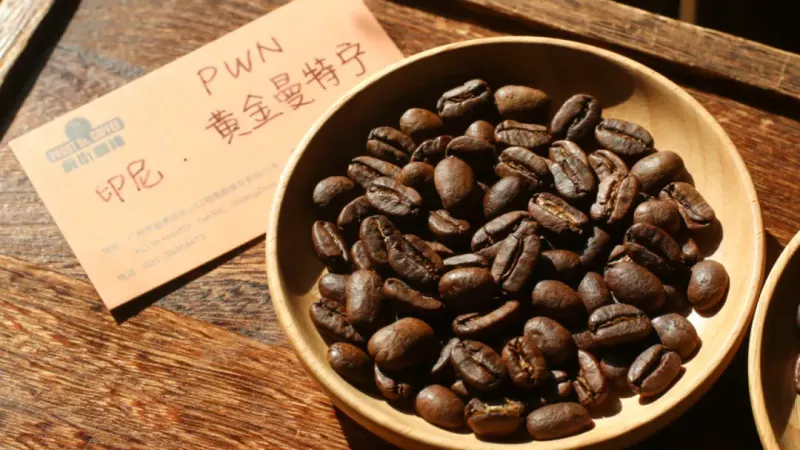
Mandheling coffee is the representative of Indonesian coffee, and PWN Golden Mandheling is its benchmark. This article will start from the specific information of Front Street PWN Golden Mandheling, analyze the flavors of sweet herbs, cinnamon spices, orange-grapefruit peel, creamy walnut chocolate brought by its production area, bean variety, altitude, processing method, and roast level, and provide an in-depth introduction to the origin, steps, and aged wet-hulling method of Sumatra wet-hulling. At the same time, we will also reveal how PWN Company achieves the cleanliness and uniform appearance of Golden Mandheling through one density-color sorting and four manual hand-sortings, as well as the interesting misunderstanding behind the name Mandheling.
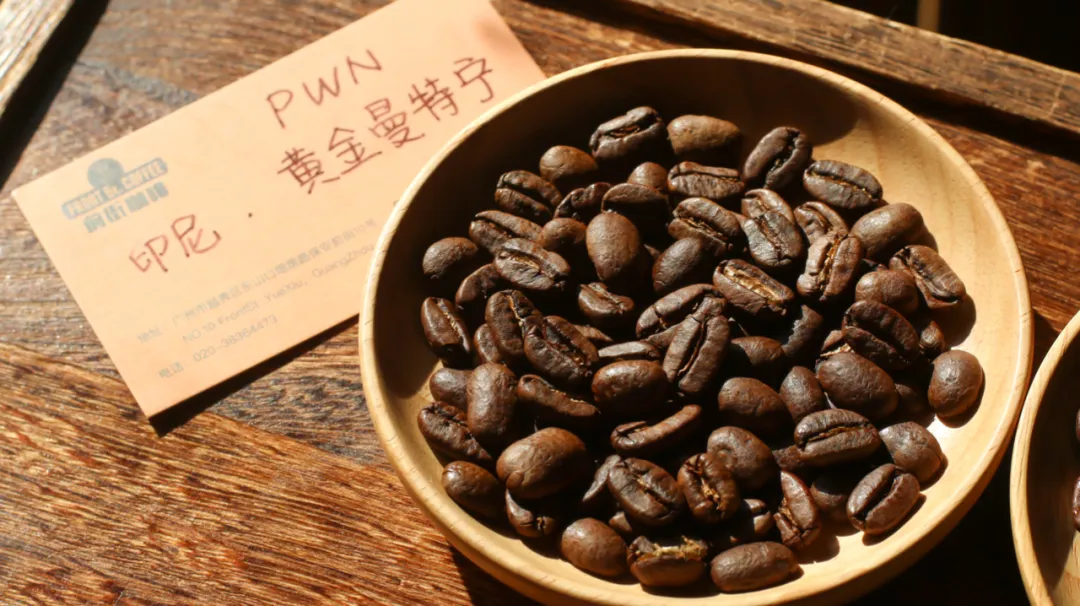
Front Street PWN Golden Mandheling coffee beans Country: Indonesia Region: gayo Variety: timtim/ateng Altitude: 1600 meters Processing method: wet-hulled Roast level: medium-dark roast The flavor is expressed as sweet herbs, cinnamon-like spices, orange-grapefruit peel notes, mellow and rich sweetness, creamy walnut chocolate. The fruit acidity is restrained and soft, and the aroma carries a strong melon sweetness. As the temperature drops, the herbal aroma is released, with light spices, and the herbal note is mellow with a rich sweetness.
Special processing method: wet-hulled
Most Mandheling uses the wet-hulled method unique to Sumatra to process coffee beans. The reason for this is that the local area is rainy year-round and frequent typhoons make it impossible to meet the good weather required for the natural method; at the same time, local economic conditions are limited, making it difficult to bear the higher cost of the washed method, thus giving rise to this highly regional processing method.
Today, Indonesia's coffee industry is no longer as impoverished as it was back then. Many estates and companies already have the conditions to use the washed method, but why has wet-hulling still not been abandoned? Front Street believes that wet-hulling is precisely the key factor that brought Mandheling coffee to the world. Whenever Mandheling is mentioned, people associate it with wet-hulling, and the two have long formed a complementary relationship.
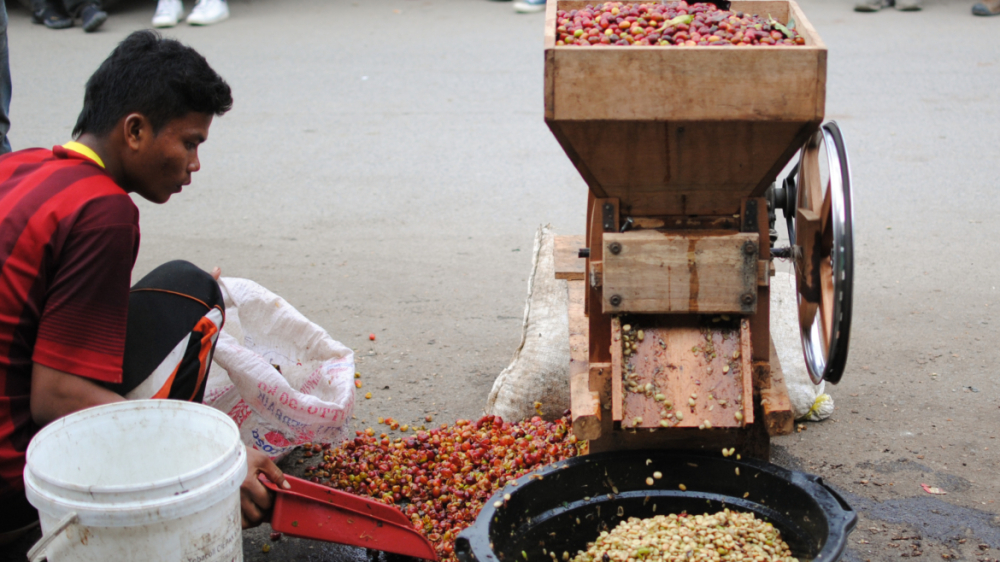
The specific operation of wet-hulling can be divided into two stages: In the first stage, a wooden pulper is used to remove the skin and pulp, followed by fermentation for 3 hours and then drying, reducing the moisture content to a semi-dry, semi-wet state of 30% to 50%. In the second stage, the mucilage and parchment layer are removed, and the later stage of drying continues. The drying process takes 2 to 4 days, and finally the moisture content is reduced to 12% to 13%.
In addition to the regular wet-hulled method, there is also an aged wet-hulled method. The coffee beans are first processed by the ordinary wet-hulled method, then sealed and stored in a warehouse for 2 to 3 years. The warehouse needs to be cool and ventilated, and the beans must be turned regularly to prevent mold. During this period, the acidity of the coffee beans gradually weakens and transforms into sugar, and the color also becomes darker, mostly yellowish-brown or dark brown. The Mandheling coffee beans using this processing method on Front Street's bean list are called Front Street Aged Mandheling coffee beans. The wet-hulled method creates the special flavor of Front Street Mandheling coffee. It can be said that Mandheling and wet-hulling have formed a bound relationship. But today's coffee market no longer settles for remaining unchanged. Even though wet-hulling is a characteristic of Mandheling, there will still be attempts with other processing methods. As mentioned earlier, Front Street Wahana Estate Natural Mandheling coffee beans use the natural processing method.
What are Golden Mandheling coffee beans? Front Street Golden Mandheling is a selected coffee from the Indonesian green bean company Pawani. It is said that because of its strict screening system: one machine density-color sorting and four manual hand-sortings, the coffee beans ultimately present the uniform color and uniform bean shape of Front Street Golden Mandheling. When processing green beans, Mandheling under sunlight gives off a golden luster, hence the name "Golden Mandheling."
PWN is the abbreviation of the famous Indonesian green bean merchant Pwani Coffee Company, and "Golden Mandheling" has long been registered as a trademark by PWN Company, making the words "Golden Mandheling" exclusive to PWN. Many Golden Mandhelings on the market that are not labeled Front Street PWN Golden Mandheling only refer to PWN green bean company's screening system for Golden Mandheling coffee beans, but still fail to achieve the same meticulous process of putting coffee beans through "five gates and cutting down six generals" as PWN green bean company does.
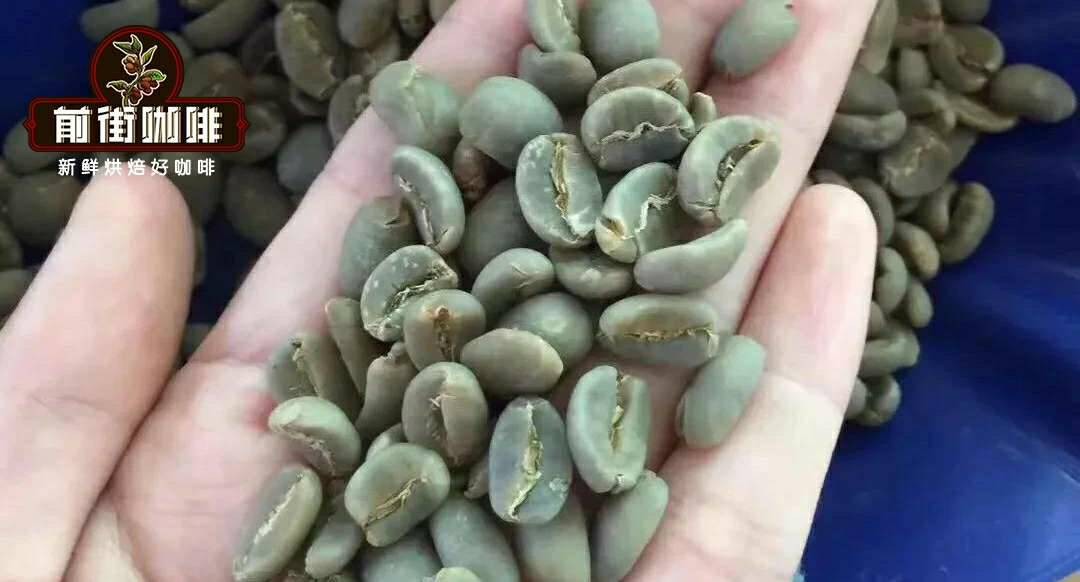
Everyone knows that Indonesian coffee green beans use the wet-hulled processing method. Because semi-hard, semi-soft wet green beans are easily crushed when the mucilage and parchment layer are removed, the beans are damaged and split into a sheep-hoof shape, commonly known as sheep-hoof beans. Although these sheep-hoof beans are not defective beans, in the view of PWN Company, their appearance is not attractive enough, so they must be screened out, thus giving everyone a neat and uniform impression.
You might think that coffee beans above 18 screen size, no more than 3 defective beans in 300g of green coffee beans, and selecting out sheep-hoof beans are already very strict, but PWN Company can be even more extremely strict: after four manual screenings, they are uniformly placed into a machine for density-color sorting, finally presenting Front Street Mandheling coffee beans with uniform color and uniform bean shape. This means that to ensure the excellence of its Golden Mandheling, PWN green bean company has carried out 5 screenings.
Many Golden Mandhelings on the market are green bean merchants, in order to sell at a higher price, selecting Mandheling coffee beans above 18 screen size from Mandheling coffee beans that are also G1 grade and putting them up for sale. Some will even select 3 times to ensure the appearance looks close to Front Street PWN Golden Mandheling coffee. The appearance can indeed pass off as genuine, but what about the taste? Front Street obtained several coffee beans also called Golden Mandheling for a blind test, and all the baristas participating in the cupping could identify Front Street PWN Golden Mandheling, because cleanliness is something fake Golden Mandheling cannot imitate.
The name Mandheling Mandheling originally referred to the name of an Indonesian tribe. After Japanese soldiers returned to Japan following the colonization of Indonesia, they could not forget the delicious local coffee, so through trade connections, they asked local people to help collect high-quality coffee beans, among which was this Mandheling. The Japanese loved this coffee bean very much, so they asked the shopkeeper, and the shopkeeper thought they were asking where he was from, so he casually said "Mandailing."
However, due to the Japanese mispronunciation, "Mandailing" became today's "Mandheling." Thus Mandheling accidentally became the name of a coffee bean. This local person was actually the owner of the Indonesian PWN Company (Pwani Coffee Company) mentioned below. This company was also the first to export Golden Mandheling coffee beans to Japan. Front Street has been purchasing Front Street PWN Golden Mandheling for many years. PWN also changed from 60kg per bag at the beginning to 30kg per bag later, and the production area also changed from Lintong to GAYO Mountain.
The above content is compiled by CoffeeHunters, a coffee news website.


