







Antigua Coffee: Region, Varieties, and Flavor
Antigua coffee comes from the highlands of Guatemala, where volcanic soil, cool nights, and steady rainfall shape a dense, sweet bean. Most farms there grow arabica coffee varieties such as Bourbon, Caturra, and Typica. Each is picked by hand, then sent through a washing process at the wet mill before drying on patios under the sun.
In the cup, Antigua coffee often shows cocoa, caramel, and a mild citrus note, with a rounded body and clean finish. The region's name carries weight among buyers, and its long history overlaps with the story of how Guatemalan coffee reached global markets. Small estates near the old colonial city still sort and grade lots by hand.
Guatemalan coffee is known for its rich, full body and tobacco and charred notes, and the Antigua region is even hailed as the home of "cigarette coffee." This article will take you deep into Guatemala's growing environment, coffee history, the volcanic geological advantages of the Antigua region, and the Flor del Cafe from Finca La Minita—from the characteristics of Bourbon and Caturra varieties, to the washed processing method and brewing parameters. Front Street Coffee's daily beans Huehuetenango and Flor del Cafe are outstanding representatives of this region.
Have you ever experienced coffee with a smoky note? Perhaps it makes you think of smoked meat, but this smokiness in coffee is actually inseparable from the growing environment. Today Front Street is taking everyone to the Americas, to the coffee-producing country—Guatemala.
Americas coffee as a whole is known for its balance, while Guatemalan coffee is renowned for being full-bodied, rich, and layered with a tobacco character. It has a smooth mouthfeel, and amid its aromatic richness there is a charred note, as if chocolatey sweetness and smokiness are interwoven. Because of this unique charred aroma, Antigua coffee is also crowned with the title "cigarette coffee." Front Street Coffee's daily bean Guatemala Huehuetenango is widely favored, while the mouthfeel of the Guatemala single-origin bean Flor del Cafe goes up another level.
As the saying goes, a land nurtures its people, and coffee, as an agricultural crop, naturally has its flavor closely tied to the local climate and environment. Front Street will now take everyone to explore just what kind of terroir gives rise to such a distinctive coffee.
Guatemala Growing Environment
Guatemala borders Mexico to the north, Honduras and El Salvador to the south, the Caribbean Sea to the east, and the Pacific Ocean to the west. Backed by mountains and facing the sea, it has rainforests, volcanic geology, highland valleys, and changeable microclimates, providing ideal conditions for the growth of Arabica coffee varieties.
The northern and eastern coastal plains of Guatemala have a tropical rainforest climate, while the southern highlands have a subtropical climate. The year is divided into dry and wet seasons: May to October is the wet season, and November to the following April is the dry season. The narrow, fertile flatlands along the Pacific coast have a tropical climate. The central highlands, as Guatemala's cultural center, according to Front Street Coffee, have a year-round mild temperature at elevations of 1,300 to 1,800 meters, with daily temperatures between 18 and 28°C, while higher areas are colder in January and February.
Annual rainfall in the northeast is 2,000 to 3,000 mm, while in the south it is 500 to 1,000 mm. Guatemala's average elevation is relatively high, and the coffee belt is distributed above 1,500 meters, located between 14 and 16 degrees north latitude, making it easiest to produce Strictly Hard Beans, all of which use washed processing. Of these, 45% of the coffee beans reach specialty grade, a considerable proportion, and there is also a small amount of Robusta.
Guatemala has a land area of about 108,899 square kilometers, and its terrain can be divided into highland volcanoes, lowland tropical forests, volcanic sandy coastal plains along the Pacific, and virgin land along the Caribbean coast.
The Sierra Madre of Central America runs east-west through Guatemala, occupying about two-thirds of the country, with 34 volcanoes distributed within its territory. Rivers and lakes dot the land, equatorial forests and plains jungles cover vast areas, and undeveloped volcanic beaches remain along the Pacific and Caribbean coasts. Front Street believes that Guatemala's coffee being able to rank among the world's top is inseparable from its high-altitude volcanic terrain, and these volcanoes are precisely ideal places for cultivating coffee.
Guatemala Coffee Planting History
According to Front Street, as early as 1747, local farmers in Guatemala already knew how to grow and drink coffee. In 1750, Jesuit priests introduced coffee trees to Guatemala. In 1845, with the establishment of Guatemala's coffee planting and promotion committee, coffee gradually became an important economic crop for the country. Under strong government promotion, by 1880 coffee already accounted for 90% of Guatemala's total exports. In pursuit of higher yields, those in power targeted Indigenous lands, forcing them to sell their land and move to more barren areas.
Therefore, to this day, most of Guatemala's coffee industry is concentrated in the south. The country has eight major coffee-producing regions, each with its own distinctive flavor, but overall, Guatemalan coffee presents a mild, full-bodied texture, elegant aroma, and pleasant acidity similar to fruit acids, making it truly the nobility among coffees. Front Street Coffee's Guatemala Flor del Cafe is a typical representative.
Introduction to the Antigua Region
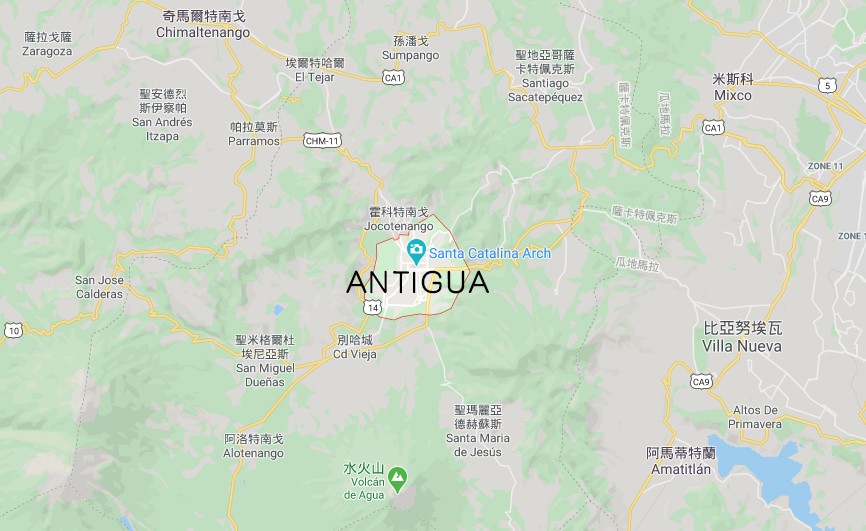
Antigua is a typical volcanic geological producing region, said to be the birthplace of Guatemalan coffee. It sits in a valley embraced by three volcanoes (Agua, Fuego, Acatenango). According to Front Street, Fuego is an active volcano that erupts irregularly from time to time, bringing abundant minerals to the region's soil—what Front Street often calls volcanic soil rich in organic matter. In addition, a large amount of virgin forest is preserved in the Antigua department, making the soil abundant in potassium ions. With the double support of organic matter and potassium ions, the coffee trees in the Antigua region receive a steady supply of nutrients and grow vigorously.
The volcano once instantly destroyed this once-prosperous capital, taking away all its prosperity overnight. Having endured catastrophe, the mountain city of Antigua saw more than 200 years of splendor dissipate, never to regain its former glory. After returning to calm, Antigua was diligently managed by the remaining Indigenous people. These resilient and hardworking Indigenous people later became coffee producers. They not only discovered Antigua coffee's rich, alluring, and unique aroma, but also brought it to the world. Today, Antigua coffee enjoys a reputation for the world's best quality and is praised by coffee connoisseurs as the finest and most distinctive coffee.
Finca La Minita
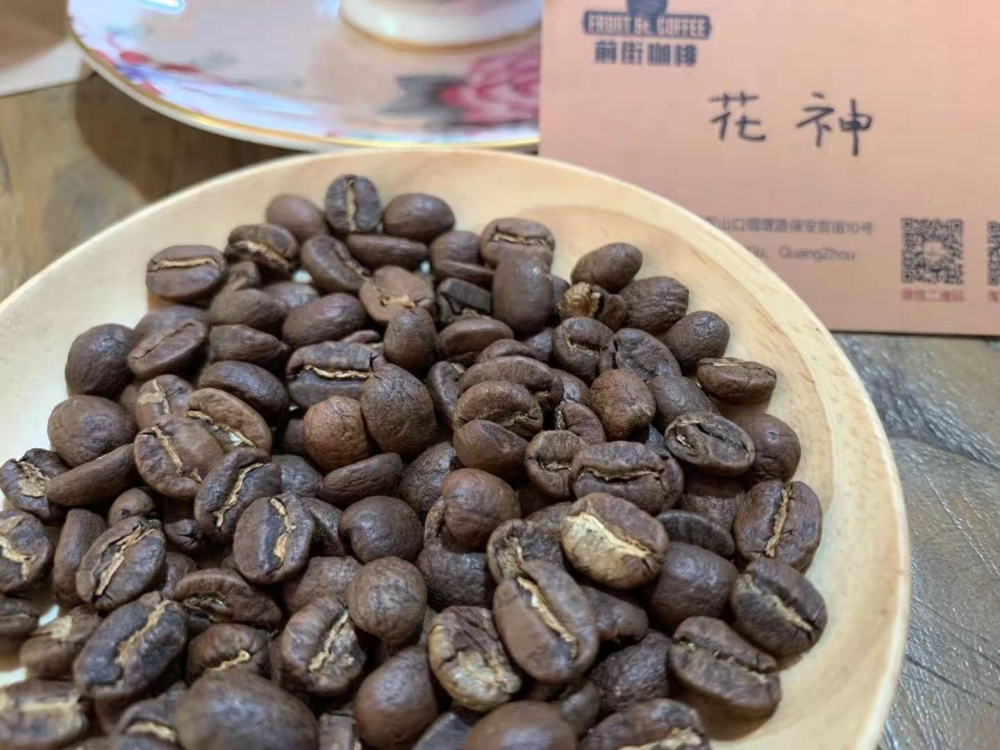
Front Street's Antigua Flor del Cafe comes from the famous Antigua estate—Finca La Minita. Why is this estate so famous? Because it is known for excellent cultivation techniques and extremely strict quality management. The coffee bean processing is entrusted to Las Pastores, Antigua's largest local washed processing plant, and the coffee is named Flor del Cafe. This is because the washed processing method can preserve the coffee beans' original flavor, making the mouthfeel clean and bright. This Flor del Cafe's dry aroma after grinding carries intense floral and tea notes, and after brewing, the mouthfeel is clean and bright, with both lime-like acidity and berry notes, and a honeyed sweetness in the finish. It is precisely this excellent mouthfeel that earned it the name Flor del Cafe, and Front Street believes it fully deserves the name.
In addition, La Minita never uses insecticides during cultivation. The estate's climate and elevation limit pest growth, and a small number of pests will not have too great an impact on the coffee trees, but extra care is needed during harvesting. This is because at Finca La Minita, as the rainy season draws to a close, the coffee cherries also ripen shortly after. The green cherries begin to turn red, but the ripening process is very slow and uneven, unlike flowering, which is rapid and uniform, so harvesting must be more meticulous. To ensure excellent quality, the estate picks only fully ripe dark red cherries.
According to Front Street, Finca La Minita conducts soil tests twice a year to ensure the soil quality for producing high-quality coffee beans, and fertilizes about three times a year. In addition, the estate also applies trace-element fertilizers such as zinc, boron, and copper to provide more nutrients to the coffee trees and prevent disease.
Therefore, Front Street believes that it is precisely such scientific cultivation management that creates Flor del Cafe's excellent flavor expression and its reputation for consistent quality over the years.
Guatemala Flor del Cafe Variety
Front Street believes that the quality of coffee flavor depends not only on the producing region and processing method, but is also closely related to the coffee variety. For example, all single-origin coffees belong to the Arabica species, and under the Arabica species there are many further subdivided varieties. Front Street's Antigua Flor del Cafe is a combination of the Caturra variety and the Bourbon variety. Next, Front Street will briefly introduce these two varieties.
Bourbon
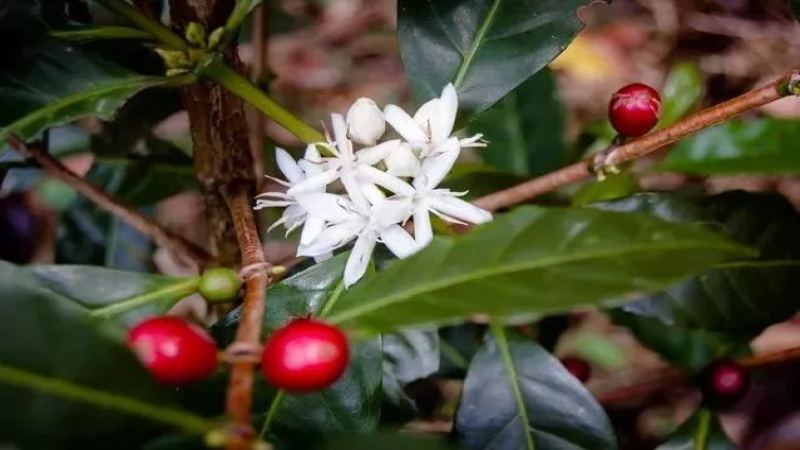
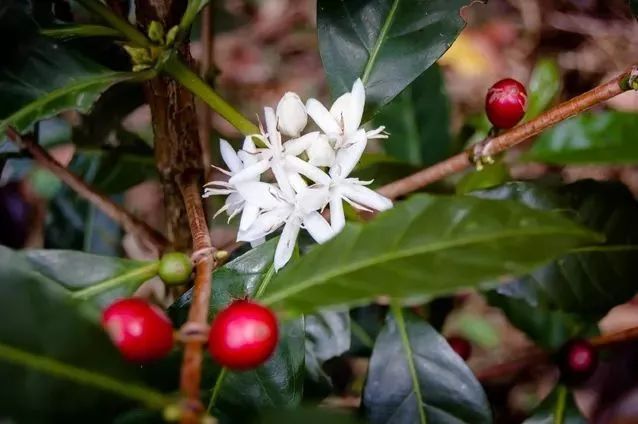
Bourbon is a secondary species produced by a mutation of Typica, and together with Typica it is one of the oldest existing Arabica varieties; its green cherries turn bright red when ripe. Compared with Typica, Bourbon has broader leaves and denser growth. Although its yield is higher than Typica, its harvest cycle is likewise two years, and it is also a relatively low-yield variety, yet it has excellent mouthfeel, with a wine-like acidity and a sweet finish.
Caturra
Caturra is a single-gene mutant of Bourbon, discovered in Brazil in 1937. Its productivity and disease resistance are both better than Bourbon, and the tree is shorter, making harvesting easier, but like Bourbon it has a cyclical problem of fluctuating productivity every two years. Its flavor is comparable to or slightly inferior to Bourbon, but more importantly, it has extremely strong adaptability and does not need shade trees; it can thrive even when directly exposed to the blazing sun, commonly known as sun-grown coffee. It can adapt to high-density planting, but must be fertilized more, increasing costs, so it was not widely accepted by coffee farmers at first.
Guatemala Coffee Bean Processing Method
Most Guatemalan coffee cherries use the washed processing method, with only a small amount using natural processing. Front Street's Guatemalan coffees all use washed processing, such as Guatemala Huehuetenango coffee and Guatemala Flor del Cafe.
Most of Front Street's daily beans use coffee beans processed by the washed method, because Front Street believes that the washed method best expresses a coffee bean's most original flavor and is also the starting point for understanding that region's flavor. Therefore, the daily beans launched by Front Street Coffee are mainly washed processed, for example, Front Street Coffee's Guatemala Huehuetenango daily bean uses the washed method; the natural method, on the other hand, adds aroma and fermented notes on top of the region's base flavor.
Front Street Coffee Brewing Suggestions:
Regarding coffee brewing, Front Street has always believed that the freshness of coffee beans is crucial, as freshness allows one to experience coffee's rich flavors to the greatest extent. The coffee beans shipped by Front Street Coffee are all within 5 days of roasting, because Front Street deeply understands the huge impact of freshness on flavor. Front Street's roasting philosophy is "freshly roasted good coffee," so that every customer who places an order receives the freshest coffee. The coffee resting period is about 4 to 7 days, so when customers receive it, it is exactly at its best flavor.
Of course, some customers need Front Street to help grind the coffee, and that is no problem either, but Front Street reminds: once coffee beans are ground in advance, they no longer need to rest, because during transportation the pressure from carbon dioxide inside the packaging can also make the coffee flavor rounder, so once you receive the ground coffee you can immediately brew a cup. However, ground coffee needs to be brewed promptly, because after contact with air it oxidizes faster and the flavor dissipates more quickly, making the coffee taste less good. Therefore, Front Street recommends buying whole beans and grinding fresh before brewing, so you can better taste the coffee's flavor.
Front Street Brewing Parameters for Guatemala Flor del Cafe:
Front Street chooses the V60 dripper, using its even flow rate to better highlight the acidity-sweetness layers. Water temperature 90°C, using a relatively high water temperature to extract the coffee's aromatic substances. Water-to-coffee ratio 1:15, coffee dose 15 g, grind size (80% passing through the Chinese No. 20 standard sieve).
Use staged extraction, blooming with 2 times the coffee dose in water, that is, 30 grams of water for a 30-second bloom. The blooming process is intended to let the coffee grounds release internal carbon dioxide, making the later extraction more stable. Pour in a small stream in circles until 125 grams, then pause, continue pouring until 225 grams and stop. After the water in the dripper finishes dripping, remove the dripper. Start timing from the beginning of pouring; extraction time is 2'00". Next, swirl the entire cup of coffee to mix it evenly, then pour it into a cup and taste.
Front Street Guatemala Flor del Cafe Flavor Characteristics: relatively pronounced citrus acidity, juicy acidity, rich floral notes, pleasant sweetness, medium body, with a slight caramel note and smoky flavor in the later stage; overall pure, mild, smooth in texture, balanced in taste, and lively and changeable in layers.
For professional coffee knowledge exchange and more coffee bean information, please follow Coffee Workshop (WeChat public account cafe_style)
For more specialty coffee beans, please add the private WeChat of Front Street Coffee (FrontStreet Coffee), WeChat ID: qjcoffeex
The above content is compiled by CoffeeHunters, a coffee news website.


