







For more specialty coffee knowledge, please follow: Front Street Coffee (Frontsteet Coffee)
Coffee is a global beverage. In addition to the diversity of brewing methods, it can also produce coffees with different flavors and mouthfeels through different extraction methods, offering extremely high experiential value whether visually or in terms of taste.Traditional espresso is characterized by a strong mouthfeel and a rich, sweet aftertaste. With dark-roasted coffee beans, it can produce coffee with nutty and chocolatey flavors, making it a highly popular type of coffee.
For those who enjoy this kind of full-bodied coffee, Front Street Classic Espresso Blend is recommended. This is a recipe combining beans from three origins—Brazil, Indonesia, and Vietnam—and uses a deep roast, which maximizes the coffee's rich aroma and also allows everyone to easily extract abundant, dense crema. It is very suitable whether for making an Americano diluted with water or a latte paired with milk.

Espresso has a very long history, so over the course of its development, a different path gradually emerged that does not use blended beans as the main ingredient. Instead, single-origin beans are used to make espresso. This espresso made from a single variety from a single origin is called SOE.
What Is SOE
SOE stands for Single Origin Espresso, literally translated into Chinese as espresso made from a single origin and a single variety. To put it even more simply, it is single-origin espresso. This makes it easy to understand: if you want SOE at a café, you can choose a single-origin coffee to make it. Whether it is a high-quality single-origin Geisha or a lower-quality single-origin Brazil, what is produced is still SOE—only the quality differs. SOE began to appear abroad in 2007 and gradually matured in 2010. That year, a coffee competitor from London, UK, used coffee made with SOE and won the WBC (World Barista Championship). After that, SOE coffee gained attention and gradually became popular.

Many friends often cannot distinguish among SOE, single-origin coffee beans, blended beans, pour-over coffee beans, and espresso coffee beans. Here, Front Street will briefly explain. If distinguished by use, they can be divided into pour-over coffee beans used for drip methods represented by hand brewing, and espresso coffee beans used for pressure extraction represented by espresso machines. Their main difference is the degree of roasting. However, due to historical reasons, coffee beans used for pour-over are mostly single-origin coffee beans, while coffee beans used for espresso are mostly blended coffee beans.
Single-origin coffee beans are coffee beans from a single origin. What needs to be noted here is that single origin only emphasizes the source of origin, not whether the variety is single. Blended coffee beans refer to artificially combining coffee beans from more than two origins to achieve better flavor, greater consistency, or a more advantageous price. Therefore, strictly speaking, blending beans of different coffee varieties from the same origin (estate) together does not count as blended coffee beans.
SOE specifically refers to espresso made from single-origin coffee beans, and SOE coffee beans are single-origin coffee beans roasted to be suitable for espresso extraction.
Is Front Street's explanation clearer now...
Why Are SOE Coffee Beans More Expensive Than Blended Coffee Beans?
The reason is simple: the raw materials of the SOE coffee beans used by merchants are better, so the cost is higher.
In fact, blending with higher-quality coffee beans is also not cheap, and the flavor is no inferior to SOE. For example, Front Street's Sunflower Warm Sun Blend uses single-origin Yirgacheffe Red Cherry and single-origin Honduras Sherry. Its flavor characteristics are distinct, with notes of vanilla cream, sherry wine aroma, chocolate, and brown sugar. This coffee bean is also used for espresso served at Front Street stores and has been warmly sought after by customers.

Due to historical reasons, the term "blend" has become a stereotype in many people's minds, which is also why many merchants do not choose high-quality blends. By contrast, the term "SOE" forms a sharp impression contrast with "blend" (blend corresponds to single origin, and a negative impression corresponds to a positive impression).
So are there coffee beans that can be used both for pour-over and for SOE?
Front Street has said before that there is a roasting difference between beans for pour-over and beans for espresso. This is because some coffee beans, in order to express a very strong fruity acidity, are roasted slightly lighter, and the espresso extracted with an espresso machine will have a sharp, pungent taste. However, some coffee beans are roasted at a degree that makes them suitable for both pour-over and espresso SOE.
For example, Front Street's Brazil Queen's Estate Yellow Bourbon coffee beans use a medium-dark roast. Brewed by pour-over, it has a rich chocolate and peanut butter mouthfeel, while the sweetness of sucrose is also very obvious. When used to extract SOE, it can also produce thick crema. It tastes very rich in chocolate and nutty aromas, without burnt bitterness, and has very high sweetness.
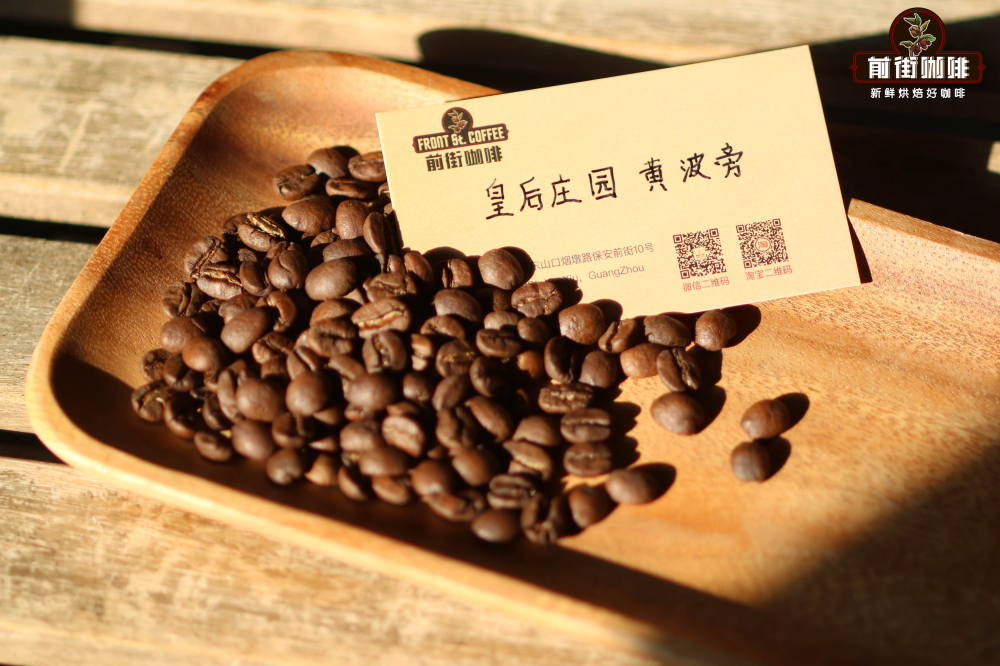
There is also Yirgacheffe Red Cherry coffee beans, for which Front Street uses a medium-light roast. The coffee brewed by pour-over has very sweet berry, fruity acidity, cream, and fermentation aromas. Because the roast level is not too light, it is also suitable for espresso machines. The resulting SOE coffee has a very fragrant strawberry fruit aroma, fruity acidity when drunk, caramel cream aroma, and the charm of black tea.
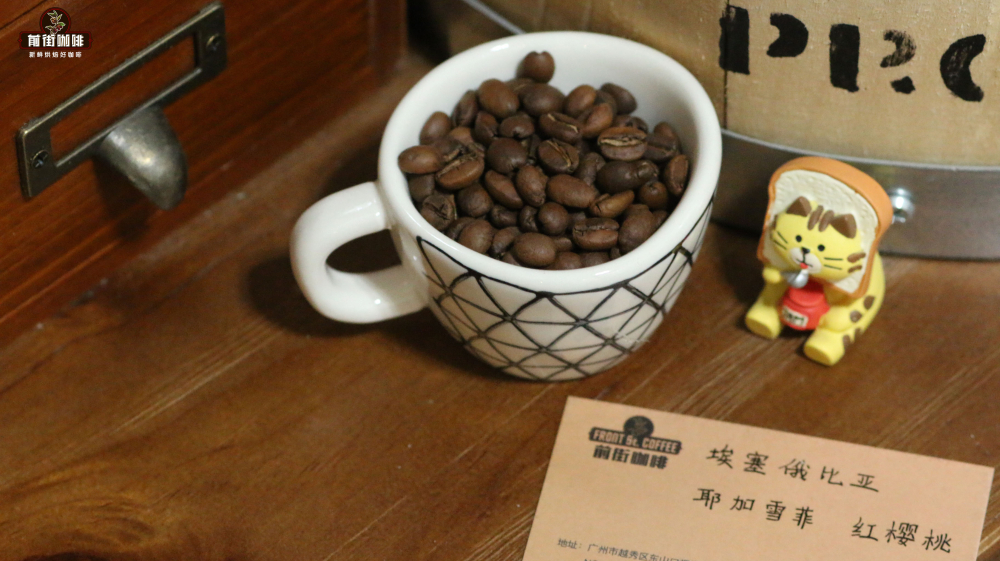
Also in the Ethiopian region, there is a high-altitude Huakui 8.0 that has become a daily staple coffee for many friends because of its full and rich strawberry and citrus aromas. But if medium-light roasted beans are used directly to make SOE, splattering, sourness, and astringency easily occur. So, to let everyone make Huakui SOE at home, Front Street has also simultaneously introduced a medium-roast SOE option—just check the box when placing an order.

Extraction Parameters for SOE Huakui Espresso
Coffee beans: Ethiopia · Huakui 8.0
Coffee dose: 20g
Coffee liquid yield: 40g
Dose-to-yield ratio: 1:2
Extraction time: 26–32 seconds
Grind setting: Galileo 2.0
The coffee machine used by Front Street has a double basket capacity, requiring 20 grams of coffee powder each time. The extraction dose-to-yield ratio is 1:2, meaning 40 grams of coffee liquid is produced within a reasonable time. Extraction time is related to the flow rate of the coffee powder. Generally, a single extraction is controlled between 20 and 35 seconds. If it is less than 20 seconds, the coffee taste tends to be thin and bland; if it exceeds 35 seconds, over-extraction easily causes a burnt bitter taste in the coffee. Therefore, when producing coffee, Front Street controls the espresso time within the range of 26–32 seconds.

Before extraction, we need to first wipe the basket dry, turn on the grinder, grind a double dose of coffee powder, and place it on an electronic scale to measure and adjust until it reaches exactly 20 grams. Then use a distribution tool to level the coffee powder, and use a tamper to press vertically downward with force to tamp the coffee puck firmly, ensuring more stable extraction.
Then turn on the extraction switch and let water run for 1–2 seconds to moisten the brew head, while also carrying away any coffee grounds stuck on it. Place an electronic scale under the cup that will receive the Espresso, tare it to 0, and place it together under the brew head during extraction.

Gently lock the portafilter onto the brew head, then start the extraction switch. Observe the changes in the extracted liquid. When the electronic scale shows 40 grams of coffee liquid, at about 30 seconds, turn off the extraction switch. The brewing parameters will change subtly according to daily air humidity and the condition of the coffee beans, so it is necessary to adjust the coffee dose, grind setting, and extraction yield up or down.

The extracted Huakui SOE can be drunk directly. Remember to pair it with a glass of water to rinse your mouth, so you can taste the dense crema foam and the rich tropical fruit aroma of the coffee liquid underneath. If you cannot accept the strong bitterness of espresso, then of course you can also, according to your preference, add ice water or warm water at a 1:4 ratio to turn it into a refreshing SOE Huakui Americano, or add frothed fresh milk at a 1:6 ratio to soften the mouthfeel, making it a delicious SOE Huakui Latte.
The above content is compiled by CoffeeHunters, a coffee news website.


