







How Does Pulped Natural Change the Coffee Extraction Process Beverage?
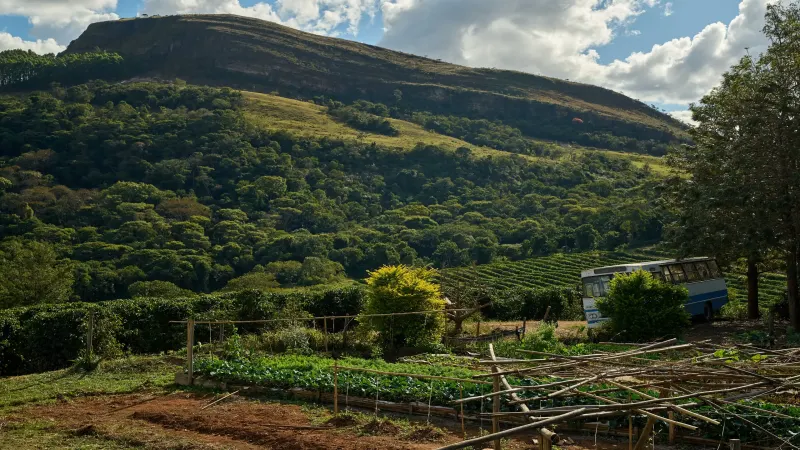
Brazil leads the world in coffee bean production, and its mild, balanced flavor makes it a friendly start for pour-over drinkers. The pulped natural method, developed there, leaves some mucilage on the bean during drying, which builds the fruity aroma and full sweetness seen in lots like Cerrado Red Bourbon and Queen Farm Yellow Bourbon.
The coffee extraction process beverage depends on recipe as much as bean. Front Street suggests choosing a dripper, then setting water temperature, coffee-to-water ratio and pouring rhythm to match each bean. Brazilian coffee arrived only after the 1720s, when a Portuguese officer carried hidden seeds home from French Guiana, so the country's three-century growing history is shorter than its output suggests.
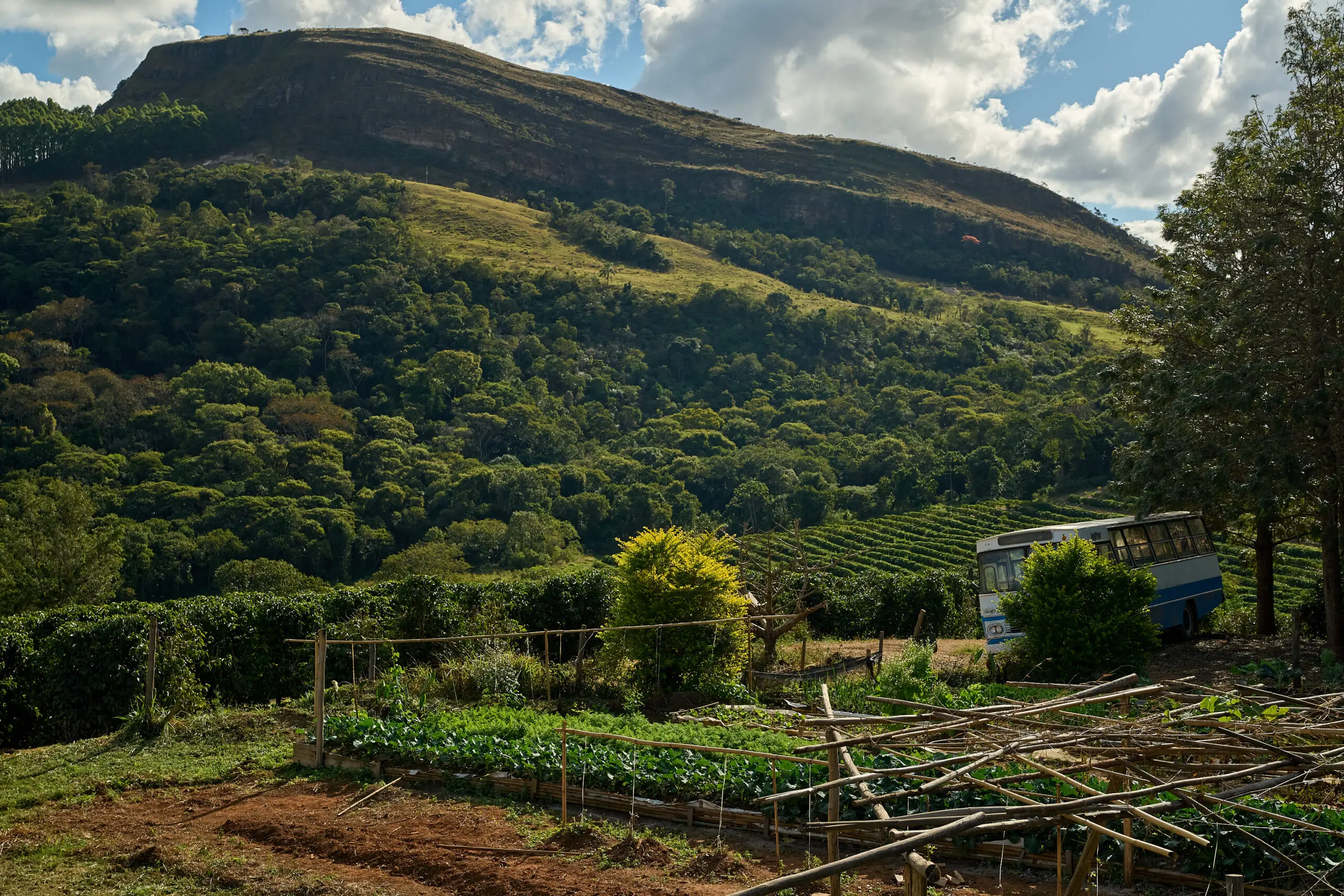
Brazil ranks first in the world in coffee bean production, and its mild, balanced flavor profile is very friendly to those just getting into pour-over coffee. This article will trace the cultivation history of Brazilian coffee and the origins of the pulped natural processing method, and focus on two Brazilian Bourbon coffees on the Front Street Coffee bean list—Cerrado Red Bourbon and Queen Farm Yellow Bourbon—explaining their producing regions, altitudes, processing methods, and flavor tendencies. At the same time, we will also share brewing recipes for these two beans, including dripper choice, water temperature, coffee-to-water ratio, and pouring rhythm, to help enthusiasts recreate the rich fruity aroma and full-bodied sweetness of Brazilian coffee at home.
For more specialty coffee knowledge, please follow: Front Street Coffee (Frontsteet Coffee)
Brazil often gives people the impression of being passionate and uninhibited, but beneath this passion there is also a gentle side, and Brazilian coffee is a typical representative of this temperament. Many people just beginning to explore single-origin coffee often find the bright acidity of African beans or the intense bitter aroma of Asian beans both novel and hard to get used to. By contrast, Brazilian coffee beans are like a gentle elder: not high in acidity, not harsh in bitterness, yet very full in aroma, and are therefore often regarded as the most easily accepted single-origin choice for pour-over beginners.
When it comes to coffee beans, Brazil is a producing origin that cannot be avoided. Brazil's coffee production has long ranked first in the world, and once there is any disturbance in its producing regions, international coffee futures prices fluctuate accordingly. Take the COVID-19 pandemic as an example: tight shipping capacity combined with multiple extreme weather events in Brazil doubled global coffee bean prices in just one year.
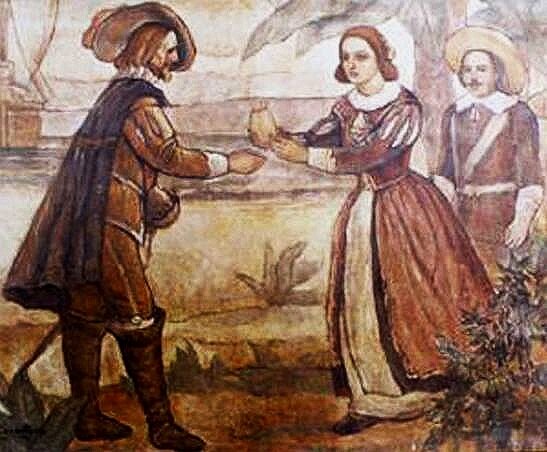
However, Brazil's history of coffee cultivation is actually only more than three hundred years old. Before the 1720s, there were no coffee trees on Brazilian soil. At that time, a Portuguese officer stationed in Brazil was ordered to go to French Guiana to mediate a territorial dispute between France and the Netherlands, but he and the local governor's wife fell in love. On his return journey, the governor's wife gave him a bouquet, and coffee seeds were hidden inside it. After that, coffee quickly adapted to Brazil's climate and gradually flourished.
Entering the 1770s, Brazil's coffee industry experienced rapid expansion. At that time, North Americans, protesting the British Tea Act, launched the Boston Tea Party, and coffee was thereby given the identity of a patriotic beverage. The number of coffeehouses in North America surged, and demand for Brazilian coffee beans rose accordingly. Considerable trade profits in turn drove local transportation construction in Brazil, allowing railways to reach directly to coffee plantations, greatly reducing transport time and costs and making the entire circulation process more efficient.
Soon afterward the American Civil War broke out, and coffee became a military necessity for both the Northern and Southern armies, further driving up demand for Brazilian coffee beans. At that time Brazil mainly cultivated the Typica variety, which, although elegant in flavor, had low yields. So people began looking for high-yield coffee varieties, and the Bourbon variety from Réunion was therefore introduced to Brazil. By the 1870s, Bourbon had become Brazil's main coffee variety.
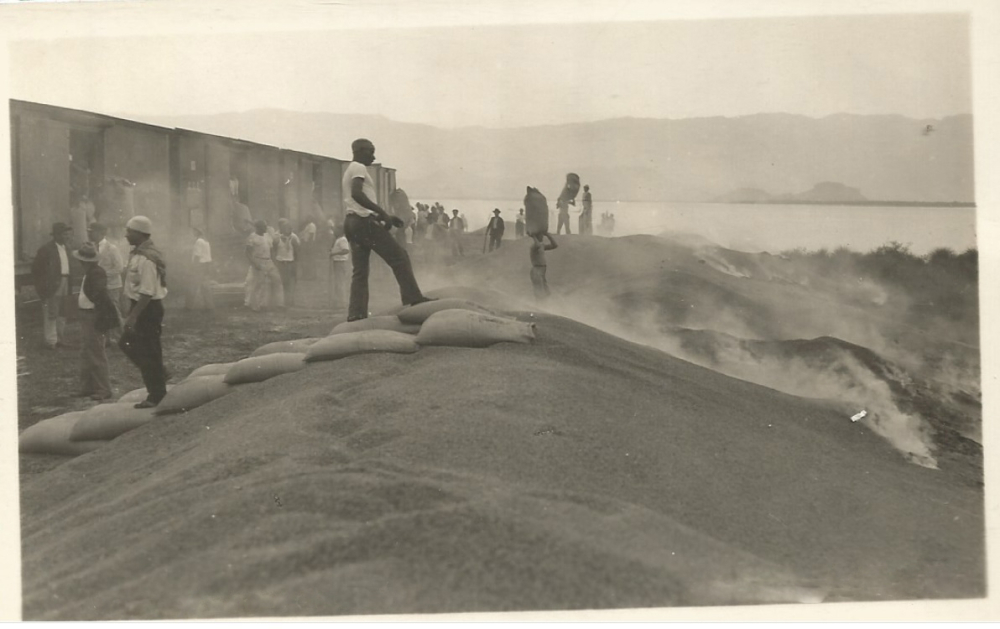
In the 1930s, the Great Depression in the United States caused large quantities of Brazilian coffee beans to pile up in warehouses unsold, and in the end a large number of beans had to be destroyed before prices returned to normal. Later, a relatively complete regulatory system was gradually established.
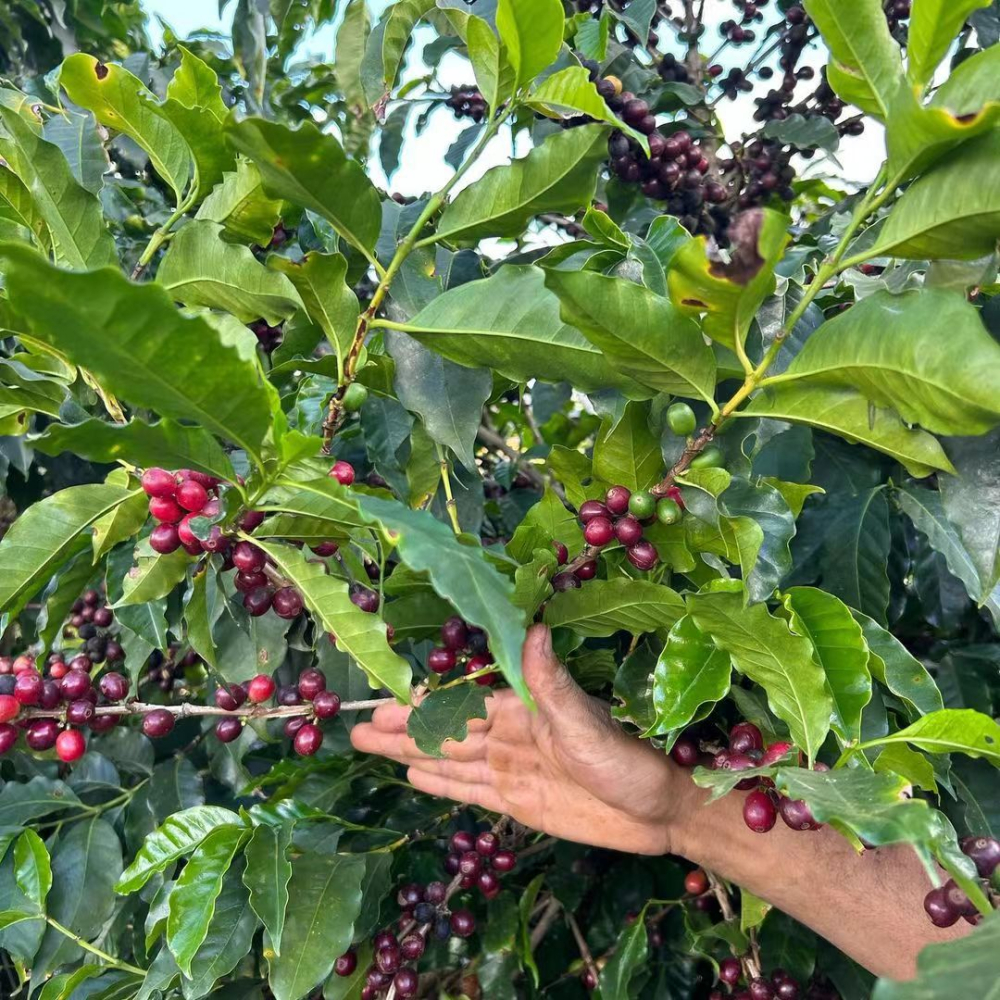
By the 1990s, the Brazilian authorities hoped to sell coffee beans globally as quickly and in as large quantities as possible, and once considered adopting the washed processing method. However, not every producing region in Brazil had sufficient water sources and funding to support washed processing, so the pulped natural method emerged. This method removes the coffee fruit's skin and pulp, leaving the parchment beans with their mucilage layer to be sun-dried directly. Because the skin and pulp have already been removed, drying time is shortened, and green bean quality is also improved to a certain extent.
In the early twenty-first century, Costa Rica, also aiming to shorten processing time and improve green bean quality, drew on Brazil's pulped natural method and further developed honey processing, giving Costa Rican coffee the label of being "sweet as honey."
On the Front Street Coffee (FrontStreet Coffee) bean list there are two coffees from Brazil. One is Front Street Brazil Red Bourbon Coffee from the Cerrado region of Minas Gerais, and the other is Front Street Brazil Queen Farm Yellow Bourbon Coffee from the Mogiana region of São Paulo.
Many coffees in Front Street's daily drinking series use the washed processing method, which best reflects a producing region's terroir, but the characteristics of some regions come precisely from their traditional processing methods, so some green beans follow local customary practices, such as semi-washed or pulped natural. Brazil uses the pulped natural method, and this approach gives Brazilian coffee beans a richer fruity aroma, a fuller body, and a more pronounced sweetness.
Front Street Coffee (FrontStreet Coffee): Brazil Red Bourbon Coffee Beans
Producing region: Cerrado region, Minas Gerais, Brazil
Altitude: 1,000 meters
Variety: Red Bourbon
Processing method: Pulped natural
Another Brazilian coffee bean on the Front Street bean list comes from Queen Farm, namely Front Street Brazil Yellow Bourbon Coffee Beans. The Mogiana region where Queen Farm is located is a long-established coffee-producing region in Brazil, and the farm's excellent output is widely recognized. Since Brazil held its first Cup of Excellence (COE) competition in 1999, Queen Farm has won awards many times, once setting a record of twelve awards within seven years.
Front Street Coffee (FrontStreet Coffee): Brazil Queen Farm Coffee Beans
Producing region: Mogiana region, São Paulo, Brazil
Farm: Queen Farm
Altitude: 1,400 meters—1,950 meters
Variety: Yellow Bourbon
Processing method: Natural
Queen Farm has a planting area of about 280 hectares, of which more than 200 hectares are planted with the lower-yield but better-flavored Yellow Bourbon variety. Modern scientific verification shows that Yellow Bourbon is a natural mutation of Red Bourbon. Literature records that it was discovered in São Paulo in 1871, with a thicker mucilage layer and richer sugars.
This Front Street Brazil Queen Farm Yellow Bourbon coffee bean uses a small-scale natural processing method, with whole coffee cherries evenly spread on raised beds for sun-drying, thereby retaining more sugars and allowing the sugars to penetrate more fully into the green beans. Workers turn the cherries frequently to avoid unpleasant acidity and fermented flavors. Natural processing also makes Yellow Bourbon coffee sweeter and more delicious.
When brewing these two Front Street Brazilian coffee beans, Front Street recommends using a KONO dripper, a water temperature of 88 degrees Celsius, and a medium-coarse grind size.
Dripper: KONO dripper
Water temperature: 88 degrees Celsius
Dose: 15 grams
Coffee-to-water ratio: 1:15
Grind size: 75% passing a Chinese standard No. 20 sieve
First pour 30 grams of hot water in a "の" shape to completely wet the coffee grounds and bloom for 30 seconds. After the bloom, pour slowly in circles from the center with a small stream up to 125 grams for the first stage. When the water level in the dripper drops to the point where the coffee bed is about to be exposed, continue pouring until 225 grams, then stop. Wait for the water in the dripper to drip completely into the server, then remove the dripper. The total extraction time is about 2 minutes.
The above content is compiled by CoffeeHunters, a coffee news website.


