







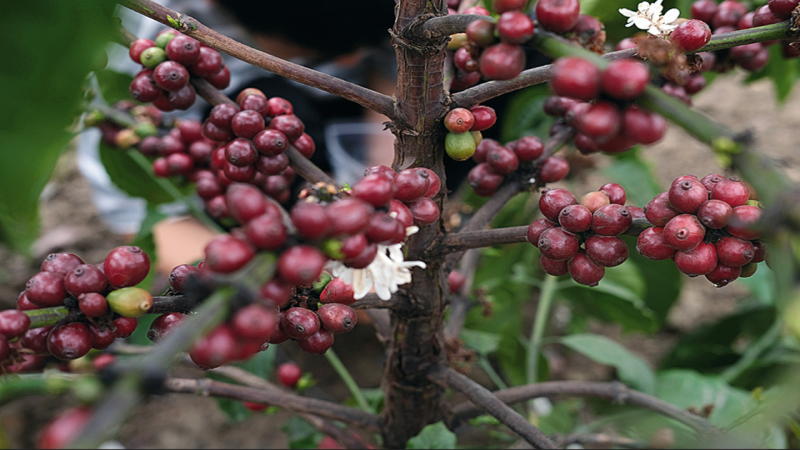
Catimor is the most widely planted coffee variety in Yunnan, accounting for the vast majority of the region's total coffee production. This variety was developed by the Portuguese Coffee Rust Research Center. Although classified as Arabica, it carries one-quarter Robusta ancestry. It combines disease resistance and high yield with balanced flavor, but its Robusta genes also result in a lack of high-tier aromatics. Front Street Coffee's Yunnan daily-drink beans are made from Catimor from the Baoshan region, washed-processed to present the typical taste of Yunnan. This article will take a deep dive into Catimor's varietal origins, flavor characteristics, and processing methods, and share the brewing parameters and tasting experience of Front Street Yunnan small-bean coffee.
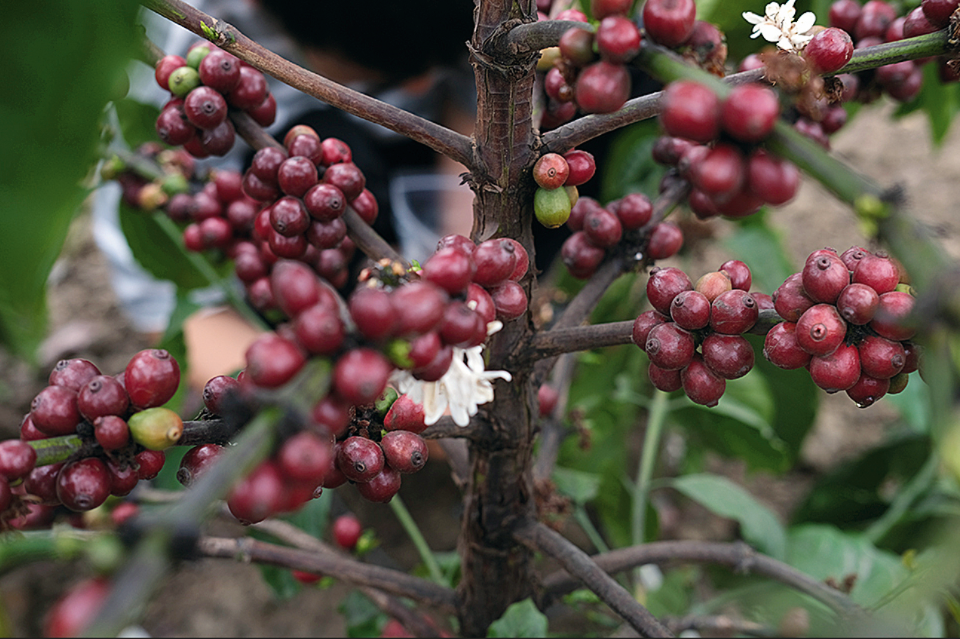
In Yunnan, the most widely planted "small-bean coffee" variety is Catimor, which accounts for the vast majority of the province's total coffee production, with all other varieties combined making up only a small portion. The Yunnan daily-drink beans launched by Front Street are made from Catimor from the Baoshan region, processed using the washed method. In today's article, we will take a closer look at the Catimor variety.
Catimor CIFC7963
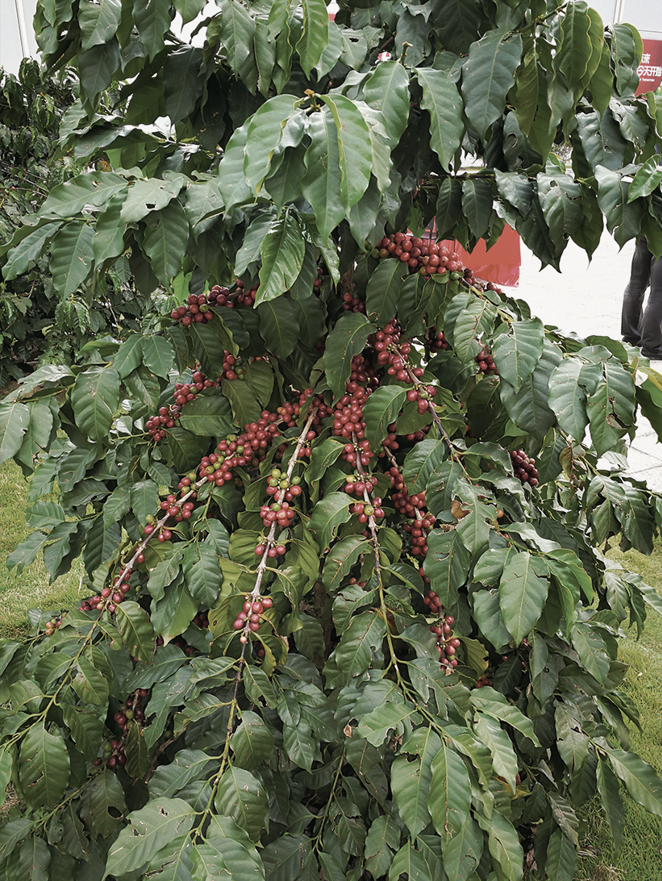
Catimor is a hybrid variety bred by the Portuguese Coffee Rust Research Center (CIFC) to combat coffee leaf rust. In appearance, this variety has a compact tree shape, dwarf stature, many branches, and short fruiting nodes. It grows vigorously and has very strong vitality. Its most prominent advantages are its extremely strong rust resistance and high yield.
Although Catimor is classified as Arabica, genetically speaking it is a cross between Timor (which belongs to Robusta) and Caturra (a Bourbon mutation), so Catimor contains about one-quarter Robusta genes. Robusta itself has a relatively high chlorogenic acid content, is not easily affected by pests or climate, and is usually grown at lower elevations, with high yield and fast fruit ripening. Dark-roasted Robusta often has abundant coffee oils, with an intense taste and pronounced bitterness. If not handled properly, it can easily produce astringency and a rather pungent musty flavor.
By contrast, the "picky" Arabica plant has relatively weak disease resistance and lower per-plant yield. The significant temperature difference between day and night at high elevations slows the ripening of the coffee fruit, allowing the coffee cherries to absorb more nutrients and thus develop richer aromas. The unique microclimates of each coffee-producing region also provide diverse growing conditions for Arabica, creating distinctive flavor expressions.
Catimor inherits characteristics from both Robusta and Arabica. It not only has strong disease resistance and high-yield advantages, but when tasted after roasting, it also offers fruit-like acidity and sweetness. However, its Robusta lineage also brings shortcomings in flavor. The overall profile is dominated by nuts and brown sugar, lacking rich, uplifting high-tier flavors such as citrus, floral notes, and tropical fruit. In addition, because green bean processing methods in the past were relatively crude, Yunnan coffee has often been described as having a "devil's aftertaste" and has struggled to compete with pure Arabica varieties such as Caturra in competitions. Furthermore, Catimor's rust resistance gradually degrades after 20 to 30 years. If the Yunnan coffee industry wants to improve overall quality and achieve long-term development, gradual replanting is an unavoidable path.
As a coffee grown locally in our country, Front Street believes it is very necessary to let everyone learn about it, so Front Street has always kept a Yunnan small-bean daily-drink coffee on its bean list for everyone to taste. It is precisely the most common local Catimor variety in Yunnan, using washed processing and medium roasting, striving to present the typical "taste of Yunnan."
Washed Yunnan Catimor
Some merchants use novel flavor-enhancing processing methods to mask the flaws of Yunnan beans themselves and add large amounts of aroma to them, thereby raising the selling price. Front Street believes that doing so neither truly preserves the original taste of Yunnan coffee nor avoids misleading consumers. Some friends, after tasting Yunnan coffee beans with special processing methods, find the aroma particularly prominent and then assume that this is the mainstream processing method for Yunnan coffee. In reality, most Yunnan coffee farmers work under difficult production conditions and do not have expensive processing equipment, so the vast majority of Yunnan coffee beans can only use natural processing methods, namely washed and natural.
If you want to truly explore the "taste of Yunnan," Front Street recommends Front Street Yunnan Small-Bean Daily-Drink Beans, using washed processing. The daily-drink beans launched by Front Street are selected from 7 classic origins, covering multiple highly representative regions and varieties, using the natural processing methods customary in the origin and presenting the unique terroir character of the origin.
The washed process steps are: first remove the skin and pulp of the harvested coffee fruit with a machine, place the depulped coffee beans into a fermentation tank to ferment, using fermentation to break down the mucilage layer. After fermentation is complete, rinse repeatedly with clean water to remove the broken-down mucilage, and finally dry the coffee beans for 1 to 2 weeks. Washed processing not only reduces the defect rate of Yunnan coffee and makes the output quality more stable, but also gives the coffee flavor greater clarity.
Front Street believes that the coffee flavor produced by Yunnan's terroir has a neutral, balanced character, that is, it has acidity, sweetness, and bitterness all at once. Therefore, Front Street's Yunnan coffees all use medium roasting, highlighting chocolate and nutty roasting aromas while retaining some acidity. In Front Street's cupping, the Yunnan Small-Bean Daily-Drink Beans showed nutty, herbal, and brown sugar aromas, melon-like sweetness, and plum-like acidity, with a balanced mouthfeel.
Brewing parameters for Front Street Yunnan small-bean coffee:
Dripper: KONO
Dose: 15g
Water temperature: 90°C
Grind size: 75% passing through a No. 20 sieve
Water-to-coffee ratio: 1:15
Three-stage pouring: first wet the coffee bed with twice the weight of the coffee grounds in water to form a dome and bloom for 30 seconds, then pour in a slow stream in circles from the inside out, pausing at 125g, and when the coffee bed drops to half the height of the dripper, continue pouring the third stage in the same thin stream until 225g, then wait until all the coffee liquid has filtered through and remove the dripper. The time is about 2 minutes.
Front Street Yunnan Small-Bean Daily-Drink Bean coffee flavor: it smells very nutty, with herbal, chocolate, and caramel notes on the palate, a slight fruity acidity in the finish, an overall balanced mouthfeel, and good clarity.
For professional coffee knowledge exchange and more coffee bean information, please follow Coffee Workshop (WeChat public account: cafe_style)
For more specialty coffee beans, please add the private WeChat of Front Street Coffee (FrontStreet Coffee), WeChat ID: qjcoffeex
The above content is compiled by CoffeeHunters, a coffee news website.


