







How Does the Papua New Guinea Coffee Grading System Work?
Papua New Guinea is the largest island nation in the South Pacific, and its signature Bird of Paradise bean shares Typica lineage with Blue Mountain coffee, which is why it is nicknamed Little Blue Mountain. The Typica AA beans from the Bird of Paradise estate show a full body with toasted bread and nutty sweetness plus a light fruity acidity.
The country's coffee grading system sorts beans by screen size and defect count, with AA marking the larger screen size. Growing areas above 1,000 meters have a mountain climate that slows cherry ripening and concentrates flavor. For brewing, a medium-dark roast through a Kono dripper at 88°C, 15g of coffee at a 1:15 ratio and staged pouring brings out the bean's sweetness.
Papua New Guinea is the largest island nation in the South Pacific, and its signature coffee bean, Bird of Paradise, shares a deep heritage with Blue Mountain coffee due to its Typica lineage, often earning it the nickname "Little Blue Mountain." Front Street Coffee once compared the two: Blue Mountain pour-over presents a rich, full-bodied dark chocolate and caramel profile, while Papua New Guinea coffee offers a touch of fruity acidity beneath its full body, each with its own distinctive character. This article will systematically review the background knowledge of this coffee-producing country from the perspectives of geography, coffee history, growing regions, washed processing, and grading systems, with a focus on introducing the Typica AA coffee beans from the Bird of Paradise estate. At the end, we include Front Street Coffee's medium-dark roast approach, Kono dripper paired with 88°C water temperature, 15g coffee at a 1:15 ratio, and a staged pouring scheme to help enthusiasts recreate this bean's toasted bread sweetness, nutty sweetness, and subtle fruity acidity at home.
For more specialty coffee content, welcome to follow Front Street Coffee (Frontsteet Coffee).
Papua New Guinea is the largest island nation in the South Pacific, and its signature coffee bean, Bird of Paradise, has long held the title of "Little Blue Mountain." When Front Street compared the two beans, they noticed that Jamaican Blue Mountain, when brewed as pour-over, delivers a very distinct heavy body of dark chocolate and caramel; while this Papua New Guinea "Little Blue Mountain" adds a touch of fruity acidity on top of its full-bodied base — the two remain clearly distinguishable in their flavor directions.
So what exactly makes Papua New Guinea coffee unique? Follow Front Street as we explore every aspect of this coffee-producing country.
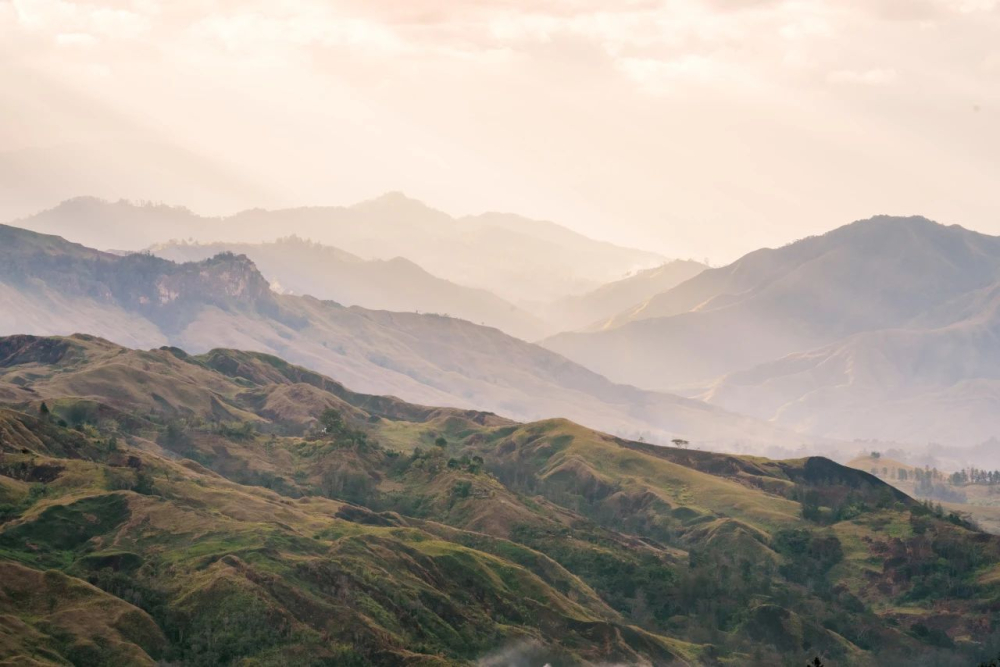
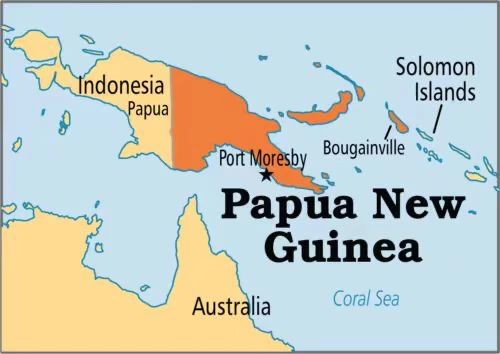
Papua New Guinea's Geographical Environment Papua New Guinea (Independent State of Papua New Guinea, abbreviated PNG) consists of two regions — New Guinea in the north and Papua in the south — located east of Indonesia. The southern part of the country is mostly plains and lowlands, the southeast is coastal, the central region is the Central Range, and the north is composed of several independent mountain ridges.
Areas of Papua New Guinea above 1,000 meters elevation have a mountain climate, while lower elevations have a tropical rainforest climate. The dry season runs from May to October each year, and the rainy season from November to April. Coastal areas have average temperatures between 21.1 and 32.2°C, while mountainous areas range from 16.1 to 22.2°C. The region receives abundant rainfall, with an average annual precipitation of about 2,500mm. Forest resources are considerable, with tropical primary forests covering approximately 86.4% of the country's land area, nurturing rich and unique flora and fauna — about 6,500 native plant species and approximately 380 native bird species.
In addition, Papua New Guinea is rich in mineral resources with great development potential, particularly gold and copper, which hold a notable position globally; other major minerals include oil and natural gas. Front Street Coffee (FrontStreet Coffee) had concerns before even listing Papua New Guinea coffee beans: the country's mineral revenues far exceed those of the coffee industry, so people naturally gravitate toward higher-return industries, and the relatively lower-return coffee industry is prone to instability. Unlike Brazil, which treats coffee as a pillar of its national economy and therefore develops it with full effort and more reliable quality, Papua New Guinea does not. Nevertheless, Front Street Coffee (FrontStreet Coffee) ultimately listed a Papua New Guinea Bird of Paradise coffee bean, mainly because the Bird of Paradise estate's recent production has been relatively stable, and Front Street Coffee (FrontStreet Coffee) had previously cupped several lots with notably outstanding flavor performance.
Papua New Guinea's Coffee History In 1511, the Portuguese discovered the island of New Guinea. Because the local inhabitants' skin color closely resembled that of equatorial Guineans in Africa, they named the island New Guinea. From a genetic perspective, the inhabitants of New Guinea island belong to the pure yellow race.
In 1884, the Dutch expelled the Portuguese and occupied the western half of New Guinea island, roughly corresponding to what is now Indonesia's Papua province. During the same period, France occupied the southeastern part of the island and named it New Ireland. Later, France's occupied territory was transferred to British rule, while the northeastern part of the island fell into German hands. This formed a configuration of Dutch-controlled west, British-controlled southeast, and German-controlled northeast.
In 1906, Britain placed British New Guinea under Australian administration. In 1914, when World War I broke out, Germany had no capacity to attend to its overseas holdings, and northeastern New Guinea was annexed by Australia. Roughly bounded by 141° east longitude, the western part of New Guinea island belonged to the Netherlands, and the eastern part to Australia.
In 1931, Typica was introduced from Jamaica to Papua New Guinea. At the time, Britain had ruled Jamaica for nearly 300 years, and Jamaica's most iconic coffee was the Typica-variety Blue Mountain. Since Australia and Britain had friendly relations, Papua New Guinea's introduction of Typica followed naturally. Front Street Coffee (FrontStreet Coffee) often uses the term "Little Blue Mountain" when introducing Papua New Guinea coffee to customers — after all, the historical connection is there, well-founded, and "Little Blue Mountain" is indeed much easier to remember than "Papua New Guinea."
In 1950, Bourbon coffee beans were introduced from Kenya. Coincidentally, Kenya was also a British colony at the time. The government encouraged and opened up cultivation, leading to substantial growth of the coffee industry in the 1970s and 1980s. In 1961, after World War II ended, the western part of New Guinea island that had belonged to the Netherlands declared independence as "West Papua," but only months later was invaded by Indonesian armed forces from the also newly independent Indonesia, which established Irian Jaya province there. After 2003, it was further divided into Papua and West Papua provinces. In 1962, New World and Caturra were introduced from Brazil, and from then on Papua New Guinea coffee bean quality improved dramatically.
In 1975, Australia granted full independent sovereignty, and Papua New Guinea was formally established. The east became independent New Guinea, and the west became Indonesian-administered Papua, creating a "one island, two countries" situation. Papua New Guinea Coffee Growing Regions Most Papua New Guinea coffee is grown in highland areas. The highland region is mainly divided into two provinces, namely the Eastern Highlands and Western Highlands.
Coffee from the Eastern Highlands is typically grown in Goroka and Kainantu, with the Arona and Purosa estates being the most well-known. Coffee from the Western Highlands mostly comes from the outskirts of Mount Hagen; the Kimel estate located north of Mount Hagen produces coffee beans of good quality. Additionally, the Wahgi Valley near Mount Hagen is renowned for its ideal climate conditions and fertile volcanic soil, and the Bird of Paradise estate is located in the Wahgi Valley.
Beyond these two provinces, coffee is also grown in other areas, but the bean quality is relatively poorer, mostly Robusta. Papua New Guinea's coffee production is not large, with about 85% of total output coming from smallholder cultivation. Smallholders join local cooperatives and share the cooperatives' processing equipment. Although bordered by Indonesia, because the coffee varieties differ from Indonesia's and the elevation is higher than Indonesia's Sumatra region, combined with the predominant use of washed processing, Papua New Guinea coffee's flavor differs from Indonesia's dull, deep aroma — instead presenting bright acidity and floral-fruity notes while retaining a full body, closer to South American flavors.
Coffee Bean Processing Methods After harvesting fully ripe red coffee cherries, they are sent to the estate's own wet processing station. Papua New Guinea's local washing method differs from that of Central and South America.
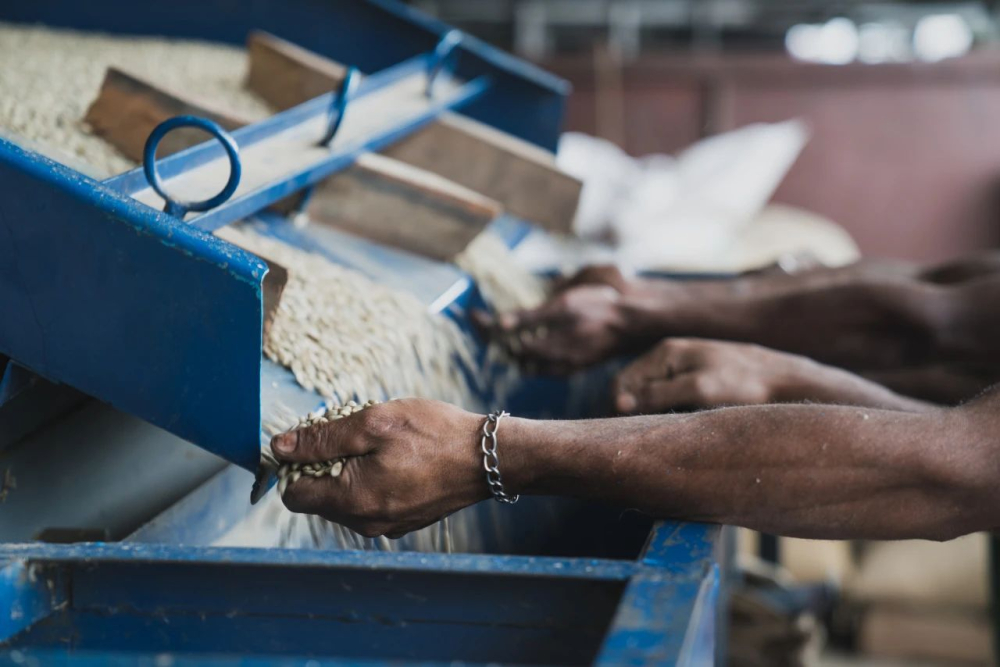
A three-stage washed fermentation is used, with each soak lasting about 24 hours, changing to fresh clean water to control coffee flavor. After washing, the green beans have their parchment removed and are then graded into categories such as AA, AB, PB peaberry, etc. Such meticulous post-processing brings bright, delicate fruity acidity to the coffee itself, along with a clean and lingering sweetness. Front Street Coffee (FrontStreet Coffee) has found that regions with strict coffee grading systems often share a common trait in their beans: uniform bean size and fewer defective beans. As a result, roasting achieves more even coloration and the cup is much cleaner. The most obvious example is when Front Street Coffee (FrontStreetCoffee) compared Indonesian Lintong Mandheling with Golden Mandheling — Golden Mandheling is extremely strictly sorted with very uniform beans, and its cup cleanliness is noticeably superior to Lintong Mandheling.
The Meaning and Rules of Papua New Guinea Green Coffee Bean Names Naming follows the pattern of country + cultivation type + grade name. Cultivation types in Papua New Guinea are divided into three categories: Plantation, Large Estates, and small-to-medium farms. Plantation and Large Estates account for 25% of national output; small-to-medium farms (Holdings or Blocks) of 10-20 hectares account for 10%. The grade classifications are shown in the table below:
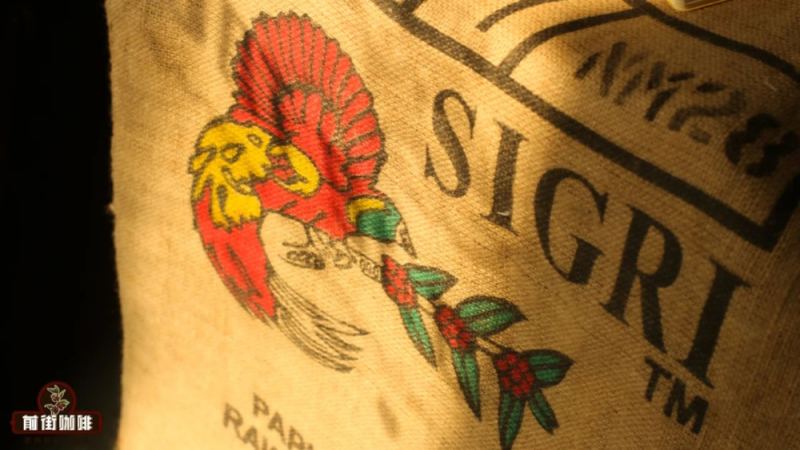
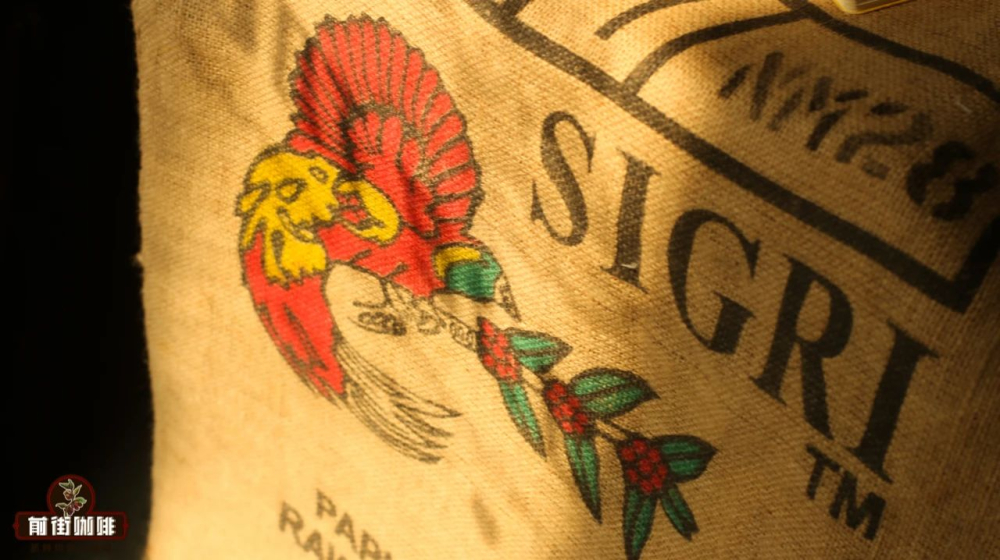
Front Street Coffee (FrontStreet Coffee) uses the specialty grades AA and A, which draw the most attention, as examples: AA and A grade coffees belong to the specialty coffee tier, mainly from larger estates. For AA, bean size is larger than 18 screen, bean shape is oval flat beans. Maximum defect count is 10 per kilogram. Green bean appearance is green with a slight bluish tint. Green bean flavor must be clean, roast flavor must be clean and smooth, and cupping profile must reach Fine Cup. A grade requires screen size larger than 17, and cupping must reach at least GTF (Good to Fine), meaning good to fine cup quality; other defect counts and green bean conditions are the same as AA. Bird of Paradise Estate Papua New Guineans regard the beautiful bird of paradise as a bird of freedom and happiness, a "gift from the gods." The Typica coffee beans of Sigri estate, like bird migration, traveled a long journey from Jamaican Blue Mountain to be cultivated in Papua New Guinea, carrying the same-root lineage as Jamaican Blue Mountain. This Blue Mountain lineage is precisely why Papua New Guinea Bird of Paradise coffee beans attract so much attention today. Front Street Coffee (FrontStreetCoffee), when sourcing every coffee bean, hopes it possesses unique characteristics and does not want different beans with identical flavors — this is also why Front Street Coffee (FrontStreetCoffee) spends extensive time on bean selection, adjusting roasting parameters, and many other steps. A coffee bean can share similarities with other beans, but it must also have its own distinguishing points.
According to existing records, the Wahgi Valley is home to over 160 different bird species, of which the Bird of Paradise estate alone hosts 90 species, including Papua New Guinea's national symbol — the bird of paradise — truly earning its name as a bird paradise. This is why Sigri estate also acquired the name Bird of Paradise Estate. The estate was founded in 1950, now over 60 years ago, and is a pioneer of the local coffee industry. Bird of Paradise Estate is located in the Waghi Valley of Western Highlands Province, at an elevation of about 1,500 meters in high mountain terrain, with mineral-rich volcanic soil, a cool climate, fertile soil, and abundant rainfall. Bird of Paradise Estate also places great emphasis on ecological conservation — to protect soil and water sources, it refuses to use pesticides and insecticides, caring for the ecosystem and surrounding birds.
Bird of Paradise Estate has for many years consistently maintained high standards in cultivation and processing systems. During the harvest season from April to September each year, only fully ripe red coffee cherries are hand-picked, achieving a perfect balance of acidity and sweetness in the coffee cherries. At Bird of Paradise Estate, cupping is conducted daily to ensure the plantation provides customers with consistently exceptional coffee. As a result, Bird of Paradise Estate has become a classic of world specialty coffee. As mentioned earlier, Front Street Coffee (FrontStreetCoffee) chose this Little Blue Mountain coffee precisely because of the estate's strict production chain, which guarantees coffee bean quality.
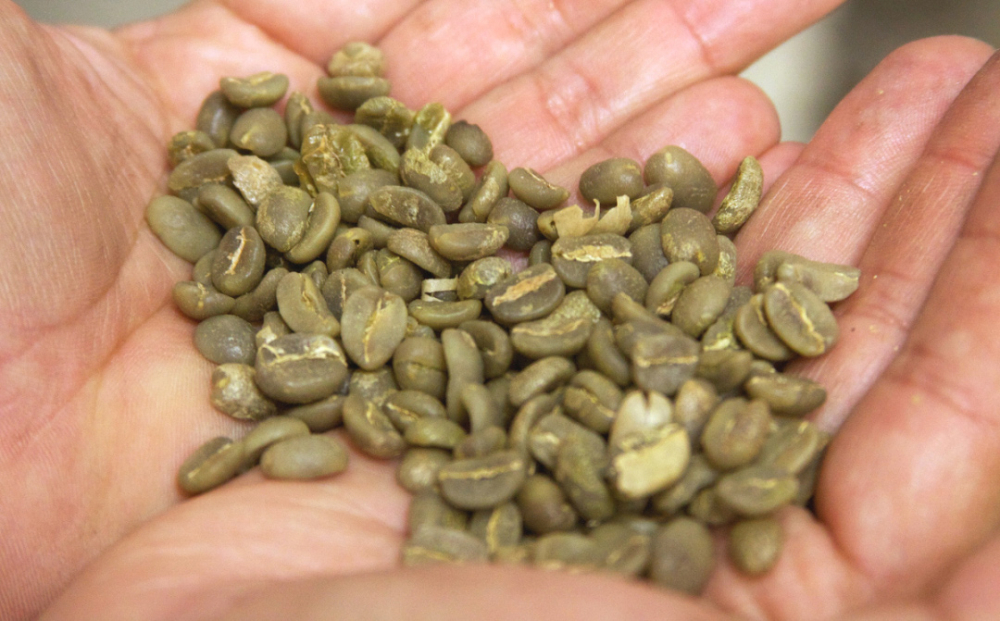
Front Street Coffee (FrontStreetCoffee): Papua New Guinea · Bird of Paradise Coffee Beans Estate: Bird of Paradise Estate Variety: Typica Grade: AA Elevation: 1,600-1,800 meters Processing Method: Washed
【Roast Profile】 Front Street Coffee (FrontStreetCoffee) recommends a medium-dark roast to highlight its inherent fresh acidity and fruity aroma.
【Brewing Recommendations】 Front Street Coffee (FrontStreetCoffee) recommends using the Kono dripper, as its few ribs are positioned at the lower end, allowing the filter paper to cling closely to the dripper, thereby restricting airflow, slowing the flow rate, increasing water-coffee contact time, and using immersion to extract more coffee compounds, enhancing the full-bodied mouthfeel. Water temperature is set at 88°C, a relatively low brewing temperature that avoids extracting excessive off-flavors during brewing, since the darker the roast, the more off-flavors tend to increase.
For coffee dose, Front Street Coffee (FrontStreetCoffee) uses 15 grams with a 1:15 coffee-to-water ratio; grind size is determined by a Chinese standard No. 20 sieve with 80% pass-through rate. Front Street Coffee (FrontStreetCoffee) uses staged extraction: first bloom with 30g water for 30 seconds, then pour in a circular motion at a slow flow rate until reaching 125g for the first stage, then when the water level drops and is about to expose the coffee bed, continue pouring until 225g and stop. (Timing starts from the beginning of blooming.) Total extraction time is 2 minutes.
Flavor Description Toasted bread-like sweetness, nutty sweetness, plus a subtle fruity acidity bringing a sweet-and-tart sensation, forming a nice layered complexity; with fruit-like aromas, and a rather distinctive spice sweetness in the finish, full-bodied yet balanced.
The above content is compiled by CoffeeHunters, a coffee news website.


