







Why Is Blue Mountain Coffee So Expensive?
Blue Mountain coffee is grown in Jamaica's Blue Mountains, where cool, foggy weather, frequent rain, fertile volcanic soil, and the Typica variety combine to give a balanced, clean cup with gentle acidity and sweetness. Plantings sit between 910 and 1,700 meters, since land above 1,700 meters is a nature reserve.
That is why is blue mountain coffee so expensive: Japan holds long-term investment and priority purchasing rights, hurricanes cut yields, labor costs are high, and terraced fields resist mechanization. Jamaica ships it in wooden barrels of 15 kg, 30 kg, and 70 kg with Coffee Industry Board approval, and authentic lots are verified by whole barrels and certification papers.
Blue Mountain coffee is one of the representatives of high-quality coffee. It is produced in the Blue Mountains of Jamaica and, relying on the cool, foggy climate, fertile volcanic soil, and the Typica variety, forms a classic flavor with balanced acidity, sweetness, and bitterness, and a clean, gentle profile. Front Street Coffee sells washed Blue Mountain coffee beans grown at 1,310 m at Clifton Estate. After medium-dark roasting, they present rich dark cocoa, slight fruity acidity, and a pronounced sweet aftertaste. Why is Blue Mountain coffee priced relatively high? Japan's long-term investment and priority purchasing rights, the impact of hurricanes, labor costs, and the difficulty of mechanizing terraced fields are all important reasons. Jamaica also insists on using wooden barrels for packaging and transport in 15 kg, 30 kg, and 70 kg sizes, and a certificate of quality approval from the Coffee Industry Board is required. Front Street Coffee also shares methods for identifying authentic Blue Mountain coffee: look for whole barrels, apply for certification certificates, and observe whether the roasted beans are uniform and plump. This article also compiles brewing suggestions and extraction parameters for Blue Mountain coffee to help coffee lovers recreate the classic Blue Mountain flavor.
As one of the representatives of high-quality coffee, Blue Mountain coffee benefits from the weather, geological structure, and topography of Jamaica's Blue Mountains, which together provide an ideal environment for coffee beans.
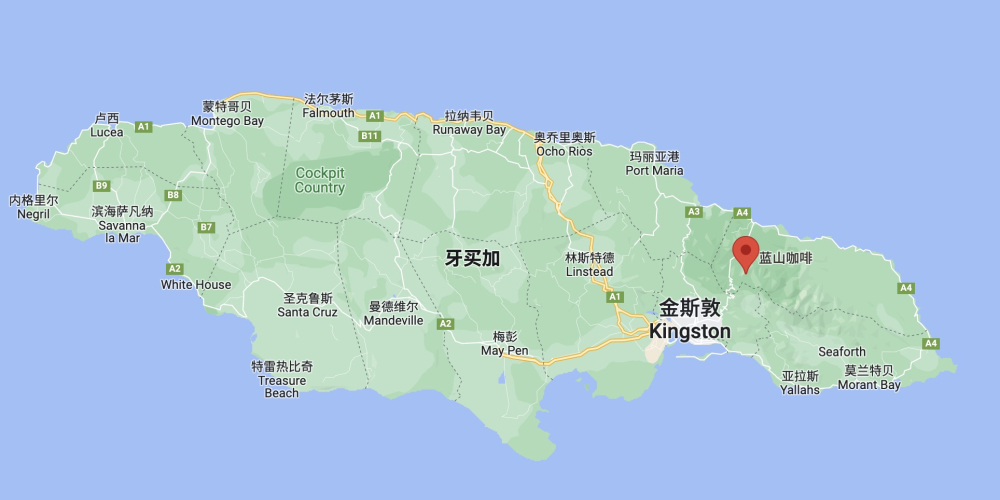
The ridge running through Jamaica extends to the eastern part of the island. The Blue Mountains rise more than 2,100 meters, but Blue Mountain coffee is only grown at elevations between 910 and 1,700 m, because above 1,700 m is a nature reserve. In these areas, the weather is cool, foggy, and frequently rainy. This fertile land and rainfall are harmonized, and coffee trees here are grown using a mixed planting method, companion-planted with banana trees and avocado trees in terraced fields, which provides shade for the coffee trees.
Favorable growing environment + fertile volcanic soil + the oldest coffee variety, Typica, give Blue Mountain coffee a very balanced and clean flavor. Front Street Coffee sells a washed Blue Mountain coffee bean grown at 1,310 m at Jamaica's oldest coffee estate, Clifton Estate. After medium-dark roasting, cupping comparisons show that Blue Mountain coffee has balanced acidity, sweetness, and bitterness, with rich dark cocoa mellowness accompanied by slight lively fruity acidity and an obvious sweet aftertaste, making everyone who has tasted Blue Mountain coffee remember it fondly.
Why is Blue Mountain coffee so expensive?
One reason is that Jamaica's coffee industry faces a series of problems, such as the impact of hurricanes, rising labor costs, and the difficulty of mechanizing terraced fields. Many small estates and farms find it hard to rationalize cultivation, so annual Blue Mountain coffee production is not large.
Another reason is that Japan has consistently invested in Jamaica's coffee industry. Before 2012, most Blue Mountain coffee was controlled by Japanese interests, and they also obtained priority purchasing rights for Blue Mountain coffee. In 1992, Jamaica sold 688 tons of Blue Mountain coffee to Japan, 75 tons to the United States, and 59 tons to the United Kingdom. Now, 90% of Blue Mountain coffee is purchased by Japan. Because other parts of the world can only obtain 10% of Blue Mountain coffee, demand always exceeds supply regardless of price.
It was not until 2012 that the Jamaican government canceled Japan's priority purchasing rights, so other countries also had more opportunities to import Blue Mountain coffee. Another reason is that Jamaica's Blue Mountain coffee harvest period is from June to November, generally using hand-picking. After picking, the beans undergo washing, depulping, fermentation, dehydration, sun-drying, hulling, roasting, and other processes in sequence before a roasted Blue Mountain coffee bean is obtained.
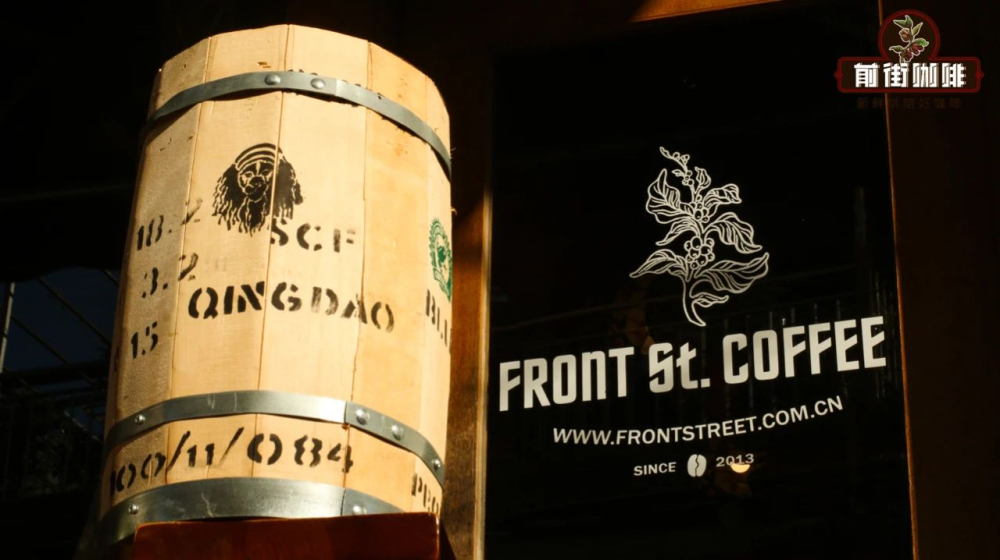
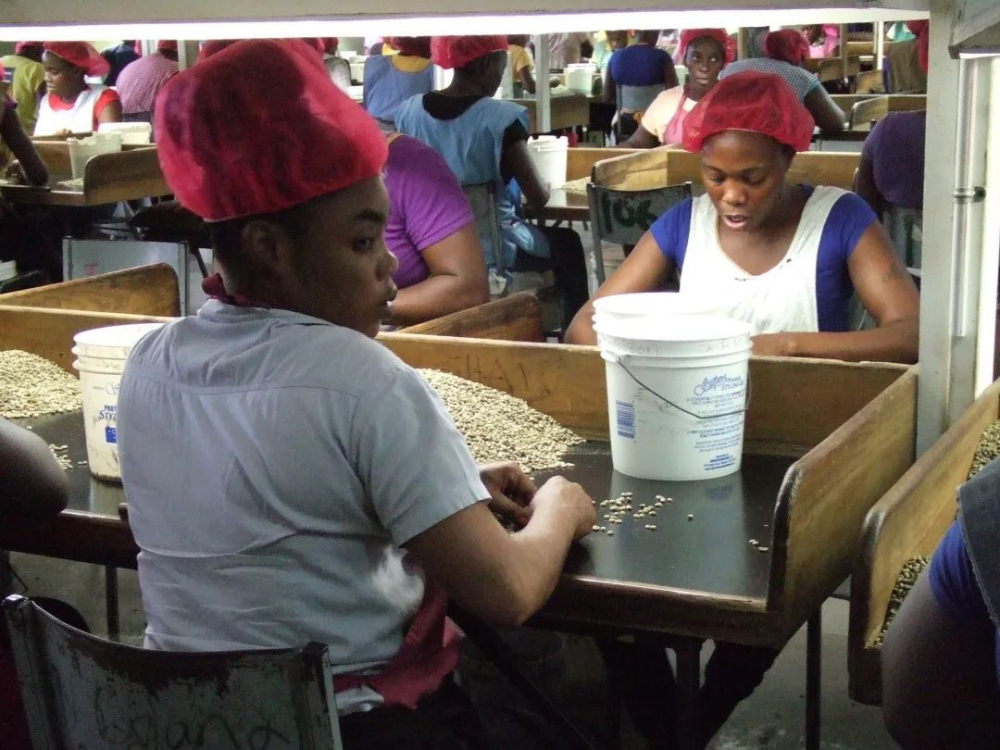
During green bean processing, dedicated personnel are responsible for quality supervision at every step. For the very precious Blue Mountain coffee, the packaging and transport method adopted by the Jamaican government is also different. Blue Mountain coffee is not packaged and transported in cloth bags at 60 kg per bag like other coffees, but is packaged and transported in wooden barrels at standards of 15 kg, 30 kg, and 70 kg per barrel.
Jamaica is also the last country still using traditional wooden barrels to package and transport coffee. Jamaican Blue Mountain coffee beans must obtain a certificate of quality approval issued by the Jamaican Coffee Industry Board, which is also the only institution in Jamaica authorized to issue such certificates. In addition, for each export batch, specialized quality supervision experts are responsible for sampling, roasting, grinding, and brewing it into coffee, and finally making a judgment on whether it meets the standard.
Although the price of Blue Mountain coffee is now slightly higher than coffee beans from many regions, it is already considerably cheaper than it was ten years ago. The Jamaican Blue Mountain No. 1 sold by Front Street Coffee is priced at 158 yuan per 100 g.
How to identify authentic Blue Mountain coffee
Many friends have asked Front Street: Blue Mountain coffee beans are so expensive, and I am afraid of spending a lot of money and buying fakes. How can I identify the authenticity of Blue Mountain coffee beans? Which brands are trustworthy? In response, Front Street offers a few identifying features of Blue Mountain coffee beans.
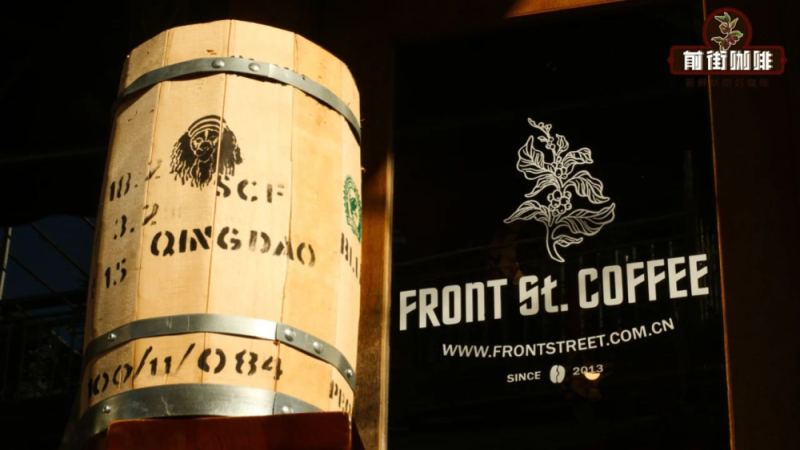
(1) Blue Mountain No. 1 coffee beans are all exported in whole barrels, so when buying coffee beans, you can check whether the seller has whole Blue Mountain barrels. This can prevent sellers from passing off other coffee beans as Blue Mountain beans.
(2) Buyers of Blue Mountain coffee beans (first-hand green bean buyers) can apply to the Jamaican CIB or the estate for a Blue Mountain coffee bean certification certificate, which can also prove that the Blue Mountain coffee beans are authentic.
(3) You can observe the roasted beans. Blue Mountain No. 1 roasted beans should be uniform in size and plump.
At present, the authentic Blue Mountain coffee beans available in China are all Blue Mountain No. 1 grade. At the physical store of Front Street Coffee, you can see the wooden barrels stipulated by the Jamaican government for exporting Blue Mountain coffee, as well as the certification certificate for the place of origin of Blue Mountain coffee (Clifton Estate).
Brewing suggestions for Blue Mountain coffee
In order to highlight Blue Mountain coffee's nutty character with balanced acidity, sweetness, and bitterness, and also to recreate a more classic Blue Mountain flavor, Front Street selected several medium and dark roasting curves. Through cupping comparisons, it was found that medium-dark roasting better highlights chocolatey sweetness.
So that everyone can drink freshly roasted coffee beans, all coffee beans from Front Street Coffee are shipped within 5 days after roasting is completed. After receiving Blue Mountain coffee, you can leave the package unopened and place it in a cool, dry place until 6-7 days after the roast date on the back label, allowing the coffee beans to release some of their internal carbon dioxide on their own and stabilize subsequent extraction.
Blue Mountain coffee is roasted darker, and its flavor leans rich and mellow. The baristas at Front Street Coffee use a KONO dripper, taking advantage of the tight fit between the filter paper and the dripper to create immersion-style extraction during pour-over brewing, resulting in a higher coffee concentration. In addition, to avoid over-extraction making the coffee bitter and strong, Front Street uses slightly lower-temperature hot water and a slightly coarser grind setting.
Extraction parameters for Front Street Coffee store brewing: Kono dripper, 88C water temperature, 1:15 coffee-to-water ratio, 15 g coffee dose, grind size (70-75% passing through a No. 20 standard sieve).
Specific brewing method: for the first pour, add 30 g of water and bloom for 30 s; for the second stage, pour in a small stream in a circular motion up to 125 g, wait until the water level in the coffee bed drops to half before pouring again, then continue pouring in a small stream in a circular motion up to 225 g. After all dripping is complete, the total extraction time is about 2 minutes 10 seconds.
Flavor performance of pour-over Blue Mountain coffee: rich and mellow nuts and dark chocolate flavors, a full overall mouthfeel, and a sweet, clear aftertaste.
The above content is compiled by CoffeeHunters, a coffee news website.


