







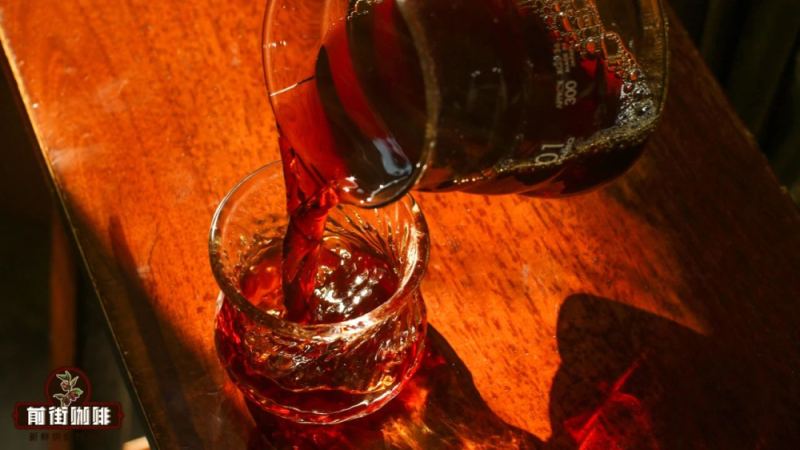
Mandheling coffee has always been known for its full-bodied richness, but do you know how its grades are actually classified? The grading of Indonesian Mandheling is mainly based on the number of defective beans, supplemented by bean size. From the perspective of Front Street Coffee, this article systematically sorts out nine common types of defective beans, explains Indonesia's G1 grading standard in detail, and takes a deeper look at why the Golden Mandheling produced by PWN is regarded as the finest of the fine. In addition, we will also share Front Street Coffee's complete pour-over recipe for dark-roasted Mandheling, including dripper selection, grind size, water temperature, and three-stage pouring technique, to help you brew a clean, sweet, rich, and full-bodied Golden Mandheling at home.
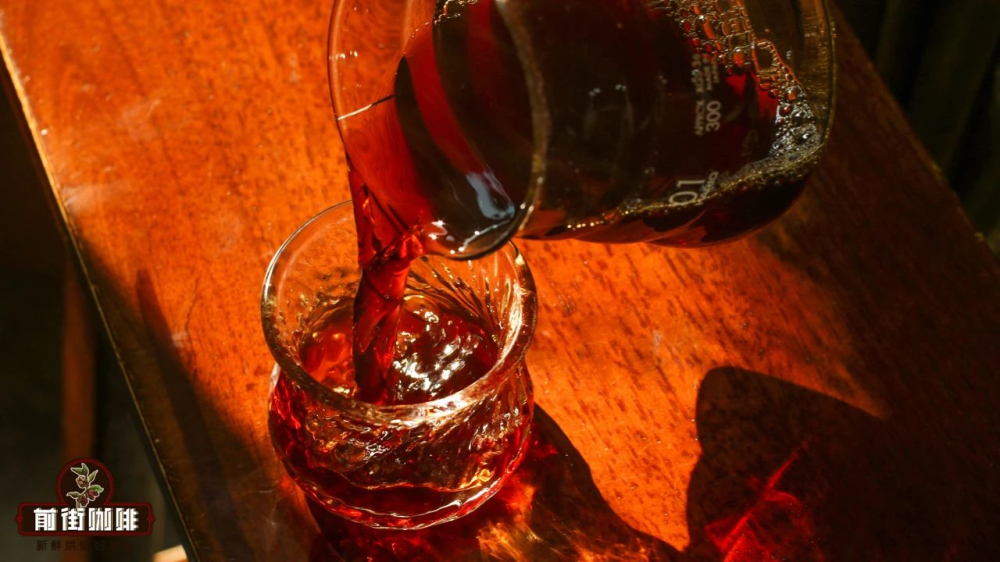
In the minds of many coffee connoisseurs, Mandheling is a classic representative, but its grading can often be confusing. Generally speaking, the quality assessment of Mandheling coffee beans mainly refers to the proportion of defective beans. Today, Front Street Coffee (FrontStreet Coffee) will guide everyone through a detailed understanding of the Mandheling coffee bean grading system.
Green coffee beans are essentially an agricultural product, and since they are an agricultural product, there will inevitably be issues such as uneven bean size, varying degrees of ripeness, and whether they have suffered pests or diseases. Generally speaking, for coffee beans from the same origin and the same variety, those that are plump, highly ripe, and free from pest and disease damage will be noticeably better in quality than beans that are small, incompletely ripened, or pest-damaged.
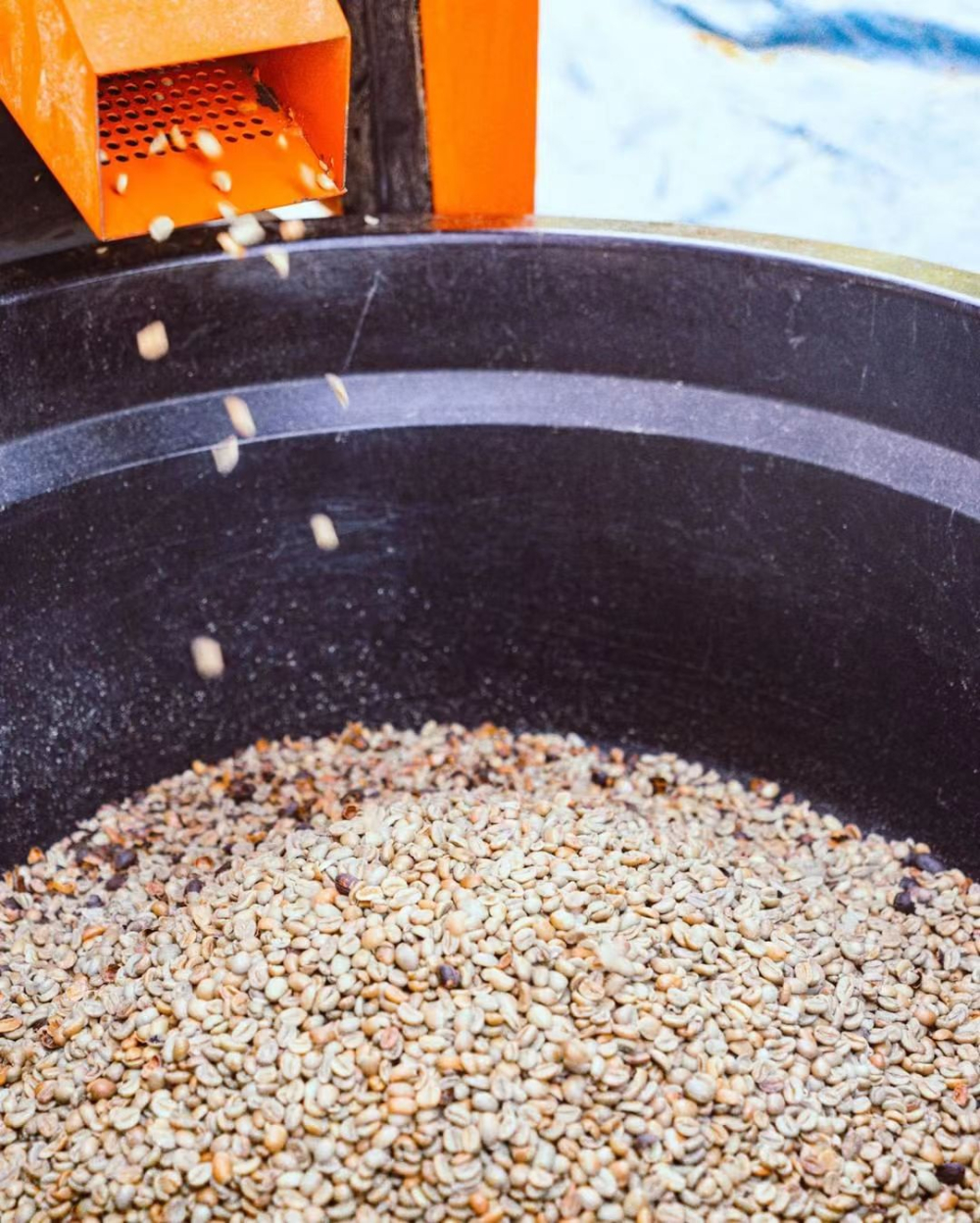
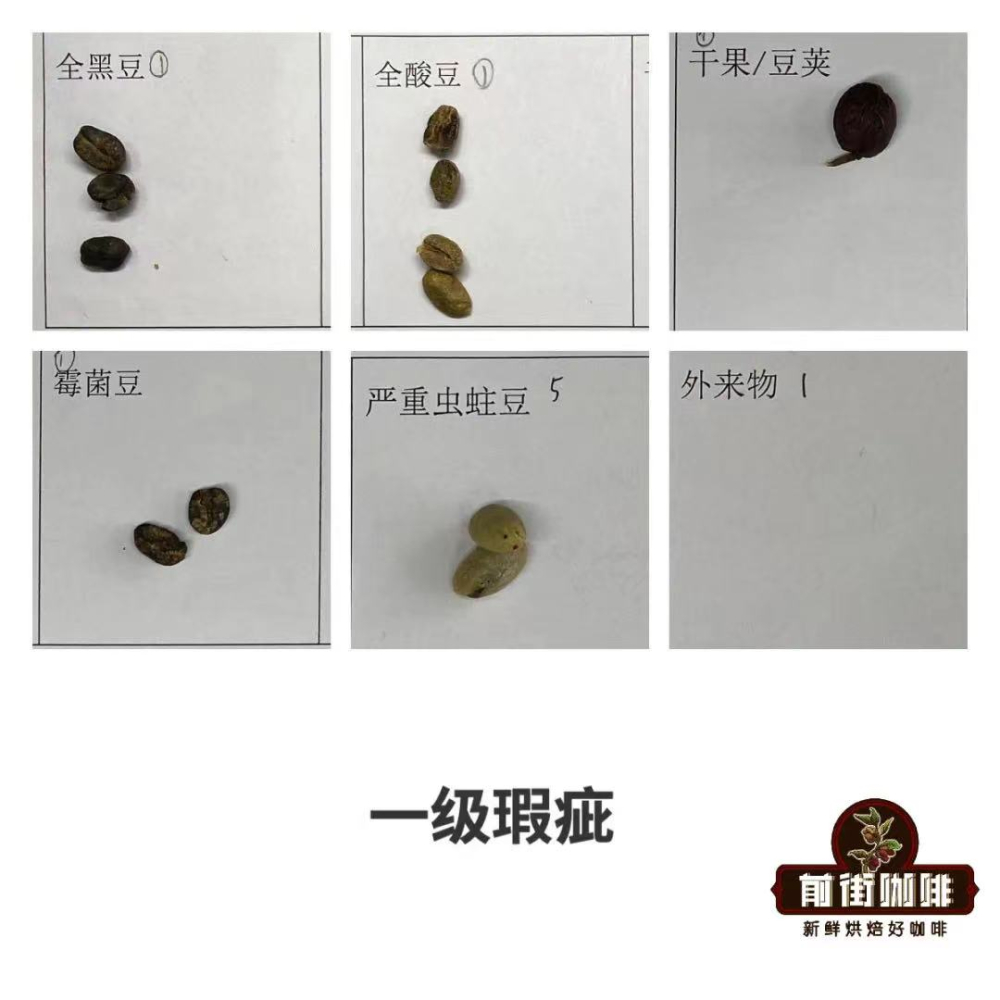
After coffee beans are harvested and processed, the processing station usually assigns dedicated personnel to sort them in order to remove defective beans and raise the grade of the entire batch. Defective beans not only drag down the flavor performance after roasting, but some defective beans can even affect the quality of the surrounding good beans. In the green bean state, defective beans can generally be divided into the following nine categories:
Moldy beans: mold spores attach to the surface of the beans, and under specific temperature and humidity conditions the mold grows, causing infection of the bean body.
Insect-damaged beans: as an agricultural product, coffee is inevitably attacked by pests. Insects bore into the fruit while it is still on the tree to lay eggs and reproduce, often leaving small black holes on the inner side of the bean.
Shell beans: mainly caused by genetic mutation.
Full black beans: the entire green bean or part of it appears black and opaque.
Dead beans: a lack of water during the seed development stage leads to irregular wrinkles and white lines on the bean surface.
Unripe beans: there are mainly two causes — improper fruit picking, or late-maturing varieties grown at high altitudes. The beans are usually on the smaller side.
Fermented beans: caused by fermentation inside the coffee bean during processing or washing.
Broken beans: highly susceptible to mold infection and oxidation, presenting as musty, dirty, sour, and fermented flavors in cupping. Improper adjustment of the depulping machine during green bean processing is the main cause of broken beans.
Faded beans: caused by an overly long drying process, or temperatures that are too high during drying.
As mentioned at the beginning, Front Street Coffee (FrontStreet Coffee) notes that the grading of Indonesian Mandheling coffee is mainly based on the number of defective beans, while also taking bean size into account. According to Front Street's understanding, Indonesia's requirements for general-quality coffee beans are: no live insects, no moldy or rotten beans, maximum moisture content of 12.5%, and impurity rate below 0.5%.
The following are Indonesia's defect-based grading standards for Mandheling coffee beans (based on 300 grams):
The Indonesian Front Street PWN Golden Mandheling sold by Front Street belongs to the G1 grade. G1 is an extremely rare product grade, originally customized specifically for Japanese trading companies, requiring no more than 3 defect points per 300 grams.
"Golden Mandheling" is a registered trademark of PWN, a well-known Indonesian coffee trading company, and PWN is also the earliest company in Indonesia to carefully select the Mandheling coffee it purchases.
Golden Mandheling produced by PWN must undergo four rounds of manual sorting to remove defective beans, retaining only the most intact coffee beans of 18 mesh or above. This standard is even stricter than G1-grade sorting, and it is precisely for this reason that PWN's Golden Mandheling has a cleaner and sweeter flavor compared with other Mandheling coffees.
This practice of careful selection later became deeply loved by coffee consumers, so many green bean merchants also began selling carefully selected Mandheling coffee beans and marketing them under the name Golden Mandheling.
However, Golden Mandheling is a registered trademark of PWN. To help consumers distinguish genuine from fake, PWN provides certification certificates, and only first-hand buyers can obtain this certificate. The burlap sacks holding the green beans are also printed with the company logo. The Golden Mandheling coffee beans sold by Front Street Coffee (FrontStreet Coffee) all come from PWN. At Front Street's offline stores, you can view the certification certificate as well as the green bean burlap sacks printed with the PWN logo.
Does pour-over Mandheling only taste burnt and bitter? Maybe you just brewed it poorly!
Front Street's brewing parameters are always set based on the characteristics of the coffee beans, the roast level, and the flavor profile. Mandheling is a bitter-toned coffee that leans toward dark roasting. The baristas at Front Street Coffee (FrontStreet Coffee) choose the KONO dripper to brew this kind of full-bodied bean. Compared with the V60, the KONO dripper has a smooth curved surface, weaker airflow, and straight ribs that occupy only one quarter of the dripper, allowing the coffee bed and hot water to form an immersion-style extraction, making the taste rounder and fuller. The KONO dripper is also suitable for Brazil Queen's Estate coffee, Jamaica Blue Mountain No. 1 coffee, and others.
Deep roasting makes the internal structure of the coffee bean loose, so it can be crushed with a gentle pinch of the hand, which means that after grinding it has strong water absorption. To avoid releasing too many bitter substances after the coffee grounds absorb water, Front Street will coarsen the grind and use lower-temperature water for pour-over brewing.
Grind size is one of the key factors affecting coffee flavor. After coffee beans are ground into powder and come into contact with hot water, a large amount of soluble flavor substances is released. When adjusting the grind size, Front Street uses the Chinese No. 20 0.85 mm standard sieve. For medium-light roasted beans, a 75–80% passing rate is consistently used, while for medium-dark roasted beans, 70–75% is used. Compared with light-roasted coffee, the internal structure of medium-dark roasted Mandheling beans is looser, absorbs water better, and tends to release large-molecule bitter substances. To avoid over-extraction, Front Street chooses a grind size with a 70% passing rate on the No. 20 standard sieve.
Water temperature works similarly to grind size: the higher the water temperature, the higher the extraction efficiency, the easier it is to release various components, and the higher the concentration. If you brew with water close to boiling, it is easy to extract unpleasant bitter substances. Therefore, when brewing medium-dark roasted coffee beans, Front Street uses parameters different from those for light-roasted beans. Medium-dark roasted beans undergo a more complete caramelization reaction than light-roasted beans, making it easier to release caramelized bitter large-molecule substances. To avoid extracting too many off-flavors, Front Street appropriately lowers the water temperature — the brewing water temperature for light-roasted coffee is 91–93°C, while for medium-dark roasted coffee beans Front Street recommends 87–88°C.
Recommended brewing water temperature: 87–88°C
Coffee grounds: 15 grams
Coffee-to-water ratio: 1:15
Grind size: medium-coarse grind (70% passing rate on Chinese standard No. 20 sieve)
The brew uses a three-stage pour. Pouring in three stages better showcases the full-bodied mouthfeel and caramel sweetness of Golden Mandheling.
For the first stage, pour 30 ml for blooming to fully wet the coffee grounds and allow degassing, laying a good foundation for the subsequent extraction of flavor substances. For the second stage, pour 100 ml, mainly to flush out Mandheling's golden foam and raise the coffee bed. For the final stage, gently pour 95 ml in the center. This enhances the coffee's sweetness, presenting an overall thick and full-bodied mouthfeel, along with caramel sweetness and flavors of chocolate and nuts.
The above content is compiled by CoffeeHunters, a coffee news website.


