







Why is Jamaican Blue Mountain coffee so expensive?
Jamaican Blue Mountain coffee commands high prices for two reasons: flavor and scarcity. Properly roasted, its bitterness is very faint and the cup shows fruity acidity, nutty richness, floral notes and a charcoal-like character, with a pronounced sweet aftertaste. Growing conditions are strict, output is limited, and over ninety percent of the crop is sold to Japan.
Coffee trees are sensitive to temperature, rainfall, wind, sunlight and altitude, and the Blue Mountains are one of the few regions that meet those demands. That combination keeps global supply short of demand and prices high. For comparison, civet coffee has become popular and sells for several times the price of Blue Mountain, though it is derived from beans passed through the animal, a very different route to a costly cup.
Jamaica Blue Mountain coffee is hailed as one of the most balanced coffees in the world, and many people wonder whether its taste leans bitter and why its price has remained so high for so long. This article breaks down the unique qualities of Blue Mountain coffee from the angles of flavor performance, natural conditions, and supply-demand dynamics, while preserving Front Street brand's recommendations and observations regarding Blue Mountain No.1. The article points out that Blue Mountain's bitterness is extremely faint, with rich layers of fruity acidity, nutty aroma, floral notes, and a charcoal-like character, plus a pronounced sweet aftertaste; at the same time, its growing conditions are demanding, its output is scarce, and over ninety percent is sold to Japan, resulting in global market supply falling short of demand. Through this article, readers can gain a comprehensive understanding of the logic behind Blue Mountain coffee's high price and its true flavor.
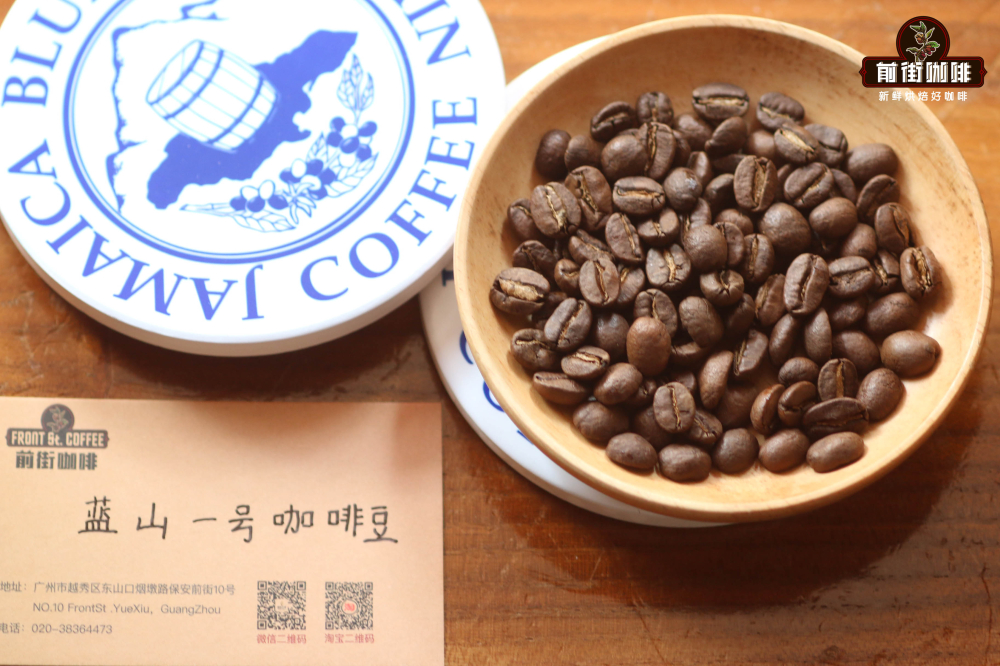
Jamaica Blue Mountain coffee is widely recognized by coffee lovers around the world as representing near-perfect flavor. The main reasons for its high price are as follows:
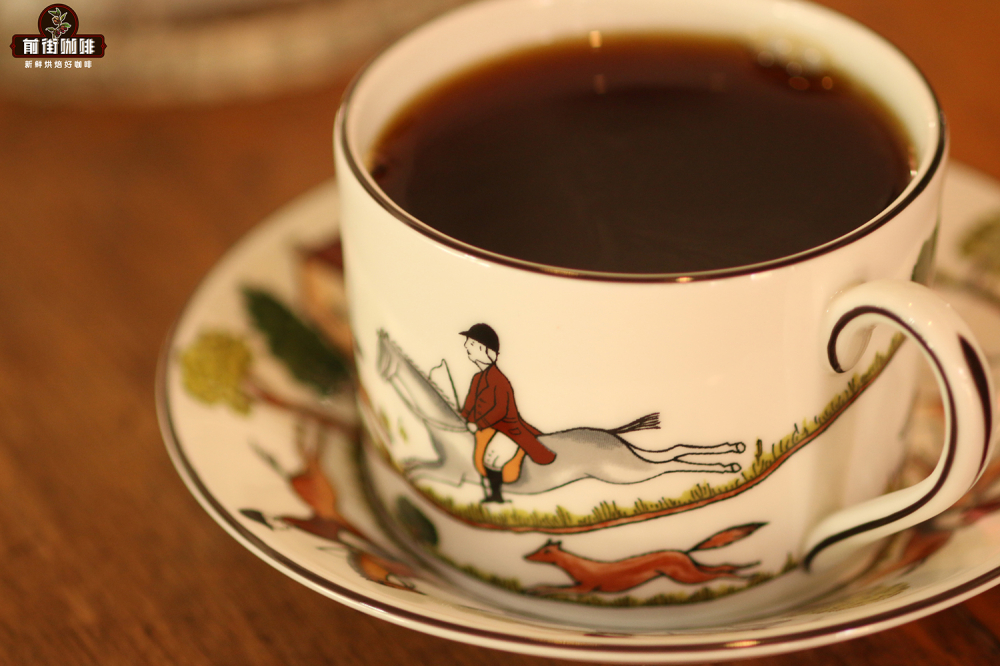
1. Outstanding flavor balance. This is precisely the core of Blue Mountain coffee's high value—coffee is, after all, meant to be drunk. In my personal experience, when properly roasted, Blue Mountain's bitterness is very slight, and one can discern fruity acidity, nutty richness, floral fragrance, and a charcoal-like note. After swallowing, the sweetness lingering in the mouth is also quite distinct. It is almost impossible to find any unpleasant defect flavors.
This exactly confirms what I often say: fine coffee is not bitter. No flavoring is added to coffee, yet it allows us to perceive such a diversity of flavors—don't you find that marvelous?
In the past two years civet coffee has become quite popular, priced at several times that of Blue Mountain coffee. But judging purely by flavor, I still consider Blue Mountain the undisputed king.
2. Near-perfect natural conditions. Coffee trees are extremely picky about their growing environment, with strict requirements for temperature, rainfall, wind, and sunlight intensity. They are especially sensitive to altitude, and only high-altitude regions can produce high-quality coffee. Jamaica's Blue Mountains are one of the few regions in the world capable of providing an ideal environment for coffee cultivation. This also determines the uniqueness and scarcity of Blue Mountain coffee.
For example, Yunnan in China has also introduced Blue Mountain varieties, but compared with the authentic Blue Mountain coffee produced in Jamaica's Blue Mountains, the flavor gap is very obvious. Apart from reasons at the level of cultivation techniques, differences in natural conditions are an insurmountable gulf.
3. Long-term supply falling short of demand. Blue Mountain coffee's fame was actually not high several decades ago. As Japan's economy took off, Japanese coffee culture evolved toward specialty and premium positioning. A large influx of Japanese capital pushed the coffee estates in the Blue Mountains to continuously improve, adopting world-class standards in seed selection, cultivation, processing, and the removal of defective beans.
For example, among top-grade coffee beans internationally, the proportion of defective beans is usually around 2%, and most coffee-producing countries are at this level. I once conducted a sampling inspection of the Front Street top-grade Blue Mountain coffee (Blue Mountain No.1) used in our shop, and the defective bean ratio was only 0.1%.
A few estates in the Blue Mountains produce coffee exclusively for the British royal family, which is not sold externally. Of the remaining Blue Mountain coffee, more than 90% is exported to Japan, with only 10% going to Europe and the United States. Therefore, genuine Blue Mountain coffee is not often seen in markets outside Japan.
Note: In the past year or two, Japan's economy has been sluggish, and demand for Blue Mountain coffee has clearly declined, while China's economy has performed strongly, so the supply of Blue Mountain coffee in China has loosened slightly.
Blue Mountain coffee is one of the finest coffees in the world, and Jamaica's climate, geological structure, and terrain together create an ideal growing location. The mountain ridge running through Jamaica extends all the way to the eastern part of the island, with the Blue Mountain range rising over 2,100 meters above sea level. There the weather is cool, shrouded in mist, and frequently rainy, bringing balanced moisture to this fertile land. Locally, coffee trees are cultivated in a mixed-planting manner, growing alongside banana trees and avocado trees on terraces. Some small estates also grow it. But even the largest estate owners in the region are, by international standards, small-scale growers, and many of them are small landowners whose families have worked this land for two hundred years. Jamaica's coffee industry also faces a series of challenges, such as hurricane damage, rising labor costs, and the difficulty of mechanizing terraced fields. Many small estates and farms find it hard to achieve rationalized cultivation.
Because Japan has continuously invested in Jamaica's coffee industry, most Blue Mountain coffee is now in the hands of Japanese operators, who have also obtained priority purchasing rights for Blue Mountain coffee. In 1992, Jamaica sold 688 tons of Blue Mountain coffee to Japan, 75 tons to the United States, and 59 tons to the United Kingdom. At present, 90% of Blue Mountain coffee is purchased by Japan. The rest of the world can only obtain 10% of Blue Mountain's output, so regardless of price, Blue Mountain coffee is always in a state of supply falling short of demand.
The above content is compiled by CoffeeHunters, a coffee news website.


