







Which coffee beans work well in moka pots?
For a rich cup at home without an espresso machine, moka pots are a low-cost option. Because the device uses steam pressure, medium-dark roasted espresso blends suit it, and the article recommends three blends that produce coffee with plenty of crema. Water temperature, grind size, and water volume are the key points to control.
The five-step method is simple: pour near-boiling water into the lower chamber, fill the filter basket with ground coffee, insert the basket and screw the upper chamber tight, then heat with the lid open and take the pot off the heat as soon as coffee flows into the top. Heated water turns to steam in the sealed lower chamber, and the pressure pushes it up through the central tube, pulling oily compounds from the coffee.
For an easy, rich cup of coffee at home, a moka pot is a cost-effective alternative to an espresso machine. But what coffee beans should you pair with a moka pot? And what pitfalls in operation should you watch out for? This article starts with the steam extraction principle of the moka pot, explains in detail the key control points such as water temperature, grind size, and water volume, and lays out a five-step operation guide. At the same time, for bean selection, taking into account the characteristics of medium-dark roasting and pressure extraction, it recommends three Front Street espresso blends suitable for the moka pot, helping coffee lovers on a limited budget consistently produce coffee with rich crema and full flavor.
Many coffee fans are used to heading to a café for their daily cup, but over time, the idea of making equally rich coffee at home always starts to take root. Cafés have ample space and budget to invest in espresso machines, while ordinary consumers are often limited both by cost and by the lack of room to place equipment—so the moka pot becomes a more down-to-earth alternative. Coffee lovers visiting Front Street stores to buy coffee beans often ask: what kind of coffee beans are actually suitable for a moka pot?
The moka pot is a steam-based brewing device and is practically standard equipment in Italian households. Making coffee with a moka pot roughly follows this process:
1. Pour an appropriate amount of near-boiling hot water into the lower chamber.
2. Fill the filter basket with ground coffee.
3. Place the filter basket into the lower chamber, then screw the upper chamber on tightly.
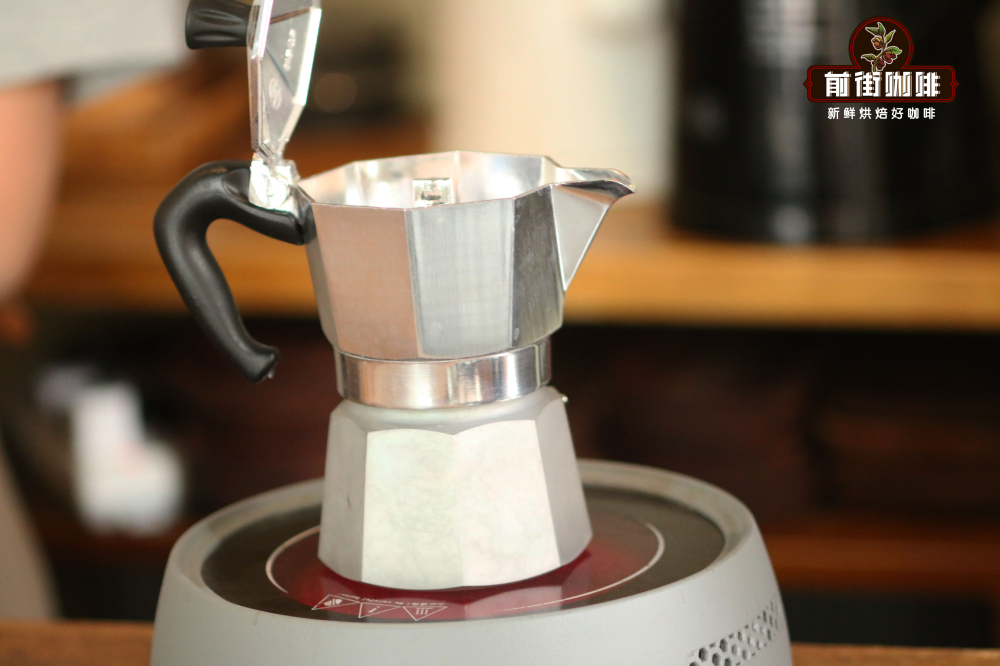
4. Keep the lid of the upper chamber open and place it on a heat source.
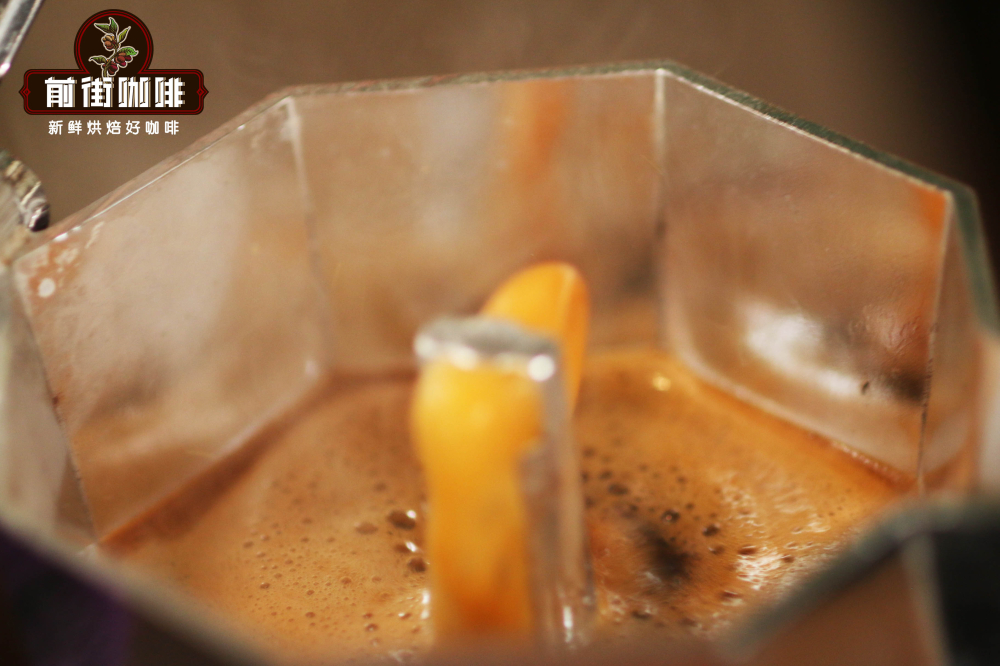
5. As soon as coffee starts flowing out into the upper chamber, immediately remove the moka pot from the heat source.
The reason the coffee brewed with a moka pot is so rich, and can even show crema, is that after the lower chamber is heated, the hot water, while boiling, produces a large amount of steam in a confined space, creating a certain steam pressure that pushes the hot water up through the central metal tube, thereby extracting the oily components from the coffee.
By now everyone has surely understood that although the moka pot has a low barrier to operation, brewing a delicious cup still requires mastering some techniques.
[Water temperature] It is recommended to use near-boiling hot water. If you start heating from room-temperature water, as the temperature rises, steam keeps increasing, and water that has not yet reached a sufficient temperature already comes into contact with the coffee grounds and begins extracting, thereby affecting the coffee's flavor.
[Grind size] Friends often ask how fine the grind should be for a moka pot. Front Street's recommendation is that the particle diameter of the coffee grounds used in a moka pot should be between 0.3 mm and 0.55 mm, which is slightly coarser than the grounds used in an espresso machine.
Because the size differences between particles are so small that they are hard to distinguish with the naked eye, if conditions allow, you can buy a particle size ruler, or use moka-pot-specific grounds as a reference for comparison; you can also determine the appropriate grind size through repeated testing.
During brewing, if you see the coffee in the upper chamber gushing out violently like a fountain, it means the coffee grounds are ground too coarsely, the water flow encounters too little resistance, and the crema will also be relatively thin; if you hear a low "whirring" sound and the coffee liquid is slow to rise, immediately remove the moka pot from the heat source and take safety precautions—this situation means the grounds are ground too finely, the hot water faces too much resistance, and it is difficult for it to rise smoothly.
Some people, hoping to extract more coffee, get greedy when adding hot water to the lower chamber. Front Street reminds everyone here that there is a pressure relief valve designed on the lower chamber—that raised hole in the picture. The pressure relief valve's purpose is to prevent explosions caused by excessive pressure inside the lower chamber due to certain factors. Among these factors is grinding the coffee too finely.
Therefore, when adding water, be sure not to let the water exceed the valve. Once water covers the pressure relief valve, the pressure relief function fails, creating a serious safety hazard. Since the moka pot generates a certain steam pressure during extraction, is what it brews espresso?
Espresso is made by an espresso machine using 9 bar of high pressure to force near-boiling hot water through a compacted puck of coffee grounds, with extraction time usually controlled between 18 and 40 seconds.
The pressure during moka pot extraction is far below 9 bar, so the coffee it makes cannot be considered espresso. However, it is not particularly difficult to extract crema with a moka pot. So, what coffee beans are suitable for a moka pot?
The crema of espresso is actually made up of countless tiny carbon dioxide bubbles, and medium-dark roasted coffee beans contain sufficient carbon dioxide gas, making them suitable for pressure extraction. In addition, since the moka pot is a home brewing device, cost-effectiveness is the first consideration when buying coffee beans. Therefore, if you want to achieve an ideal moka pot extraction at home, choosing medium-dark roasted espresso blend coffee beans is more appropriate.
Below is a shopping list of delicious coffee beans suitable for the moka pot, for everyone's reference:
The first type is Front Street Classic Espresso Blend coffee beans. This espresso blend, which easily extracts rich crema, makes coffee with a moka pot that carries rich aromas of chocolate cookie, cream, malt sugar, and toasted bread, with high body, suitable for Americanos and lattes.
The second type is an espresso coffee bean recommended by many baristas—Front Street Dark Cocoa Blend coffee beans. These beans use medium-dark roasting and are a combination of Yunnan small-harvest and Brazil Red Bourbon. Affordable and delicious is its greatest feature, with caramel notes and nutty sweetness very prominent. Whether used to make a moka pot americano to drink directly or made into milk coffee, it performs well.
The third type is Front Street Strawberry Candy Espresso Blend coffee beans. This is a recipe combining three major producing regions—Costa Rica, Ethiopia, and Colombia—using medium-roasted coffee beans, usable in both home coffee machines and moka pots. The extracted coffee liquid carries aromas of rose, strawberry gummy, and dried blueberry, with balanced grape and citrus sweet-tartness, and a sweet aftertaste with almond aroma.
The above content is compiled by CoffeeHunters, a coffee news website.


