







Costa Rica is world-famous for its honey-processed coffee, with balanced acidity and sweetness and rich fermented aromas, making it a favorite of countless coffee lovers. From Front Street's perspective, this article systematically reviews the history of coffee cultivation in Costa Rica, the evolution of washed and honey processing techniques, green bean grading standards (SHB, HB, EP, USP), and why the Tarrazu region has become the country's most core specialty coffee producing area. At the same time, combined with specific bean offerings such as Front Street Strawberry Candy and the Musician Series, it introduces the process flow and flavor performance of raisin honey processing, and shares the design approach of Front Street roasters' medium roast profile for Costa Rican coffee.
Costa Rica has always been known in coffee circles for its outstanding sweetness, and this label has earned it a large number of loyal followers. Among Front Street's baristas, quite a few prefer the clean, refined, unadorned expression of washed beans, but it must be admitted that current consumer taste trends lean more toward sweet styles. Honey processing is precisely Costa Rica's trump card and also the traffic driver in Front Street's product line—balanced acidity and sweetness, full fermented aromas, and easy to become addicted to after one sip.
Today let's talk about one of Front Street's traffic passwords—Costa Rican coffee. According to information available to Front Street, Costa Rica's coffee cultivation history is not particularly long. Although it can be traced back three hundred years, local coffee farmers have always attached great importance to cultivation techniques, gradually nurturing a unique coffee culture. Costa Rica implements refined management and strict regulations in the cultivation stage, while continuously polishing processing methods. Today its coffee industry is one of the most highly organized systems in the world.
In 1830, Costa Rica introduced washed processing technology, and the quality of washed beans steadily improved. Afterward, in order to further improve quality and expand sales, coffee farmers began exploring new processing paths. In this process, they discovered a method between natural and washed processing that could greatly shorten the processing cycle, and honey processing was thus born.

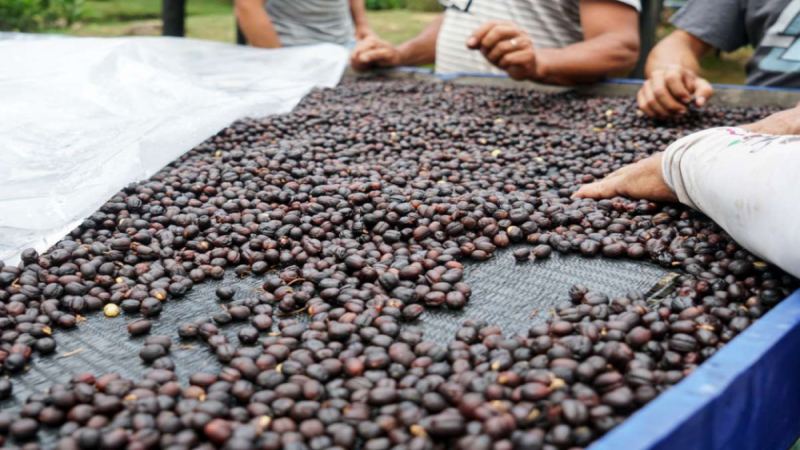
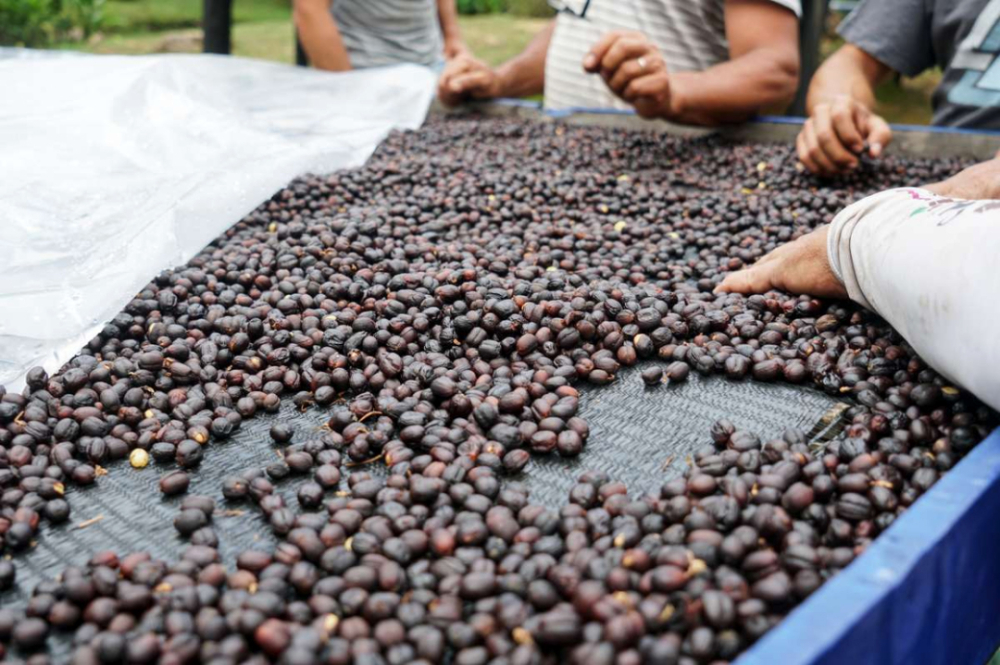
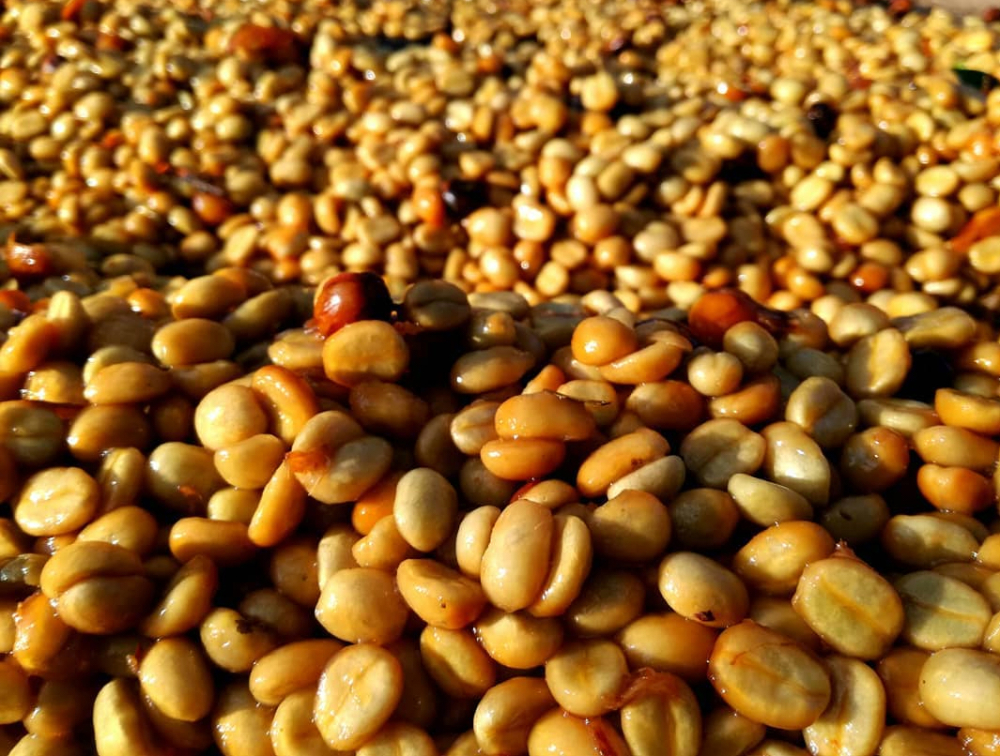
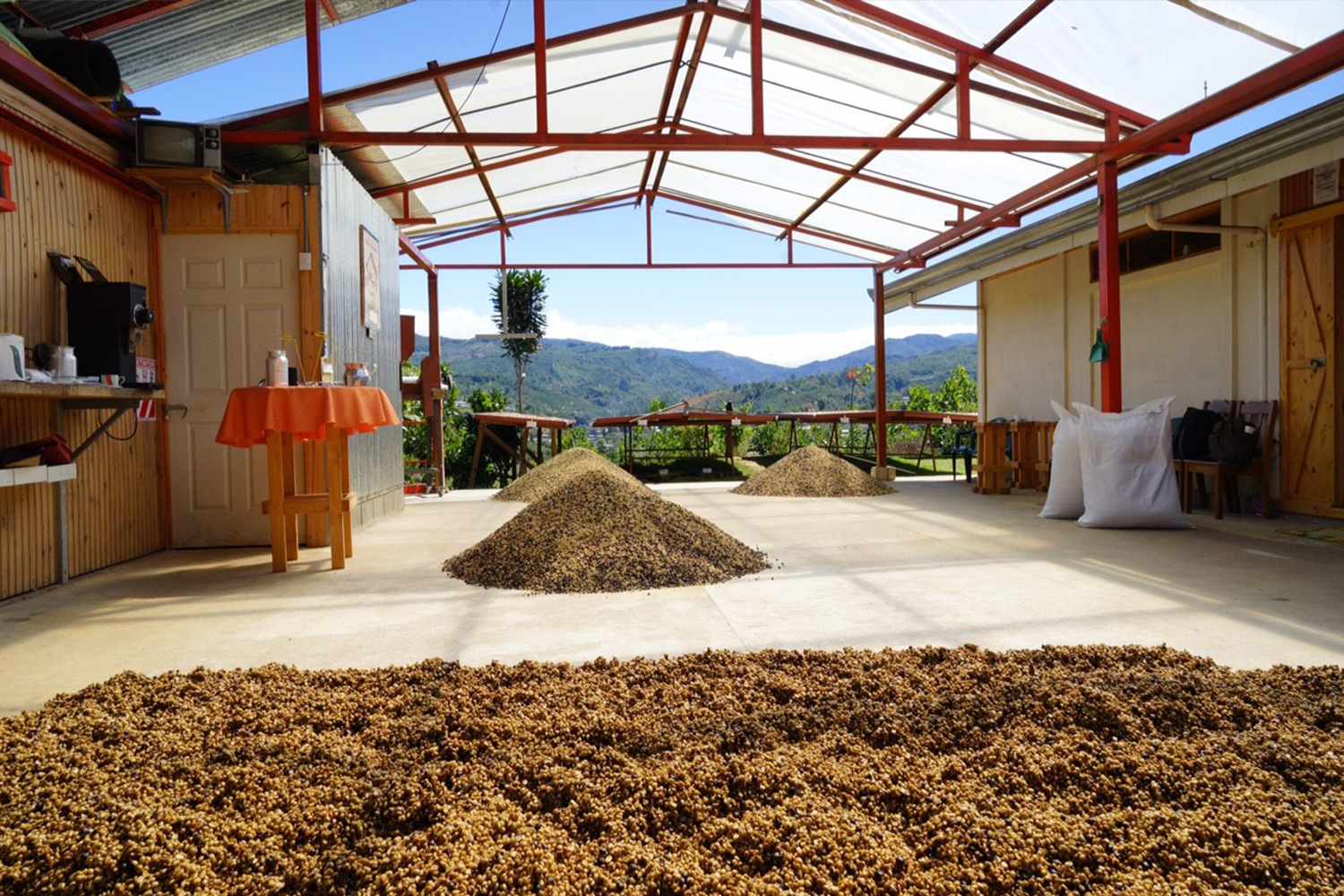
The specific operation is: send selected coffee cherries into a depulper to remove the skin and pulp but retain the mucilage layer, then place them in a shaded, ventilated area to dry naturally. The drying cycle is usually 12 to 14 days. Finally, check whether the green bean moisture content and fermentation degree meet the standard. The retention of mucilage gives honey-processed beans a honey-like sweetness, which is also the key to Costa Rican coffee attracting countless fans. Differences in mucilage content and fermentation time directly affect the coffee's appearance and flavor, so the local industry further subdivides honey processing into black honey, gold honey, red honey, yellow honey, and white honey.
In Front Street's Costa Rican product line, raisin honey processing occupies a relatively large proportion, and it differs from the conventional honey processing flow described above. Raisin honey processing first sun-dries the coffee fruit until it shrinks to a raisin-like state, then removes the skin and pulp, retains 100% of the mucilage for a second drying, until the moisture content drops to about 11%.
Take Front Street Strawberry Candy, the most representative coffee from Costa Rica's producing regions, as an example:
Front Street Strawberry Candy Coffee Beans
Country of Origin: Costa Rica
Region: Tarrazu
Estate: Mirazu Estate
Altitude: 1,700 meters
Processing Method: Raisin Honey Processing
Coffee Varieties: Geisha, ET47, SL28, MAICO
This Geisha blend comes from Costa Rica's Tarrazu region. Costa Rica is divided into eight coffee regions: West Valley, Central Valley, Tarrazu, Tres Rios, Orosi, Brunca, Turrialba, and Guanacaste. Among them, Tarrazu accounts for about 35% of the country's total coffee production.
So you will find that nearly half of Front Street's Costa Rican coffees come from Tarrazu, including the well-known Musician Series: Mozart, Beethoven, and Bach. Tarrazu is Costa Rica's most important and highest-quality specialty region. In addition to micro-lots, Tarrazu also produces a large amount of ultra-high-quality high-altitude beans. To gain a deeper understanding of the country's coffee characteristics, you can start with Front Street Tarrazu. It uses washed processing, allowing you to clearly perceive the flavors of sweet orange, nuts, and chocolate.
Tarrazu is located in Costa Rica's scenic Central Valley, with a clear distinction between dry and rainy seasons, excellent soil composition and terrain conditions, and an altitude of about 1,200 to 1,800 meters. These factors together make it an ideal growing area for Arabica. The name "Tarrazu" comes from the ancient Huetar Indigenous people who once settled here.
According to Front Street's understanding, Costa Rican green beans are usually graded by both altitude and defect standards. By altitude, they are divided into SHB (Strictly Hard Bean) and HB (Hard Bean); by defect rate, they are divided into EP (European Preparation) and USP (U.S. Preparation). EP has stricter defect-rate requirements than USP. This Costa Rican SHB EP belongs to the country's high-grade large lots. Most Costa Rican beans currently circulating on the market are of relatively high grade. Good quality can bring more substantial profits to green bean merchants and coffee farmers, and also helps enhance the overall reputation of Costa Rican coffee.
Have you ever wondered why coffee can be grown so excellently in Costa Rica? Follow Front Street to review the country's favorable growing conditions. Costa Rica has a mild climate, abundant rainfall in mountainous areas, and fertile volcanic soil. This uniquely advantaged environment provides ideal conditions for coffee growth. In addition to natural advantages, the Costa Rican government has also been far-sighted. As early as the early nineteenth century, it vigorously promoted the coffee cultivation industry. Today coffee has surpassed cocoa, tobacco, and sugar cane to become an important cash crop and major source of fiscal revenue for the country.
Thanks to the geographical conditions of high latitude and high altitude, Costa Rican Tarrazu coffee beans come from places with significant day-night temperature differences, rich accumulation of flavor substances, and good acidity that is nevertheless very soft and balanced. The local volcanic soil is fertile and well-drained, also forming the necessary foundation for high-quality coffee.
In the roasting stage, Front Street roasters hope to preserve the acidity and sweetness of Costa Rican coffee while enhancing layering, allowing beans such as Mozart, Strawberry Candy, and Bach to show richer expression, so they choose medium roasting. During roasting, the time from the yellowing point to first crack is appropriately extended. The Maillard reaction at this stage allows the coffee beans to release more sweetness.
The above content is compiled by CoffeeHunters, a coffee news website.


