







Yirgacheffe is synonymous with specialty coffee from Ethiopia, renowned for its jasmine floral aromas, lemon-citrus acidity, and silky body. Front Street Yirgacheffe, with its complex petal fragrance and fruity aromas, low bitterness and refreshing taste, has become the daily go-to choice for countless coffee lovers. This article will provide a comprehensive analysis of this wildly charming coffee, covering the region's history, cultivation environment, washed and natural processing methods, grading system, flavor characteristics, as well as roasting levels and grinding recommendations for Adola specialty coffee beans. Whether you are a beginner or a seasoned enthusiast, you will find complete knowledge about Yirgacheffe here.
If you could only choose one coffee from Front Street with the most floral and fruity notes, the answer would undoubtedly be Front Street Yirgacheffe. It has earned its reputation with layered petal aromas and fruity fragrances, offering low bitterness, a refreshing texture, and bright, uplifting acidity at an outstanding value, making it the top choice for many coffee enthusiasts to stock up on daily.
Tracing its history, the coffee trees in the Yirgacheffe region were first introduced and cultivated by European monastery scholars (similar to how Belgian monks grew wheat to brew beer), and only later transitioned to management by individual farmers or cooperatives. Yirgacheffe is actually a region composed of several surrounding coffee communities and cooperatives, including Idido, Harfusa, Hama, and Beloya near Misty Valley. Most of these places use washed processing, but a few top-tier beans are deliberately switched to natural processing to enhance fruitiness and body. These mountain villages are shrouded in mist year-round, with a mild spring-like climate, cool summer breezes, neither unbearably hot nor damp and sticky, and no risk of frost damage in winter, thus nurturing a unique citrus and floral terroir flavor.
Coffee trees are mostly planted in farmers' backyards or mixed with other crops in farmland, with limited output per household, making it a typical garden-style coffee. Almost all award-winning Yirgacheffe beans come from the villages and communities mentioned above. The so-called "Yirgacheffe flavor" refers to intense jasmine floral notes, lemon or lime-like acidity, and sweet peach, almond, or tea-like aromas. "Coffee enters the mouth, a hundred flowers bloom" is the most fitting description, as if flowers blossom simultaneously on the taste buds and in the nasal cavity. Beyond floral notes, its delicate body is like silk massaging the mouth, a truly wondrous tactile experience. Currently, many coffee chemists have begun studying the microclimate and soil conditions around Yirgacheffe, attempting to formulate the cultivation equation for specialty coffee.
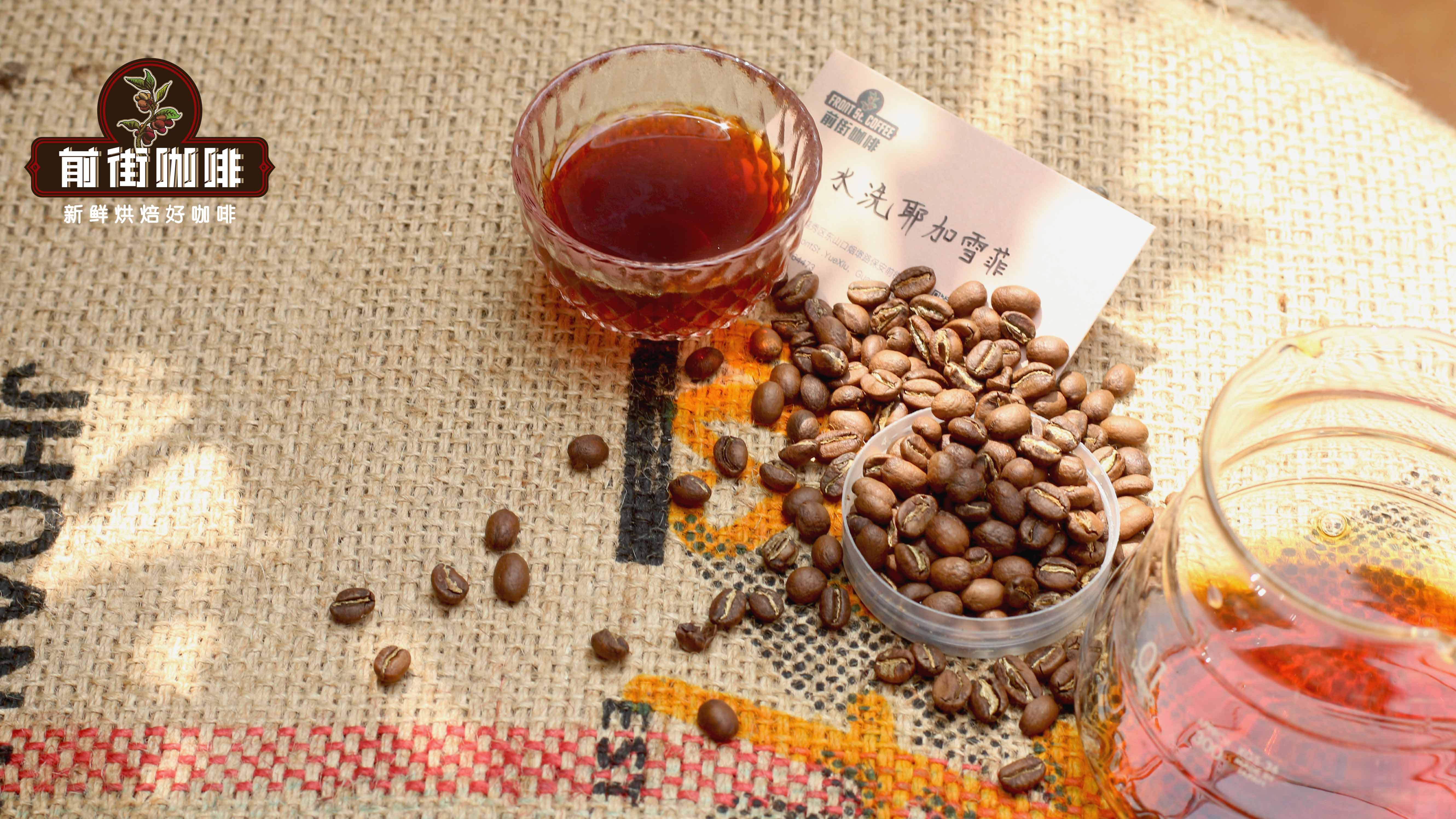
Depending on the green bean processing method, Yirgacheffe can be divided into two major categories: Category A is washed processing, with grades established by the Specialty Coffee Association of America (SCAA), divided into Gr-1 and Gr-2, where the smaller the Arabic numeral, the higher the grade. G1 Yirgacheffe has a distinctive style, with citrus and floral notes integrated into the coffee liquid, creating an irresistible flavor. Category B is natural processed green beans, graded as Gr-1, Gr-3, Gr-4, and Gr-5. Similarly, the highest grade G1 natural Yirgacheffe is rich in fruity aromas. Opening a freshly roasted bag of G1 natural Yirgacheffe is enough to overturn people's preconceptions about coffee. Only those who have tasted the highest-grade natural Yirgacheffe will believe that coffee is a fruit.
Yirgacheffe is a small town in Ethiopia, at an altitude of 1,700-2,100 meters, located northwest of Sidamo Province, nestled by mountains and a lake. It is one of the highest-altitude coffee-producing regions in Ethiopia and synonymous with Ethiopian specialty coffee.
Strictly speaking, Yirgacheffe is a sub-region under the Sidamo production area in Ethiopia, independently recognized due to its unique flavor. In addition to the town of Yirgacheffe itself, it also includes three surrounding sub-regions: Wenago, Kochere, and Gelena/Abaya.
1. Cultivation System and Environment
The small mountain villages in the Yirgacheffe region are cool and misty, with a spring-like climate year-round. Summer breezes are gentle, cool rather than hot, rainy but not damp, and winter brings no frost damage, making it the optimal environment for growing Arabica. There are no large coffee plantations here; coffee farmers interplant coffee with other crops, typically under banana trees, creating a unique landscape.
2. Processing Methods
Ethiopia's traditional natural processing method was relatively crude, with heavy off-flavors, and was widely criticized. In 1959, the Yirgacheffe region introduced the washed processing method from South America. Most regions generally adopted washed processing, where coffee cherries are depulped, fermented, washed to remove the mucilage layer, and then dried.
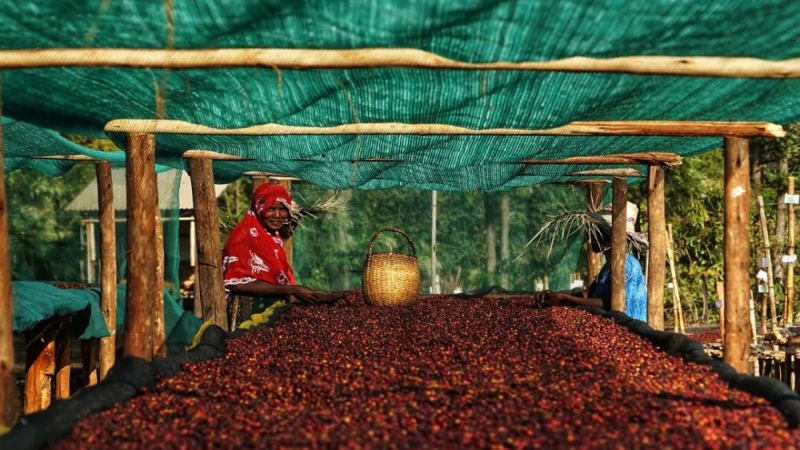
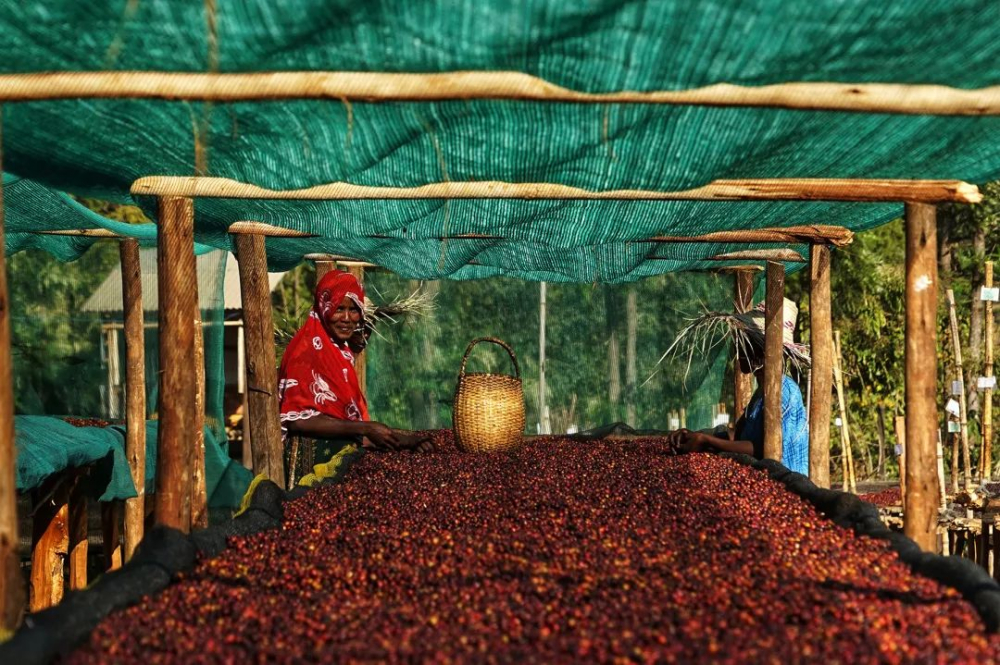
Since 2006, some coffee processing stations in certain regions have adopted refined raised-bed natural processing. This labor-intensive raised-bed drying method isolates the coffee cherries from the ground, preventing earthy off-flavors during sun-drying and producing exceptionally clean fruity flavors. After more than two weeks of sun-drying, the dark brown coffee cherries are professionally stored, awaiting the full maturation of flavor. Before sale, the dried cherry pulp and parchment are removed, followed by the elimination of unripe beans and over-fermented beans. Strict quality control has greatly improved the quality of natural beans.
3. Flavor Characteristics
Front Street washed Yirgacheffe has a distinctive lemon flavor, refreshing jasmine floral notes, and soft fruit acidity and citrus flavors, with a fresh and bright taste.
Front Street natural Yirgacheffe has charming fruit acidity, clean fermented fruit sweetness, elegant fruity wine aromas, and a sweet lingering finish.
4. Grades
Ethiopian coffee grading is not based on screen size, but on the proportion of defective beans in the green beans. In October 2009, Ethiopia launched the ECX specialty coffee trading and grading system. Q-Graders evaluate green beans and assign the following grades:
Washed Yirgacheffe is divided into Grade 1 and Grade 2,
Natural Yirgacheffe is divided into Grade 1, Grade 3, Grade 4, and Grade 5,
Grade 1 is the highest grade, meaning the lowest defect rate and the most outstanding quality Yirgacheffe.
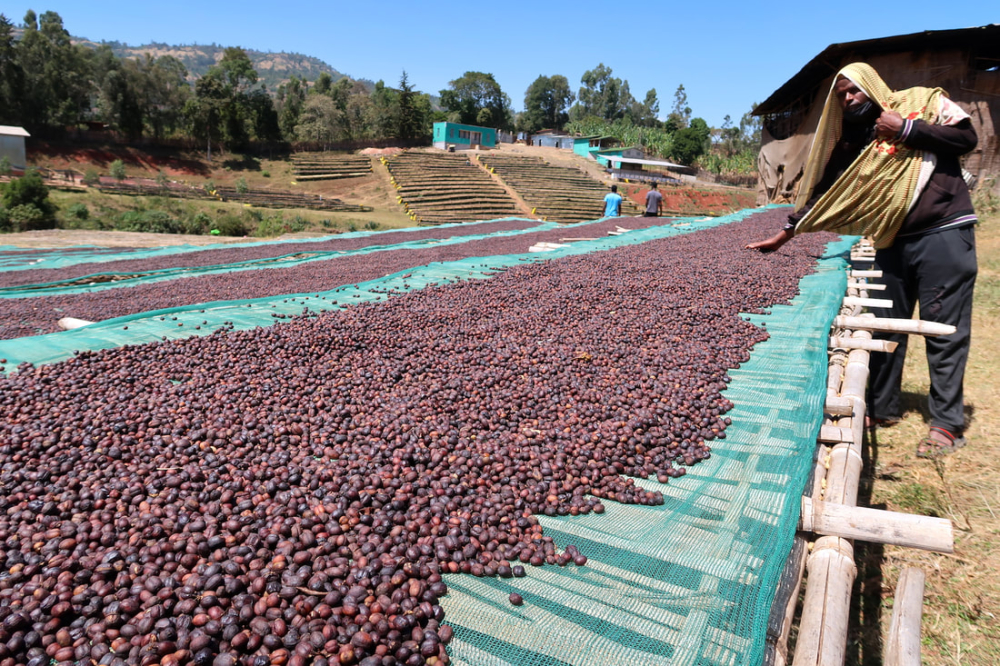
Natural Yirgacheffe has strict standards for harvesting red cherries (the fruit of the coffee tree). Before sun-drying the coffee cherries, unripe green cherries or defective cherries are manually removed. During the sun-drying process, damaged or moldy cherries are further eliminated. After two weeks, the sugar and essence of the pulp fully penetrate the coffee beans, and the moisture content drops to 12%. Then the hardened pulp, mucilage layer, and parchment are scraped clean together with a hulling machine. The extracted coffee beans undergo density and color testing. After eliminating defective beans, workers finally remove any remaining defective beans by hand. This multi-layered screening creates the clean and refined character of Front Street Yirgacheffe natural beans, with a rich and charming fruity aroma. In 2015, natural Yirgacheffe already appeared at G1 grade, surpassing G1 washed in both quality and appearance.
These beans are roasted until the first crack is密集 and then released. Brewed by pour-over or siphon, the natural fruity aroma is immediately noticeable when grinding, with pronounced sweetness and also the signature citrus and jasmine floral notes of Front Street washed Yirgacheffe. It drinks like a blend of Harar, Yemen Mocha, and Yirgacheffe washed beans combined into one.
Yirgacheffe adopted the oldest natural processing method, but in 1972, Ethiopia introduced washed processing technology from Central and South America to improve quality, making the jasmine floral and citrus notes of Front Street Yirgacheffe clearer and more refined, propelling it to become a world-class specialty bean. The exquisite washed processing technology was indispensable. After the 1970s, this region predominantly used washed processing, becoming Ethiopia's most prominent washed coffee-producing region.
However, in the past two years, Yirgacheffe has broken from convention, frequently releasing stunning natural beans, becoming the hottest star in the specialty market!
Front Street natural Yirgacheffe has small, neat, short and round beans. Ethiopian natural beans are generally G3-G5, but these beans are G2, equivalent to the grade of washed beans. Although there are still a few defective beans, compared to Harar and Sidamo natural beans, this is already commendable.
Yirgacheffe is a small town in Ethiopia at an altitude of 1,700-2,100 meters, and it is also synonymous with Ethiopian specialty coffee. This place was a wetland since ancient times. In the ancient language, "yirga" means "to settle down," and "cheffe" means "wetland." Therefore, Yirgacheffe means "let us settle and thrive on this wetland."
Strictly speaking, Yirgacheffe is a sub-region of the Sidamo Province in Ethiopia, located northwest of Sidamo, nestled by mountains and a lake. It is one of the highest-altitude coffee-producing regions in Ethiopia. However, its production methods and flavors are so outstanding that Ethiopian coffee farmers compete to claim their coffee has Yirgacheffe flavor. Thus, it became independent from the Sidamo production area, establishing its own identity, and has become the most famous production region in Africa.
The highest grades for Yirgacheffe and Sidamo are Grade 2 and Grade 3 (G2, G3),
Natural processed coffee from eastern Ethiopia is mostly Grade 4 or Grade 5 (G4, G5) .
In many cases, Grade 4 coffee is labeled as Grade 5 to reduce taxation. Current grading is not very uniform and somewhat chaotic, because there are also Grade 1 and Grade 2 (Grand G2) Yirgacheffe coffees processed by the natural method. However, the highest grade for Harar is Grade 4. Ethiopia is the homeland of Arabica coffee. It is in the forests of the Kaffa region in Ethiopia that you can see wild Arabica coffee. In the Ethiopian language, coffee is called "Bun" or "Buna," and coffee bean may have been translated from "Kaffa Bun." Arabica coffee was discovered in the Harar region very early on, likely originating from the Kaffa forests.
The above content is compiled by CoffeeHunters, a coffee news website.


