







Geisha coffee started in the primitive forests of Ethiopia, traveled through many countries, and then rose to fame when Panama's Hacienda La Esmeralda won the 2004 BOP competition, becoming a legend in the specialty coffee world ever since. This article systematically traces the origin and spread of Geisha, explains its demanding requirements for the growing environment, and compares the cultivation backgrounds and flavor differences of Geisha from Colombia, Costa Rica, and Ethiopia. It also details the grading standards of Hacienda La Esmeralda's Red Label, Green Label, and Blue Label, as well as the market changes surrounding the discontinuation of Blue Label and the appearance of Volcanic Rock. At the end, it includes Front Street Coffee's V60 three-pour brewing parameters and complete flavor descriptions of four Geisha coffees to help you truly understand this famous jasmine-scented bean.
For a deeper understanding of specialty coffee, welcome to follow the WeChat official account: Front Street Coffee.
In 2001, Panama's Hacienda La Esmeralda used internal cupping comparisons to become the first to identify Geisha coffee, also commonly known as "艺妓咖啡." It was named "瑰夏" because it was then believed to have originated from the Geisha region of Ethiopia in Africa. Geisha sounds the same as the Japanese word for "geisha," so it also gained the alias "geisha coffee."
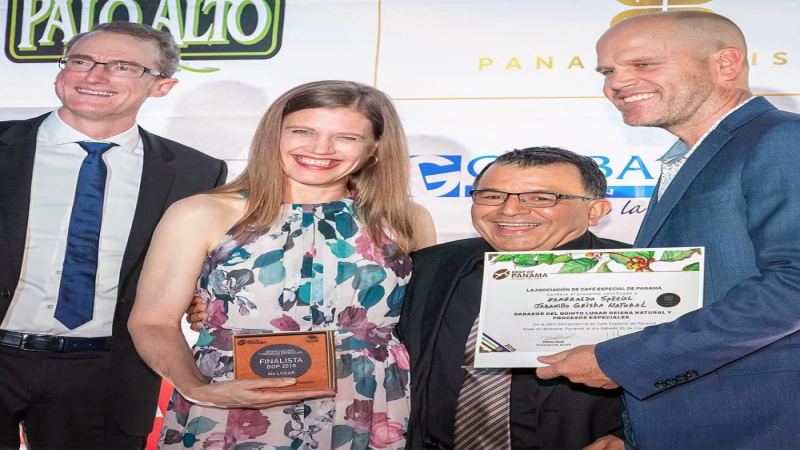
Geisha's original home is Ethiopia—not only the cradle of global coffee but also a genetic treasure trove of the coffee kingdom, with extremely rich variety resources, which is why many coffees from that country simply list "heirloom" in the variety field. In 1931, people first discovered it in the Geisha forest within Ethiopia. However, locally, Geisha was long ignored and was even planted directly as a windbreak. The seeds were later sent to a coffee research institution in Kenya, then introduced to Uganda and Tanzania in 1936, to Costa Rica in 1953, and to Panama in 1970. Ultimately, Panama's Hacienda La Esmeralda separated this variety from among many coffee trees and sent it to competition, winning the BOP championship in 2004. From then on, it became famous in one battle, and Geisha finally entered the public eye, firmly occupying the top tier of specialty coffee.
Although Panamanian Geisha beans were introduced from Ethiopia, the flavors presented by the varieties in the two places are not the same. Geisha's flavor is certainly delicate and refined, but this elegance cannot be separated from specific cultivation conditions. This variety is quite picky about its growing environment and needs to be planted at higher elevations, in misty areas or with abundant shade trees, and in fertile soil. Geisha produced at high elevations has distinct floral aromas and delicate, elegant fruit acidity, so Panama's exceptional terroir is not only an important driver of Geisha's rise to fame but also one of the reasons it became popular worldwide.
Since Panamanian Geisha became famous, many producing regions around the world have devoted themselves to researching and cultivating this variety, including many estates in Panama itself. The Geisha beans introduced by Front Street include not only products from Panama's Hacienda La Esmeralda but also Colombia and Costa Rica; Ethiopian Geisha is naturally indispensable—the country alone has more than a dozen single-origin beans, and Front Street also carries more than 50 single-origin beans from around the world.
Next, Front Street will break down the highlights of each of these Geisha beans one by one:
Colombian Geisha
The Colombian Hanami coffee introduced by Front Street this time is a blend of Geisha, Caturra, and Catuai. The estate first planted Caturra and Catuai. In 2016, the owner led a team to introduce Geisha from Panama, and the first harvest came only in 2020, officially entering mass production in 2021. Therefore, this bean can be called Monteblanco Estate's first Geisha product brought to market.
In 2007, the Herrera family of Colombia's Finca La Esperanza brought Geisha back from Panama's Hacienda La Esmeralda. Although initial trial planting failed, after years of persistent exploration, they finally won first place in April 2011 in Houston at the Specialty Coffee Association of America's Coffees of the Year (COTY) competition.
The flavor profile of Front Street's Colombian Hanami: chamomile, pink pepper, mandarin, honey, and almond.
Costa Rican Geisha
Costa Rican Geisha is likewise highly renowned. This variety entered the country as early as 1953, earlier than Panama. In Panama, it was in the 1970s that Mr. Francisco Serracin, owner of Hacienda Don Pachi, obtained seeds from Costa Rica's CATIE, beginning the history of local Geisha cultivation. Because production is extremely small and must be obtained through bidding, this bean is truly hard to come by.
Volcanic terrain has brought fertile volcanic ash soil to Costa Rica's coffee farms, and together with mild, pleasant temperatures and abundant, stable rainfall, this has laid the foundation for the country's production of high-quality coffee. The country has a coffee-growing history of nearly two hundred years, coffee is an important local cash crop, and the industry system is quite mature. Today, new estates continue to emerge locally, most of them well resourced and happy to grow Geisha varieties. Mirasu, as its name suggests, is a blend with 50% Geisha, while the remaining components include SL28, ET47, and MAICO.
In Front Street's Mirasu, the Geisha component contributes jasmine floral notes, while the other varieties make berry flavors such as strawberry more three-dimensional, and together with the raisin honey process, the sweetness of the whole bean is further elevated.
The flavor profile of Front Street's Costa Rican Mirasu: jasmine aroma rushes forth, with the sweetness of raisins and strawberry gummy candy on entry, and a texture resembling nut cream.
Ethiopian Geisha
As the birthplace of coffee, Ethiopia is where the Geisha variety was discovered in 1931 and then gradually spread to various countries in the Americas. Therefore, aside from Panama, it is one of the most noteworthy Geisha-producing countries. However, unlike Panama and other American countries, the country's varieties are complex and dominated by smallholder farming, making it almost impossible to determine whether a bean is pure Geisha, and the vast majority are exported under the name "heirloom." Since 2008, Adam and Rachel, owners of Gesha Village, spent three years searching around and finally found, in an area at 1,900-2,100 meters elevation covered by tropical rainforest, with a pleasant climate, fertile forest soil, and ancient trees, a complete environmental system suitable for coffee growing. Under the careful guidance of Mr. Willem, known as the godfather of Geisha, Gesha Village's products have repeatedly achieved excellent results in various competitions around the world.
Unlike the vast majority of farms in Ethiopia, Gesha Village is not a smallholder operation but a large farm covering more than 400 hectares, equipped with its own wet mill and laboratory, located in the southwestern part of the country near the border with Sudan. The estate divides the farm into 8 blocks and cultivates 3 main Geisha varieties. The Geisha seeds selected were collected from a native coffee forest 20 kilometers away—precisely the variety source of Panamanian Geisha as well.
Gesha Village and Panama's Hacienda La Esmeralda each have their own strengths in Geisha flavor: La Esmeralda's washed Geisha often presents refined floral notes, tea-like character, and almond-nut tones; the natural version is dominated by full fruit tones, with light floral notes, and after cooling, hints of ginger flower and citrus can be detected. Gesha Village's coffee, by contrast, has yellow stone fruit flavors as its main axis, easily reminding one of fruits such as yellow peach, with medium-high sweetness, and in outstanding lots, even toffee notes can be found.
Introduction to Hacienda La Esmeralda
In 1964, Rudolf Peterson—a banker from the United States—moved to Panama after retirement and bought Hacienda La Esmeralda in Boquete, initially focusing on dairy. His son Price later gave up medical practice and returned to help his father manage the farm, introducing the Caturra and Catuai coffee varieties in 1987 and building a wet mill in 1994, from which the estate gained independent processing capacity. In 1996, they acquired the adjacent Hacienda Jaramillo—which had excellent geographical conditions and original varieties with notable flavor—and incorporated it into Hacienda La Esmeralda.
Jaramillo won the favor of the Petersons precisely because the coffee beans originally planted there gave off a pleasing orange aroma and floral-fruity fragrance, clearly different from the usual taste of Panamanian coffee. After cupping the beans from each area of the estate one by one, father and son zeroed in on several unnamed coffee trees growing at the estate's highest point. Because they bore little fruit, the previous owner used them only as windbreaks, but now the Petersons recognized their value and decided to cultivate the coffee trees in this area separately in isolation. In 2004, this batch of beans went to Panama's domestic green bean competition BOP and won first place, astonishing ever since. Only after expert appraisal did people confirm that this was originally the Ethiopian Geisha variety. After that, the Peterson family shifted focus to infrastructure construction to support strict lot separation and meticulous processing.
Hacienda La Esmeralda's Geisha grading system
After years of experimentation, Hacienda La Esmeralda concluded that only when the elevation exceeds 1,400 meters can Geisha display the refined flavor it should have. Therefore, using planting elevation as the main basis and cupping scores as a supplementary reference, the estate divided its Geisha into three tiers: Red Label, Green Label, and Blue Label. However, in the first half of that year, Hacienda La Esmeralda announced the discontinuation of the Blue Label brand; in the second half, Front Street noticed a Geisha product called Volcanic Rock on the market. After careful verification and repeated cupping, it was confirmed that Volcanic Rock indeed came from Hacienda La Esmeralda, with a flavor extremely close to the former Blue Label.
[Red Label Geisha]
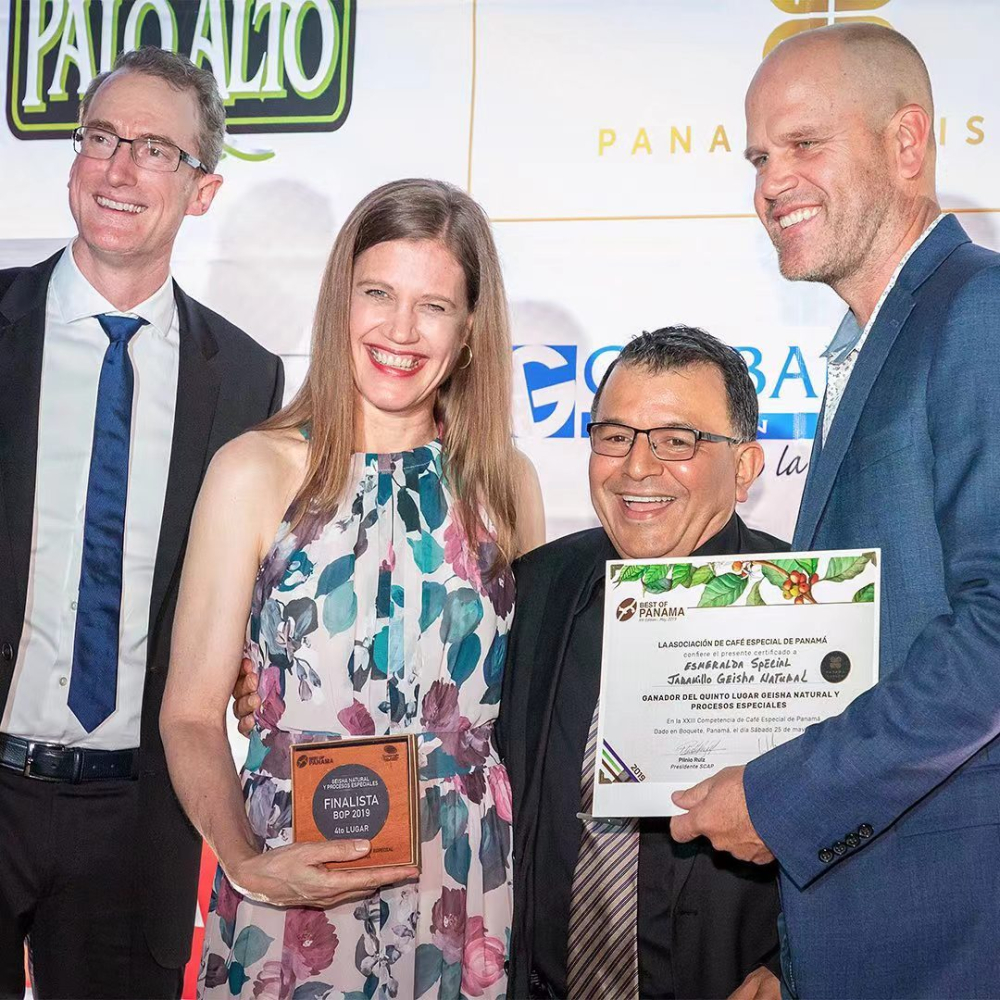
Geisha sold under the name Esmeralda Special is what everyone calls Red Label. The raw material comes from planting areas at 1,600-1,800 meters elevation, cupping scores must be above 90 points, and the origin is limited to the two major production areas of Jaramillo and Cañas Verdes. In Hacienda La Esmeralda's own independent auction, only Geisha lots selected from designated plots for bidding count as auction Red Label. Today there is also non-auction Red Label circulating on the market, essentially Geisha from the same plots that did not participate in the auction and then flowed directly to market; the variety and quality are exactly the same, with the difference only in price.
The Red Label Geisha purchased by Front Street is the natural version, from the Jaramillo plot. This grade can use either natural or washed processing, and the flavor carries unique, bright floral aromas and citrus notes. By comparison, naturally processed Geisha has more complex aroma layers and more striking sweet-acid performance. If you are willing to pay a higher price to experience peak-level Geisha flavor, Hacienda La Esmeralda's naturally processed Red Label is undoubtedly more classic—natural processing makes the flavor richer, leaving fragrance in the mouth after drinking and a long, unforgettable finish. The Esmeralda Red Label on Front Street's bean list comes from the same Jaramillo farm as the 2004 BOP champion bean.
[Green Label Geisha]
Green Label is what is often called the Private Collection series. It is not an independent auction lot, but includes Geisha that, while not entered in competition, is still outstanding in quality. The raw material comes from the 1,600-1,800 meter growing belt and is blended from micro-lots from multiple plots such as Jaramillo and Cañas Verdes. Although Green Label is lower in grade than Red Label, it lacks none of Geisha's classic elements: both floral and fruity aromas, acidity similar to citrus and lemon, and a thick, juicy mouthfeel. Green Label is also available in both washed and natural processing.
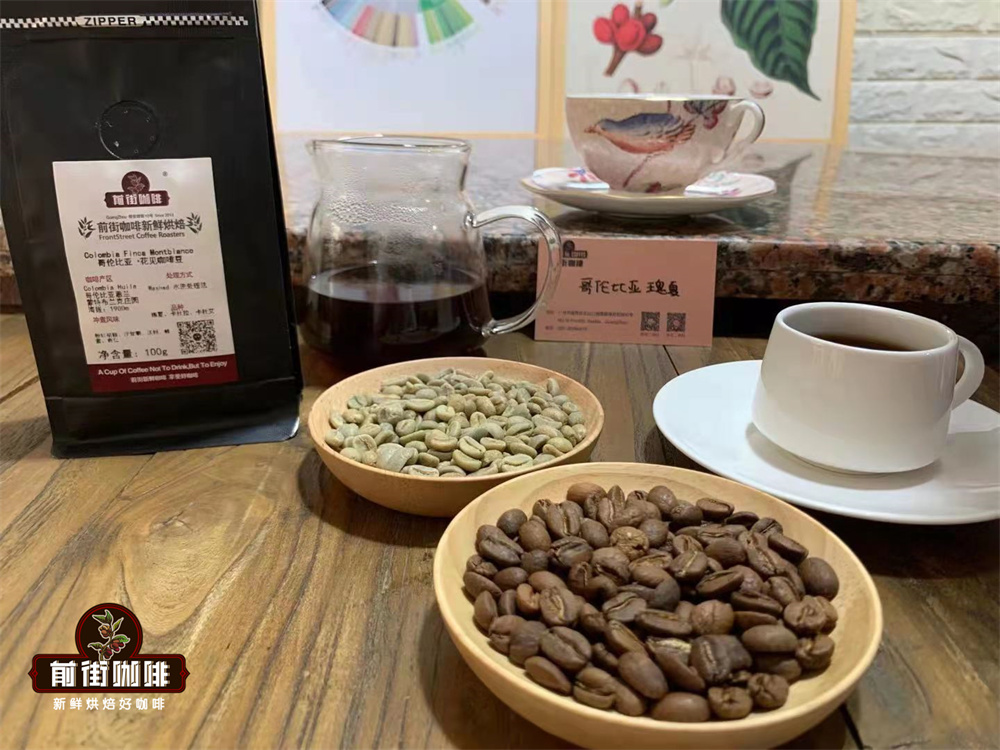
Compared with the intensity of natural Red Label, Front Street's washed Green Label can be called the embodiment of "fresh and light": typical Geisha characteristics are distinct and easy to recognize, and the overall impression is clean and crisp, like sipping a cup of oolong tea. It is a relatively good-value choice among Hacienda La Esmeralda Geisha coffees.
[Blue Label Geisha]
Blue Label is blended from beans at 1,400-1,500 meters elevation, combining the three plots of Jaramillo, Velvet, and Cañas Verdes. In flavor, it has light floral notes, fruit acidity, and sweetness, with a slightly thinner body. In the past, Blue Label was only available washed, while the 2020 batch included natural processing for the first time. By 2021, Hacienda La Esmeralda discontinued the Blue Label grade, and a few months later, a Geisha bean called "Volcanic Rock" appeared on the market. Front Street's baristas confirmed through cupping comparison that its flavor was highly similar to the former Blue Label.
Front Street's washed Blue Label enters with a hint of floral aroma, fruit acidity, and sweetness, with a relatively light body; the natural Blue Label gives off light floral notes and a clear fermentation aroma, with a mouthfeel like berry juice and prominent sweetness. Front Street believes that Esmeralda adding a natural option for Blue Label in the new season is undoubtedly good news for consumers—in the past, if you wanted to drink naturally processed Esmeralda Geisha, you usually had to buy the pricey Red Label or Green Label, while natural Blue Label allows enthusiasts to own an Esmeralda natural Geisha at lower cost and better value.
Front Street's brewing recommendations
For brewing, Front Street recommends using freshly roasted beans, as only then can coffee's rich flavors be brought out to the fullest. The coffee beans shipped by Front Street are all within 5 days of roasting, because the team deeply understands the huge impact of freshness on flavor. "Freshly roasted good coffee" is the roasting philosophy Front Street insists on, ensuring that every customer receives the freshest beans when ordering. Coffee's resting period is about 4-7 days, so when the beans arrive, they are exactly at their flavor peak. Of course, some customers need Front Street to grind the beans for them, which is also no problem, but one reminder: once beans are ground into powder in advance, be sure to brew them as soon as possible. Once coffee grounds contact air, oxidation speeds up significantly, flavor loss accelerates, and the taste naturally suffers. Therefore, Front Street recommends grinding fresh and brewing immediately to appreciate coffee's flavor charm more fully.
For Panama Hacienda La Esmeralda's Geisha coffee beans, Front Street's brewing plan is as follows: Dripper: Hario V60 Water temperature: 90°C Dose: 15 grams Coffee-to-water ratio: 1:15 Grind size: medium-fine (BG#6S, 80% passing through China standard sieve No. 20)
For the brewing method, Front Street uses three-pour extraction:
First bloom with 30 grams of water for 30 seconds; then pour in a thin stream in circles, stopping in stages when the total reaches 125 grams; when the water level falls and the coffee bed is about to be exposed, add water again to 225 grams and stop; after extraction is complete, remove the dripper. Time from the first pour, with total extraction about 2'00". Finally, pick up the whole cup and gently swirl to even it out, then pour into a cup and savor carefully.
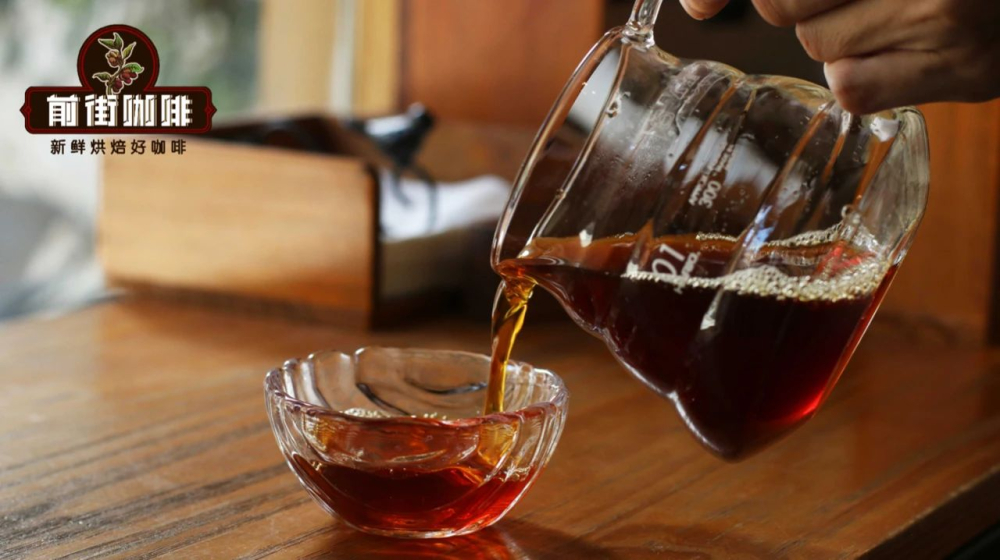
Front Street presents the flavor of Panama Hacienda La Esmeralda Geisha by pour-over
[Front Street Natural Red Label] The aromas of rose and citrus are bright and expressive, accompanied by brown rice, berries, and apricot, supplemented by complex fruit and honey. The juicy feel is solid and full, with clear layers and perceptible sweetness.
[Front Street Washed Green Label] On entry there is rich jasmine aroma and quite high sweetness, with citrus and berries bringing a juicy feel and creamy texture, followed by notes of green tea, orange peel, and cantaloupe. The overall layering is full, and the floral and citrus notes linger long in the finish.
[Washed Blue Label] The first sip reveals soft acidity composed of lemon and grapefruit. After the temperature drops slightly, the sweetness of oolong tea, honey, and sucrose gradually emerges, with a clean and bright mouthfeel.
[Natural Blue Label] The dry aroma carries fermentation notes and fruity sweetness. On entry, you can taste the sweetness of melon and tropical fruits, with a mouthfeel like juice and very prominent sweetness.
The above content is compiled by CoffeeHunters, a coffee news website.


