







As China's most important coffee-producing region, Yunnan's cultivation history can be traced back to 1904, when French missionaries planted the first Typica trees in Zhukula Village. After more than a century of development, Yunnan coffee has moved from obscurity onto the path of specialization, with regions such as Baoshan, Pu'er, Dehong, and Lincang each having their own distinctive characteristics. However, factors such as variety replacement, choice of processing method, and growing altitude have always influenced the flavor direction of Yunnan coffee. Front Street Coffee has gone deep into Yunnan to establish estates, insisting on the Typica variety and the traditional washed and natural processing methods, in an attempt to restore the most authentic taste of Yunnan coffee. This article will systematically review the distribution of Yunnan coffee origins and the history of variety evolution, and share Front Street's practical experience in cultivation and processing.
When Yunnan is mentioned, many people first think of Pu'er tea or tourist destinations, but Yunnan coffee is now increasingly well known among Chinese people. The small-bean coffee produced in Baoshan is not only exported overseas but has also gained broad recognition, securing a place in the specialty coffee field. China's finest coffee-producing region is none other than Yunnan. The history of coffee cultivation in Yunnan can be traced back to 1904, when the French Catholic missionary Tian Deneng entered the Dali region of Yunnan via Vietnam to preach. While building a church in Zhukula Village, he planted a batch of Typica coffee trees nearby. This marked the beginning of coffee cultivation in Yunnan, and since then the Yunnan coffee industry has gone through three waves of development.
Which brand of Yunnan coffee beans is the best?
In China, many people habitually assume that imported products are of better quality, and coffee is no exception—they always feel that only foreign goods are good, while overlooking the fact that Yunnan coffee has also joined the ranks of the excellent. Yunnan mainly grows two mainstream coffee beans, differing in variety and processing method: one is washed Typica, and the other is Catimor. In Front Street Coffee's product line, Yunnan Typica is classified as Yunnan specialty coffee, while Yunnan Catimor is labeled as Yunnan small-bean coffee in accordance with market convention.
Introduction to Yunnan's main coffee-producing regions
Why is Yunnan the region most suitable for growing coffee in China? The answer lies in its rich forest resources, fertile soil, abundant rainfall, complex terrain, and relatively high altitude, combined with mild temperatures year-round and its location near the Tropic of Cancer—making it a rare and favored land for coffee cultivation in China. The growing areas for Yunnan small-bean coffee are mainly distributed across Lincang, Baoshan, Simao, Xishuangbanna, and Dehong.
【Pu'er】
All nine counties and districts under the jurisdiction of Pu'er City—Simao, Ning'er, Mojiang, Jinggu, Jingdong, Zhenyuan, Jiangcheng, Lancang, Menglian, and Ximeng—cultivate Yunnan small-bean coffee. The local average annual temperature ranges between 17 and 20 degrees Celsius, and the growing altitude is between 700 and 1,600 meters.
【Baoshan】
The five counties and districts under the jurisdiction of Baoshan City—Longyang, Longling, Shidian, Changning, and Tengchong—all produce coffee certified under the Baoshan small-bean coffee geographical indication product. The growing altitude is between 1,000 and 1,500 meters, and the average annual temperature is about 21 degrees Celsius. Coffee produced in Lujiang, Baoshan, was once rated as a first-class product on the London market in the late 1950s.
In recent years, with the continuous expansion of international trade, the small-bean coffee of Lujiangba has become widely renowned. Merchants from Europe, America, and Arab countries—especially those from the United Kingdom, the United States, Egypt, and the Hong Kong and Macao regions—regard it as a premium coffee, and the product has long been in short supply. In December 2010, after review, China's General Administration of Quality Supervision, Inspection and Quarantine decided to implement national geographical indication product protection for "Baoshan small-bean coffee."
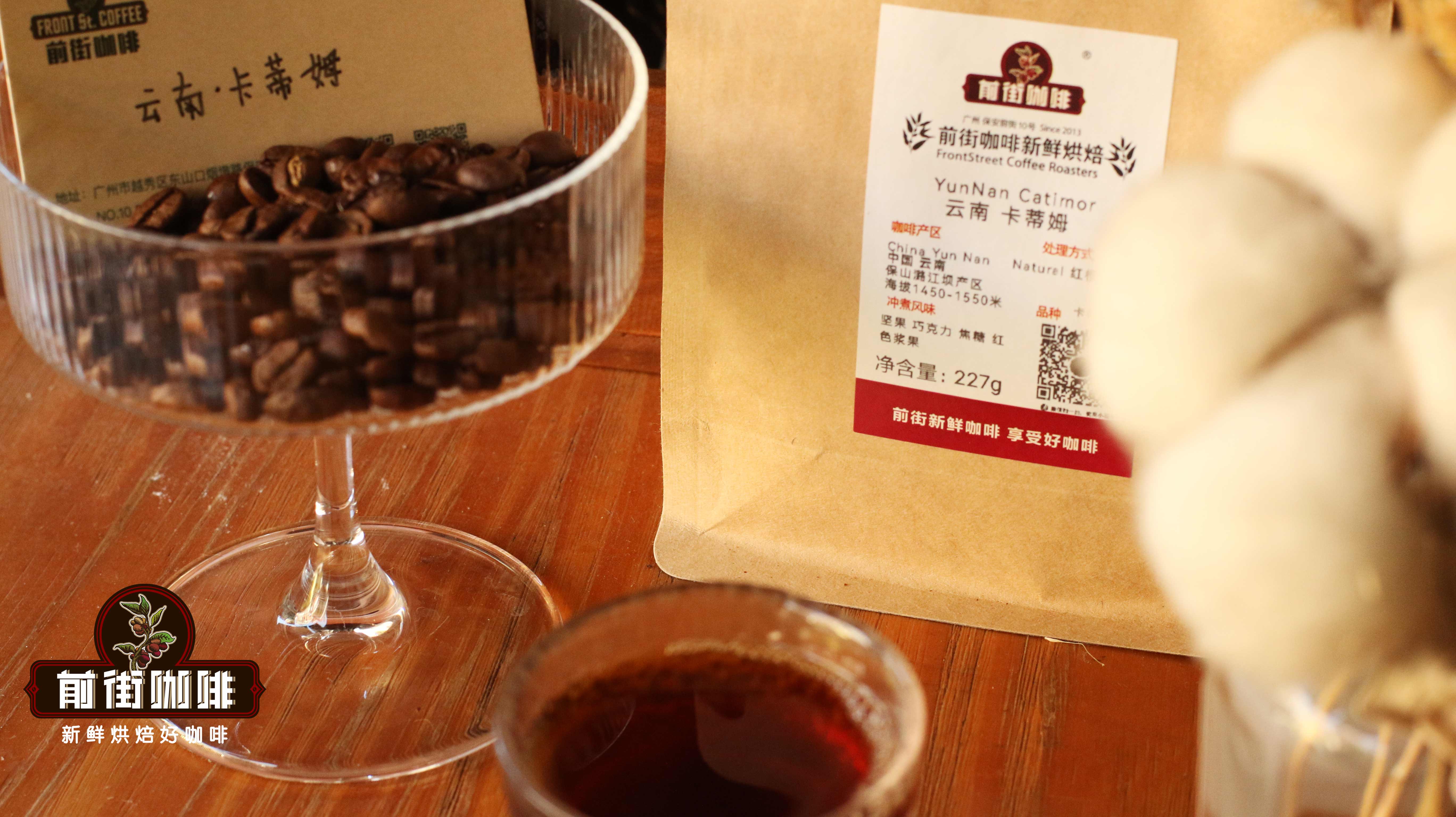
The Yunnan small-bean coffee that Front Street has sourced comes precisely from the Baoshan producing region, using washed processing and a medium roast. When brewed, it displays soft nutty and chocolatey sweetness, accompanied by a slight plum acidity, and at an accessible price it has become an introductory choice through which many people come to know Yunnan coffee.
【Dehong】
The Dehong producing region is one of the earliest areas in China to introduce coffee cultivation, importing small-bean coffee from Myanmar in 1914, though large-scale commercial cultivation did not begin until 1953. Lincang's average annual temperature is between 18 and 20 degrees Celsius, with no severe cold in winter and no extreme heat in summer, a large temperature difference between day and night, fertile soil, and abundant rainfall. When the coffee cherries are at the ripening stage, such conditions are conducive to the accumulation of proteins, sugars, caffeine, and other substances, giving Dehong coffee ample flavor.
【Lincang】
Coffee cultivation in Lincang City is carried out in towns such as Gengma, Zhenkang, Yunxian, Cangyuan, and Yongde. Lincang has a unique geographical location, bordering Myanmar to the west; its local climate conditions are highly favorable, with a significant temperature difference between day and night, abundant rainfall, and a mild average annual temperature, making Lincang a hotspot of attention for many coffee enterprises. Front Street Coffee recognized Lincang's potential and established its own coffee-growing estate in this producing region.
Yunnan coffee varieties
Most of the Yunnan coffee beans seen on the market today are of the Catimor variety. But in fact, what was grown in Yunnan in the early days was not Catimor, but the oldest and most primitive variety in the Arabica line—Typica.
With the advancement of China's reform and opening up, international coffee brands such as Nestlé and Starbucks made Yunnan one of their raw material sources. In order to obtain large quantities of raw materials from a single producing region, these companies promoted the cultivation of the Catimor coffee variety. Because Catimor carries Robusta genes, it is not only more resistant to coffee leaf rust than Typica, but its yield can reach as much as three times that of Typica.
Higher productivity means higher income. Many local coffee farmers in Yunnan do not understand the connection between coffee varieties and flavor; what they worry about is income, so they reluctantly cut down the elegant-flavored Typica and switched to growing the higher-yielding but inferior-flavored Catimor.
The benefits brought by Robusta genes are certainly obvious, but the drawbacks are equally real. Robusta coffee beans usually carry a bitter taste, and because Catimor carries some Robusta genes, it likewise has a "devilish aftertaste."
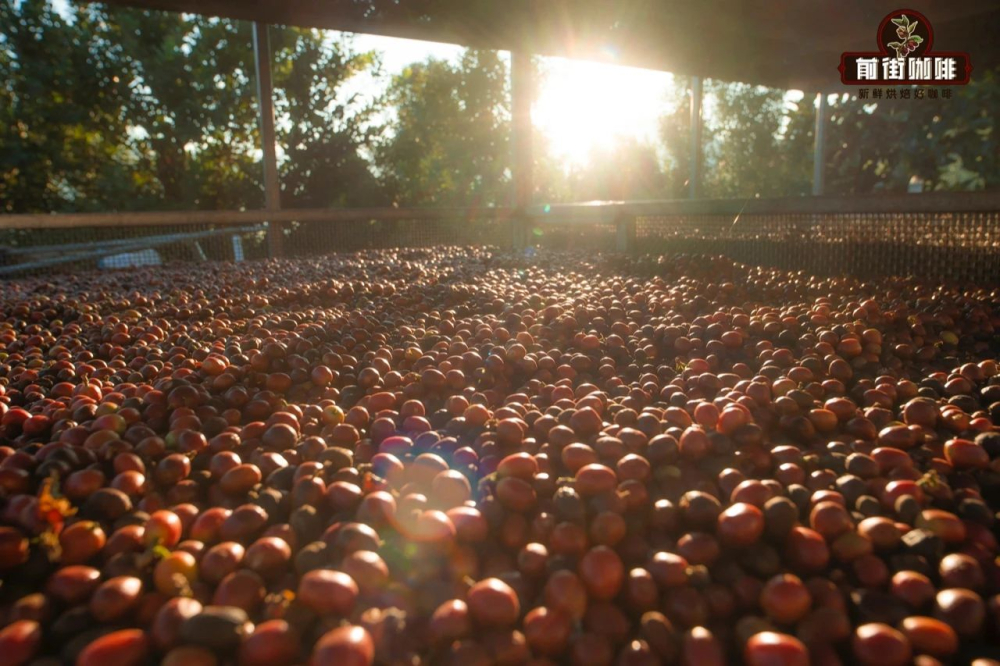
The differences between Catimor and Typica coffee bean varieties:
Let us first look at Typica. The Typica group, like all Arabica coffee, should have originated in southwestern Ethiopia. At some point in the 15th or 16th century, it was brought to Yemen. By 1700, seeds from Yemen began to be planted in India. In 1696 and 1699, coffee seeds were sent from India's Malabar Coast to the island of Batavia (present-day Java, Indonesia). It was these few seeds that gave rise to the distinctive Typica variety we know today.
Typica coffee beans are one of the most important coffee genome groups in the world, with extremely excellent flavor, but lower yield compared with other varieties. Many of the world's famous coffees belong to the Typica variety, such as Jamaican Blue Mountain coffee and the Hawaiian Kona estate. Yet in Yunnan, coffee farmers chose Catimor in pursuit of higher returns.
Second, Typica is extremely susceptible to disease, whereas Catimor is a hybrid of Catuai and Timor coffee. Because it carries the genetic material of Robusta coffee, it has enhanced disease resistance and higher yield. But precisely for this reason, Catimor has inherited the strong flavor characteristics of Robusta coffee beans.
Yunnan's coffee-growing altitude is generally not high. Although the upper altitude limit given by the major estates can reach around 1,800 meters, not all coffee trees grow at the highest point; most coffee trees are planted near the qualifying altitude line for Arabica. When the altitude is not high enough, good bean varieties must make up for it. In order to obtain the most satisfactory results under limited conditions, Front Street chose the Typica variety, which has a higher price per plant and lower yield. At the same time, Front Street implemented a stricter screening and management system and found and trained a large number of skilled workers. All these efforts ultimately crystallized into the coffee bean known as 【Front Street 2013】.
From seed to cup, 【Front Street 2013】 took 7 years. At first, Front Street remained in a trial-and-error stage, and since coffee needs three to four years from seedling to fruiting, success on the first attempt was impossible without experience. After multiple rounds of selective breeding of varieties, this batch of Typica coffee beans—only about 200 kilograms—was finally produced. Hard work pays off: after this coffee was launched, its good flavor and quality meant it quickly sold out.
Front Street Coffee Estate (altitude 1,300 meters)
Front Street roasted coffee has now entered its 10th year, and its involvement in coffee cultivation came half a year earlier than coffee bean roasting. "Dazhen Coffee," the predecessor of Front Street, originally wanted to grow coffee in a place in Guangdong called Dazhen. At that time, the Catimor seedlings had already grown to 20 centimeters before we understood the relationship and sequence among variety, altitude, and processing method in specialty coffee. So Front Street abandoned its planting plan in Guangdong and went to Yunnan to study coffee cultivation in depth, and by chance found land suitable for growing coffee.
Back then, Front Street chose the most difficult path: selecting high ground, cultivating Arabica varieties, and planting rationally. Yunnan is not a place with four distinct seasons; here there is only the dry season and the rainy season. In terms of cultivation, Front Street adopted extremely high standards, solely to give the coffee trees a natural and comfortable living environment. Because Typica is more difficult to manage in the field than Catimor and is sensitive to prolonged direct sunlight, Front Street maintained the diversity of plant species and the ecological environment within the estate.
From seedling cultivation to harvest, at least three to four years are needed. Now, Front Street Coffee Estate has welcomed its second coffee season. Everything done is only to hear a coffee connoisseur say: this is the taste of Yunnan specialty coffee.
Yunnan coffee processing methods
According to Front Street's understanding, as of now Yunnan coffee beans have used many processing methods, such as various anaerobic processes. Although these special processing methods also create distinctive flavors with high recognizability, Front Street Coffee believes that insisting on starting from the growing region and coffee variety is fundamental; changing the processing method only treats the symptoms, not the root cause—Catimor will always be Catimor. Only by choosing the correct growing altitude and high-quality-flavor coffee varieties at the source can Yunnan coffee embark on a long-term, sustainable path of development. Therefore, Front Street Coffee insists on using the most primitive washed and natural processing methods to produce Yunnan coffee beans, with the aim of allowing coffee lovers to taste the most original local coffee flavor of Yunnan.
Washed processing method
The harvested cherries are run through a depulper to separate most of the pulp from the coffee beans, and then the parchment beans are transferred into a clean tank and soaked in water for fermentation to thoroughly remove the remaining pulp layer. In the past, the washed method was often the first choice for processing high-quality coffee beans. Through washed processing, unripe beans and defective beans are picked out due to buoyancy, and the fermentation process is easier to control, so the flavor does not have the off-notes of natural beans but instead shows distinct fruit acidity, slightly greater complexity, and a cleaner cup profile. However, precisely because it is too "thoroughly clean," its flavor richness is somewhat weaker.
Most of Front Street Coffee's beans from different producing regions also use washed processing, especially Front Street's everyday beans, because washed coffee beans are cleaner and their flavor expression is more transparent, in line with the most original taste of the coffee fruit. Therefore Front Street often says that washed coffee beans are the guiding light for understanding the flavor of a producing region. This is also why Front Street Coffee insists on using the washed processing method to produce coffee beans.
Natural processing method
The natural processing method is the oldest coffee bean processing method, also known as the "dry method." Natural processing does not require particularly advanced equipment; it can be carried out as long as there are consecutive sunny days, with sun-drying requiring 27 to 30 days. Therefore, it has relatively strict requirements for climate conditions and is suited to countries in arid regions.
It is worth noting that although the natural processing method is simple to operate, precisely because of this, naturally processed coffee beans do not look attractive and will have some cracks, so they are not particularly appealing.
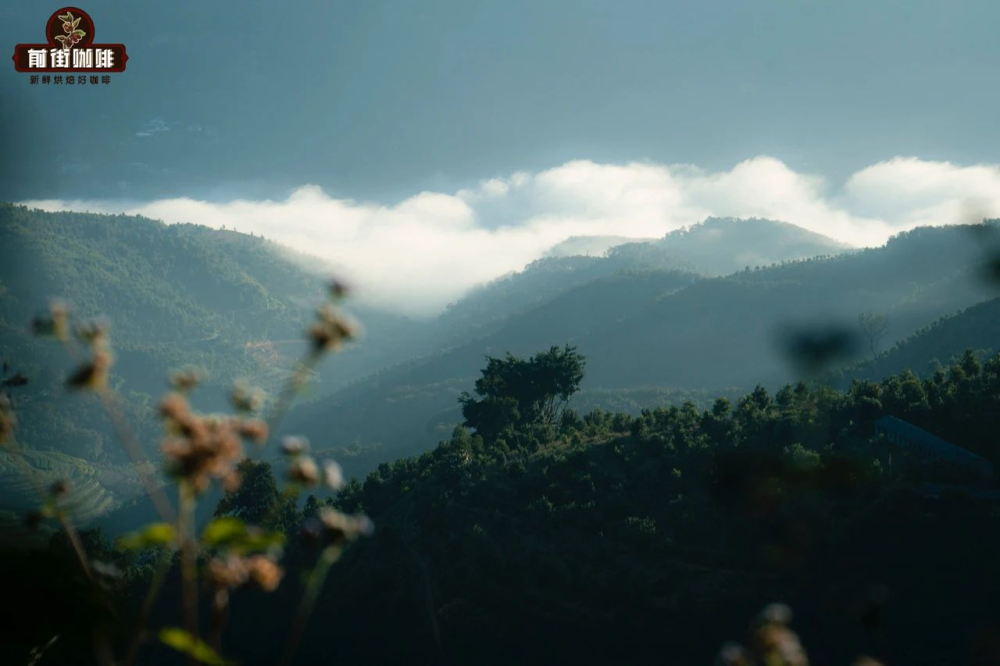
The differences between washed and natural processed coffee beans
The most essential difference between natural processing and washed processing is that natural processing retains the flavor of the pulp, while washed processing removes the pulp flavor, representing the most essential taste of the coffee bean. A clear difference can be felt in the mouthfeel: washed coffee is cleaner and more transparent, while natural coffee has a richer mouthfeel. It is precisely because the washed method can express the most essential flavor of coffee beans that, whenever Front Street Coffee recommends Yunnan coffee beans, if the customer is tasting coffee beans from the Yunnan producing region for the first time, Front Street will give priority to recommending washed coffee beans, so that people can more clearly understand the flavor characteristics of the Yunnan producing region.
Front Street's latest batch of coffee beans uses the most traditional and primitive post-harvest processing method for green coffee beans, namely the natural processing method. Whole coffee cherries with just the right ripeness and intactness are evenly spread on drying beds for sun-drying. Because the complete skin and pulp layer are retained, the drying process is more complex and takes longer. To avoid over-fermentation, workers need to turn each coffee cherry frequently and on schedule.
Because Front Street's natural Typica uses a Japanese-style processing method, its aroma is very full, and its sweetness is especially prominent, with preserved-fruit-like sweetness, soft plum acidity, rich nutty notes, and an aftertaste with brown sugar sweetness and black tea character. Many friends, when purchasing this Front Street coffee bean, ask Front Street's baristas how to brew it to best bring out its flavor. Front Street's natural Typica is fragrant without being harsh, and rich without being bitter, possessing the mouthfeel of traditional Yunnan small-bean coffee.
The above content is compiled by CoffeeHunters, a coffee news website.


