








What sets Kilimanjaro coffee apart from southern Tanzanian beans?
Kilimanjaro coffee comes from northeastern Tanzania, the country's most famous growing area, while southern beans show a different profile. Tanzanian coffee overall has a full body, mild acidity, and rich aroma, a character Europeans nicknamed the coffee gentleman. Against high-quality Kenyan beans, the Tanzanian cup shows softer, gentler acidity with more prominent sweetness.
Bourbon coffee was introduced to the Kilimanjaro region by Catholic missionaries in 1898, and Kent followed in 1920; those two varieties still dominate Tanzanian plantings. Bourbon cherries are small and round with dense pulp and seeds, giving high sweetness and bright acidity. Grading and washed coffee beans processing shape how the northeast and southern regions express flavor.
Tanzanian coffee is renowned for its full body, mild acidity, and rich aroma, and has been praised by Europeans as the "coffee gentleman," ranking alongside Blue Mountain and Mocha as the "Three Musketeers of Coffee." Front Street Coffee takes you through the origins of Tanzanian coffee varieties, the terroir of its three major regions, its grading system, and its washed processing method, and compares the flavor differences between Kilimanjaro and southern coffee beans. The article also includes the roasting curves, cupping reports, and V60 brewing parameters for two of Front Street's Tanzanian beans, making it suitable reading for enthusiasts who want to deepen their understanding of East African specialty coffee.

For more specialty coffee knowledge, please follow: Front Street Coffee (Frontsteet Coffee)
If you prefer coffee with a rich aroma and bright acidity, Tanzanian coffee is the perfect choice. Many years ago, Tanzanian coffee was already deeply favored by European consumers and successfully ranked among the world's famous products. Europeans gave it the elegant nickname "coffee gentleman," while Chinese coffee connoisseurs placed it alongside the "King of Coffee" Blue Mountain and the "Lady of Coffee" Mocha, collectively calling them the "Three Musketeers of Coffee." How exactly is this distinctive coffee produced?
Tanzania is a typical East African country, and Front Street Coffee (FrontStreet Coffee) has noticed that many people habitually compare Tanzanian coffee beans with those of neighboring Kenya. Front Street Coffee (FrontStreet Coffee) believes that compared to high-quality Kenyan coffee beans, Tanzanian coffee beans have slightly weaker bright acidity, presenting a softer and gentler character with more prominent sweetness. The most famous among Tanzanian coffee beans is undoubtedly Kilimanjaro coffee from the northeast. So what exactly are the differences between coffee beans from northeastern and southern Tanzania?
Sources of Tanzanian beans: In 1898, Bourbon coffee was introduced to Tanzania's Kilimanjaro region by Catholic missionaries. Then Kent was also introduced in 1920. Therefore, to this day, Tanzanian coffee beans are still mainly Bourbon and Kent. Bourbon coffee cherries are small and round, with very high density in the pulp and seeds. Bourbon coffee typically has high sweetness and bright acidity. Bourbon coffee yields 20-30% more than Typica, but is still considered a low-yield variety and is equally susceptible to leaf rust. Kent: a Typica hybrid variety discovered in India, with high yield and strong disease resistance.
Tanzanian regions: Kilimanjaro, Ruvuma, Mbeya. Kilimanjaro This is Tanzania's oldest Arabica coffee region, so it would not be an exaggeration to say that this area has had the longest time to develop international renown. Because of its long history in the coffee industry, the infrastructure here is also relatively good, though many coffee trees are quite old, resulting in lower yields. In recent years, other crops have gradually been replacing coffee. Altitude: 1050-2500 meters, harvest period: July-December.
Ruvuma This region is located in the southernmost part of Tanzania, and its name comes from the Ruvuma River. Coffee is mostly grown in the Mbingo area, which is considered a potential region capable of producing high-quality coffee. Altitude: 1200-1800 meters, harvest period: June-October.
Mbeya Located around Mbeya city in southern Tanzania, this region is an important producing area for high-value export crops such as coffee, tea, cocoa, and spices. In recent years it has attracted the attention of numerous certification groups and non-governmental organizations, with the aim of improving the coffee quality in this region, which has not been highly regarded. Altitude: 1200-2000, harvest period: June-October.
Kenyan coffee grading system Tanzanian coffee is graded in the same way as Kenyan coffee, both based on bean size. During screening, green coffee beans are passed through screens with fixed-size holes; the larger the screen number, the larger the green coffee beans. AA grade: Screen Size between 17-18 (7.20mm screen) AB grade: Screen Size between 15-16 (6.8mm~6.2mm screen), PB grade: round green beans, accounting for about 10% of all coffee beans C grade: Screen Size between 12-14 (4.8mm~5.6mm screen)
Washed processing method Tanzanian coffee is mostly processed using the washed method. After picking, coffee farmers send the coffee cherries to the nearest processing station for processing. Steps of the washed processing method: 1. Screen out and remove impurities mixed in with the coffee cherries 2. Remove the coffee pulp and outer skin 3. Send to fermentation tanks, where fermentation removes the pectin layer adhering to the parchment 4. Clean thoroughly and then dry.
Front Street Coffee (FrontStreet Coffee): Tanzanian Kilimanjaro coffee beans Processing method: Washed Grade: AA Region: Northern Highlands, Kilimanjaro volcanic area Variety: Bourbon Altitude: 1300-2000m
Tanzania is located in East Africa, bordering Kenya and Uganda to the north, Malawi, Mozambique, and Zambia to the south, and Rwanda and Burundi to the west. When Tanzanian coffee is mentioned, the first thing that comes to most coffee professionals' minds is Kilimanjaro coffee. Indeed, it possesses a unique "Kilimanjaro flavor"—full body, moderate acidity, and rich aroma—earning it the reputation of "coffee gentleman." After comparing Tanzanian coffee with that of neighboring Kenya, Front Street Coffee (FrontStreet Coffee) found that compared to high-quality Kenyan beans, Tanzanian coffee has slightly less bright acidity, but a superior soft and gentle character, with more prominent sweetness, and its strong red wine notes are also a major feature.
Kilimanjaro volcanic region
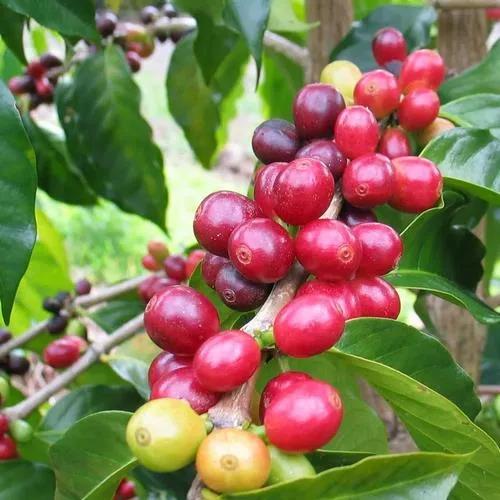
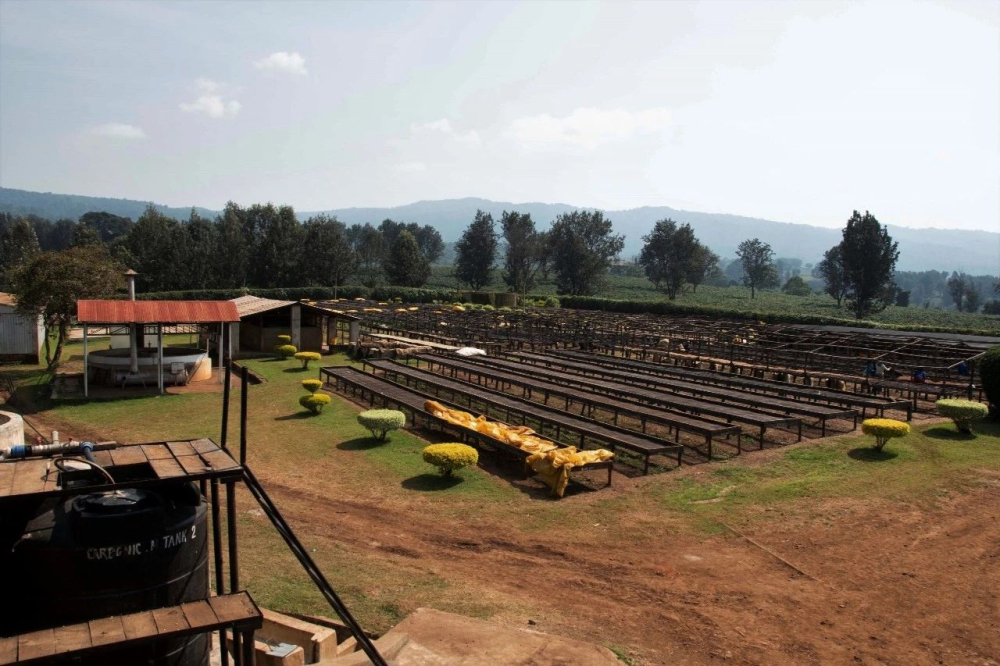
Kilimanjaro Kilimanjaro is Tanzania's largest coffee-producing region, and Kilimanjaro coffee is also an important lifeline of Tanzania's economy. Kilimanjaro coffee comes from Mount Kilimanjaro, the highest mountain in Africa, in northeastern Tanzania. Local smallholder farmers grow it at altitudes between 1300-2000m, nurtured by volcanic ash, and grown at high altitudes, producing coffee beans of excellent quality.
Front Street Coffee (FrontStreet Coffee) Roasting Kilimanjaro coffee consists of large, uniformly sized beans with a grayish-green color, offering relatively strong acidity and a sweet aroma, with excellent flavor. After a medium-light roast, it releases sweetness and a light acidity.
Bean charging temperature: 170°C, yellowing point: 6'30, 150.8°C, first crack: 10'16, 182.7°C, first crack development 1'45 seconds, drop at 193°C.
Front Street Coffee (FrontStreet Coffee) Cupping Report Dry aroma: Caramel Wet aroma: Berries Cupping results: Citrus on the entry, berries, tea-like
Front Street Coffee (FrontStreet Coffee) Brewing Parameters Dripper: V60 Coffee-to-water ratio: 1:15 Water temperature: 91 degrees Grind size: fine sugar size (80% pass-through rate on No. 20 standard sieve)
Front Street Coffee (FrontStreet Coffee) Brewing Method
30g-125g-225g. Bloom with 30g of water for 30 seconds; after blooming, pour in a circular motion to 125g; when the water level drops to half, continue pouring in a circular motion to 225g. Front Street Coffee (FrontStreet Coffee) Flavor Description Honey, berries, tea-like, citrus.
Front Street Coffee (FrontStreet Coffee): Southern Tanzania coffee beans
Region: Southern region
Variety: Bourbon
Processing method: Washed
Grade: AA
Altitude: 1200-2100 meters
Although the variety of coffee produced in Tanzania is not particularly rich, demand for the country's coffee in the international market has always been strong, because many consumers are fond of its flavor characteristics. So what exactly are the flavor characteristics of Tanzanian coffee? And how does coffee from the southern region perform? Let's explore together with Front Street. Tanzania is located in east-central Africa, and its specialty coffee is a typical representative of the washed processing style, with bright and easy-drinking acidity as one of its hallmarks.
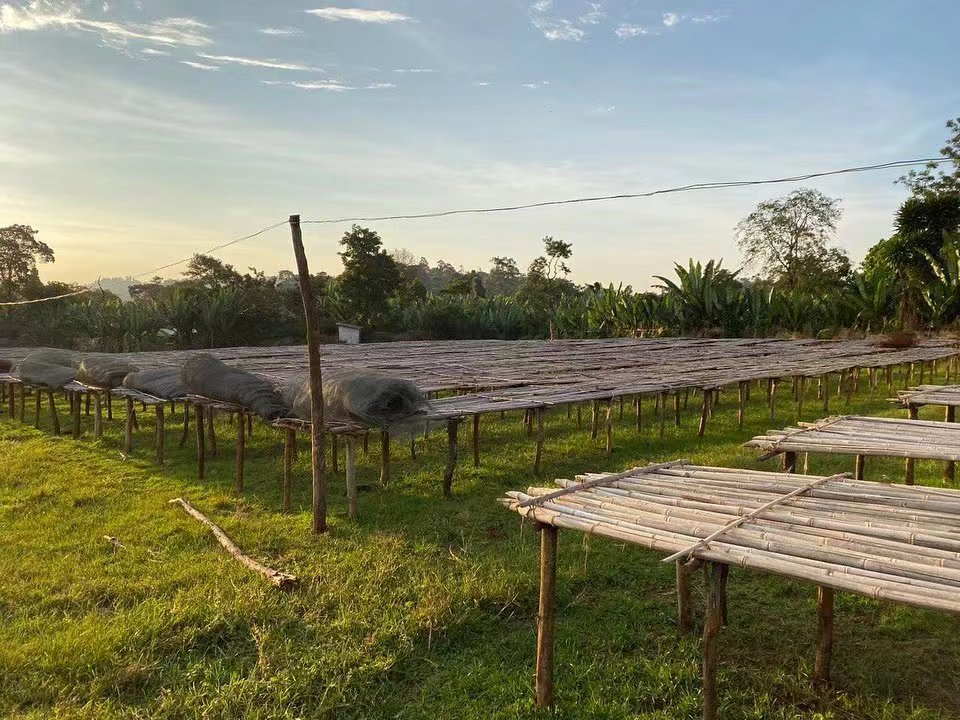
Tanzania's neighbor Kenya is a well-known producer of specialty coffee, and because Tanzania's geological conditions are very similar to Kenya's, its coffee beans share many flavor similarities with Kenyan coffee. Tanzanian coffee is mainly grown in the northern and southern parts of its territory. The excellent altitude and climatic conditions give these coffees great quality potential, and coffee from the southern region also carries the traditional flavor characteristics of Tanzanian coffee.
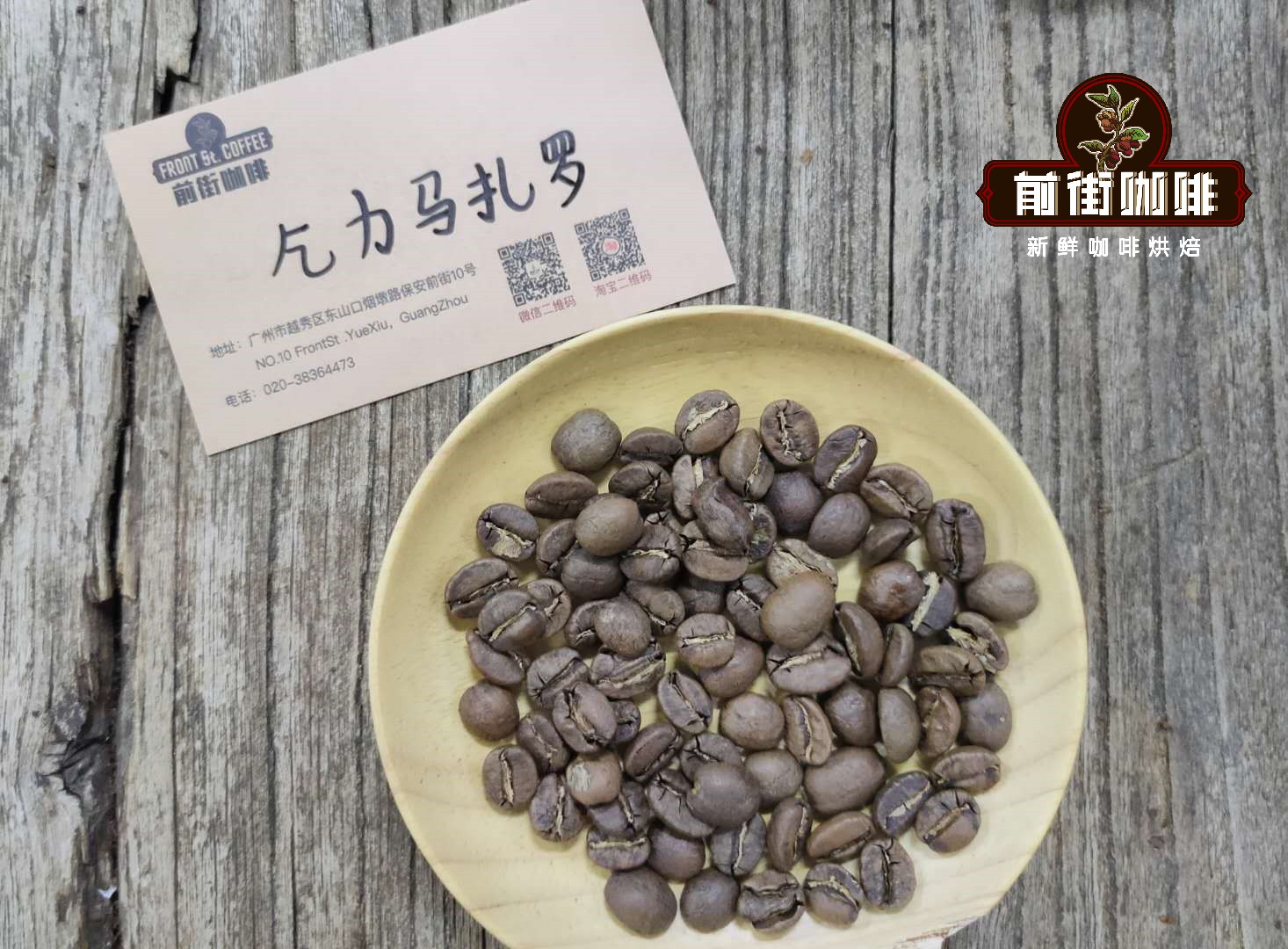
Front Street Coffee (FrontStreet Coffee) Roasting Curve In order to highlight the flavor of southern region coffee, Front Street Coffee (FrontStreet Coffee)'s roaster used a medium-light roast.
Bean charging temperature: 170°C, yellowing point: 6'15, 150.8°C, first crack: 10'03, 182.7°C, first crack development 1'50 seconds, drop at 194°C. Front Street Coffee (FrontStreet Coffee) Cupping Report Dry aroma: Berries, fermented Wet aroma: Berries, floral Cupping: Citrus, caramel, nuts, fermented aroma
Front Street Coffee (FrontStreet Coffee) Brewing Parameters Dripper: V60 Water temperature: 91°C Water-to-coffee ratio: 1:15 Grind size: fine sugar size (80% pass-through rate on No. 20 standard sieve)
Front Street Coffee (FrontStreet Coffee) Brewing Technique Bloom with 30g for 30 seconds; after blooming, pour in a circular motion to 125g; when the water level drops by half, continue pouring in a circular motion to 225g; total extraction time 2 minutes.
Front Street Coffee (FrontStreet Coffee) Flavor Description Floral, berries, citrus, nuts.
Differences between Kilimanjaro coffee beans and southern coffee beans Front Street Coffee (FrontStreet Coffee) found that Kilimanjaro coffee has higher acidity than southern coffee, while southern coffee, when cooled, presents a mellow nutty flavor.
The above content is compiled by CoffeeHunters, a coffee news website.


