







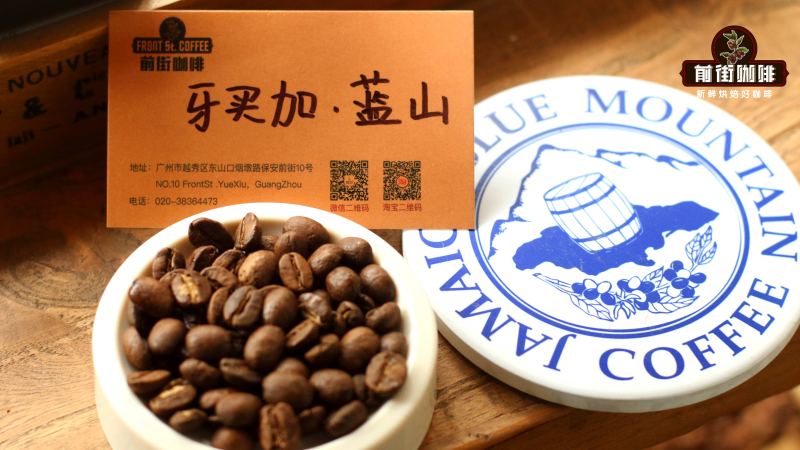
How Are Jamaica Blue Mountain Coffee Beans Grown and Graded?
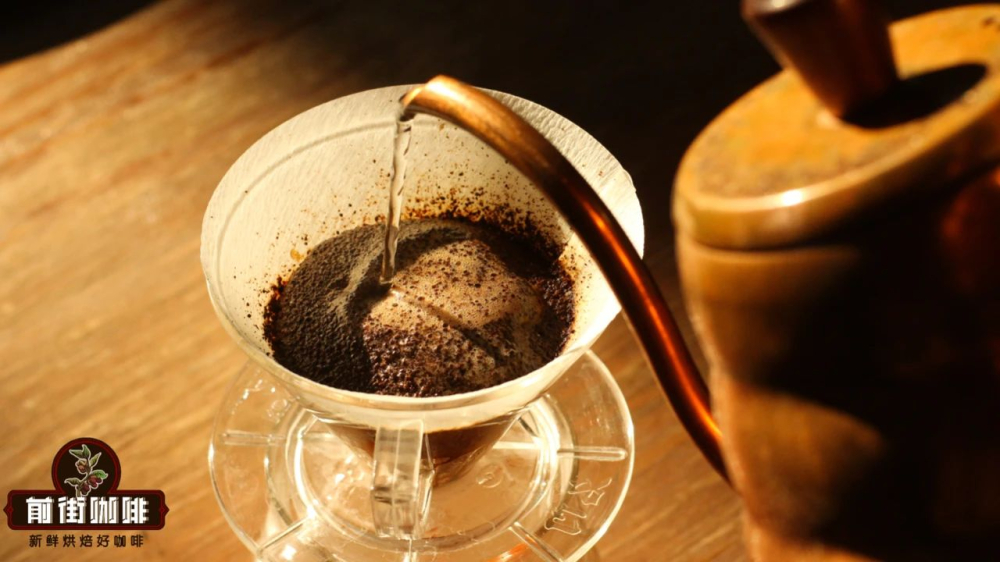
Jamaica Blue Mountain coffee is graded by the Jamaica Agricultural Commodities Regulatory Authority according to bean size, defects and cup quality, and the well-known estates sit in the Blue Mountain and High Mountain districts. The cup profile is balanced and mild: low bitterness, only slight acidity, and a sweet, full body. Pour-over extraction suits these beans well.
Japanese buyers long held preferential purchasing rights, and in 1992 Jamaica sold 688 tons to Japan against 75 tons to the United States and 59 tons to the United Kingdom. Those rights lapsed after the 2008 economic crisis, and China formally opened an import channel in 2011, widening supply beyond the most expensive coffee markets.
Jamaican Blue Mountain Coffee is renowned as one of the most well-balanced coffees in the world, with its sweetness, acidity, and bitterness blending seamlessly, almost devoid of any bitter taste and with only a very slight acidity. Front Street Blue Mountain Coffee fully inherits these excellent qualities and is suitable for extraction by pour-over. This article will systematically outline the variety classification system of Blue Mountain Coffee, the main producing regions and representative estates, the evolution of China's import channels, and the key points for identifying authentic Blue Mountain Coffee, while also introducing Front Street brand's practical experience in sourcing and recommending Blue Mountain Coffee, helping coffee enthusiasts gain a comprehensive understanding of this legendary coffee.
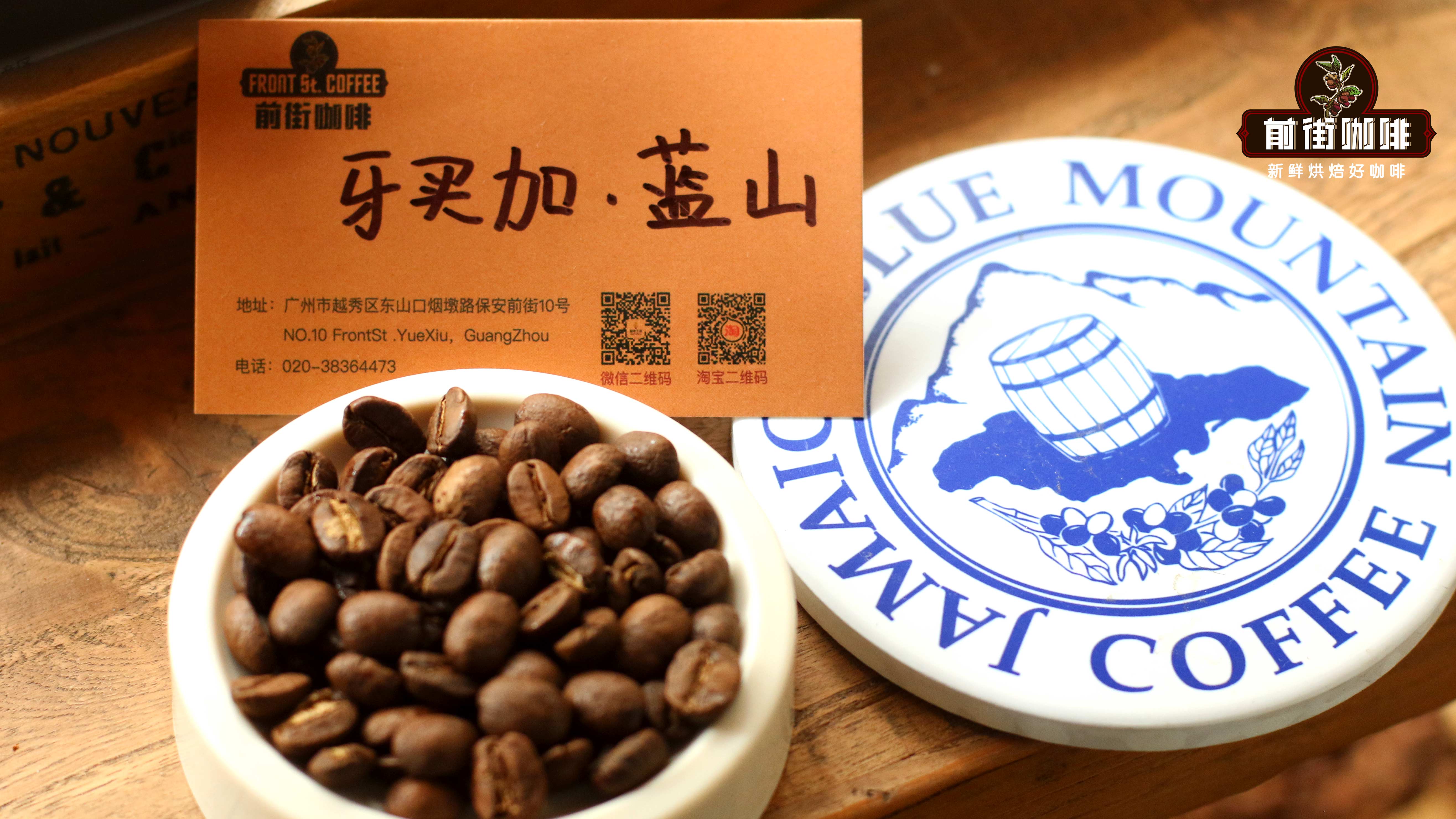
Front Street Jamaican Blue Mountain Coffee single-origin beans: varieties, brand recommendations, and estate introductions
Front Street Blue Mountain Coffee brings together all the virtues that a great coffee should have: a rich, full-bodied taste, a perfect balance of sweetness, acidity, and bitterness, no unpleasant bitterness, and only a very slight degree of acidity. As an outstanding single-origin bean, it is recommended to extract the best flavor of Front Street Blue Mountain Coffee by pour-over.
Long-term Japanese capital involvement in the Jamaican coffee industry has left the lifeblood of Blue Mountain Coffee mostly in Japanese hands, and they have consequently enjoyed preferential purchasing privileges. Data from 1992 illustrates the point: Jamaica sold 688 tons of Blue Mountain Coffee to Japan that year, while the United States received only 75 tons and the United Kingdom 59 tons. Japan alone consumed ninety percent of Blue Mountain Coffee's output. The rest of the world combined could only receive a 10% share, so no matter how prices fluctuated, Blue Mountain Coffee remained in a state of supply falling short of demand.
China formally established its Blue Mountain Coffee import channel in 2011, and the key turning point came in 2008. That year, the economic crisis broke out, and Japan's preferential purchasing rights happened to expire. To diversify risk, the Jamaican government proactively expressed interest in cooperation with China. In 2010, the Hangzhou Coffee and Western Food Industry Association was invited to visit Jamaica, and the two sides signed a letter of intent for cooperation as general agents for Blue Mountain Coffee in Eastern Europe and China. The association's president at the time was the holder of the Weibo account "Lou Boyin."
Starting in 2011, mainland China began to have independent import batches of Blue Mountain Coffee beans. Blue Mountain Coffee beans are indeed expensive, but not to the exaggerated extent the public imagines. Front Street purchases Blue Mountain Coffee beans by the barrel, and its partner estate is Clifton Farm, which has long supplied China. The farm belongs to the Sharp family and is a highly capable major coffee grower in the Blue Mountain region.
Jamaican coffee can be divided into three varieties:
Jamaican Blue Mountain Coffee
(Jamaica Blue Mountain Coffee). Blue Mountain Coffee and High Mountain Coffee are each further subdivided into four grades. Ranked from highest to lowest quality, they are: NO.1, NO.2, NO.3, and PB, with PB referring to peaberry. According to CIB standards, only coffee grown above 666 meters in elevation can be called Jamaican Blue Mountain Coffee;
Jamaican High Mountain Coffee
(Jamaica High Mountain Supreme Coffee Beans). Coffee produced below 666 meters in elevation in Jamaica's Blue Mountain region is called High Mountain Coffee. Its quality is second only to Blue Mountain Coffee, and the industry often calls it the sibling variety of Blue Mountain Coffee. Because Jamaican Blue Mountain Coffee output is extremely limited, if you want to experience Jamaican flavor, High Mountain Coffee is the ideal alternative.
Jamaican Coffee
(Jamaica Prime Coffee Beans). Coffee grown outside the Blue Mountain range is collectively called Jamaican Coffee. In the past, a misunderstanding circulated among domestic coffee professionals that only coffee produced in the Blue Mountain region above 1,800 meters could be called Blue Mountain Coffee. In fact, there is only one estate in the crown zone above 1,800 meters in the Blue Mountains, named Amber. The estate owner is of Chinese descent, surnamed Lyn (Lin), with ancestral roots in Guangdong, China. The estate has only 30 hectares of land and very low output. Blue Mountain Coffee is mainly distributed across five mountain areas of the Blue Mountain range: John Crow, St. John's Peak, Mossman's Peak, High Peak, and Blue Mountain Peak.
Among the so-called "Blue Mountain style" coffees on the market, it is almost impossible to find a single genuine Blue Mountain coffee bean. There is also a "Jamaica Blue Mountain Blend" coffee, made from 30% Blue Mountain Coffee and 70% premium Jamaican High Mountain Coffee. Both types of products try to imitate the flavor of Blue Mountain Coffee, but they can never reach that perfect level.
Identifying Authentic Blue Mountain
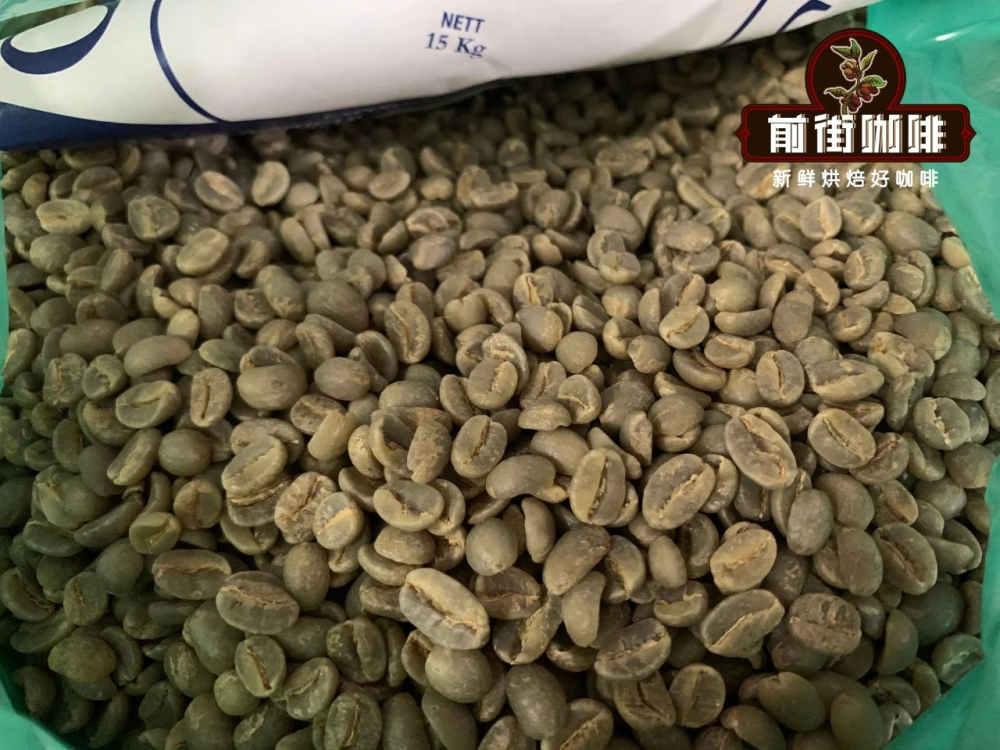
1 Appearance: Front Street's authentic Blue Mountain Coffee green beans are bluish-green, neat and uniform in appearance, medium-small in size, with slightly raised ends. After roasting, they expand noticeably in volume, and the beans are very plump.
2 Grinding: Genuine Blue Mountain Coffee beans grow at high altitudes, and their cell structure is relatively loose. When hand-grinding, they feel crisp, smooth, and continuous, without any sense of resistance.
3 Aroma: Front Street's authentic Blue Mountain Coffee has a rich and dense aroma; blended Blue Mountain coffees completely lack this aromatic expression.
4 Taste: Front Street's genuine Blue Mountain Coffee is balanced and full-bodied, without any one flavor being overly prominent or noticeably missing. This is precisely what other coffee beans find hard to match, and it is also the most crucial point when identifying authenticity. Blue Mountain peaberry has a more restrained aroma and a relatively stronger mouthfeel.
5 Feeling: As one of the world's top coffees, Blue Mountain Coffee, with its classic balanced character, often brings a subconscious sense of satisfaction that is hard to put into words when tasting it.
At the mention of Jamaica, people immediately perk up, because it produces the world-famous "Jamaica Blue Mountain Coffee." We have every reason to believe that Jamaican Blue Mountain Coffee is the finest coffee, with its acidity, sweetness, body, and bitterness achieving a delicate balance, a fragrant aroma, and an extremely smooth entry.
The earliest "Jamaica Blue Mountain" referred to coffee produced by Wallenford Estate and Silver Hill Estate, with the former being superior in quality; today's Jamaica Blue Mountain refers to coffee beans grown in the Blue Mountain region east of Jamaica's capital, Kingston (at elevations above 1,000 meters). Currently, Mavis Bank is the largest estate, and its barrels bear the M.B.C.F mark. Jamaica Blue Mountain's quality control is extremely strict, with certification handled by the government's Coffee Industry Board.
Coffee beans usually grown at low elevations and in other areas can only be called "Jamaica High Mountain Beans" or "Jamaica Washed Beans," and their flavor is far inferior to Jamaica Blue Mountain. However, the area of these producing regions is twice that of the true Blue Mountain region, and their output accounts for 75% of the country's total. So when buying Jamaican coffee, do not mistakenly assume that what you are buying is Blue Mountain Coffee.
Because Jamaica Blue Mountain is so famous, counterfeit Blue Mountain style coffees have emerged on the market, some even directly labeled "Blue Mountain Coffee." These are basically merchants' own blended products, and there may not be a single genuine Jamaican Blue Mountain bean in them.
Jamaica
Almost everyone who knows about Jamaica Blue Mountain Coffee knows it is the most expensive coffee in the world. In 1725, Sir Nicholas Lawes introduced the first Blue Mountain coffee tree seedlings to Jamaica from Martinique and planted them in the St. Andrew area.
Jamaica's coffee producing regions:
Today, the St. Andrew producing region remains one of the three major Blue Mountain Coffee producing regions. The other two are the Portland region and the St. Thomas region.
Today's Blue Mountain region has only 6,000 hectares of planted area, a modest scale, so it is impossible for all coffee marked "Blue Mountain" to come from there. In addition, another 12,000 hectares of land are used to grow two other types of coffee (non-Blue Mountain coffee): High Mountain Supreme and Prime Washed Jamaican.
Genuine Blue Mountain Coffee enjoys one of the most superior growing conditions in the world. Jamaica's weather, geological structure, and topography together create a uniquely ideal environment. The mountain ridge running across Jamaica extends to the eastern part of the island, and the Blue Mountain range reaches elevations of more than 2,100 meters. The cool, foggy climate and frequent rainfall give this fertile land well-balanced moisture. Locally, coffee trees are cultivated using mixed planting, allowing them to grow alongside banana trees and avocado trees on terraces.
Some small estates also grow Blue Mountain Coffee, such as Wallenford Estate, Silver Hill Estate, and J. Martinez's Atlanta Estate. Even the largest estate owners in the region are considered small-scale growers by international standards, and many estate owners are small landholders whose families have worked this land for two centuries.
Characteristics of Jamaican coffee:
The best Blue Mountain Coffee is undoubtedly one of the finest coffees available. This coffee tastes even more expensive than it looks. To taste its best flavor, you must use more coffee beans than when brewing other coffees; otherwise, the flavor will not live up to its reputation. Therefore, the real cost of fully expressing its flavor is that it requires 10% to 15% more coffee beans than the coffee second only to it in price.
Genuine Blue Mountain Coffee is made from the best local green coffee beans. Its flavor is rich and balanced, full of fruity and acidic notes, and able to satisfy a wide range of taste preferences. In addition, high-quality fresh Blue Mountain Coffee has an especially long-lasting flavor—a lengthy finish. Blue Mountain Coffee is divided into five grades: 1# Blue Mountain; 2# Blue Mountain; Select Peaberry Blue Mountain; 3# Blue Mountain.
Flavor: The aroma is very rich, with excellent sweetness returning
Recommended roasting method: Medium roast
★★★: Excellent
The market for Jamaican coffee:
Blue Mountain Coffee is a variety that reputed coffee retailers must stock no matter what. A leading British retailer once said: regardless of price, he would continue selling Blue Mountain Coffee all year round because he has many customers who recognize only "Blue Mountain."
Today, ninety percent of the harvested Blue Mountain Coffee is purchased by Japan. Other regions of the world can only obtain 10% of Blue Mountain Coffee's output, so regardless of price, Blue Mountain Coffee is always in short supply. In the UK, for many years Langford Brothers was the sole supplier. Later, Edmonds Group also obtained supply from Jamaica's Salda Foods.
In terms of transportation, Blue Mountain Coffee differs from other coffees: it is shipped in barrels with a capacity of 70 kilograms, an imitation of the Bonifieur barrels produced on Guadeloupe last century. These barrels were originally used to carry flour shipped from the UK to Jamaica and usually bore the trademark name and the manufacturer's name. The Coffee Industry Board issues certificates for all authentic Jamaican coffee and stamps them with an approval seal before export.
The Jamaican government used to insist that all Blue Mountain Coffee be roasted in Jamaica to ensure consistent quality. In fact, roasting is a fine art, and doing it well requires experience, training, and expensive equipment. From the consumer's perspective, coffee beans should be obtained and drunk immediately after roasting. Roasting coffee in Jamaica cannot meet this requirement. Now, Jamaican green coffee beans can already be exported.
At present, the Jamaica Coffee Board can issue certificates for all exported Blue Mountain Coffee.
There are three types of certificates:
1) Quality certification certificate issued by the Jamaica Coffee Board
2) Authorized sales certificate issued by the Blue Mountain Coffee producer.
(Blue Mountain Coffee is distributed by 4 Jamaican government-licensed processors and exporters, and exported by 16 licensed exporters.)
3) Certificate of origin for Jamaican Blue Mountain Coffee
The quality certification certificate will indicate the time and quantity. The Jamaica Coffee Board randomly selects one package from the submitted Blue Mountain Coffee for inspection. If it meets the conditions for Blue Mountain Coffee, the certificate is issued.
The above content is compiled by CoffeeHunters, a coffee news website.


