







How Does the Geisha Coffee Variety Perform in Yunnan?
Yunnan Geisha is the same Geisha coffee variety grown in Ethiopia and Panama, trial-planted in China from around 2011 at altitudes of 1,300 to 1,800 meters, mainly in Baoshan, Pu'er, and Xishuangbanna. Because soil and climate differ from Panama, the cup shows a different tonality, so the variety is genuine but the flavor expression is regional.
The variety traces back to Ethiopia's Gesha forests, then moved through Kenya and Tanzania before reaching Costa Rica as T2722 in 1953; that answers where did the coffee bean originated for this line. Panama adopted it in the 1960s and won the 2004 reliable of Panama, which made Geisha famous. Yunnan plantings are still young, and natural-process lots from Baoshan show the current level.
In recent years, domestically grown Yunnan Geisha has gradually entered the specialty coffee market, with production regions such as Baoshan, Pu'er, and Xishuangbanna successively introducing this legendary variety. Geisha originated in the Gesha primitive forests of Ethiopia, then passed through Kenya and Tanzania to Costa Rica and Panama, rising to fame overnight with its victory at the 2004 BOP competition. Yunnan began trial-planting Geisha around 2011, mostly at altitudes between 1,300 and 1,800 meters. Influenced by soil and climate conditions, its flavor profile presents a different tonality from Panama and Ethiopia. This article will start from Geisha's origin history and the terroir characteristics of the two representative production regions, Panama and Ethiopia, then systematically review Yunnan Geisha's cultivation background, variety performance, and cupping flavor, and share Front Street's recommended tasting experience of a Yunnan Baoshan natural-process Geisha, helping coffee enthusiasts gain a comprehensive understanding of domestic Geisha's true level and flavor potential.
When it comes to specialty coffee, Geisha is almost impossible to avoid. Panama-grown Geisha in particular, with its elegant, richly aromatic cup performance and auction prices that repeatedly set records, has not only become an industry focus but also frequently appears in mainstream news, astonishing consumers outside the coffee circle. However, Front Street has also noticed that in recent years, besides imported Geisha, coffee beans from Yunnan's production regions have begun to emerge in the domestic market. Are these domestic Geishas truly the Geisha variety? And what level is their flavor performance at?
What is Geisha?
What we now call Geisha can be traced back to the primitive forests around Gesha in Ethiopia. It belongs to the Arabica species, has strong disease resistance, but yields relatively low. When Geisha was first collected, researchers gathered multiple coffee plants and named them collectively after the collection site, Gesha Mountain, then sent them to a British plantation in Kenya for research and cultivation.
In 1936, Geisha was transferred to Tanzania for continued cultivation, and in 1953 it was introduced to Costa Rica and archived under the number T2722. By the 1960s, Panama had introduced T2722 Geisha. To adapt to the local terroir, this variety continuously adjusted its gene expression, ultimately forming the refined floral and fruity aroma and flavor profile we know today. It was only after winning the Best of Panama competition in 2004 that the "Geisha era" truly began sweeping the globe.
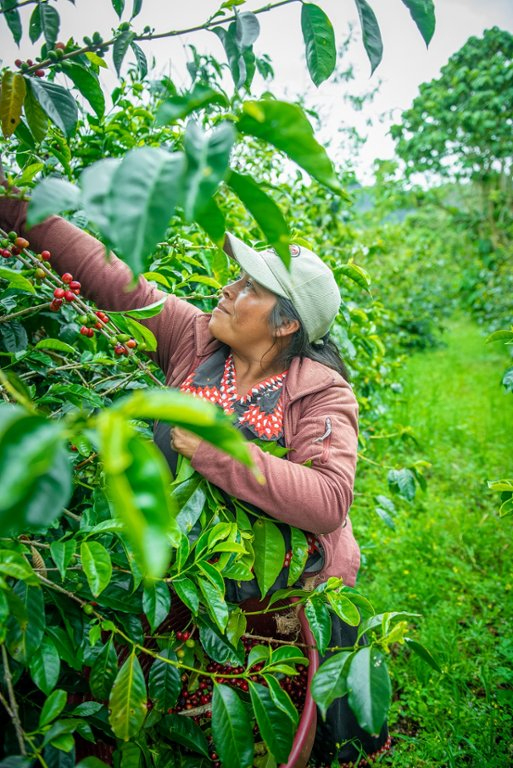
According to Front Street's research, Geisha is extremely sensitive to growing conditions, preferring high altitudes and fertile soil, and also requires clouds or shade trees to avoid direct sunlight. The owner of Hacienda La Esmeralda once mentioned that a large number of shade trees must be kept on the estate to shield the delicate Geisha from strong light, and traditional pruning methods must be used in the early planting stages, otherwise the plants easily die. The higher the planting altitude, the longer Geisha cherries take to ripen, and the flavor tends to be more complex and distinctive.
Compared with other coffee varieties, Geisha's leaf system is very thin, its photosynthetic efficiency is relatively low, and its root system is also rather fragile, absorbing water and nutrients slowly, resulting in extremely low yields. Combined with the fact that high-altitude environments themselves delay cherry ripening, a single Geisha tree produces only about half the cherry yield of a Caturra variety, which is one of the important reasons why Geisha prices remain high.
Since Geisha became popular, coffee farmers not only in Central and South America but around the world have joined the ranks of cultivation. However, each production region has its own unique terroir, altitude, and cultivation management methods, all of which affect coffee quality and flavor, so Geisha also presents different flavor directions. For guests new to Geisha, Front Street usually prioritizes recommending two of the most representative origins: one is Ethiopia, Geisha's birthplace, and the other is Panama, where Geisha rose to fame.
Panama · Geisha
Boquete is actually the name of a valley, located between Barú Volcano and the Jaramillo mountain range, forming a narrow strip. The scenery here is beautiful, cool and serene in the dry season, with gentle drizzle in the rainy season. Even without mentioning coffee, Boquete attracts travelers from various countries on its own merits. Locals who have lived here for a long time have adapted to local conditions, building many hotels, villas, and resorts along the Rio Caldera, making it a destination tourists love to explore.
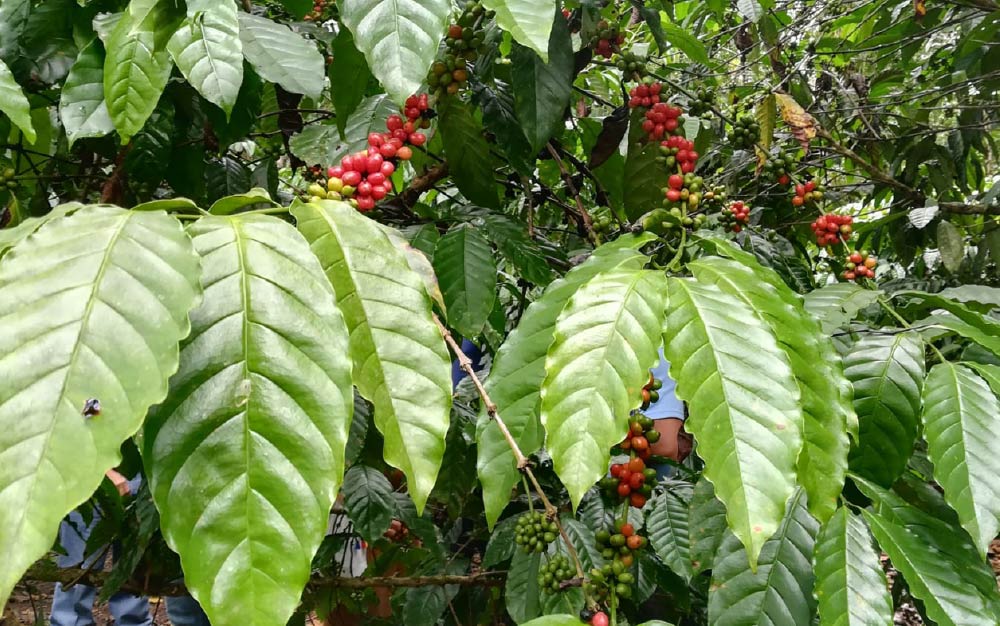
After consulting maps, Front Street found that Panama lies between two oceans, and the air currents from the Caribbean Sea and the Pacific Ocean converge in the Boquete Valley above 6,500 feet, forming a unique and variable microclimate. With moderate temperature and humidity, year-round mist, abundant rainfall, and the added benefit of volcanic soil, coffee trees here enjoy exceptionally favorable growing conditions, making it easier to develop rich and diverse aromatic characteristics.
Before 1989, Panama's coffee prices had always been controlled by the International Coffee Agreement, and for most of the 19th and 20th centuries, Panama also exported small amounts of green coffee beans to Western European countries. However, in that year, the agreement collapsed, and international green bean prices plummeted, falling from $1.20 per pound to as low as $0.74 per pound. In the early 1990s, as commercial coffee bean prices continued to decline, Panama began turning its attention to the emerging specialty coffee market. In 1996, seven local coffee estate owners in Panama jointly established the Specialty Coffee Association of Panama (SCAP) and held the first green bean competition and online auction, with the goal of organizing the country's small-scale growers to collectively promote high-quality Panamanian coffee.
With the establishment of the Specialty Coffee Association of Panama, combined with the Geisha variety rapidly gaining fame in the industry through BOP, Panama's production region began to earn widespread praise from international coffee professionals. In Front Street's view, Panama coffee's excellent reputation today is due not only to its inherently ideal growing environment but also to the high-caliber coffee farmers there.
On Front Street's bean list, Panama has multiple Front Street Geisha coffees. If only one could be chosen for tasting, Front Street would prioritize recommending the Front Street washed Geisha from the Boquete production region. It is selected from the renowned Boquete origin, uses traditional washed processing, is extremely affordably priced, and carries Geisha's classic orange-blossom honey charm—a high-quality representative not to be missed.
Ethiopia · Geisha
As Panama's Geisha variety rose to fame, some coffee researchers returned to Geisha's sampling site based on records, searching for T2722's ancestral descendants in hopes of finding an affordable alternative version of wild Geisha coffee beans. Researchers did find related plants, but the genetic relationship was not particularly close—only some genes were shared.
In terms of flavor, Ethiopian Geisha coffee beans are also not as refined. After all, wild Geisha has not been repeatedly modified genetically by humans and the natural environments of different regions, so although it also carries floral and fruity aromas, its brightness is insufficient, presenting an almond-like aroma, and its mouthfeel layers are not as rich as Panama Geisha.
Yunnan's Geisha coffee beans are the same. Whether it is T2722 Geisha or Ethiopian Geisha, after arriving in Yunnan, the flavor changes. On one hand, the planting altitude is not as high as in Africa and Central and South America; on the other hand, soil composition and climate conditions are also very different.
When did Yunnan start growing Geisha?
Having covered the Geisha stories of Panama and Ethiopia, let us now turn our attention back to China and look at Yunnan Geisha's performance. Yunnan Geisha coffee has not had a long cultivation history, mainly concentrated in the "Zuoyuan" estate in Yunnan's Baoshan production region. Starting around 2011, the estate owner began researching the cultivation of Geisha coffee varieties in Yunnan and set aside an area on his estate specifically for research into Yunnan Geisha coffee cultivation.
The Geisha variety at China Yunnan's Aini Estate, on the other hand, was introduced from the Panama region in 2012. After nearly five years of cultivation and breeding at the two estates, the green beans grown from Geisha in Yunnan's blessed land reached mature and stable quality, adapted well to the local climate and soil, showed resistance to coffee leaf rust, high yields, strong cold resistance, and performed especially well in cup quality.
Although many countries began growing Geisha coffee beans after it rose to fame, the flavor is not as refined as that grown in Panama's high-altitude regions. Even using a Geisha variety that has already been "tamed" by Panama, it is impossible to achieve the same flavor.
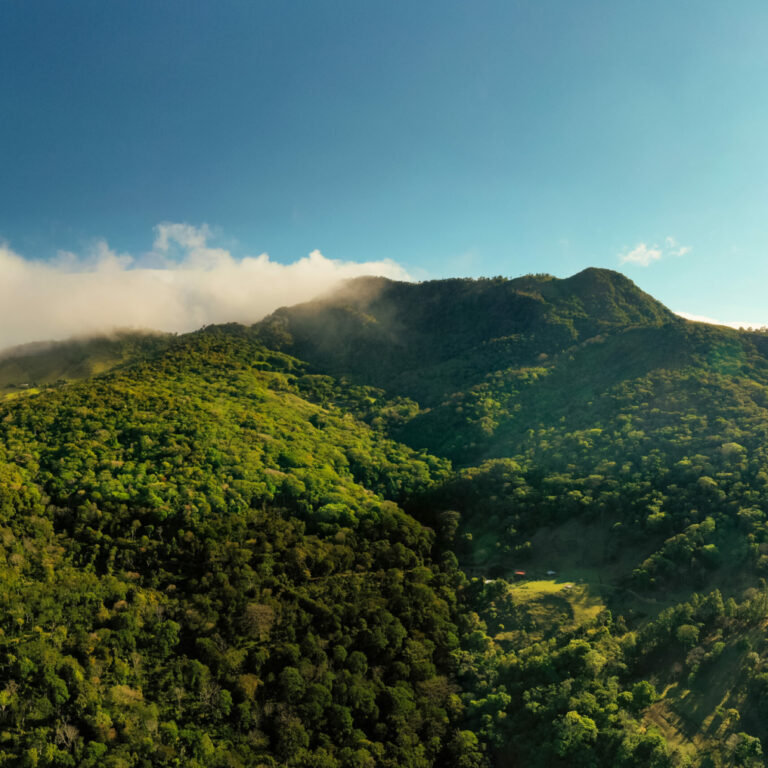
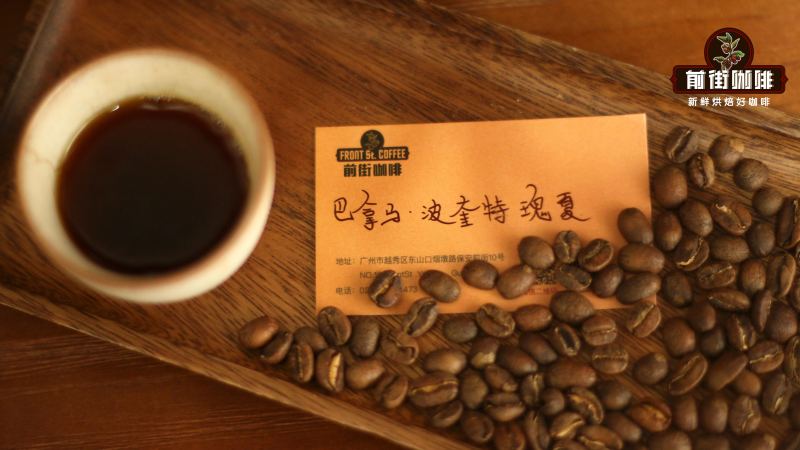
At present, Yunnan Geisha is mainly grown in Baoshan, Pu'er, Xishuangbanna, and other places, mostly distributed on high mountains at altitudes of 1,300–1,800 meters, with a still relatively small coverage area, resulting in low yields and relatively higher prices. To taste the flavor of China's Yunnan Geisha, Front Street also brought in a Front Street natural-process Geisha from Baoshan, roasted at a medium-light level, and tasted it in cupping form.
When Front Street cups the Front Street Yunnan Geisha coffee variety grown in Yunnan, the first impressions are plum-like acidity, the fresh sweetness of red berries, a slight black tea sensation, and a nutty finish. The floral aspect is not obvious, the tonality tends toward balance, and overall it is fairly moderate.
The above content is compiled by CoffeeHunters, a coffee news website.


