







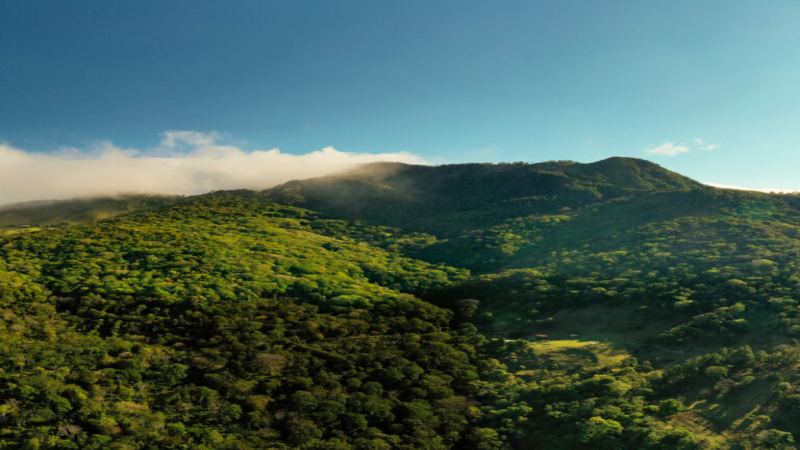
What separates the Red, Green, and Blue Labels in geisha coffee?
Panama geisha coffee became a specialty benchmark through Hacienda La Esmeralda. Daniel, the estate's third-generation owner, confirmed the variety in 2003 after repeated cupping, noticing jasmine, citrus, peach, blueberry, bergamot, and sugarcane notes. The estate entered it in competition and won, then took the Specialty Coffee Association of America title in 2005, followed by world championships in 2006 and 2007.
La Esmeralda divides its planting plots by altitude into three brand series: Red Label, Green Label, and Blue Label. Each represents a different quality grade and price positioning. The article outlines the distinguishing criteria, flavor characteristics, and buying points for the three labels, and lists specific Hacienda La Esmeralda geisha coffee products so drinkers can see how the grades differ.
Geisha coffee is now in high demand in the specialty coffee world, and this variety's world-class reputation owes much to Panama's Hacienda La Esmeralda. From Daniel discovering Geisha's unique flavor on the cupping table in 2003, to winning first place in the Specialty Coffee Association of America competition in 2005, Hacienda La Esmeralda proved Geisha's extraordinary potential through quality. The estate divides its planting plots into three brand series—Red Label, Green Label, and Blue Label—based on altitude, each representing different quality grades and price positioning. This article will systematically outline the distinguishing criteria, flavor characteristics, and purchasing points of these three brands, while introducing specific information about multiple Hacienda La Esmeralda Geisha products under Front Street Coffee, helping coffee enthusiasts clearly understand the differences between the grades.
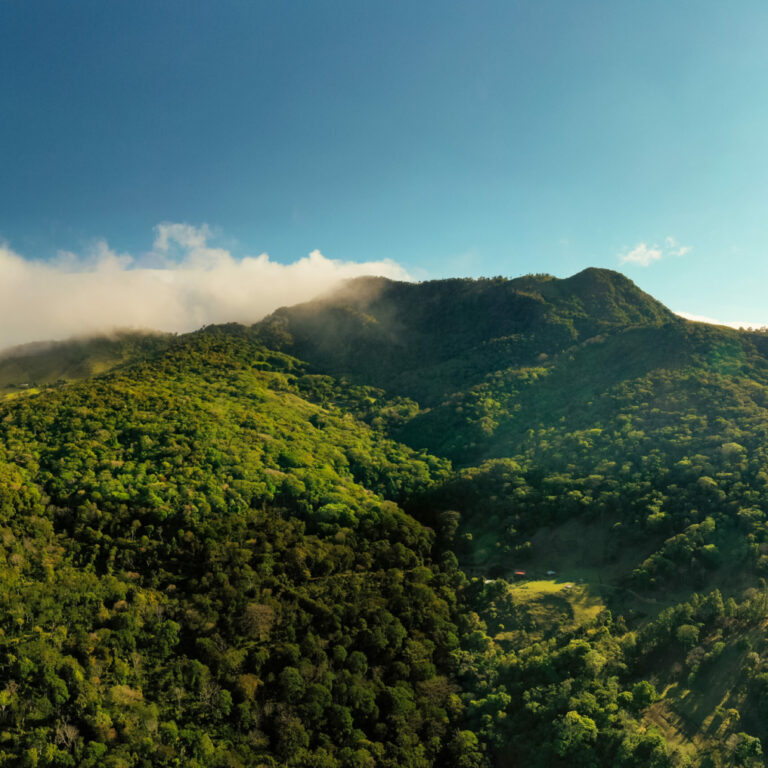
If you ask who the hottest star in today's specialty coffee scene is, Geisha is undoubtedly the first to come to mind.
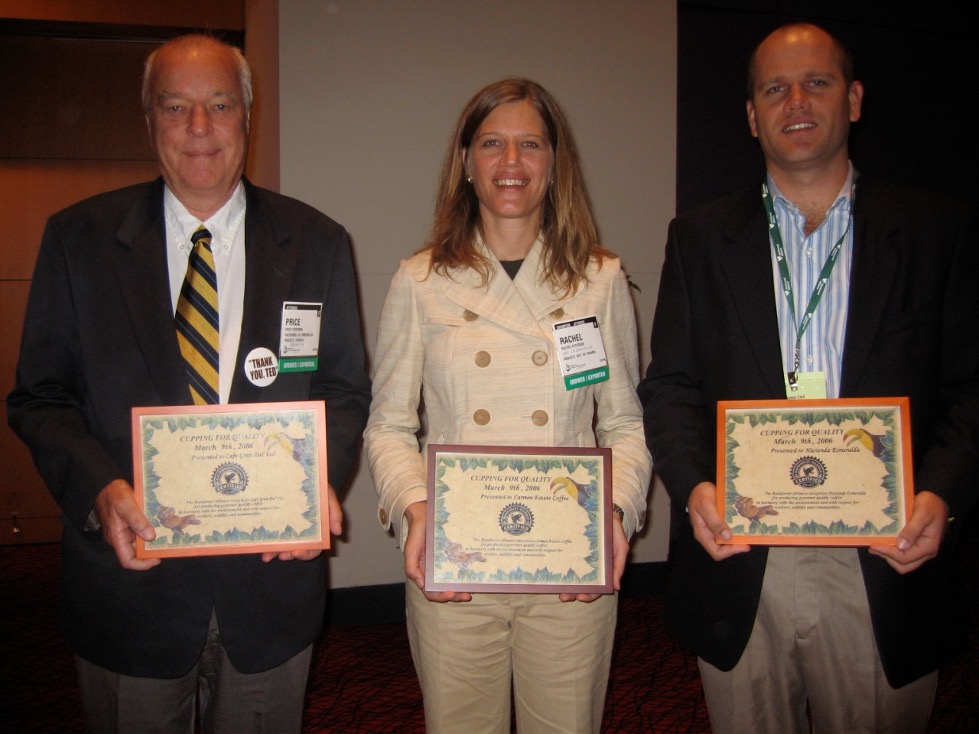
Geisha's current fame, Front Street believes, is largely thanks to Panama's Hacienda La Esmeralda. Daniel, the third-generation owner of the estate, once revealed that after years of repeated comparison and testing, he finally confirmed the Geisha variety in 2003. That same year, two weeks before the Best of Panama (BOP) competition opened, while selecting competition batches on the internal cupping table, Daniel noticed that Geisha had outstanding flavors of jasmine, citrus, peach, blueberry, bergamot, and sugarcane. These flavors differed from the mainstream preferences in the coffee industry at the time, but he still decided to enter Geisha in the competition and ultimately won the championship.
In 2005, Hacienda La Esmeralda brought Geisha to the Specialty Coffee Association of America (SCAA) competition, defeated many strong opponents, won the honor of world-class specialty coffee, and went on to win the world championship in both 2006 and 2007, once again attracting global attention in the coffee world. Since then, coffee-producing regions around the world have introduced Geisha, including Yunnan in China, which also began growing this popular variety. Although Geisha is now grown all over the world, Front Street believes that as the discoverer of Geisha's flavor, Hacienda La Esmeralda not only strictly controls coffee quality, but its natural processing method also best showcases the classic "Geisha taste."
In the early years, after Hacienda La Esmeralda purchased the Jaramillo estate with its superior environment, cupping revealed that Geisha's flavor was unique, so they began cupping other areas of the farm and divided planting plots according to altitude, which formed the Red Label, Green Label, and Blue Label we know today. If we divide Geisha according to Hacienda La Esmeralda's brand strategy, it can be categorized as Esmeralda Special—Red Label, Private Collection—Green Label, and Geisha1500—Blue Label.
Among these, Esmeralda Red Label Esmeralda Special includes both auction and non-auction lots. The Red Label series has a notable feature: all coffee beans in each lot come from the same plot. For example, the Red Label Geisha purchased by Front Street comes from the Jaramillo plot, which provides buyers with detailed coffee information. Of course, Front Street believes that Geisha is widely popular not only because of its stunning flavor, but also because this variety presents another distinctive deliciousness in different origins. Therefore, Front Street's bean list already includes 6 Panama Geisha coffees, such as the Guarumo Estate Geisha coffee that won first place in the natural group at the 26th Best of Panama in 2022. Its acidity is especially "bold," and on top of Geisha's original rich floral and fruity aroma, it highlights a malt-fermented mouthfeel.
Geisha produced under Esmeralda Special is selected from the two sub-regions of Jaramillo and Cañas Verdes, requires a growing altitude between 1600-1800 meters, and a cupping score above 90 points. We sometimes see auction Red Label Geisha lots, which are actually selected by Hacienda La Esmeralda from divided plots to participate in an internal independent auction. Non-auction Red Label comes from the same plots, and its price is also much lower than auction Red Label.
FrontStreet Coffee: Hacienda La Esmeralda Red Label Geisha Coffee Beans
Region: Boquete
Estate: Hacienda La Esmeralda, Cañas Verdes
Altitude: 1700+ meters
Variety: Geisha
Processing Method: Natural
Flavor: Lemon, honey, berries, orange peel, mango, cream, citrus
Green Label Geisha belongs to lots that did not independently participate in competitions. Its growing altitude is also between 1600-1800 meters, and it is also selected from micro-lots grown in Jaramillo and Cañas Verdes. Green Label does not indicate a specific plot name. Hacienda La Esmeralda harvests and sells the coffee beans within this range as a blend, so it is normal for flavors similar to Red Label Geisha to appear.
FrontStreet Coffee: Hacienda La Esmeralda Green Label Geisha Coffee Beans
Region: Boquete
Estate: Hacienda La Esmeralda
Altitude: 1500–1600 meters
Variety: Geisha
Processing Method: Washed
Flavor: Jasmine, ginger flower, sweet orange, lemon, honey
There is also a Blue Label Geisha, made from Geisha coffee grown at 1400-1500 meters, harvested from all three sub-estates of Hacienda La Esmeralda, and only washed. Because Daniel and his sister Rachel wanted to elevate Hacienda La Esmeralda's brand positioning, the Blue Label Geisha lot was discontinued between 2019 and 2022, and the Geisha coffee from that area was instead sold to a brand, which launched "Las Rocas," also known as Volcanic Rock Geisha coffee beans, which is what we understand as Blue Label.
As consumers, we mostly distinguish grade levels by the color of the product trademark: when the label is printed with a large red coffee flower, it is Esmeralda Special (Red Label); if the coffee flower on the label has a green background, it indicates Private Collection (Green Label); Esmeralda Auction, which must be obtained through bidding, uses a gray background.
For many years, Red Label has always been the symbol of Hacienda La Esmeralda's highest quality. Its definition is high-quality Geisha grown at an altitude above 1600 meters, with a cupping score no lower than 91 points, and with detailed traceability information. Fans all know that every Esmeralda Red Label comes with a lot number used to track information such as the growing plot, altitude, latitude and longitude, tree age, harvest date, processing method, and cupping flavors.
FrontStreet Coffee Brewing Suggestions
Preparation before brewing is crucial. Since these are high-quality coffee beans, to taste the complete coffee aroma, Front Street recommends choosing freshly roasted coffee beans. All coffee has a period when its flavor is at its best, generally 7-30 days after roasting. Only brewing during this period does justice to such good coffee. The coffee beans shipped by FrontStreet Coffee are all roasted within 5 days, ensuring that the coffee beans everyone receives after ordering are the freshest, exactly within the best tasting period.
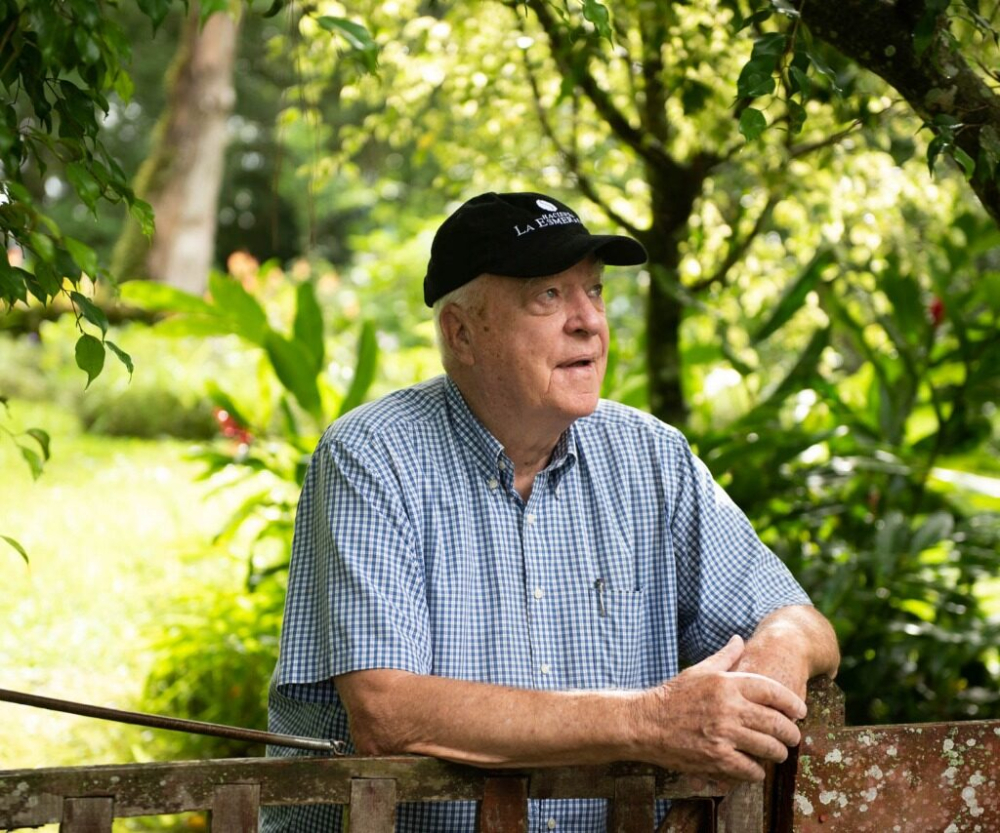
Panama's Geisha growing environment is high-altitude, and the coffee beans are relatively hard. For beans with floral and fruity profiles, Front Street's roasters generally use a medium-light roast to retain more high-quality acidity. Light roasting does not significantly change the internal structure of the coffee beans, so FrontStreet Coffee baristas use a higher water temperature and finer grind to bring out Geisha's aroma.
Filter: V60
Water Temperature: 91-92°C
Dose: 15g
Coffee-to-Water Ratio: 1:15
Grind Size: fine granulated sugar (80% passing a No. 20 sieve)
Three-stage extraction: For the first stage, use 30g of water to bloom for 30 seconds, pouring evenly in circles to form a dome. For the second stage, pour 95g of hot water. When the coffee bed drops halfway, begin pouring the third stage of 100g until all the coffee finishes dripping. Note: start pouring from the center point, using a gentle, small stream in circular motions throughout to avoid uneven extraction.
The above content is compiled by CoffeeHunters, a coffee news website.


