







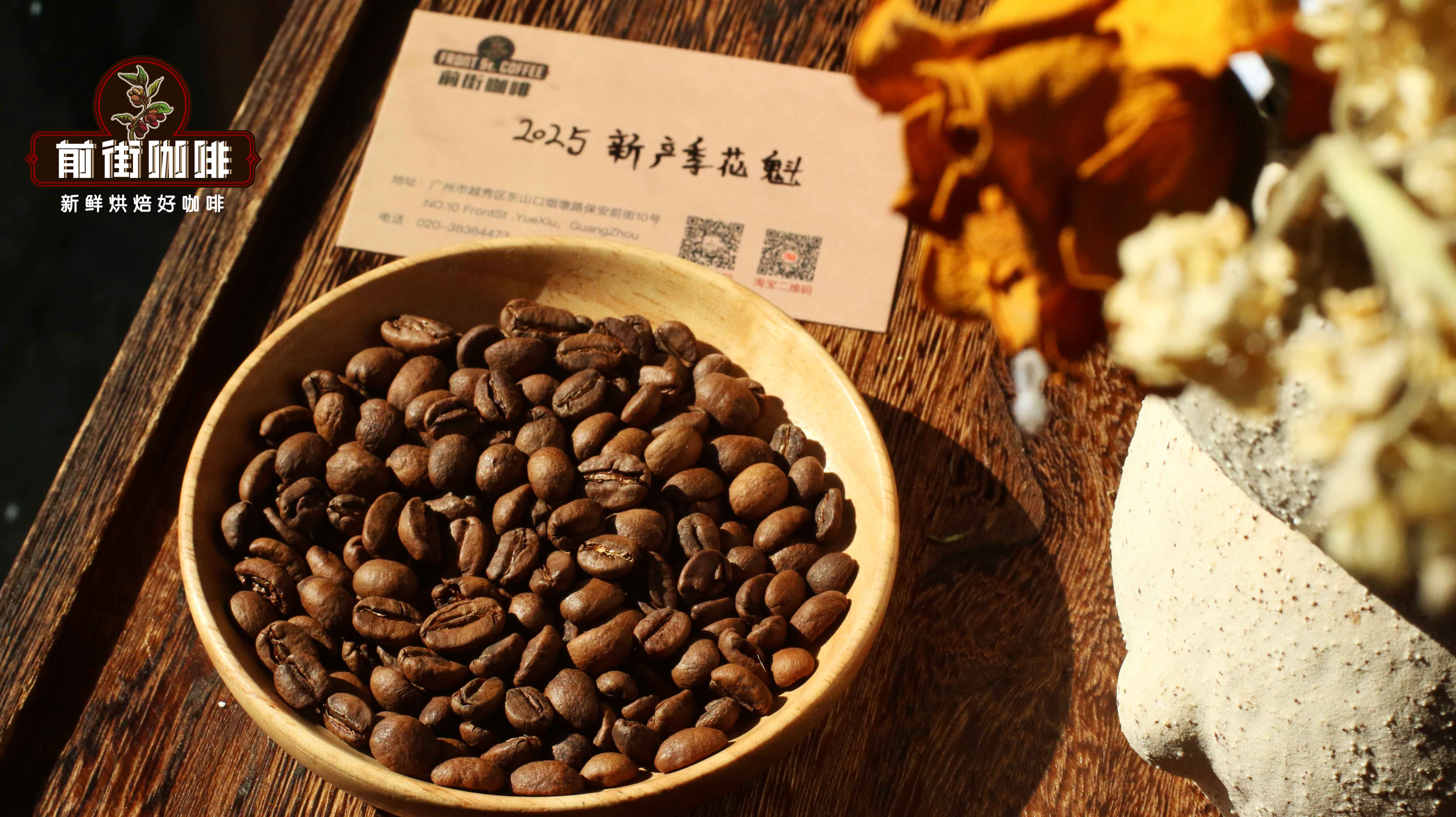
The name of Huakui coffee beans always evokes the image of "the chief of a hundred flowers, graceful and enchanting," and its flavor truly lives up to such praise. From the perspective of Front Street, this article takes you through how this bean went from an unknown lot in the Guji region of Sidama to becoming the highly acclaimed "chief of a hundred flowers." We will trace Huakui's origins and path to fame, explain the origin of the X.0 series, and share Front Street Coffee's brewing suggestions and flavor descriptions. Whether you are new to Huakui or looking to refine your brewing technique, you will find practical references here.
For more specialty coffee knowledge, please follow our WeChat public account: FrontStreet Coffee
The name of Huakui coffee beans always brings to mind the image of "the chief of a hundred flowers, graceful and enchanting." This bean truly lives up to its name, displaying an intoxicating aroma and mouthfeel in the cup. Today, Front Street will take you back to see how this coffee bean transformed from obscurity into the widely admired "chief of a hundred flowers."
The Origins of Huakui Coffee Beans
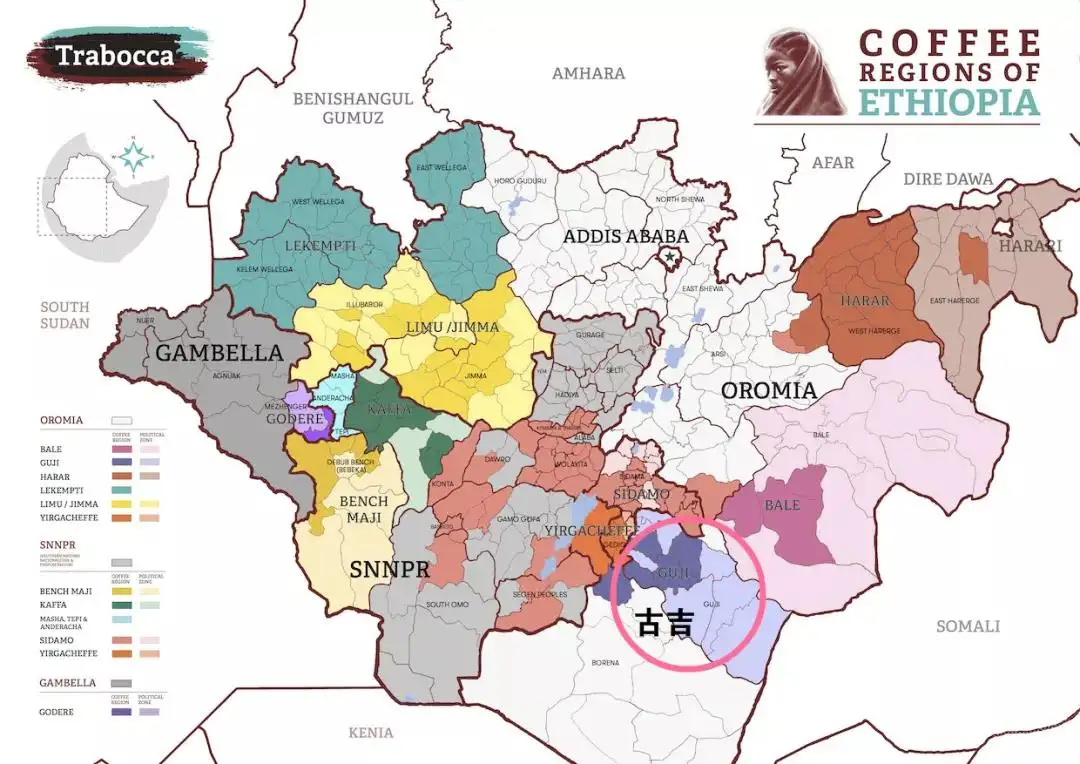
Huakui coffee comes from the Guji region of Sidama. Guji was originally part of the Sidama region, but in 2010, due to its outstanding coffee flavor, it was independently designated as a new region by the Ethiopian Commodity Exchange (ECX).
The Guji region is adjacent to Yirgacheffe, with diverse terrain and fertile black soil that can reach a depth of two meters, allowing coffee plants to root more deeply. The average altitude of the region is above 1,800 meters, with a large temperature difference between day and night, all of which provide favorable conditions for Guji to cultivate high-quality coffee. Coffee cultivation requires almost no chemical fertilizers; the fallen leaves, decaying matter, plant residues around the trees, and organic matter in the soil are enough to provide sufficient nutrients for the coffee trees to grow vigorously.
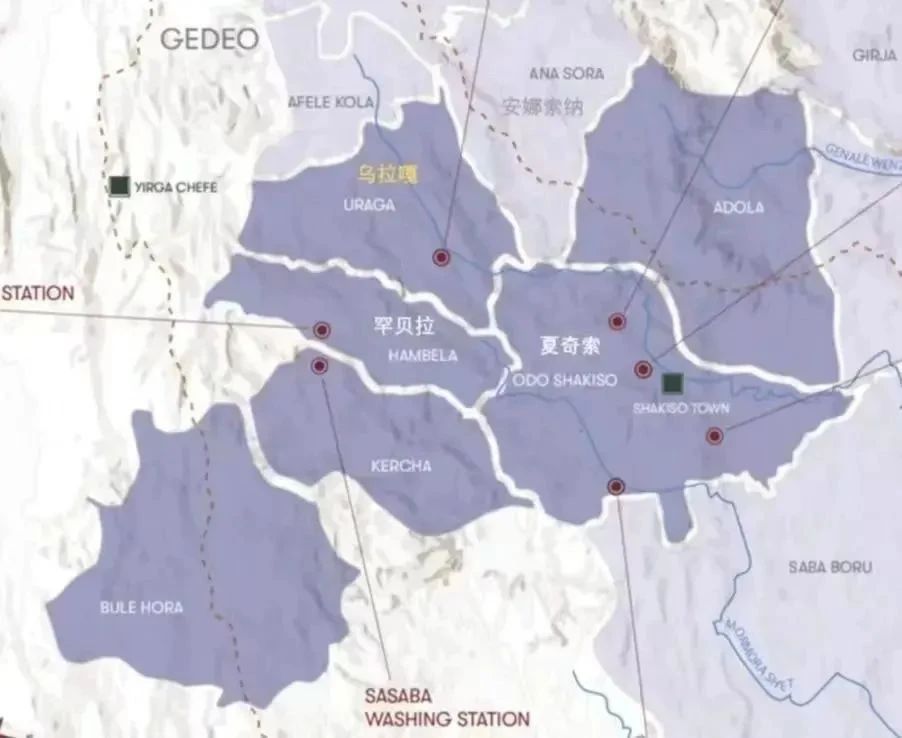
Today we still often see the Sidama region and Guji region appear together, which is mainly related to Ethiopia's administrative divisions. Administrative divisions are divided into four levels, from largest to smallest: Region, Zone, woreda, kebele. Most green coffee bean names follow this rule. Taking Huakui as an example, it is located southeast of Yirgacheffe in the Sidama region, and administratively belongs to Oromia Region → Guji Zone → Shakisso woreda → Hambella.
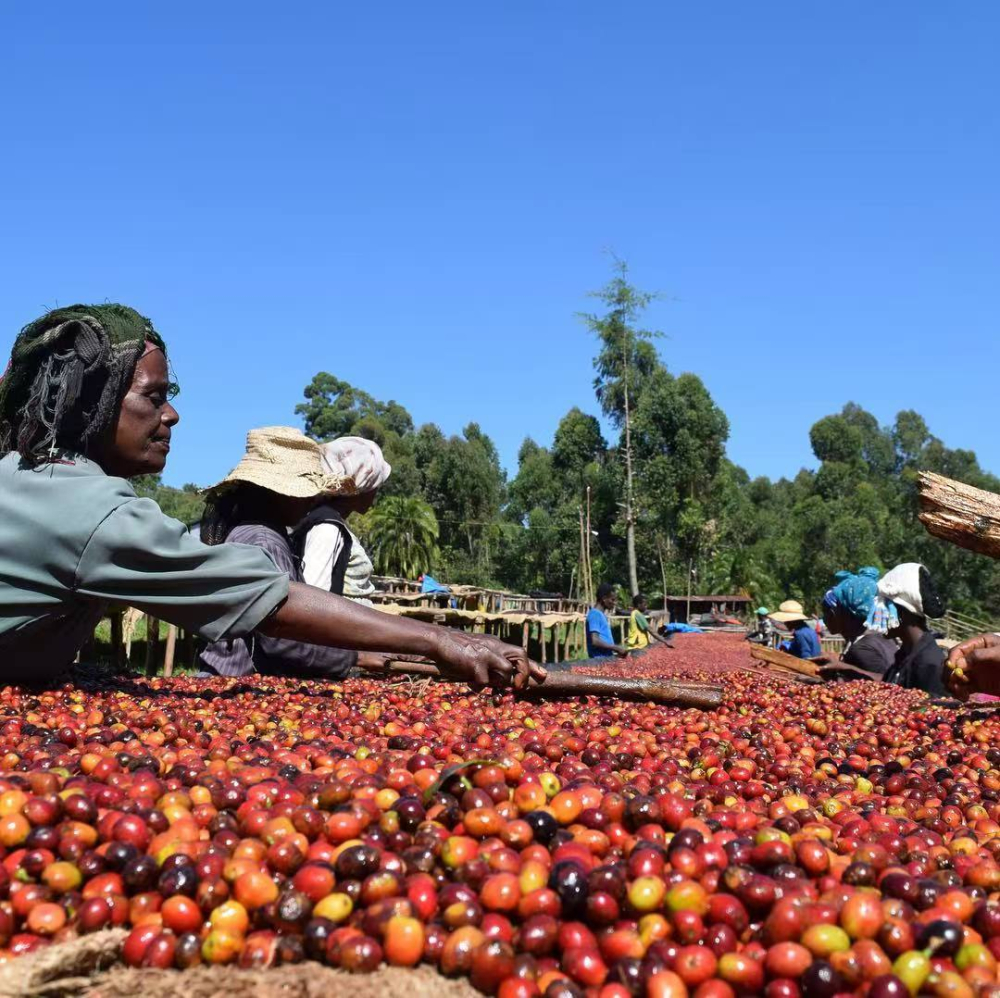
This area has red-brown organic soil, abundant rainfall, and a large temperature difference between day and night, giving the coffee a refined flavor and high-quality, full-bodied acidity. Every harvest season, farmers hand-pick fully red ripe cherries into baskets and send them to processing stations equipped with professional equipment. Sun-drying begins only when the red cherries reach a sugar content of 21 or above. With scientific measurement and refined management, the traditional sun-drying process is preserved while the coffee beans display more consistent quality and better sweetness.
The excellent sweet-and-sour taste and stable quality caught the attention of Ethiopian DW Green Bean Company. In 2017, DW sent the sun-dried coffee beans from the Buku processing station to compete in the TOH (the Taste Of Harvest) East African Green Bean Cupping Competition. With intense and full berry notes, creamy smoothness, and high sweetness, this lot won the championship. In the same year, a Chinese green bean company introduced the competition lot of green coffee beans and gave them the mysterious name "Huakui" to describe their flavor characteristics.
However, this was not yet the key to its fame. In 2017, Li Jianfei, runner-up in the China region of the World Brewers Cup, used this lot of Huakui coffee beans to defeat many competitors' Geisha coffees. In an era when Geisha coffee beans almost swept competitions of all sizes, a sun-dried bean from Ethiopia being able to defeat so many Geishas naturally made people take notice, and it was even considered comparable to Geisha.
Afterward, DW added processing stations in Dimtu, the core production area of Hambella, namely Buku Abel, Buku Saysay, Haro Soresa, and Tirtiro Goye, with an annual coffee output of about 1,100 tons. In terms of growing regions and processing stations, among all these estates and processing stations, only the sun-dried coffee beans from the "Buku Abel" processing station can be called "Huakui." And the Huakui coffee beans sold by Front Street over the years all come from the Buku Abel processing station~
Why does Huakui coffee have so many X.0 series?
In theory, only the champion lot from 2017 deserves the name Huakui. But coffee beans are, after all, an agricultural product, and a series of environmental factors such as climate and soil will cause the flavor to differ from year to year. To distinguish them, DW assigned an X.0 series to the sun-dried Huakui coffee beans produced each year thereafter by the Buku processing station. For example, 2018 was called Huakui 2.0, and by 2024, it had already reached the Huakui 8.0 series.
No~ Huakui is merely the commercial name of the coffee beans. Its variety is Ethiopian Heirloom, which is what we commonly call Heirloom. As the birthplace of Arabica coffee, Ethiopia has thousands of Heirloom varieties, making it a unique origin.
In Ethiopia, coffee cultivation is broadly divided into three systems: smallholder farming, semi-forest cultivation, and forest cultivation. Among them, coffee trees in semi-forest cultivation are mostly wild varieties from the wild, and farmers manage the coffee-growing areas and interplant other cash crops. Because there are too many varieties and they are too mixed, it is almost impossible to conduct genetic testing and verification on a larger scale. At the same time, the local government wanted to protect these unknown varieties and prevent operators from various countries from rushing to obtain them, so it decided to uniformly name them "Heirloom."
According to Front Street's observation, Heirloom varieties generally have small beans, are relatively round in shape, and are somewhat uneven, mostly between screen sizes 14-15. In cupping, they often show elegant floral and fruity flavors, and are deeply loved by people.
When Front Street first received the green Huakui 5.0 coffee beans, we could smell a fermented aroma of coffee flowers, completely different from the grassy smell of ordinary green beans. At the same time, we noticed that Huakui green beans vary in size, with many being pointed at both ends, and the moisture content was good, about 11%, but they were not very hard SHB beans. Because the beans are dense and hard, during brewing the first stage should extend the dehydration time and enter first crack before the temperature rise reaches first crack, trying to preserve small-molecule aromatic substances such as floral notes and reduce their loss.
FrontStreet Coffee Brewing Suggestions
Dripper: V60#01
Water temperature: 90-91℃
Dose: 15g
Coffee-to-water ratio: 1:15
Grind size: medium-fine grind (80% passing through China standard No. 20 sieve)
Brewing method: three-stage extraction. Use 30 grams of water for a 30-second bloom, then pour in a small stream in circles until 125 grams for the first stage; when the water level drops and is about to expose the coffee bed, continue pouring until 225 grams and stop; when the water level drops and is about to expose the coffee bed, remove the dripper. (Start timing at the beginning of the bloom.) Extraction time is 2'00".
The brewed flavor of Front Street Huakui coffee beans from the 2025 new crop season: floral aromas, the sweet-and-sour taste of berries, citrus, and plum, mango juice, honey, with a finish of black tea sweetness.
The above content is compiled by CoffeeHunters, a coffee news website.


