







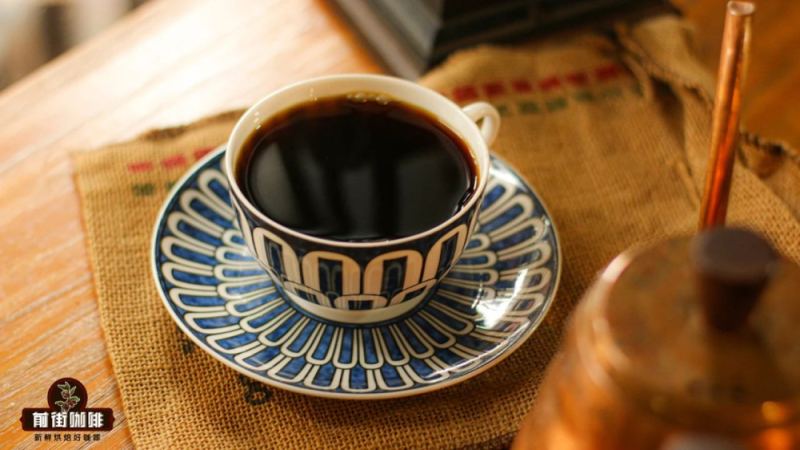
Honduras is the largest coffee producer in Central America and a major global exporter of washed Arabica beans. Coffee here is known for its exotic spice-like aroma, the rich nutty-chocolate finish, and a balanced, layered complexity. Since its introduction in the late 18th century, Honduran coffee has gone through a winding journey from lagging behind to rising up, and today it boasts six major regions such as Copán and Opalaca, along with a strict grading system based on altitude and defect rate. This article will give you a comprehensive understanding of Honduras coffee's geographical conditions, development history, regional distribution, processing methods, and main varieties, and introduce specialty coffee beans selected by Front Street, such as Sweet Orange Estate, Moka Estate Sherry, and Lychee Orchid.
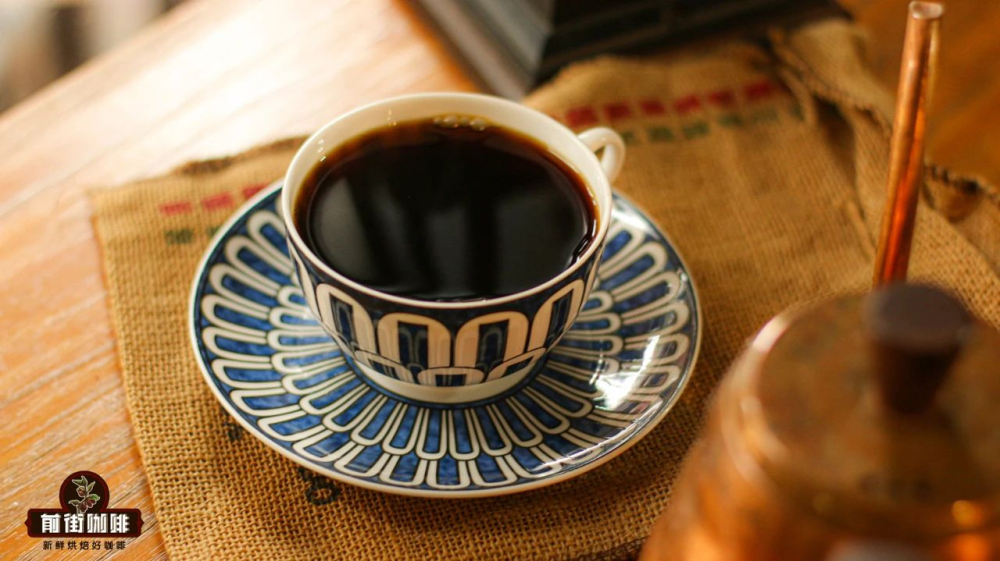
If you follow coffee origins, you should know that the coffee styles of different countries on the American continent each have their own strengths. Take Costa Rica as an example: Front Street believes that the coffee there is known for its soft fruity acidity, and with the support of innovative honey processing, it shows an especially rounded sweetness... Honduras, also located in the Americas, has flavors similar to its neighbors, but in its aroma you can often catch a hint of exotic spices, while the finish presents a rich texture of nuts and chocolate, overall balanced and full of layers.
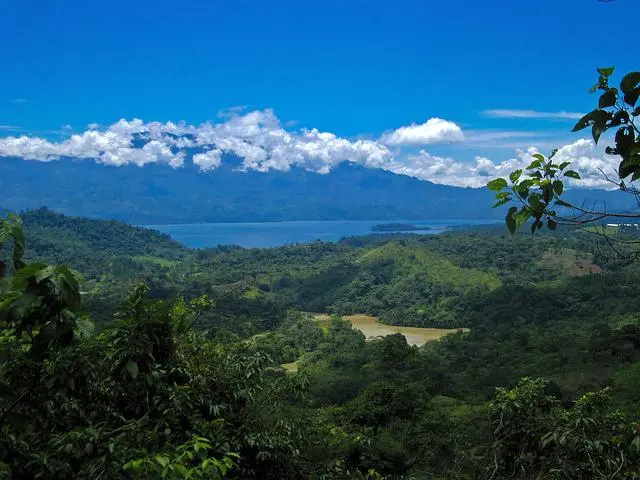
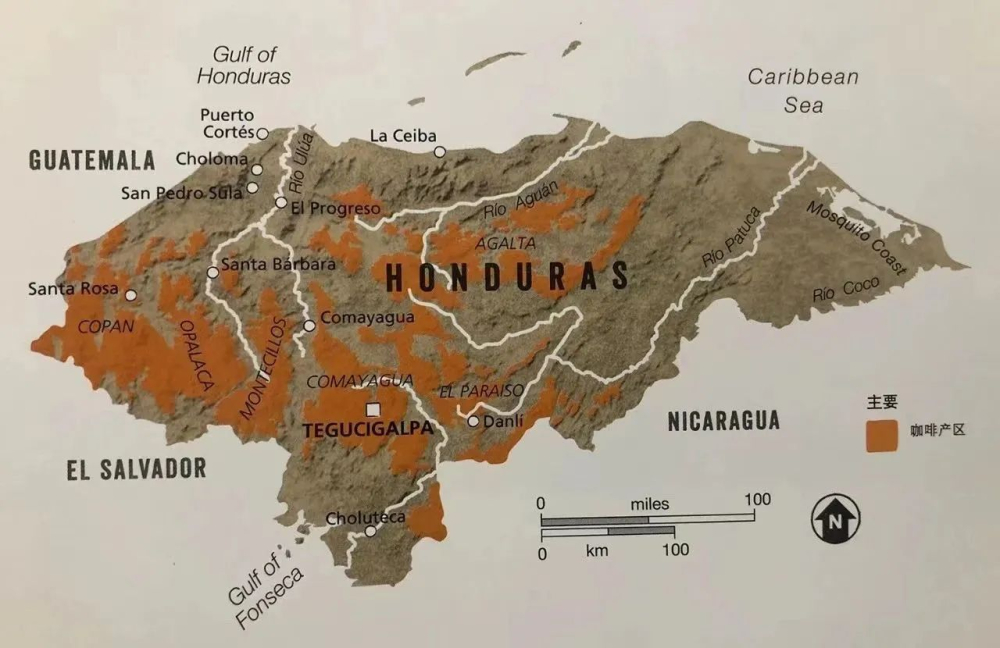
Geographical Conditions of Honduras Honduras is located in northern Central America and is a mountainous country. To the north it faces the Caribbean Sea, to the south it borders the Gulf of Fonseca on the Pacific, to the southeast it is adjacent to Nicaragua and El Salvador, and to the west it borders Guatemala. More than three-quarters of the country is mountainous and plateau terrain, with mountain ranges stretching from west to east, lava plateaus and many intermontane valleys inland, and plains along the coast. The country has a tropical climate, and the coastal plains have a tropical rainforest climate. It is precisely the microclimates, altitude, soil conditions, and abundant rainfall that together form Honduras's natural advantage for growing high-quality coffee.
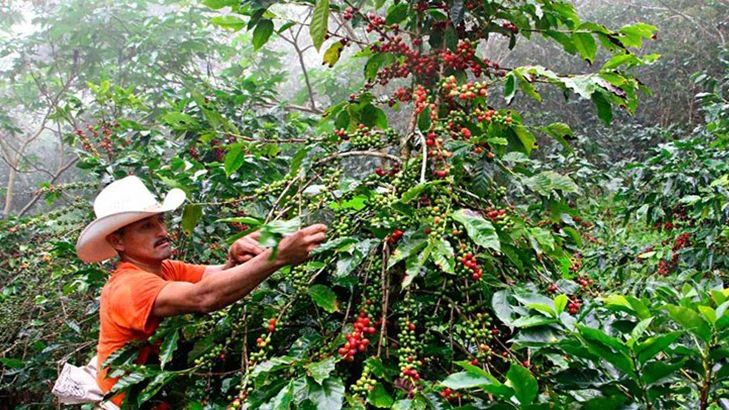
Honduras is not only the largest coffee producer in Central America; if counting only washed Arabica beans, it even ranks second in the world. In the early 21st century, coffee replaced bananas to become the country's most important cash crop. The banana industry was once dominated by large American companies, while coffee cultivation relies on smallholder farmers. At present, Honduras has about 110,000 coffee farmers, and manual picking of coffee cherries is the main harvesting method, with the harvest season from November to March of the following year.
Development of Honduran Coffee Honduran coffee was first introduced by Spanish merchants in the late 18th century. By 1804, there was already small-scale coffee cultivation locally.
In fact, Honduras's late start in coffee development had historical reasons—the lack of transportation infrastructure connecting production areas to ports caused the coffee industry to stagnate for a long time. It was not until after 1970 that the government specifically established the official institution Instituto Hondureño del Cafe (IHCAFE), dedicated to improving coffee quality. Coupled with the fact that coffee trees can be grown throughout the country, Honduras's coffee production finally surpassed Costa Rica and Guatemala in 2011.
In 1975, frost damage occurred in Brazil, causing a sharp decline in coffee production. Honduras seized the opportunity to rise, with production soaring from 500,000 bags to 1.8 million bags, and it was snapped up. Only after this did Honduras's coffee production truly get on a development track. By the 1990s, the specialty coffee wave rose in Central America, and other countries won with quality, while Honduras fell behind in coffee quality. The main reason lay in the green bean processing stage: the mountainous areas had abundant and irregular rainfall, which affected the final drying step.
In 2004, Honduras held the Cup of Excellence green bean competition for the first time, and 21 coffee professionals from across the country received recognition and participated in an online auction. In 2011, Honduras became the largest coffee producer in Central America and also the world's second-largest Arabica coffee producer. Today, Honduras has entered the ranks of the world's top ten coffee producers, ranking as the world's second-largest Arabica coffee producer. Coffee plays an important role in the country's economy and national development. Honduras has 280,000 hectares of coffee farms, mainly small coffee farms, most of them less than 3.5 hectares, and these small plantations contribute 60% of the country's coffee production.
Honduras Coffee Grades [By Growing Altitude] Strictly High Grown (SHG): above 1,200 meters High Grown (HG): 1,000-1,200 meters Central Standard (CS): 600-1,000 meters [By Defect Rate] US standard USP, US preparation; European standard EP Euro preparation. The meaning and rules of Honduran green coffee bean names: Honduras SHG EP (country + altitude grade + defect standard)
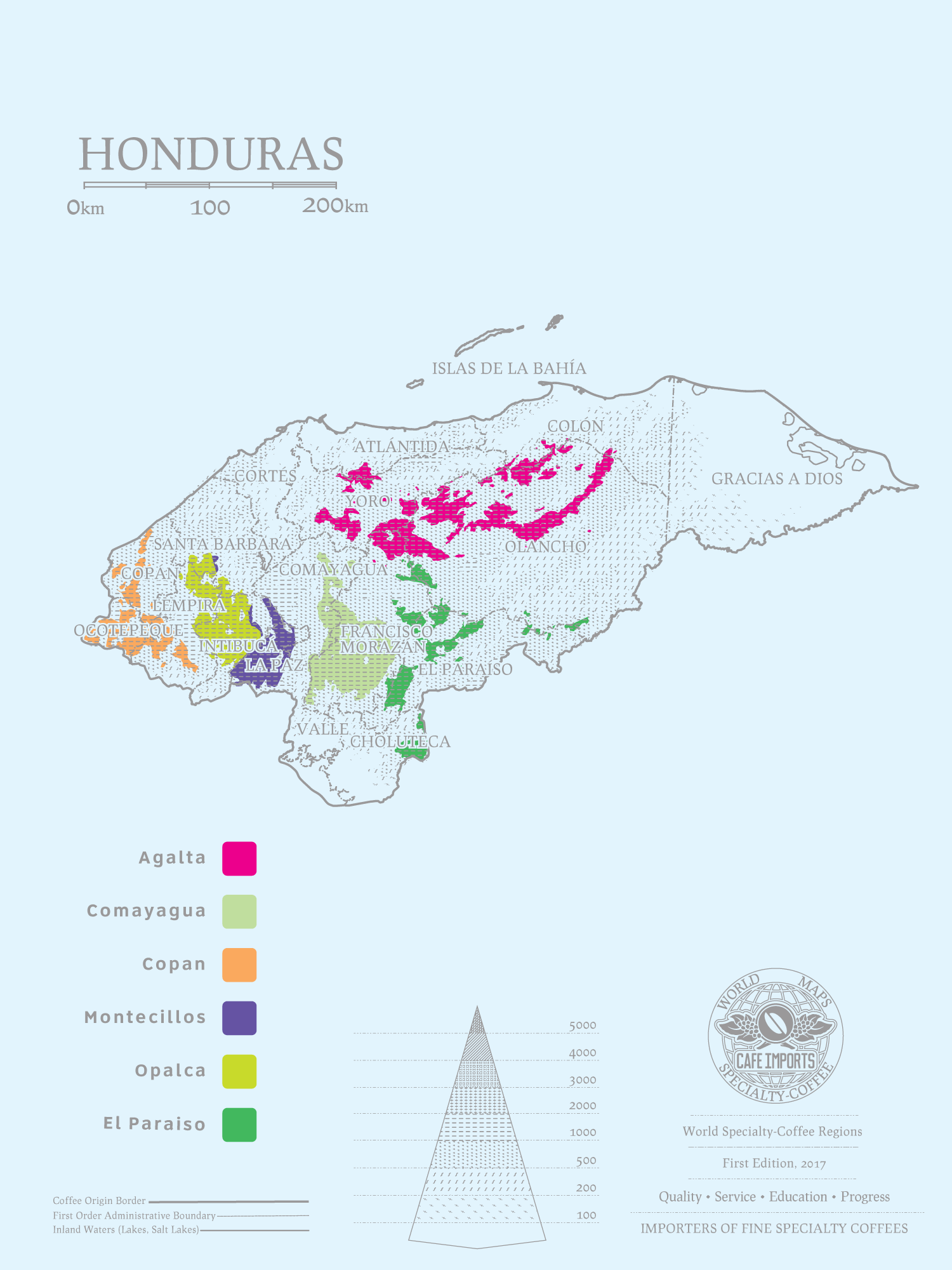
Honduras Coffee Regions Since 2007, Honduras has strengthened its origin labeling system, mainly dividing coffee origins into six major regions:
1. Copán Region (Copan) Location: Located in western Honduras, bordering Guatemala, including Copán Department, Ocotepeque Department, and parts of Cortés, Santa Bárbara, and Lempira Departments. Altitude: 1,000 - 1,500 meters Temperature: 11.5-22.5°C Precipitation: 1300-2300 mm Harvest: November - March
Honduras Las Gemelas Estate Region: Copan Estate: Las Gemelas Estate (Las Gemelas) Altitude: 1,250 meters Variety: Red Catuai Processing Method: Natural Flavor: Brown sugar, berries, raisins, fermented wine aroma
Honduras San Vicente Processing Plant Region: Copan Processing Plant: San Vicente Processing Plant Altitude: 1600-1900 meters Variety: Pacas Grade: SHG Processing Method: Washed Flavor: Raspberry, cherry, almond, caramel, green apple, grape
2. Opalaca Region (Opalaca) Location: Located between Santa Bárbara, Intibucá, and Lempira. Altitude: 1100-1500 meters Temperature: 11.5-22.5°C Precipitation: 1400-1950 mm Harvest Season: November - February Varieties: Bourbon, Typica, Catuai, Pacas Flavor: It has a very delicate acidity, an overall balanced performance, and obvious tropical fruit flavors such as grape and blackberry. 3. Montecillos (Montecillos) Location: Located in La Paz, Comayagua, Santa Bárbara, and Intibucá along the Salvadoran border in southwestern Honduras. Altitude: 1200-1600 meters Temperature: 12-21.2°C Precipitation: 1300-2300 mm Harvest Season: November - April Varieties: Bourbon, Catuai, Typica Flavor: Bright and lively acidity, with orange and peach notes, a long aftertaste, and a velvety mouthfeel. 4. Comayagua (Comayagua) Location: Located in central Honduras in Comayagua and Francisco Morazán. Altitude: 1,000 - 1,500 meters Temperature: 14.0 - 22.0°C Precipitation: 1350 - 1700 mm Varieties: Bourbon, Caturra, Typica, Pacas Harvest Season: December - March Flavor: Mainly lemon flavor, with obvious sweet fruit aroma, a creamier and richer mouthfeel, along with citrus sweetness, and it also gives off sweet and chocolate notes. 5. Agalta Tropical (Agalta Tropical) Location: Located in southeastern Honduras in Olancho and Yoro. Altitude: 1000-1400 meters Temperature: 14.5-22.5°C Precipitation: 1300-1950 mm Harvest Season: December - March Varieties: Bourbon, Catuai, Typica Flavor: Honey fragrance and aroma, with a strong citrus taste and a subtle but obvious acidity. 6. El Paraiso (El Paraiso) Location: Located in El Paraíso in southern Honduras, bordering Nicaragua. Altitude: 1100-1500 meters Temperature: 16-22.5°C Precipitation: 1000-1400 mm Harvest Season: December - March
Honduras Laurel Estate Washed Parainema Region: El Paraiso Altitude: 1,400 meters Variety: Parainema Processing Method: Washed Grade: SHG Flavor: Citrus, berries, grapefruit peel, nutty when cooled, black cocoa finish, pronounced berry acidity, tea-like body
In addition to the six major regions above, Honduras also has some smaller production areas. For example, Sweet Orange Estate in the La Paz region in the southwest and Moka Estate in the Masaguara region both produce outstanding coffee flavors, and Front Street has also launched several related coffee beans.
Honduras Sweet Orange Estate Region: Macara Altitude: 1,425 meters Variety: Catuai Processing Method: Washed Flavor: Citrus, melon, floral, cane sugar, orange peel, nuts, tea-like body
Honduras Moka Estate Sherry Region: Masaguara Estate: Moka Estate Altitude: 1500-1700 meters Varieties: Caturra, Catuai, Pacas Processing Method: Exquisite washed whiskey sherry barrel fermentation Flavor: Wine aroma, vanilla cream, black cocoa, nuts, liqueur chocolate
Honduras Moka Estate Lychee Orchid Region: Masaguara Estate: Moka Estate Altitude: 1500-1700 meters Varieties: Caturra, Catuai Processing Method: Exquisite washed + brandy barrel fermentation Flavor: Fermented note, wine aroma, slight cream, nuts, chocolate
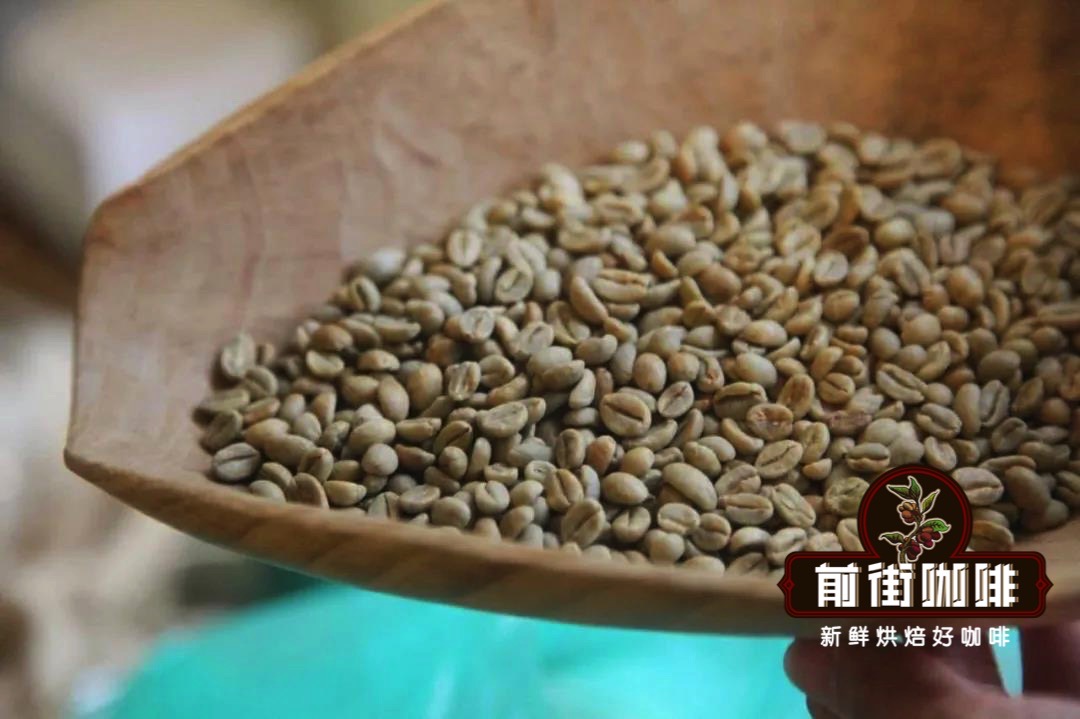
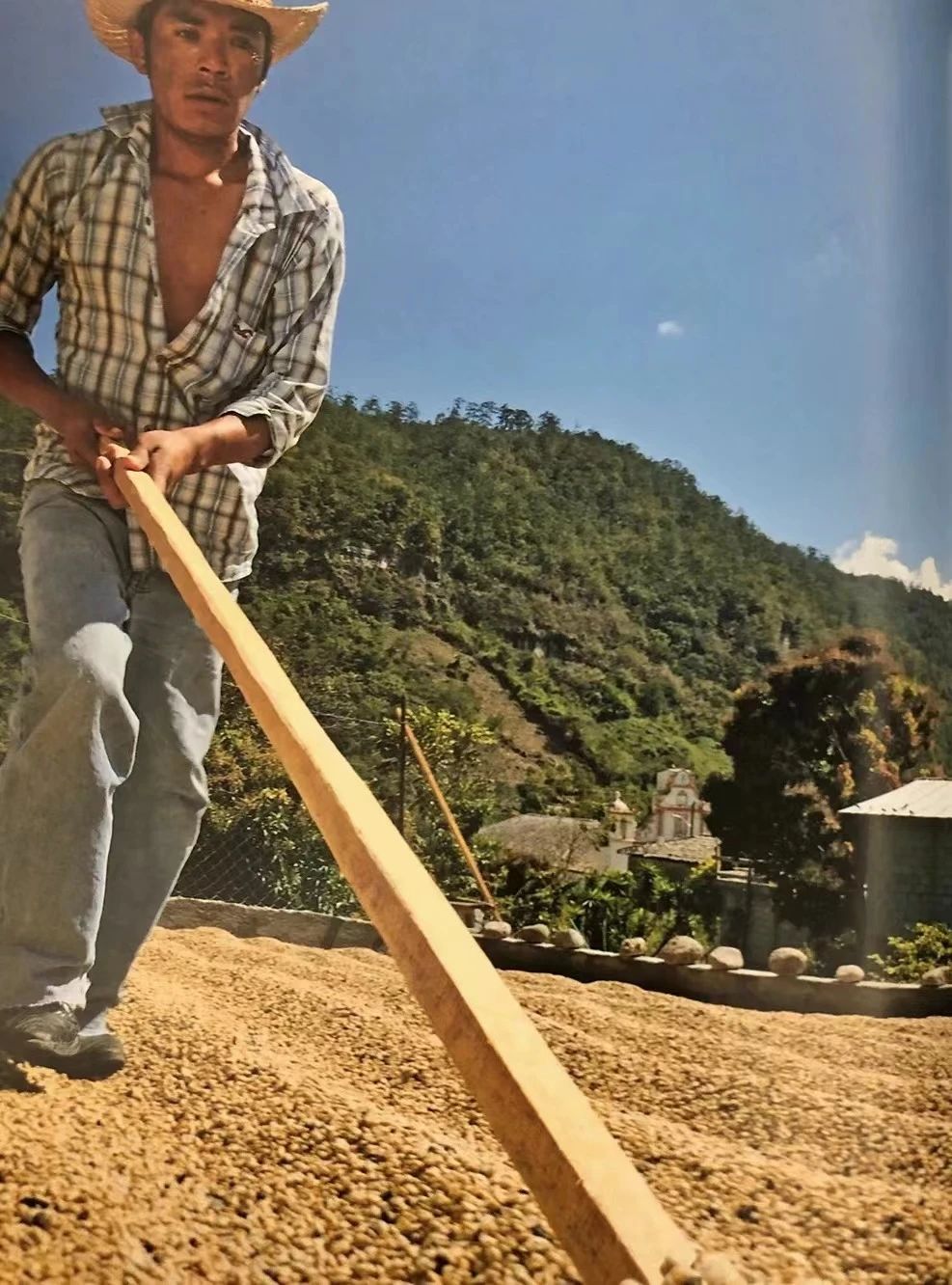
Honduras Coffee Processing Methods Honduran coffee mainly uses the washed method to process coffee beans. Usually, the beans are first soaked, and during soaking defective fruits float to the surface and can be scooped out and discarded first. Then the skin and pulp are removed, and the beans are placed in water to ferment to remove pectin, then rinsed clean and dried until the moisture content drops to about 12%. Honduran coffee can show layered flavors depending on the roast level. Medium roast can bring out the bean's sweetness to the fullest, while dark roast enhances bitterness, but the sweetness does not disappear. Generally speaking, medium roast has the best taste, with a rich and unique aroma.
Honduras Coffee Bean Varieties The average growing altitude of Honduran coffee beans is 1000-1600 meters, and the main varieties grown include Bourbon, Typica, Caturra, Catuai, and Pacas. Bourbon is a variety that developed after Typica was early transplanted to Yemen, with the bean shape changing from slender and pointed to round. In 1715, France transplanted the round-bodied Yemen Mocha bean to Bourbon Island off the east coast of Africa (renamed Reunion Island after the French Revolution), and only afterward did it get the name Bourbon. The round-bodied Bourbon bean was introduced to Brazil and Central and South America in 1727, and in 1732 Britain transplanted Yemen Mocha to St. Helena (later the place where Napoleon was imprisoned), which was also the round-bodied Bourbon bean. Bourbon is a frequent winner in American specialty coffee cupping. Typica is the oldest native variety in Ethiopia. Typica has bronze-colored top leaves, and the bean body is oval or slender and pointed, with an elegant flavor, but the plant is relatively weak, has poor disease resistance, and low yield. Front Street's high-quality coffee beans such as Jamaica Blue Mountain, Sumatra Mandheling, and Hawaii Kona all belong to Typica.
Caturra is a natural mutation of Bourbon, discovered in Brazil in 1937, and the tree is shorter than Bourbon. Because it inherits Bourbon's lineage, its disease resistance is relatively weak, but its yield is higher than Bourbon's. Although discovered in Brazil, Caturra is not suitable for growing in Brazil, so it was not planted on a large scale there; instead, it became widespread in Central and South America, such as in Colombia, Costa Rica, Nicaragua, and Honduras. The higher the growing altitude of Caturra, the better the quality, but the yield decreases accordingly. During roasting, Front Street can clearly feel that when adjusted to a light roast, Caturra's acidity and aroma are prominent and overall bright, and if processed properly its sweetness performs very well, but the coffee's body is slightly lower than Bourbon's, and the cleanliness of the mouthfeel is somewhat lacking. Caturra usually produces red berries, but in a very few regions there is also yellow Caturra, for example a small amount of yellow Caturra is grown in Hawaii. Catuai is a coffee variety artificially crossed between Caturra and Mondu Novo, with good resistance to natural disasters, especially wind and rain. The Catuai tree is shorter, and compared with other coffee trees, its fruit grows more firmly and is not easy to pick; the fruit can be red or yellow.
Pacas is a Bourbon mutation discovered in El Salvador. In 1935, Salvadoran coffee farmer Pacas selected high-yielding San Ramon Bourbon plants and moved them to his farm for cultivation. In 1956, a friend discovered that the Bourbon on his farm had a higher yield than the same kind of coffee tree, so he invited a professor from the University of Florida to come for identification, confirmed that a genetic mutation had occurred in the Bourbon, and named the new variety "Pacas" after the farm's name. Because of its high yield and good quality, Pacas is quite popular in Central America.
Front Street Honduras Sherry coffee beans contain the Pacas coffee variety
The above content is compiled by CoffeeHunters, a coffee news website.


