







As the world's largest coffee producer, Brazil is known for coffee beans with low acidity, moderate nutty notes, chocolate sweetness, and a full body. This article systematically reviews Brazil's coffee bean grading system—covering four dimensions: defect rate, screen size, cup quality, and flavor grade. It provides an in-depth analysis of the origins and flavor characteristics of Bourbon varieties (Yellow Bourbon and Red Bourbon), and introduces the terroir differences among three major specialty regions: Sul de Minas, Cerrado, and Mogiana. Meanwhile, Front Street Coffee shares the roast curve, cupping report, and brewing parameters for the Yellow Bourbon from Brazil's Queen's Farm, offering coffee enthusiasts a complete reference from green bean knowledge to extraction practice.
For more specialty coffee knowledge, please follow our WeChat official account: Front Street Coffee
Coffee has been a major economic pillar in Brazil for three hundred years, and today this South American country firmly holds the top spot in global coffee production. After cupping Brazilian beans, Front Street Coffee concluded that they have relatively low acidity, moderate nutty notes, along with chocolate-like sweetness and a thick body. This flavor profile is closely related to Brazil's geographical conditions—low altitude, flat terrain lacking variation, scarce microclimates, and long-term reliance on natural sun-drying—which ultimately shaped the unique flavor spectrum of Brazil's soft beans.
Reduced rainfall in Brazil in 2020 will lead to a decline in Brazil's coffee bean production in 2020-2021!
In early October 2020, although rain appeared in Brazilian coffee-producing regions, local media pointed out that the rainfall was extremely limited, leaving growers deeply worried. Simply put, this rain slightly eased the high temperatures but was far from enough to compensate for the water deficit and reverse the growth trend of coffee crops. Arabica varieties bore the brunt, with flowering periods delayed in almost all producing regions due to unfavorable weather. As of October 15, coffee flowers in Minas Gerais and the Franca region had begun to drop sporadically; if subsequent rainfall remains insufficient, all currently blooming flowers will wither, making a production decline almost inevitable.
The latest assessment from international investment bank ItauBBA shows that insufficient rainfall during the flowering period combined with the off-year production effect is expected to cause Brazil's 2020/21 coffee production to drop by 14% to 21%, ultimately landing in the range of 53.6 million to 58.3 million bags. Since Brazil accounts for more than one-third of global production, a reduction there could directly reverse next year's global coffee supply-demand landscape—from a surplus of 9.8 million bags this year to a shortage of 1.7 million to 6.5 million bags. Beyond the rainfall issue, higher temperatures are also dragging down coffee growth. Ideal growing conditions for Arabica coffee require an average temperature not exceeding 23 degrees Celsius, but from late September to early October, average temperatures in Minas Gerais, São Paulo, and Paraná climbed to 28 to 30 degrees Celsius.
Brazilian Coffee Producing Regions
As mentioned earlier, Brazil's Arabica coffee cultivation is mainly concentrated in Minas Gerais, São Paulo, and Paraná. The total coffee bean production in Brazil largely depends on the harvest in Minas; and Minas' output in turn depends on its three major sub-regions: Sul de Minas, Cerrado, and Mogiana. Brazilian Arabica coffee mainly comes from Sul de Minas in the south and Cerrado in the central part of Minas, with Arabica from Minas accounting for 66.7% of Brazil's total Arabica coffee beans.
Sul de Minas is located at an altitude above 1,100 meters, with rolling foothills, diverse terrain, distinct dry and wet seasons, large temperature differences between day and night, and rich microclimate resources. It is suitable for growing Bourbon and Yellow Bourbon with outstanding flavor, making it naturally the main producing region for specialty coffee.
Cerrado region: The Cerrado savanna must be mentioned—this grassland has one of the most complex species compositions in the world. However, as far as the Cerrado coffee-producing region is concerned, not all coffee grown on the savanna can be labeled Cerrado—only coffee produced at altitudes of 1,100 to 1,300 meters qualifies. This area occupies the finest section of the Cerrado savanna, with high altitude and fertile soil. Front Street believes that coffee beans from this region are clean and sweet, with a high body and no earthy or musty notes.
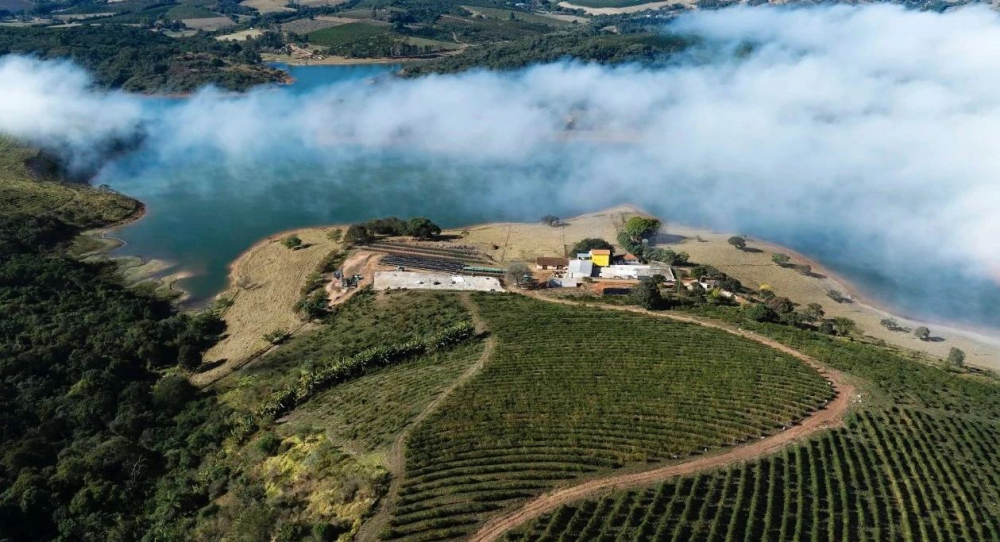
Mogiana is very close to southern Minas. Coffee trees are interplanted with shrubs, grasses, and other vegetation. The region is home to numerous growing families, some following traditional large-farm models and others adopting small-scale modern operations. The fusion of modern technology with mountain coffee-growing culture has produced the highest-quality green coffee beans. Through cupping, Front Street found that coffee beans from this region carry a sugarcane-like clean sweetness.
Brazilian Coffee Bean Grading System
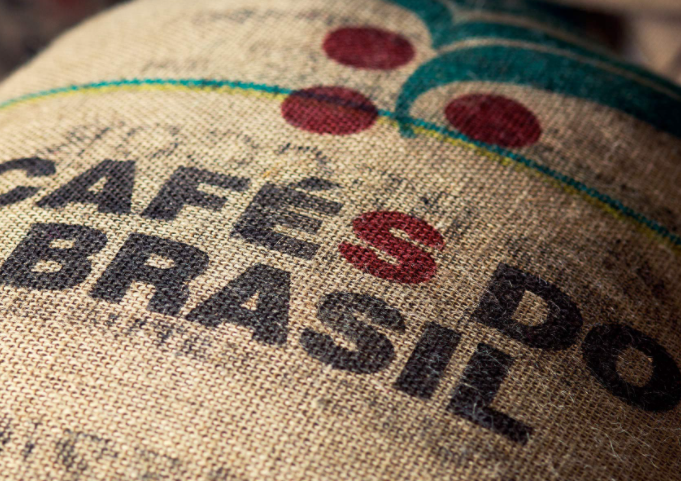
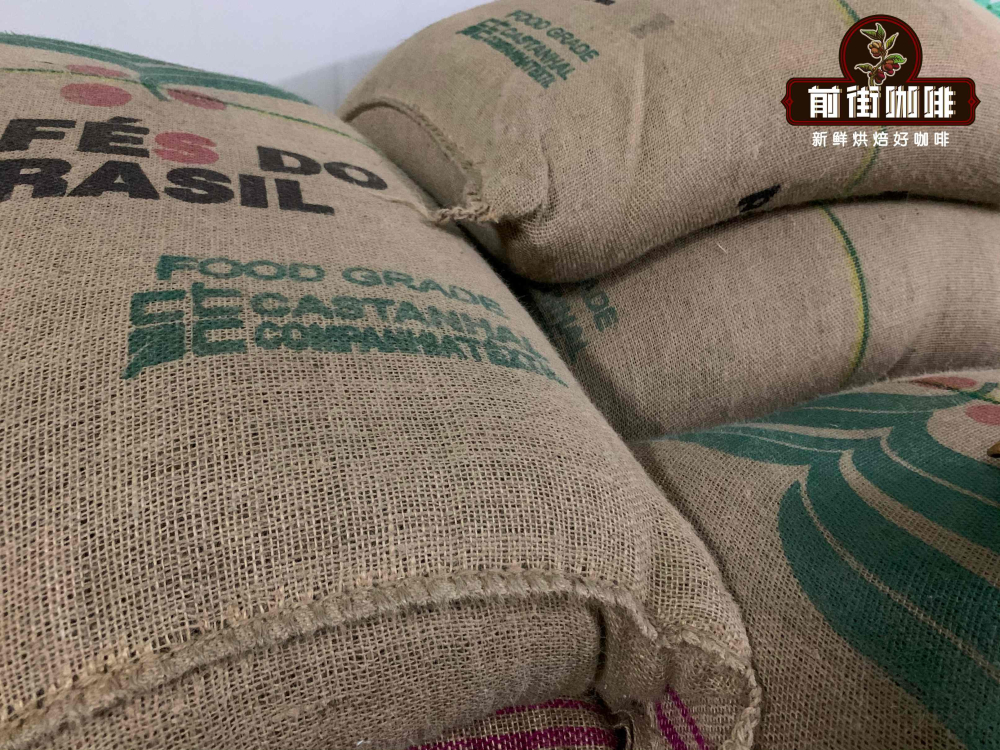
Typically, you can see information like this on bags of Brazilian coffee beans: Brazil NY.2 SC 17/18 FC. This is Brazil's unique three-part grading method, not used by other countries. The reason is that the producing regions are too vast and production too large; to blend for export-specific flavors, coffee beans often need to be mixed, and since quality varies, "cupping" is needed for grading. In this way, consumers can roughly judge coffee quality simply by checking the green bean information.
1. Grading by Defect Rate
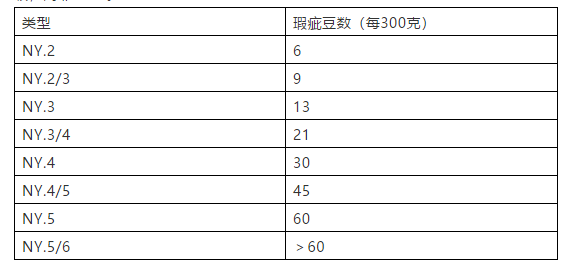
Brazilian coffee uses a "demerit point" evaluation, grading based on the number of defective beans per 300 grams of primary beans, with seven levels from No.2 to No.8. A demerit score below 4 qualifies as No.2. Zero defective beans would naturally be No.1, but such cases are extremely rare and stable supply cannot be guaranteed, so Brazil designates No.2 as the highest grade rather than No.1.
2. Grading by Screen Size
Screen size: Sieving is done with screens based on 1/64 inch, with screen sizes typically between 14 and 20. It should be noted that screen size corresponds to the short side, or "width," of the coffee bean. The largest screen size for Brazilian coffee beans is 19, but production is scarce, so 17/18 is the highest grade.
3. Cup Quality
fine cup | fine | good cup | fair cup | poor cup | bad cup | FC (Fine Cup) and GC (Good Cup) are more common. Many companies or platforms also add processing method (natural/washed/honey) and estate information.
4. Flavor Grade
Brazilian coffee beans are divided into five flavor grades: Strictly Soft → very smooth, Soft → smooth, Softish → slightly smooth, Hardish → not pleasant, Rioy → iodine-like harsh taste. Brazilian Cerrado coffee beans are cupped by the local coffee association as Strictly Soft Fine Cup (very smooth), the highest grade. In summary, Brazil NY.2 SC 17/18 FC Cerrado means: country Brazil, defect grade 2, green bean screen size 17 to 18, fine cup quality, from Cerrado. This is also the Brazilian blend component bean that Front Street Coffee has always used.
Brazilian Coffee Bean Varieties
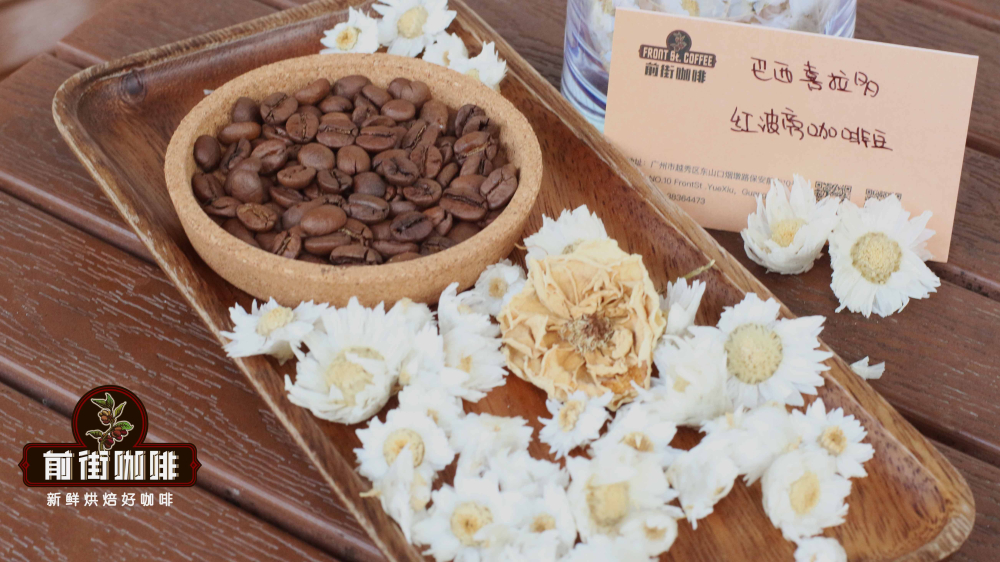
Brazil mainly grows Bourbon coffee beans. Bourbon is a branch of the Arabica variety Typica, native to Bourbon Island in the Indian Ocean (now Réunion), and is mainly cultivated in Central and South America, including El Salvador, Brazil, Rwanda, and Panama. Early Bourbon coffee beans were a mutation after Ethiopian Typica was transplanted to Yemen. The biggest visual difference between Bourbon and Typica is that Bourbon has broader leaves, produces smaller coffee cherries with denser clusters, so the coffee cherries are smaller and rounder than Typica. Bourbon is a frequent winner in specialty coffee cupping in the Americas.
Normally, ripe coffee cherries are red, but ripe Bourbon coffee appears yellow, so it is often called Yellow Bourbon. In Brazil, the world's largest coffee bean exporting region, Yellow Bourbon accounts for less than 1% of production, making it quite precious and rare. Yellow Bourbon coffee beans are harder to cultivate and have lower yields. After roasting, the coffee beans present a dry, sweet taste with nutty and cocoa/chocolate aromas. Yellow Bourbon beans generally use the pulped natural method (or semi-washed method); some Bourbon varieties carry fruity notes, and the aroma and sweetness during brewing are especially delightful.
Characteristics of Red Bourbon coffee beans: After a coffee tree flowers and bears fruit, the coffee cherry color changes from green → slightly yellow → slightly orange → ripe red → darker red when overripe, so some also call it "Red Bourbon." Actually, Red Bourbon coffee beans are what is commonly known as Bourbon. Through cupping different Brazilian coffee beans, Front Street Coffee found that Bourbon grown at high altitudes usually has better aroma, brighter acidity, and even a red-wine-like flavor.
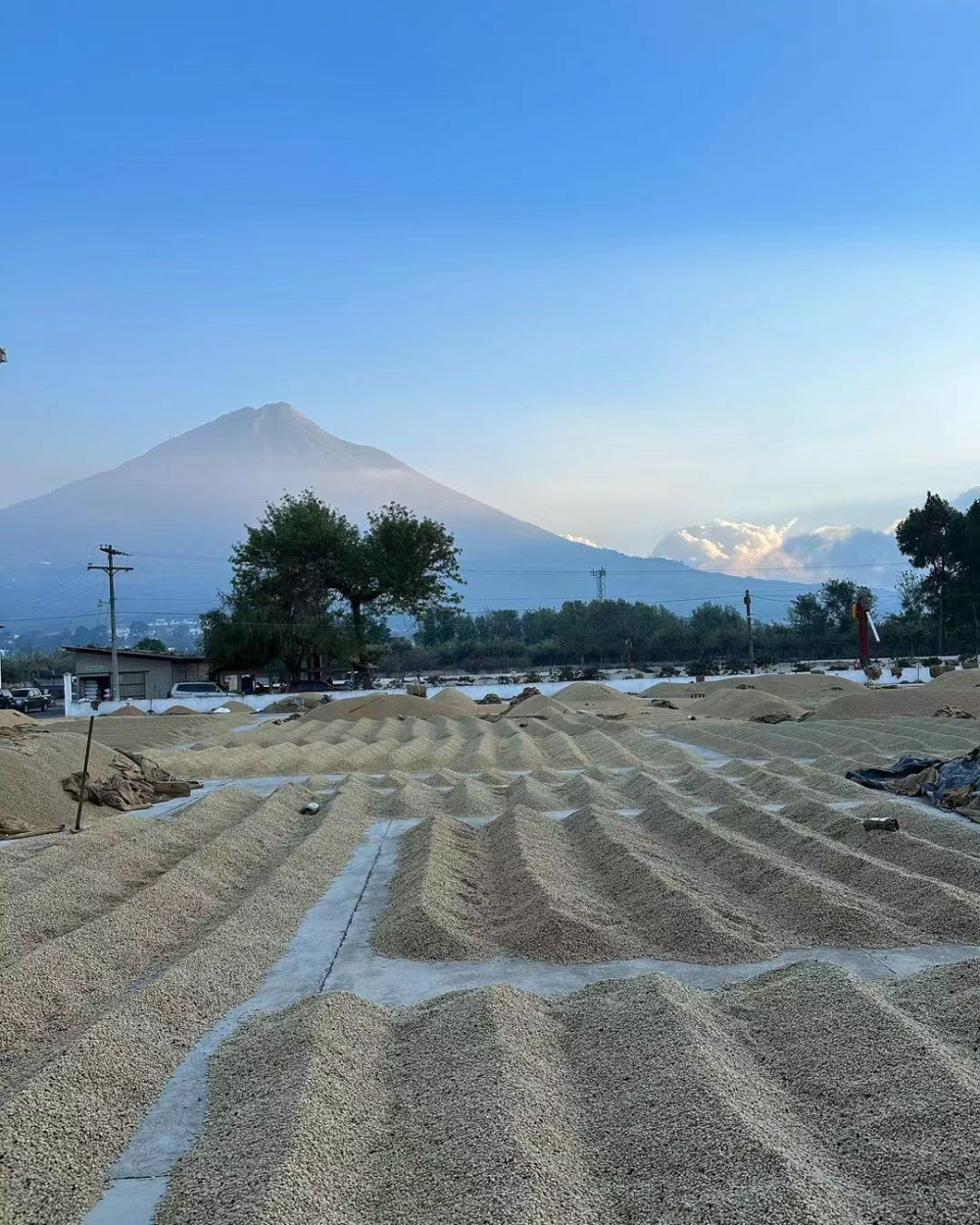
Brazilian Coffee Bean Processing Methods
Before 1990, Brazil used almost entirely rough natural sun-drying, which made Brazilian beans prone to picking up woody or earthy flavors. Because coffee cherries had to undergo two to three weeks of sun exposure, once rain or moisture returned, musty flavors easily developed. To change this situation of depending on the weather, in 1990 Brazil developed the pulped natural method (Pulped Natural) based on its relatively dry climate to shorten processing time.
Pulped natural removes the skin and pulp of the coffee cherry, allowing control over the fermentation degree of the mucilage-covered beans after pulping. Traditional natural drying involves drying with skin and pulp intact, making it impossible to observe the fermentation degree of the mucilage. The pulped natural method falls between natural and washed, but without the washed process's "tank fermentation and clean water rinsing" steps—instead, the beans are directly sun-dried. Although the methods appear similar, the absence of the fermentation step makes the coffee bean flavor completely different. During the pulping process, fully ripe pulp is easily removed, while the skin of immature green cherries is harder to process, so a second screening can be done to filter out immature fruit and standardize coffee cherry ripeness.
Compared to the natural method, Front Street believes that coffee beans selected and processed this way have improved cleanliness and ripeness, bringing a more uniform mouthfeel. The introduction of the pulped natural method does not mean all Brazilian regions use it; the lower-humidity Cerrado still mainly uses natural processing, with pulped natural playing a supporting role there. However, the Red Bourbon from the Cerrado region that Front Street Coffee sourced uses exactly the pulped natural method.
The most popular at Front Street Coffee is the Yellow Bourbon coffee bean from Brazil's Queen's Farm.
Country: Brazil
Region: Mogiana
Altitude: 1,400–1,950m
Variety: Yellow Bourbon
Processing: Natural
Front Street Coffee Brazilian Coffee Bean Roast Analysis
The green beans have a solid texture and good flavor expression, with slight orange peel and spice notes; green bean moisture content is 9.9%. This bean has relatively low moisture content and strong heat absorption capacity, so Front Street Coffee's roast plan is to charge at 200 degrees, then use high heat and low airflow to accelerate dehydration; after the dehydration phase ends, open medium airflow and medium heat for the Maillard reaction, without rushing the time, and drop close to the end of first crack.
Yangjia 800N, 550g charge: preheat to 200 degrees and charge, adjust heat to 150, open airflow to 3, turning point at 1'30", maintain heat, at 5'10" turn yellow, grassy smell disappears, entering dehydration phase, reduce heat to 125, open airflow to 3.5. At 8'20" dehydration is complete, bean surface shows wrinkles and dark streaks, toast aroma turns to coffee aroma, signaling pre-first-crack; at 178 degrees reduce heat to 80, at this point listen carefully for first crack, which begins at 9'14", open airflow fully to 5. Post-first-crack development time 3'00", drop at 201 degrees.
Front Street Coffee Brazilian Coffee Bean Cupping Report
Front Street Coffee conducts cupping within 8-24 hours after roasting sample coffee beans. The cupping bowls generally used by Front Street Coffee baristas are 200ml ceramic bowls marked with 150ml and 200ml lines. According to SCAA standards, water TDS should be around 150ppm; TDS too low easily causes over-extraction, while too high affects taste and easily causes under-extraction. The water temperature used for cupping is 94°C. Cupping grind size follows SCAA cupping standards, controlled to 70%-75% passing through a No. 20 standard sieve (0.85mm). The ratio is 11 grams of coffee grounds to 200ml of hot water, i.e., 1:18.18, so that the extracted concentration falls exactly within the golden cup range of 1.15%-1.35%. Steeping time: 4 minutes.
Brazil Queen's Farm Cupping Dry aroma: roasted nuts, cinnamon Wet aroma: roasted nuts, peanut
Flavor: roasted nuts, peanut butter, fermented fruit, sugarcane sweetness
Front Street Coffee Brazilian Coffee Bean Brewing Notes
Dripper: Kono
Water temperature: 89°C
Dose: 15 grams
Coffee-to-water ratio: 1:15
Grind size: medium-fine (75% passing through China No. 20 sieve)
Front Street Coffee brewing method: Bloom with 30 grams of water for 30 seconds, pour in a slow circular motion until 125 grams for a stage break; when the water level drops and is about to expose the coffee bed, continue pouring to 225 grams and stop; when the water level drops and is about to expose the coffee bed again, remove the dripper. (Timing starts from the beginning of blooming.) Extraction time is 2'01".
Brewed flavor: Sweet and clean bean character; using pulped natural makes its acidity slightly brighter yet beautifully combined with sweetness, some even with tropical fruit notes, especially the aroma that fills the air during brewing, making it even more delightful. Fresh sugarcane juice sweetness, black tea, smooth fruit sweetness, distinct nutty flavor, balanced and smooth acidity, faint clean bitterness, rich chocolate aroma and nutty flavor, bright and refreshing mouthfeel, silky and delicate.
Since Front Street Brazil Cerrado Coffee and Front Street Brazil Queen's Farm both have rich nutty aromas and balanced mouthfeel, they suit multiple extraction methods and can be made into moka pot coffee, Americano, siphon coffee, drip bag coffee, etc. You can purchase them at Front Street's Tmall flagship store.
The above content is compiled by CoffeeHunters, a coffee news website.


