







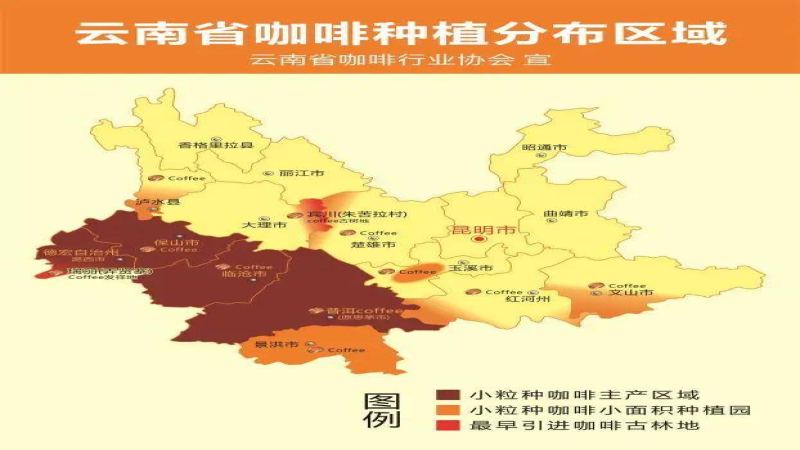
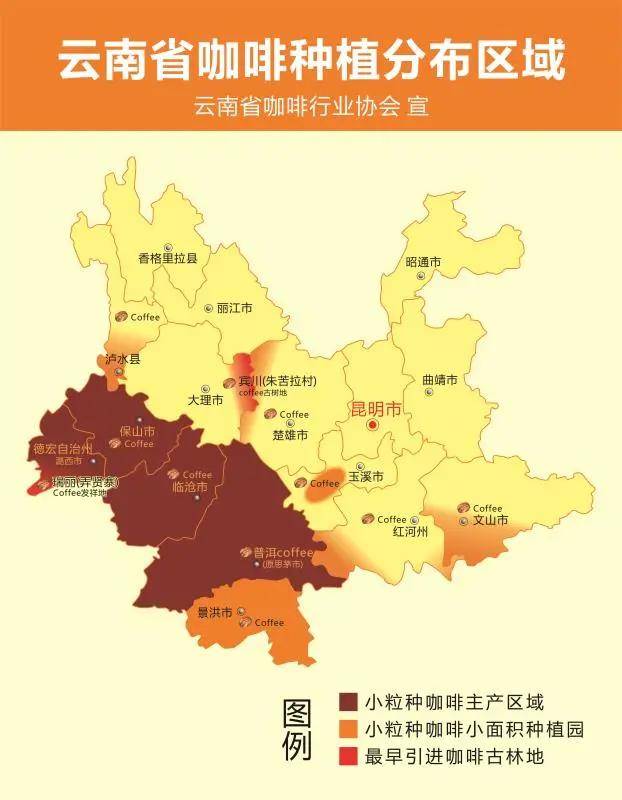
Yunnan, as China's core coffee-producing region, has a planting history that can be traced back over a century, and today it holds an absolutely dominant position in the country's coffee planting area and output. This article systematically sorts out the evolutionary thread of Yunnan coffee from missionary introduction to Nestlé's promotion of large-scale Catimor planting, explains in detail the terroir differences of major producing areas such as Dehong, Baoshan, Lincang, and Pu'er, and compares the characteristics and processing methods of the two major varieties, Typica and Catimor. Front Street Coffee has established a dedicated Typica estate in Baoshan, launched multiple products including washed Typica and Catimor daily beans, and attached roasting and pour-over parameters, taking you to comprehensively understand the potential and flavor performance of Yunnan coffee.
In the specialty coffee field, Chinese coffee beans rarely appeared in the past, but in recent years the Yunnan producing area has gradually risen and increasingly appeared in the view of coffee lovers. Front Street Coffee has always been optimistic about the development prospects of Yunnan coffee, so it opened a coffee estate in Baoshan, Yunnan, specifically for cultivating the Typica variety, hoping to let coffee fans taste Yunnan beans of outstanding quality.
History of Yunnan Coffee
Although Yunnan coffee has not been in the specialty market for a long time, coffee cultivation began as early as a hundred years ago. Next, Front Street Coffee will talk with everyone about the origins of coffee cultivation in Yunnan.
In 1904, French missionary Tian Deneng brought coffee seeds into Yunnan and planted the first coffee tree in Zhukula Village (located in present-day Binchuan County, Dali), which is regarded as the starting point of coffee cultivation in Yunnan.
After the 1930s, the well-known overseas Chinese leader Mr. Liang Jinshan introduced coffee to the Pupiao and Luoming areas for planting, and this situation continued after the founding of New China.
Starting in 1952, under the technical guidance of expert Ma Guojin from the Baoshan Institute of Tropical and Subtropical Economic Crops, areas such as Lujiang began to promote coffee planting on a large scale, and large-scale cultivation has continued for nearly sixty years. At that time, the coffee varieties planted in Yunnan were all Typica.
In 1992, as reform and opening up deepened further, foreign enterprises such as Nestlé entered Yunnan to promote the coffee planting industry, and at that time the Catimor variety provided by Nestlé was planted on a large scale. This variety is known for strong disease resistance and high yield, and quickly replaced Typica, which had good flavor but was delicate and susceptible to disease, becoming the coffee variety with the largest planting area in Yunnan. For this reason, at that time the main sales channel for Yunnan coffee was selling to Nestlé as raw material for instant coffee.
By the end of 1997, the coffee planting area in Yunnan Province reached 7,800 hectares. According to Front Street Coffee's understanding, to this day Yunnan coffee accounts for 70% of the country's coffee planting area and more than 80% of the country's output. Whether in terms of area or output, Yunnan coffee has firmly occupied a dominant position in China.
Yunnan Coffee Producing Areas
Western and southern Yunnan are located between 15°N and the Tropic of Cancer, with elevations mostly between 1,000 and 2,000 meters. The terrain is mainly mountainous and sloped, with obvious undulations, fertile soil, abundant sunshine, sufficient rainfall, and significant temperature differences between day and night, making it very suitable for the growth of Arabica coffee.
At present, Yunnan coffee is mainly distributed in southern and western areas such as Pu'er, Xishuangbanna, Wenshan, Baoshan, Dehong, and Lincang.
Dehong: It has long been known as the "Hometown of Chinese Coffee." The coffee planting elevation in Dehong Prefecture is entirely above 1,000 meters, of which 30,000 mu is located in mountainous areas above 1,600 meters. In addition, local coffee planting mainly uses organic fertilizer and organic pesticides, so the coffee produced is of excellent quality and belongs to a rare high-quality coffee producing area in the world.
Baoshan: Coffee introduction in Baoshan began in the mid-1950s, and the first batch of coffee seedlings was introduced from Southeast Asia by the late patriotic overseas Chinese Mr. Liang Jinshan. In recent years, with the continuous development of international trade, small-grain coffee from Lujiangba has become widely known. Merchants from Europe, America, and Arab countries, especially the United Kingdom, the United States, Egypt, and Hong Kong and Macao, regard it as a premium coffee, and the product is in short supply. In December 2010, after review by China's General Administration of Quality Supervision, Inspection and Quarantine, it was decided to implement national geographical indication product protection for "Baoshan Small-Grain Coffee."
The reason Front Street Coffee chose to grow coffee in the border area between Baoshan, Yunnan and Myanmar is that Baoshan has an average annual temperature of 21.5°C, with an extreme maximum temperature reaching 40.4°C, and basically no frost throughout the year, and is recognized as the most suitable producing area for small-grain coffee. The small-grain coffee cultivated here is famous at home and abroad for being rich but not bitter, aromatic but not harsh, with small and uniform beans, mellow and rich, and with fruity notes. Yunnan Baoshan small-grain coffee has a long planting history, and Baoshan small-grain coffee can be called a national geographical indication product.
Lincang: Its unique geographical location and climatic conditions have made Lincang a focus of attention for many coffee enterprises. It has successively established high-quality coffee seedling bases of 200 mu and 100 mu in Mengding Town, Gengma Autonomous County and Lincang Happiness Farm, and carried out coffee planting in Gengma, Zhenkang, Yunxian, Cangyuan, Yongde, and other places.
Pu'er: Pu'er, the hometown of tea, has a 150-year history of coffee cultivation. In the early 1990s, Pu'er City began to cultivate coffee as an advantageous backbone industry for adjusting the industrial structure and helping farmers increase income.
Yunnan Coffee Bean Varieties ---Small-Grain Coffee Varieties
The main coffee varieties currently planted in Yunnan include Catimor, Typica, Bourbon, Caturra, Catuai, and others. However, almost all that can be seen on the market is Catimor, so what is now called Yunnan small-grain coffee usually refers to Yunnan Catimor.
Typica
Typica is the oldest native Arabica variety in the current coffee market, and almost all existing Arabica varieties are derived from Typica. Typica has an elegant flavor, but the plant itself is relatively weak, has poor disease resistance, and is susceptible to leaf rust, so its yield is very low and it is difficult to generate economic benefits. In recent years, in Central and South America, Typica has also gradually been replaced by Caturra and Catuai, so it is increasingly rare to see it. Although Typica has an elegant flavor, its popularity is not as high as Bourbon.
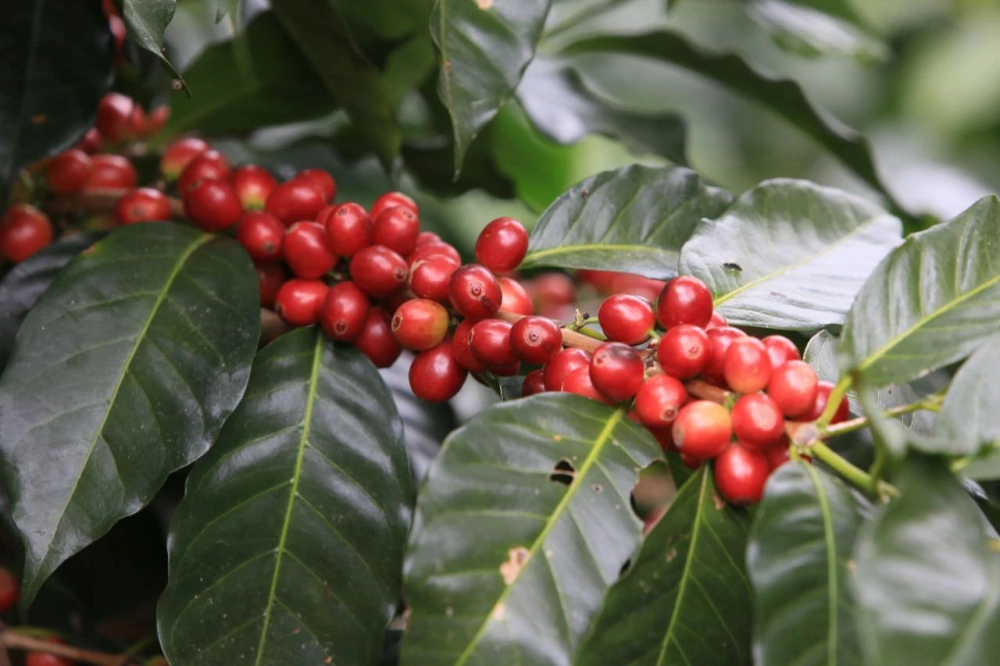
The Front Street Coffee estate mainly cultivates the Typica variety in Yunnan. Typica coffee has a unique quiet, clean flavor and balanced characteristics, and a high level of cleanliness in the cup. Although Typica is difficult to cultivate, Front Street Coffee still hopes that the Yunnan coffee tasted by coffee fans can present the best flavor.
Catimor
Catimor is a combination of Arabica and Robusta. Robusta has good resistance to leaf rust and rich oils, high yield, and is easy to cultivate. Therefore, after crossing with Arabica Typica, Catimor obtained about 25% Robusta genes, which improved resistance to leaf rust, retained rich oils, and also inherited part of the rich taste of the native Typica species.
Yunnan Coffee Processing Methods
At present, Front Street Coffee has two Yunnan coffee beans on sale in-store: one is washed Typica, and the other is Catimor. Yunnan Typica is labeled as Yunnan specialty coffee, while Yunnan Catimor is labeled as Yunnan small-grain coffee according to market custom. Front Street Coffee uses medium roasting for both Yunnan coffees, because the Yunnan producing area is not an acidity-focused producing area, and the flavor of the coffee beans is generally balanced, with a base tone mainly of nuts and brown sugar.
The above is the Yunnan coffee-related knowledge compiled by Front Street Coffee. Next, Front Street Coffee will recommend several coffee beans currently produced by the Front Street Yunnan coffee estate.
Front Street Coffee Front Street 2013 Typica Coffee Beans
Country: China
Producing Area: Baoshan, Yunnan
Altitude: 1450-1550m
Variety: Typica
Processing Method: Washed Processing
Flavor: Citrus, nuts, plum, melon and fruit aroma, brown sugar, black tea note
The difference between Front Street Coffee's Front Street 2013 Typica coffee beans and Yunnan small-grain coffee is that Huaguoshan belongs to the Typica variety, while Yunnan small-grain coffee is Catimor. In fact, both beans can be called small-grain coffee, but because Typica's floral and fruity acidity is softer and richer, the name Huaguoshan is specially used to distinguish the two varieties.
Front Street Coffee Yunnan Small-Grain Coffee Beans (Daily Beans)
Country: China
Producing Area: Baoshan, Yunnan
Altitude: 1200m
Variety: Catimor
Processing Method: Washed Processing
Flavor: Herbal, nutty aroma, chocolate, caramel
Yunnan small-grain coffee refers to the small-grain coffee cultivated in the Yunnan region. Coffee belongs to the Rubiaceae family and is an evergreen small tree native to Africa. At present, the main beverage plants cultivated are small-grain coffee and medium-grain coffee. The small-grain coffee cultivated in Yunnan, China, traditionally specifically refers to a mixed population of Bourbon variants and Typica variants.
Small-grain coffee is the most widely cultivated species in the Coffea genus. Because of its strong cold resistance and ability to withstand short-term low temperatures, it can grow on high mountains at an altitude of 2,100 meters in tropical regions, but it is not drought-tolerant; its branches are relatively fragile and not resistant to strong winds; its disease resistance is relatively weak; the fruit easily falls off after ripening; after processing, the coffee tastes mellow and has a lower caffeine content.
Front Street Coffee Yunnan Sun-Dried Catimor Coffee Beans
Country: China
Producing Area: Yunnan (Baoshan)
Altitude: 1450-1550m
Variety: Catimor
Processing Method: Red Cherry Sun-Dried Processing
Flavor: Caramel, dried fruit, cocoa, dark chocolate, herbal, woody
Most of what is planted in Yunnan now is Catimor. This variety is a hybrid of the Caturra branch of the Bourbon line within Arabica and the Robusta line. The reason for planting Catimor is that it has Robusta genes, stronger disease resistance than a single old variety, and better yield. Compared with delicate old varieties with poor disease resistance and low yield, farmers are naturally more willing to plant Catimor, so Yunnan has now set off a wave of Catimor.
Before launching each new coffee bean, Front Street Coffee conducts roasting and brewing flavor tests, from which it selects the most outstanding flavor curve, so that it can later brew it for coffee fans who come to Front Street Coffee to taste. Next, Front Street will share Front Street Coffee's roasting and brewing data for this Front Street 2013 Typica coffee bean.
Front Street 2013 Typica Coffee Roasting Suggestions
Generally, the moisture content of coffee beans is about 10.9%, so Front Street Coffee's roaster plans to charge the beans when the roaster reaches 200°C, then use high heat and a small airflow to speed up dehydration. After the dehydration stage ends, open the medium airflow and medium heat so that the Maillard reaction time is not too hurried, and develop for 3 minutes after first crack before discharging. Turning point: 1:32, 92.5°C; yellowing point: 5:40, 148.5°C; first crack: 8:59, 188.0°C; develop for 3 minutes and discharge: 12'00, 196°C.
Front Street Coffee Front Street 2013 Typica Coffee Beans Pour-Over Suggestions
Front Street recommends using a V60 conical dripper. The V60 has a larger opening, and together with its unique spiral curved ribs, air is more easily discharged, thereby improving extraction quality. The body may not be thick enough, but the Yunnan coffee acidity and obvious aroma brought out by its high concentration are one of its major features.
Dripper: V60
Water Temperature: 90-92°C
Coffee-to-Water Ratio: 1:15
Grind Size: Medium-fine grind, that is, the coarseness of fine granulated sugar (VARIO 5O: 57% passing rate on China Standard No. 20 sieve)
Brewing Method: Staged extraction.
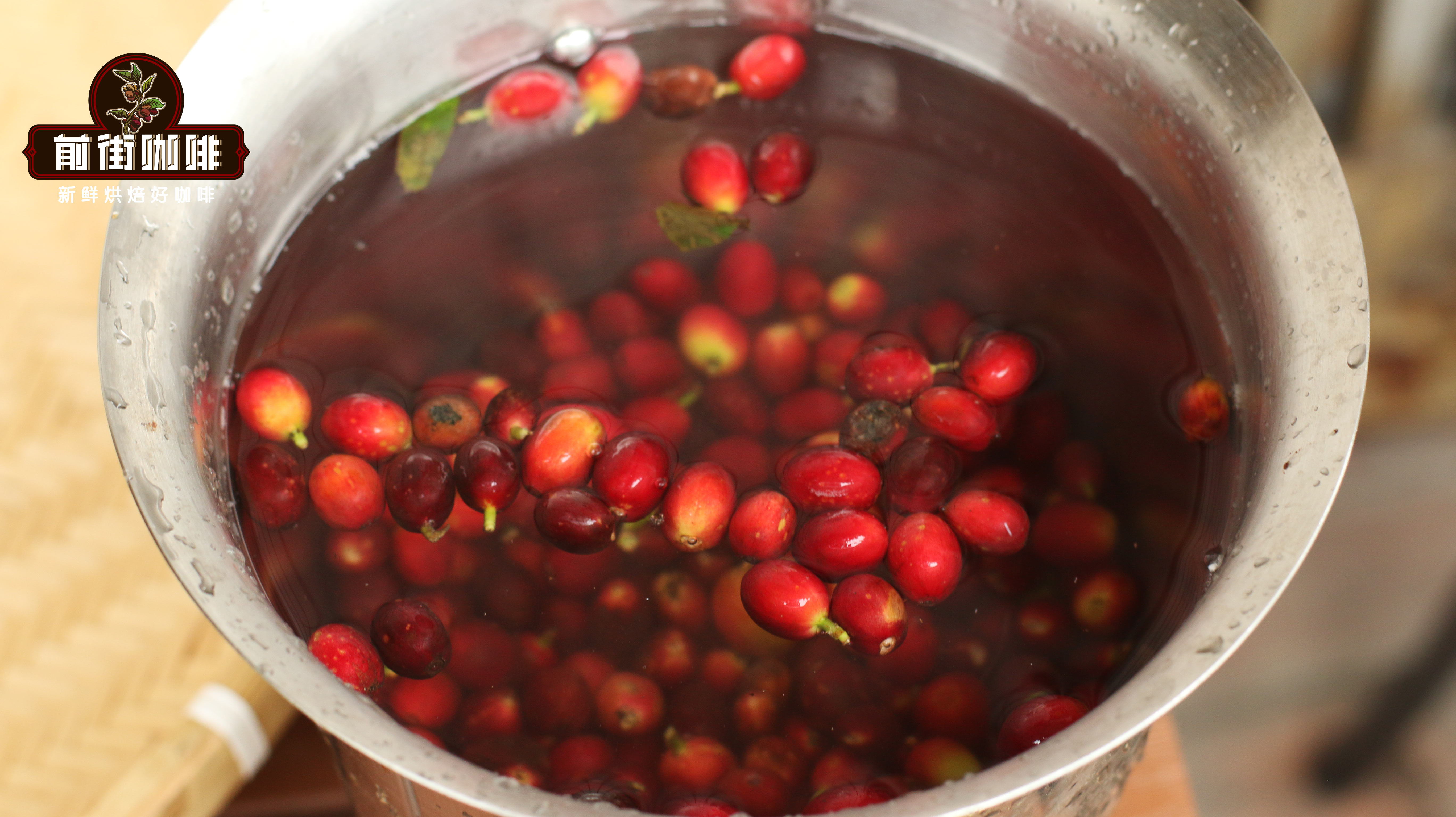
Use 30 grams of water for blooming for 30 seconds, then pour in a small stream in circles until 124 grams and pause in stages. When the water level is about to expose the coffee bed, continue pouring until 227 grams and stop pouring. When the water level is about to expose the coffee bed, remove the dripper. (Start timing from the beginning of blooming.) The extraction time is 2 minutes.
Huaguoshan Brewing Flavor Description: Rich but not bitter, aromatic but not harsh, floral, melon sweetness in the middle, black tea note in the finish.
For more specialty coffee beans, please add the private WeChat Front Street Coffee, WeChat ID: kaixinguoguo0925
The above content is compiled by CoffeeHunters, a coffee news website.


