







In recent years, Huakui coffee beans have continued to rise in popularity within the specialty coffee circle. This naturally processed bean from Hambella in the Guji region of Sidamo, Ethiopia, has won over many coffee lovers with its rich aroma of strawberry cream and full-bodied juicy mouthfeel. This article will comprehensively cover the origin of the name Huakui, the terroir conditions of the Hambella region, the historical background of its 2017 TOH championship, as well as Front Street Coffee's roasting parameters and pour-over recommendations. It will also compare the flavor differences between the small-bean Huakui SOE and Yirgacheffe, helping readers gain a more comprehensive understanding of this bean's unique charm.
For more specialty coffee knowledge, please follow our WeChat official account: FrontStreet Coffee
In the specialty coffee circle, Huakui has always been a bean highly favored by FrontStreet Coffee and many customers.
Where does the name "Huakui" come from?
Literally, "Huakui" means the most outstanding flower among all blooms. In ancient China's imperial examination system, the "Three Top Graduates" referred to the Zhuangyuan, Bangyan, and Tanhua — the top three scorers. Many people may not be aware that this coffee bean from the Guji region of Sidamo, Ethiopia, takes its Chinese name from this traditional Chinese expression. If you look closely at this bean, you'll notice that its Chinese and English names don't actually correspond — the Chinese name is "Huakui," while the English name is "Hambella," which transliterates to "Hanbeila."
Why does this mismatch between the Chinese and English names exist?
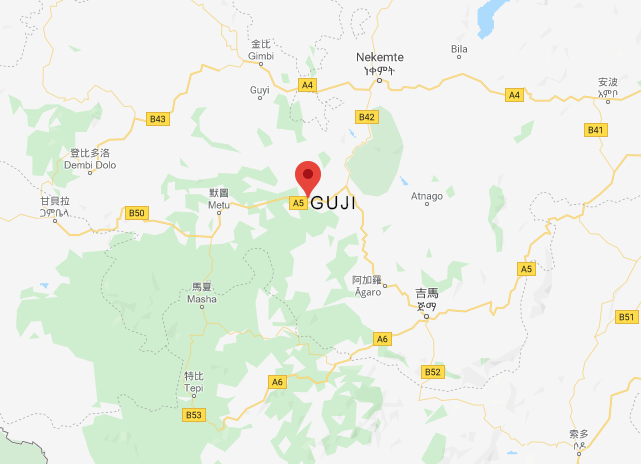
The reason is that Hambella is named after the origin of this coffee. Hambella is a sub-region under the Guji zone, administratively governed by the Oromia Region. To the west, Hambella faces the Kochere region of Yirgacheffe across a continuous mountain range, with a highland of 3,200 meters in elevation and approximately 30 kilometers in width lying between the two regions. To the southeast and north, Hambella borders other Guji sub-regions: Shakiso, Uraga, and Kercha.
The Guji region was once part of the Sidamo coffee-producing area, but as early as 2010, the Ethiopia Commodity Exchange (ECX) independently designated it as a new producing region. Guji is located to the southeast of Yirgacheffe and features towering mountains, deep valleys, and open plains, with quite complex terrain variations. The geology of this area consists of nutrient-rich black soil (Vertisol), with soil depth approaching two meters and an average elevation exceeding 1,800 meters. The unique geographical conditions create significant temperature differences between day and night, providing an exceptional terroir foundation for the local production of high-quality specialty coffee.
In 2017, Ethiopia's DW Green Bean Company submitted its coffee beans to the TOH (the Taste Of Harvest) green bean competition organized by the African Coffee Association. One naturally processed lot from the Buku Abel washing station stood out with its rich strawberry and cream aroma, taking first place in that year's TOH Ethiopia division. This lot of green beans was subsequently introduced to the Chinese market by a Beijing-based green bean trader, and due to its championship pedigree, it was given the title "Huakui."
In the same year, Li Jianfei from Beijing used this Huakui coffee to compete in the 2017 World Coffee Brewing Championship China division, ultimately winning second place. This result further boosted Huakui's profile. It's worth noting that at the time, the Geisha variety was almost dominant in competitions, with most competitors choosing Geisha to compete. Yet this Ethiopian heirloom variety beat out numerous Geisha competitors to claim second place (although achieving a good ranking cannot be attributed solely to Huakui's quality, Huakui's own outstanding performance was undoubtedly one of the important factors). Therefore, it's not hard to understand why people regarded this Huakui as a coffee bean capable of standing shoulder to shoulder with Geisha.
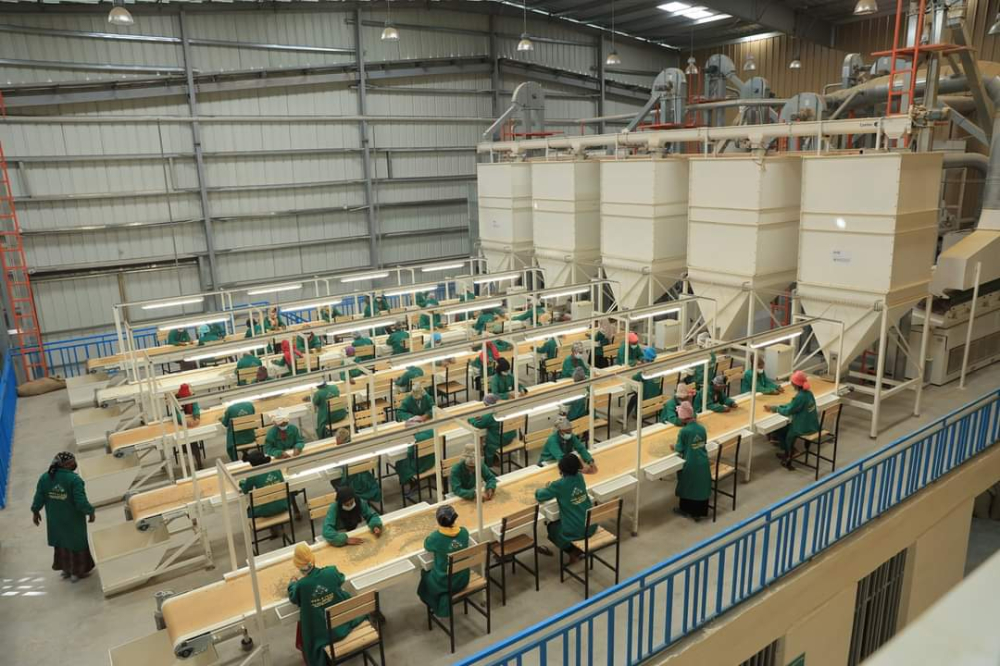
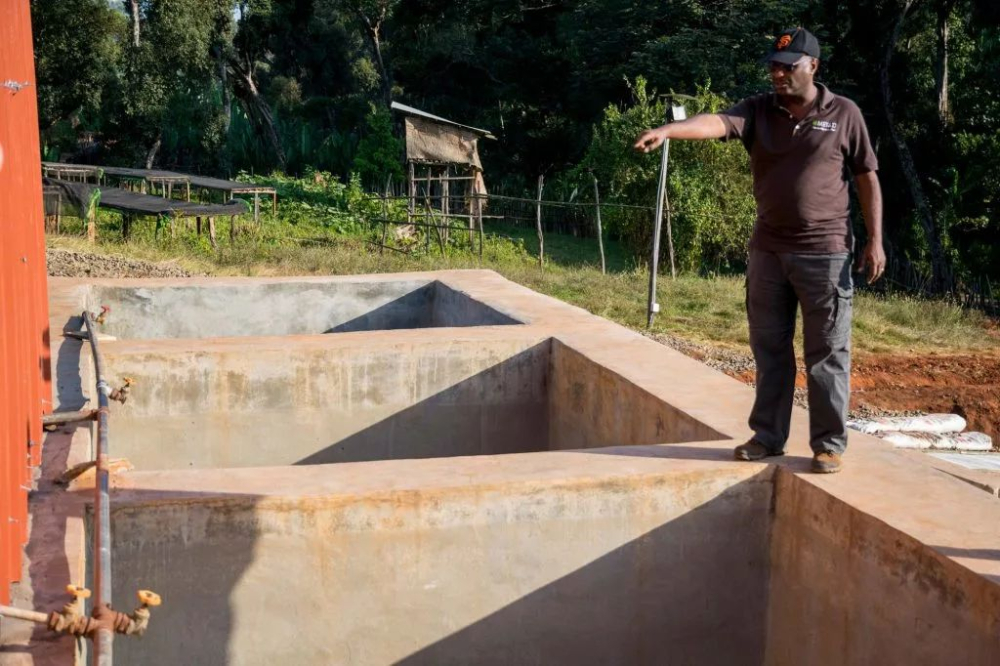
Afterward, DW Company successively established multiple processing stations in Dimtu, the core production area of Hambella, including "Buku Abel," "Buku Saysay," "Haro Soresa," and "Tirtiro Goye," with an annual production of approximately 1,100 tons of coffee. However, based on the correspondence between growing regions and processing stations, among all these estates and processing stations, only the naturally processed coffee beans from the "Buku Abel" processing station are eligible to be called "Huakui."
Front Street Coffee 2025 New Season Ethiopia Huakui Coffee Beans
Region: Sidamo Guji Zone
Elevation: 2250-2350m
Variety: Local heirloom
Processing Method: Natural Process
When Chinese green bean traders first encountered the Huakui coffee beans from Hambella in the Guji region of Sidamo, they were deeply captivated by that vanilla cream-like flavor. They judged that as long as the green bean processing continued to be refined and improved, this bean had every potential to become "the next Geisha." For this reason, Chinese green bean traders named this Guji natural bean "Huakui," expressing their high expectations for it. The reason Huakui possesses such a unique flavor profile is inextricably linked to its processing method.
The natural processing in the Sidamo region is extremely meticulous. During the coffee harvest season, only fully ripe coffee cherries are picked. After harvesting, the cherries are uniform in size, similar in ripeness, and free of impurities. The processing begins with strict hand sorting to remove defective beans, followed by evenly spreading the coffee cherries on raised wooden racks or entire drying beds for sun-drying, to prevent the cherries from molding or absorbing undesirable odors like soil during the drying period. Throughout the drying process, the cherries must be constantly turned to ensure even exposure to sunlight and even moisture loss; every three to five days, farmers also manually pick out any beans that have molded or have defects. Once the fruit skin is completely dried and hardened, a hulling machine is used to remove the dry, hard skin. After obtaining the green coffee beans, farmers conduct a final round of sorting to pursue an even more ideal cup profile.
FrontStreet Coffee Roasting Parameters
In order to fully showcase the floral and fruity character and aromatic layers of this Huakui bean, Front Street chooses a medium-light roast. The approach of extending the dehydration phase is used to lock in the coffee's aromatic compounds. Specific operation: Charge at 175°C, at the turning point of 1 minute 32 seconds the temperature is 96.2°C, heat setting at 120, airflow damper adjusted to 3, allowing the drum to heat up at a steady rate. At 6 minutes, the bean reaches the yellowing point and enters the middle phase, with heat increased to 140. At 9 minutes 50 seconds, first crack begins; 1 minute 40 seconds after first crack, the beans are dropped at a discharge temperature of 196°C.
FrontStreet Coffee Cupping Notes
FrontStreet Coffee Brewing Recommendations
Brewing Equipment: HARIO V60
Parameters: 15g coffee / 1:15 / 90°C
Grind Size: Medium-fine (78% passing through Chinese standard No. 20 sieve)
Method: First bloom with 30g of water for 30 seconds, then pour directly from the center to 125g, followed by staged pouring. Once the coffee bed reappears, continue pouring to 225g. When the coffee bed appears again, remove the dripper. Total extraction time controlled at 2 minutes 00 seconds.
Flavor: Citrus-like acidity, full-bodied berry juice mouthfeel, with a lemon black tea quality, and a long-lasting sweetness.
The above content is compiled by CoffeeHunters, a coffee news website.


