







Can Panama Geisha Coffee Flavor Come at a Lower Price?
Panama Butterfly from the Baru volcanic area of Boquete blends Geisha, Caturra and Catuai, with Geisha lineage at 70 percent. It carries the floral and fruity aromas associated with panama geisha coffee while costing far less than Hacienda La Esmeralda lots. Brew it pour-over with a V60 and staged extraction to keep the fruit clear.
Boquete sits in Chiriqui Province beside Baru Volcano, at roughly 1,000 to 2,000 meters, and its climate and soil suit high-quality coffee. The region also holds estates such as Elida and Kotowa. Elsewhere, the most expensive coffee bean poop lots from animal-processed beans show how far price can climb, which makes Butterfly's Geisha character a practical alternative.
The Boquete region of Panama is famous for Geisha, but the price of Hacienda La Esmeralda's Geisha often makes people flinch. The Butterfly we are introducing today at Front Street Coffee also comes from the Baru volcanic area of Boquete, and is a mix of three varieties—Geisha, Caturra, and Catuai—with Geisha lineage accounting for 70%. It has the distinct floral and fruity aromas of Geisha while maintaining a very affordable price, making it one of Front Street's best-selling single-origin coffees. This article will first outline Boquete's terroir and the history of Geisha, then introduce the characteristics of Caturra and Catuai respectively, followed by a detailed explanation of Butterfly's natural process, and finally provide Front Street's V60 staged extraction parameters and brewing flavor description, helping you enjoy a cup of Panamanian coffee with Geisha character for under a hundred yuan, while also understanding the importance of fresh roasting and grinding fresh for each brew.
For more specialty coffee knowledge, please follow our WeChat official account: FrontStreet Coffee
When it comes to Geisha , Front Street believes many friends immediately think of Hacienda La Esmeralda in Panama. This estate is located in the renowned specialty coffee region of Boquete and is a frequent name on the BOP competition list. Today, starting from this origin, Front Street would like to recommend a highly cost-effective "Geisha coffee" priced under three digits, yet offering the typical flavors of Geisha. It has long been one of Front Street's best-selling items and can be purchased at Front Street's Taobao store or Front Street's Tmall flagship store.
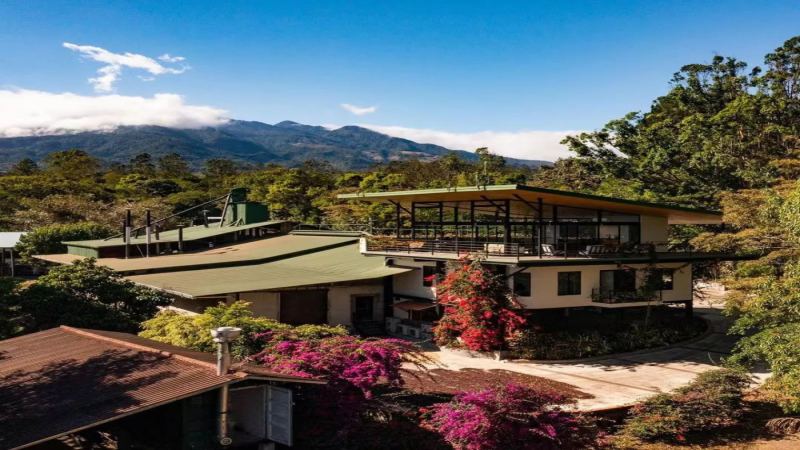
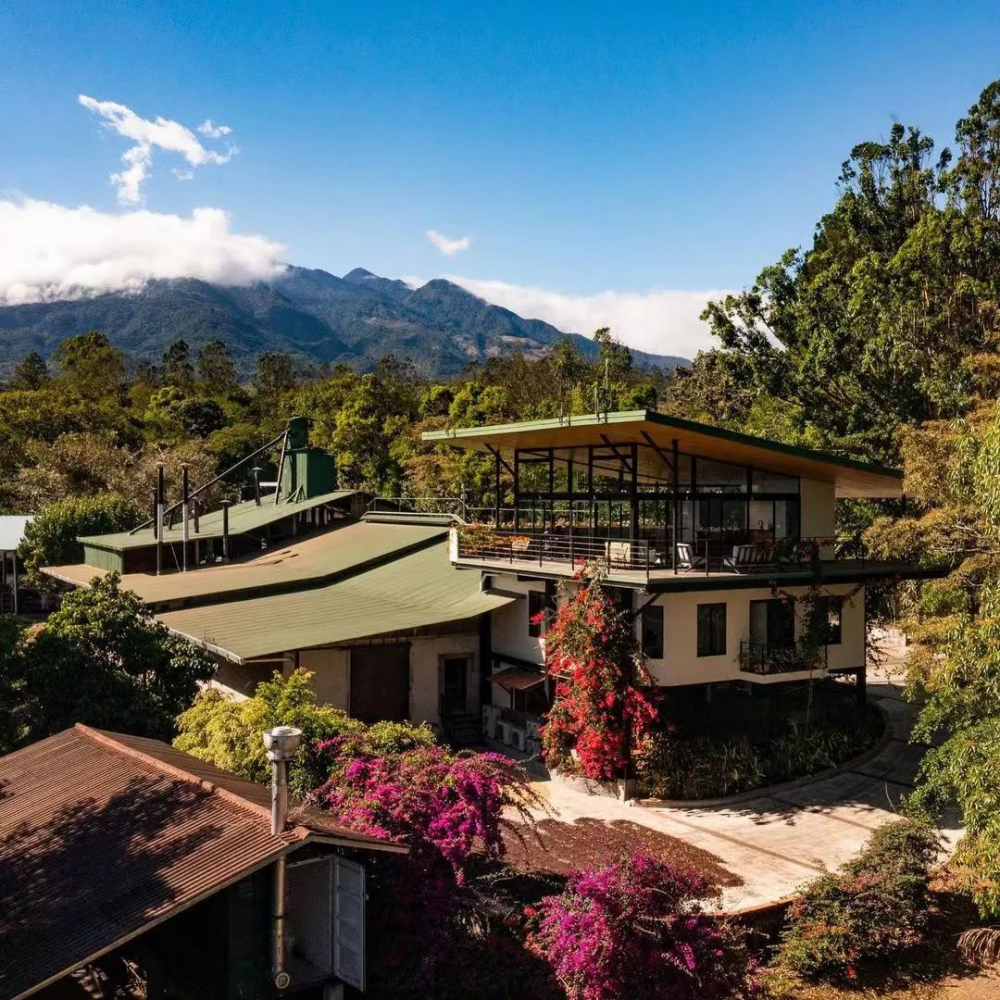
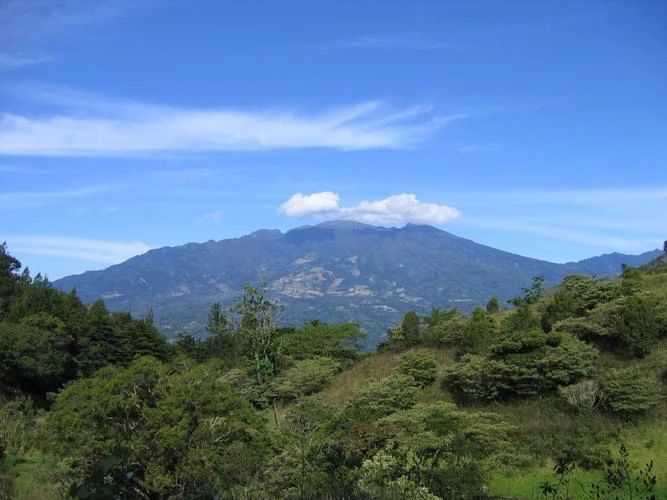
Boquete, Panama is located in Chiriqui Province, which borders Costa Rica, and is a small town under the province. It is adjacent to the famous Baru Volcano, with pleasant scenery and fertile soil. The climate and soil are both highly favorable for producing high-quality coffee.
Front Street often chats with customers about how coffee quality is closely related to the local geographical environment and climate characteristics. Boquete is one of Panama's oldest and most famous producing regions, located on the eastern side of Baru Volcano, in a highland area at about 1,000–2,000 meters above sea level. In addition to Hacienda La Esmeralda, Boquete is also home to many excellent estates, such as Elida Estate and Kotowa Duncan Estate—all well-known names that also produce high-quality specialty coffee.
Boquete's producing area is not particularly large, but it has very unique terroir conditions. It faces the warm, humid monsoon from the Caribbean Sea on one side and is influenced by the cold current from the Atlantic on the other, with towering and steep mountains. Volcan Baru National Park is a national ecological reserve with extremely rich biodiversity and seven microclimates. Add to that the year-round mist, abundant rainfall, and moderate altitude, and these factors together create an excellent coffee-growing environment, giving rise to the Geisha coffee that is now internationally renowned.
People say Geisha coffee is prohibitively expensive, so if there were a coffee that also carries Geisha flavors, comes from the same producing region as Hacienda La Esmeralda's Geisha, and most importantly is truly affordable, would you be tempted?
Panama Butterfly
At first glance, the variety column on the package lists three names, so is this coffee a blend? Front Street tells everyone: although three varieties are listed, the early Geisha variety was interplanted with Caturra and Catuai coffee trees. For ease of harvesting, the coffee farmers did not reclassify them. The three varieties in Butterfly come from the same origin and the same producing region, so it is a single-origin coffee!
Butterfly has 70% premium Geisha lineage and is composed of three varieties: Geisha, Caturra, and Catuai. It is grown in the Baru volcanic area of Boquete, in a volcanic zone at 1,600 meters above sea level, with noticeable day-night temperature differences. Combined with the characteristics of volcanic rock soil and careful harvesting and meticulous processing, this coffee performs remarkably well in body, acidity, and floral aroma.
What is even more pleasantly surprising is that despite such excellent quality, Front Street Coffee's Butterfly is very affordably priced, with outstanding value for money. The special thing about this bean is that it contains the Geisha variety, giving it distinct Geisha flavors.
Geisha
Geisha has won many fans with its unique floral and fruity aromas, bright floral and citrus notes, high cleanliness, soft and elegant acidity, lasting and smooth sweetness, and a refined black tea-like mouthfeel.
After reviewing the materials, Front Street learned that Geisha was first collected in 1931 in the wild Kaffa forest of southern Ethiopia, at the time in search of new disease-resistant varieties. Its name comes from the nearby Geisha Mountain. It was later sent to research institutes in Kenya, Uganda, Tanzania, and elsewhere for trial planting. In 1953, the Geisha variety arrived at CATIE, the Tropical Agricultural Research and Higher Education Center in Costa Rica, and was recorded as T2722. Several local farms have records of planting it, but Geisha trees are fragile and low-yielding, so they were not favored by farmers and were not widely planted.
Starting in the 1960s, CATIE gave T2722 Geisha to coffee farmers in Panama, and only then did Geisha truly enter this promised land of Panama. In the 1990s, the Peterson family, owners of Hacienda La Esmeralda, began to focus on coffee production and bought a new high-altitude farm, Jaramillo. Many coffee trees on the farm were infected with leaf rust, but Daniel Peterson noticed that the Geisha trees were not seriously harmed, so they decided to transplant the Geisha that had originally been interplanted with other varieties to more areas of the farm while also increasing its growing altitude.
In 2003, the Peterson family finally discovered Geisha's potential. In the first cupping, it showed a very intense white flower aroma, an extremely clean mouthfeel, and a finish reminiscent of berries, citrus, and bergamot, thus forming the very typical Panama Geisha flavor. Amazed, everyone decided to enter it in the 2004 BOP (Best of Panama) competition and named it "Geisha." So today's astonishing Panama Geisha coffee is the T2722 variety from back then.
Caturra
Caturra is a mutation of Bourbon, discovered in Brazil in 1937. The tree is shorter than Bourbon. Although it inherited Bourbon's weaker resistance, it has higher yield than Bourbon and is easier to harvest. Even under direct sun exposure it remains vigorous, and farmers call it Sun Coffee. Caturra is suitable for planting from low altitudes of 700 meters to high altitudes of 1,700 meters, with strong altitude adaptability, but the higher the altitude, the better the flavor and the relatively lower the yield. Caturra's flavor mainly presents fruitiness and berry-like acidity. "Diamond Mountain Coffee" on Front Street's bean list is made from Caturra, from the famous Hacienda La Esmeralda.
Catuai
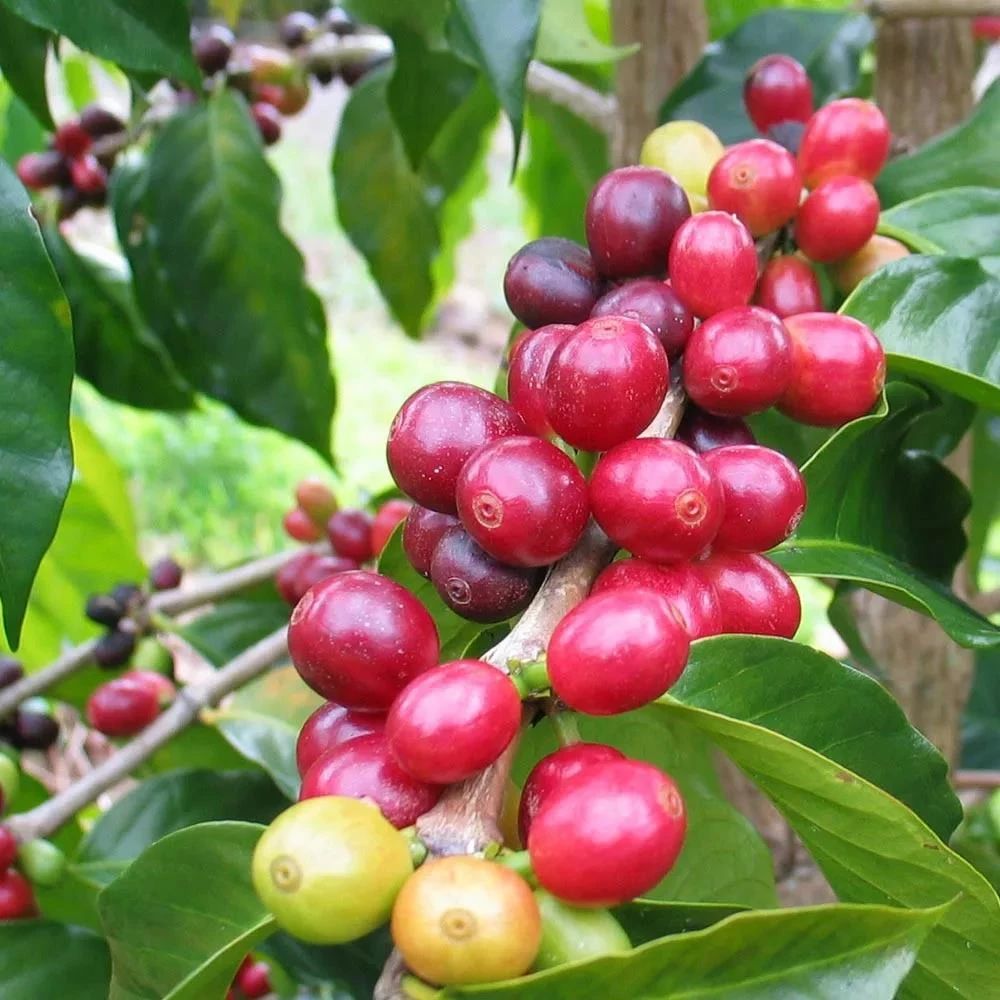
Catuai is a cross between Mundo Novo and Caturra, so it also inherited Caturra's short tree shape, but has higher resistance. It not only has better resistance to natural disasters, especially wind and rain, but the fruit it bears is firm and not easy to fall off. In terms of flavor, Catuai is more monotonous than Caturra, mainly nutty, without Caturra's rich layering. In Panama, the two varieties are usually interplanted together and harvested together after ripening.
Butterfly Natural Process
The processing method used for Butterfly is an ancient existing method, also called the natural dry method. Natural processing reduces the coffee's moisture content through extensive drying. After screening the coffee cherries, the whole coffee cherries—with flesh, skin, and seeds—are directly spread flat on concrete patios or drying beds to dry naturally to a moisture content of about 12%. The time required is about two to four weeks, depending on the climate of the origin, and the drying process usually lasts around 4 weeks. Moreover, the coffee cherries themselves still have a fairly high moisture content. Leaving the coffee cherries in one place for more than twenty days will naturally cause fermentation, and if fermentation is excessive, it can easily lead to spoilage. If the coffee cherries pile up too thickly somewhere and are not ventilated, spoilage becomes even more serious. Therefore, a large amount of labor is needed to frequently stir the pile of coffee cherries to ensure ventilation.
Front Street Coffee Brewing Method
Dripper: Hario V60, water temperature: 90°C, dose: 15 g, coffee-to-water ratio: 1:15, grind size: medium-fine (80% passing a Chinese standard No. 20 sieve)
Front Street Coffee uses staged extraction: bloom with 30 g of water for 30 seconds, then pour in a small stream in circles until 125 g for the first stage. When the water level is about to expose the coffee bed, continue pouring until 225 g and stop. After the water in the dripper has dripped through, remove the dripper. Start timing from the beginning of pouring; the extraction time is 2'00".
Butterfly coffee has higher sweetness and a soft sweet taste. Natural-process coffees generally have fermented flavors. Front Street's brewing method is for reference only; everyone can fine-tune it according to their preferred taste.
Front Street Natural Butterfly Brewing Flavor : On entry there are tea aromas, fermented fruit aromas, and nutty creamy flavors with a full body. As the temperature drops slightly, there are sweet-and-sour fruit flavors such as citrus, black plum, and sweet orange, with a honeyed sweet aftertaste.

Of course, for coffee brewing, Front Street always recommends using freshly roasted coffee beans, as this allows you to experience the coffee's rich flavors to the greatest extent. The coffee beans shipped by Front Street Coffee are all within 5 days of roasting, because Front Street deeply understands that the freshness of coffee beans greatly affects the flavor. Front Street's roasting philosophy is "Freshly roasted good coffee," so that every customer who places an order receives the freshest coffee. The resting period for coffee is about 4–7 days, so when customers receive it, it is at its optimal flavor.
Of course, some customers also need Front Street to help grind the coffee, and that is no problem, but Front Street must remind you: once coffee beans are ground in advance, they need to be brewed promptly. If they have already been ground into coffee powder, there is no need for further resting, because during transportation, the pressure generated by carbon dioxide inside the package can also make the coffee flavor rounder, so once you receive the ground coffee, you can immediately brew a cup and drink it.
However, after coffee grounds come into contact with air, they oxidize relatively quickly, which means the coffee's flavor dissipates faster and the coffee does not taste as good. Therefore, Front Street recommends buying whole beans and grinding fresh for each brew, so you can better taste the coffee's flavor.
The above content is compiled by CoffeeHunters, a coffee news website.


