








How do Ethiopian coffee processing methods shape Sidama flavor?
Ethiopia's Sidama region, with varied terrain and fertile volcanic soil, yields coffee with widely diverse flavors. In 2017 a natural batch from the Buku Abel plant in Guji Hambela won the TOH championship with intense strawberry and cream aroma, later named Huakui. The choice between natural and washed processing is a major reason Sidama lots taste so different from one another.
Ethiopia is the birthplace of Arabica, and wild coffee trees still grow in the Kaffa forest, where the word coffee likely originated. Cooperative systems and smallholder cultivation mean lots are often separated by processing station. Brewing with a Clever Cup, AeroPress, V60, or KONO lets drinkers compare how each Ethiopian coffee processing method changes the cup.
Ethiopia, as the genetic treasure trove of Arabica coffee, has given rise to many specialty regions such as Yirgacheffe and Sidamo. Among them, the Sidamo region, with its varied terrain, fertile volcanic soil, and countless native varieties, produces coffee beans with extremely diverse flavors. In 2017, a natural batch from the Buku Abel processing plant in Guji Hambela won the TOH championship with its intense strawberry and cream aroma, and was given the name "Huakui" (Flower Queen), becoming a star bean in the specialty coffee world ever since. This article will systematically review the terroir conditions, cultivation patterns, cooperative system, and processing method differences of the Sidamo region, and combine them with Front Street Coffee's roasting and brewing practices, using the Clever Cup, AeroPress, V60, and KONO to let you fully experience the charm of this champion bean.

Ethiopia is the birthplace of coffee, and the coffee beans produced here have always held an important place in the global specialty market. Region names such as Yirgacheffe and Sidamo are already familiar to coffee lovers. Since its founding, Front Street Coffee has set itself a goal: to taste coffee beans from every producing region in the world, understand the flavor differences brought by each variety, each region, and each processing method, and organize these comparison results into visualized data. Front Street Coffee hopes that all fellow coffee lovers can use this to gain a deeper understanding of the coffee world and explore its mysteries together.
Coffee occupies a central place in Ethiopian culture
Ethiopia is the original home of Arabica coffee, and wild coffee trees still grow naturally in the primeval forests of the Kaffa region. In the local dialect, coffee is called "Bun" or "Buna," and the English term "coffee bean" is generally believed to have evolved from "Kaffa Bun." Furthermore, the English word "coffee" itself is etymologically derived from the Ethiopian place name "Kaffa."
The primeval forest under the Kafa Biosphere is the largest forested area in Ethiopia, recognized as the birthplace of coffee and a genetic treasure trove of Arabica coffee today. The "Gesha" mentioned in the story of Geisha's origin is actually a region in western Kaffa. This forest is home to a large number of ancient coffee trees, which form an indispensable part of the local ecosystem. Coffee trees grow naturally under dense, tall shade trees, with no artificially cultivated crops, only wild plants that germinate and reproduce on their own after seeds fall to the ground. The Kaffa Forest coffee beans launched by Front Street use the washed process; after brewing, they display bright, clean fruit acidity, with a clear sunflower seed aroma on the palate and citrus-like sweet acidity similar to orange peel, with quite rich layers.
Back to the main topic. Ethiopia is the world's sixth-largest coffee producer. Reports indicate that in 2018, about 100 million people worldwide were directly or indirectly engaged in the coffee industry, and coffee workers in Ethiopia accounted for 20% of them. In 2017, the country's green coffee production was about 470,000 tons, of which about 160,000 tons were exported, meaning exports were less than half of total production, with the remainder all consumed domestically.
Coffee has been integrated into Ethiopian social life for hundreds of years. According to reports, the phrase commonly used in local social settings is "buna tetu," meaning "drink coffee"; and one of Ethiopia's best-known proverbs, "buna dabo naw," means "coffee is our bread."
Coffee cultivation in Ethiopia is mainly concentrated in the western and southern regions, with more than half using a smallholder model, also called garden coffee, which is the country's most important production method. It is understood that nearly 1.2 million households make a living from growing coffee, with each household cultivating no less than 4 hectares. So-called garden coffee means farmers manage coffee trees together with other cash crops in their backyards, usually planted together with enset trees, so every household's front and back yards form a unique green landscape.
Because smallholder coffee production is limited, farmer cooperatives or processing plants of varying sizes emerge locally, specifically responsible for processing green coffee in the area. Each harvest season, farmers pack the fruit from their own coffee trees and send it to a nearby processing plant (cooperative) close to a water source for unified processing, after which it is sold externally under the processing plant's name. For example, the Gedeb cooperative coffee beans on Front Street's bean list are made by collecting coffee fruit grown in Yirgacheffe town; farmers deliver it to the town for unified washed processing, and it is ultimately produced under the cooperative's name and sold around the world.

Sidamo Region
Ethiopia's topography and elevation differences are significant, and combined with the existence of many variants and as-yet-unclassified native species, this leads to enormous differences among producing regions. Coffee from different regions, micro-regions, or even a single farm may present completely different flavor profiles in cupping. For this reason, coffee buyers purchasing Ethiopian coffee often prefer to judge based on region, altitude, and cupping score rather than distinguishing by variety.
The Sidamo coffee region has an altitude of 1,400 to 2,200 meters and is located in southern Ethiopia, bordering Kenya, and is a famous specialty coffee region. Washed Sidamo coffee beans are light green in appearance, relatively small, oblong in shape, plump, balanced in overall quality, aromatic and mellow, with a long finish after drinking, carrying a kind of wild beauty. The outstanding characteristic of Sidamo coffee beans is their highly diverse flavor—different soil types, microclimates, and countless native coffee varieties make the coffee produced by each town clearly different and distinctive in flavor.
Coffee beans from the Sidamo region received high scores of 92 to 94 from the authoritative American coffee evaluation website CR for three consecutive years from 2010 to 2012, which shows the exceptional quality of green beans from this region. The region has rich terrain, including towering mountains, highlands, plateaus, valleys, and plains. Geologically, it belongs to nutrient-rich, well-drained volcanic soil, with a soil depth of nearly two meters, and the surface soil is dark brown or brown. The greatest advantage of this place is that soil fertility is maintained through the cycling of organic matter—fallen leaves from surrounding trees or residual plant roots are natural sources of fertilizer.
Coffee Cultivation Methods in Ethiopia
Coffee in Ethiopia is usually grown in environmentally friendly and sustainable ways, mostly in the form of "garden coffee," with coffee trees planted directly beside farmers' homes and cultivated together with other crops. Local "semi-forest coffee" is also very common; the practice is to first trim weeds and shrubs in natural forest, adjust the shade trees, and after these steps introduce coffee seedlings for planting. It is estimated that only about 5% of Ethiopia's coffee production comes from farms dedicated solely to coffee.

Ethiopian coffee growers are divided into contract farmers, plantations, and smallholders. Smallholder groups are organized according to cooperative principles, with participation voluntary and open to all farmers.
As long as they are willing to join the cooperative and can bear the shared responsibilities among members, any smallholder may join, without discrimination based on gender, social status, ethnicity, disability, or religion. Cooperatives are jointly run by their members and are democratic organizations, with members actively participating in the formulation of policies and decisions; each member has an equal right to vote.
Coffee cooperatives encourage and support smallholders in adopting good agricultural practices, such as picking ripe coffee cherries and using natural or washed processing. If they have export capability, profits from exported coffee can also be distributed to cooperative members. Two or more primary cooperatives may jointly form a union. In Ethiopia's coffee supply chain, the union supports the harvest and processing of each primary cooperative, and undertakes secondary processing such as hulling, grading, packaging, and exporting coffee, while distributing the proceeds to their respective cooperatives.
This is an effective grading system that emphasizes complete and consistent monitoring while following strict international quality standards, and it is of great significance to specialty coffee buyers.
Ethiopian Coffee Processing Methods
Both washed and natural coffees are common in Ethiopia. In natural processing, farmers spread coffee fruit on a flat surface and dry it in the sun; the whole process usually takes two to six weeks, during which the fruit is turned to dry evenly. After the seeds dry, they are removed from the fruit.
Washed Ethiopian coffee gives off an elegant character, with floral notes, citrus, and a delicate finish, and a smooth mouthfeel. However, the flavor profile varies greatly from region to region.
Natural coffee usually has rich, round fruit flavors with deeper layers. Compared with washed coffee of the same kind, high-quality natural coffee has clean citrus aroma and a refreshing floral quality, with added sweetness and body. When you find any of these characteristics in a natural coffee, the other flavor expressions are usually not bad either. Today more and more honey-processed coffees are also appearing in Ethiopia; I think this is because farmers can sell directly to the market, and sales are good.
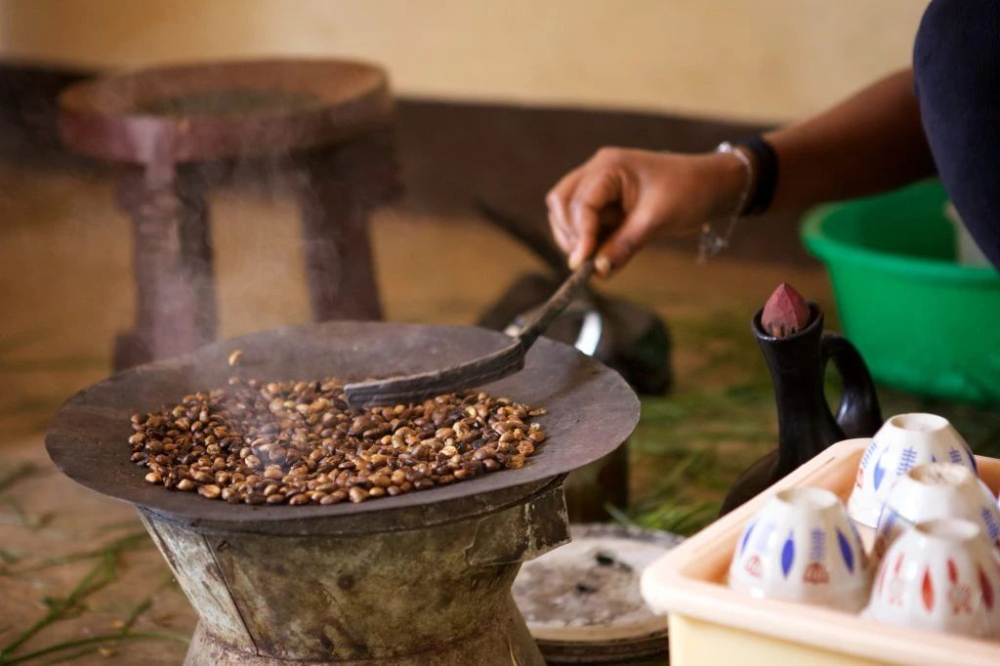
In the Sidamo region, the most famous coffee bean is none other than the naturally processed Huakui coffee bean from the Buku Abel processing plant in the Guji Hambela sub-region! In this article, Front Street Coffee takes Huakui coffee beans as an example for roasting, brewing, and sharing, so we can experience the charm of Sidamo coffee together!
Front Street Coffee - Sidamo Huakui Coffee Beans
Country: Ethiopia
Region: Sidama
Processing Plant: Buku Abel
Altitude: 1,750-2,350 meters
Processing Method: Natural Process
Variety: Ethiopian Heirloom
In 2017, Ethiopia's DW Green Bean Company submitted its coffee beans to the TOH (the Taste Of Harvest) green bean competition hosted by the African Coffee Association. A natural batch from the "Buku Abel" processing plant won the TOH Ethiopia championship with its intense strawberry and cream aroma. That year, this batch of green beans was imported by a green bean trader in Beijing, and because of its championship status, it was given the name "Huakui."
Afterward, DW Company added processing plants in Dimtu, the core production area of Hambella, namely "Buku Abel," "Buku Saysay," "Haro Soresa," and "Tirtiro Goye," with an annual coffee output of about 1,100 tons. In terms of growing regions and processing plants, among these estates and processing sites, only coffee from the processing area of the "Buku Abel" processing plant covers the small production area that originally produced the natural "Huakui."
As Huakui coffee beans grew more and more famous, many Huakui coffee beans at various prices began appearing on the market. When purchasing, be sure to confirm four key pieces of information: "Sidamo region," "Buku Abel processing plant," "natural process," and "Ethiopian heirloom variety"—none can be missing! Authentic Huakui coffee beans can be purchased at the Front Street flagship store/Front Street Coffee shop.
Through observation, Front Street Coffee has found that naturally processed Huakui green coffee beans are green with a yellow tinge and vary in size overall, which is also a typical characteristic of Ethiopian heirloom varieties. As the birthplace of coffee varieties, Ethiopia has far too many coffee varieties; it is like Arabica's natural gene bank. On one hand, the varieties are so numerous that identification and classification are extremely difficult; on the other hand, the Ethiopian government, for protection reasons, is unwilling to disclose information about these varieties, so they are collectively called Ethiopian heirloom. Precisely because the varieties are complex, mixed planting and mixed harvesting mean that Ethiopian heirloom beans come in different sizes.
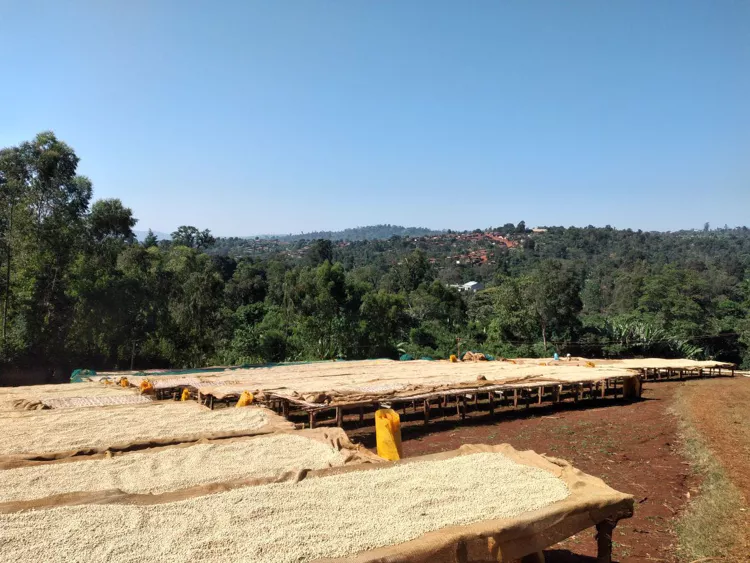
Front Street Coffee Roasting Suggestions
Roaster: Yangjia 800N.
When the drum temperature rises to 200°C, charge the beans, set the damper to 3, heat to 160, keep the damper unchanged, the turning point is 1 minute 32 seconds, and when the drum temperature reaches 140°C adjust the damper to 4; at this point the bean surface turns yellow, the grassy smell completely disappears, and it enters the dehydration stage. When the drum temperature reaches 168°C, adjust the heat to 140 and keep the damper unchanged.
At 8 minutes 56 seconds, wrinkles and dark spots appear on the bean surface, and the toast aroma clearly turns into coffee aroma, which can be regarded as the prelude to first crack. At this point, listen carefully for the sound of first crack; it begins at 9 minutes 14 seconds, reduce the heat to 110, adjust the damper to 5, develop for 1 minute 45 seconds after first crack, and drop the beans at 196°C.
What method should be used to brew this bean? Front Street Coffee chose four methods: Clever Cup, AeroPress, V60 pour-over, and KONO pour-over.
Clever Cup:
The Clever Cup combines the advantages of a French press and a pour-over brewer, and is simple and convenient to operate. It uses immersion extraction and does not demand much skill. If you find it hard to master a steady stream of water for the time being, and cannot accept the fine particles of a French press, the Clever Cup is an easy-to-use option that still delivers good flavor.
Its secret lies in a piston at the bottom of the cup, which normally stays in a lowered state (with four feet below keeping it suspended); after water is poured in, the piston seals under pressure and firmly blocks the flow; when the cup is placed on a container, the bottom piston is pushed up and the coffee liquid flows out.
Preparation:
1. Fold the filter paper and place it in the Clever Cup, wet the filter paper with hot water to remove any papery odor;
2. 15g coffee powder, medium-fine grind (80% passing a Chinese standard No. 20 sieve), water temperature 90°C, water-to-coffee ratio 1:15.
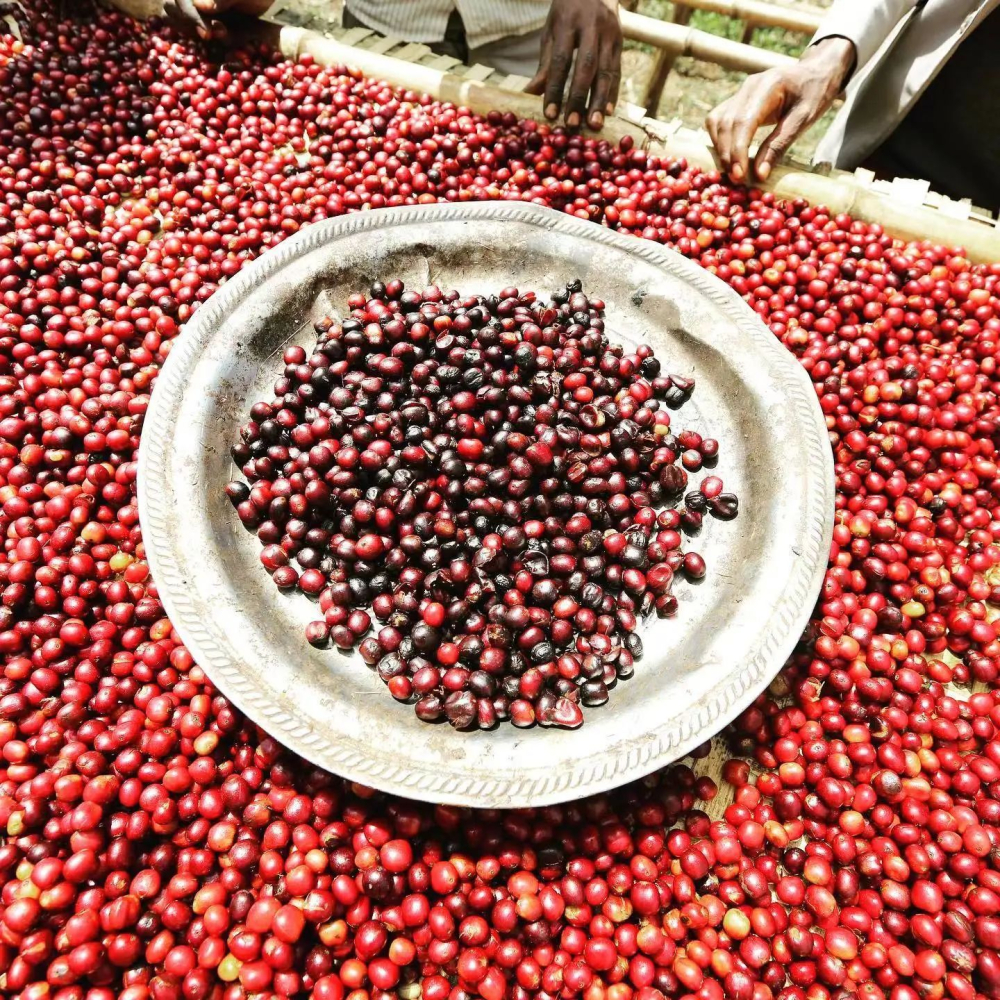
Move the Clever Cup onto the electronic scale (the valve will close automatically at this point), and pour the ground coffee into the center of the dripper. Pour in 30g of hot water for the first stage, start the timer, and bloom for 30 seconds; after blooming, pour water until 225g and steep for 1 minute 50 seconds. After steeping, move the Clever Cup onto a container to open the valve and filter out the coffee liquid; the whole process takes about 15 seconds, and the total extraction time is about 2 minutes 05 seconds.
AeroPress:
The AeroPress is both a highly ingenious creative achievement and a practical product. It combines the immersion extraction of a French press, the paper filtration of pour-over coffee, and the rapid pressure extraction principle of espresso. Through pressure extraction, it can combine the richness of espresso, the clarity of pour-over coffee, and the smoothness of a French press.
Flavor Characteristics of AeroPress Coffee:
Clean and smooth mouthfeel: using suitable warm water and appropriate pressure can brew coffee with low acidity, no bitterness, and full flavor.
Rich flavor: fully immersive brewing extracts coffee to the greatest extent and evenly, completely preserving coffee flavor.
Medium body: a perfect cup of coffee can be made in 2 minutes, with the actual pressing time only 20 to 30 seconds. Because the pressing process is pressure extraction, it can highlight the coffee's sweetness and smoothness.
Preparation:
1. Prepare 15g coffee powder, medium grind (75% passing a Chinese standard No. 20 sieve), 89°C, water-to-coffee ratio 1:15, preheat the AeroPress;
2. Standard AeroPress accessories: AeroPress body (with rubber head already attached), funnel, filter paper holder, filter cap, filter paper, scoop, stirrer, electronic scale.
Method: Pour in the coffee powder, add 40g of water and stir evenly (because the cylinder is narrow, coffee powder may remain at the edges, so add a little more water so that the coffee powder in the corners can also absorb water fully), after 30 seconds add water until 200g, stir again to help the coffee powder continue degassing, at about 1 minute 30 seconds flip it over and press, with pressing extraction taking about 30 seconds. If you feel the taste is too strong, you can add 27g of water.
V60 Dripper Brewing:
The V60 has many ribs, so the drainage speed is relatively fast, and stopping the pour can extend the extraction time. Using a three-stage brewing method can clearly bring out the front, middle, and back flavors of the coffee.
Preparation: 15g coffee powder, 90°C, water-to-coffee ratio 1:15, medium-fine grind (80% passing a Chinese standard No. 20 sieve).
Pour water using a three-stage method: start the timer, pour water for the first time until 30g, and bloom for 30 seconds; then for the second stage, pour in a slow circular motion until 125g, wait until the water level in the coffee bed drops to half before pouring again, continue pouring in a slow circular motion until 225g, and after all dripping is complete, the total extraction time is about 2 minutes 00 seconds to 2 minutes 10 seconds.
KONO Pour-Over:
The KONO cup has few ribs at the bottom, and the filter paper fits closely against the dripper, which can restrict airflow and give water and coffee grounds a longer contact and steeping time in the dripper, ensuring extraction time and extraction yield even with a coarse grind. This allows the coffee grounds to be fully extracted, enhancing body and making the flavor more concentrated.
Preparation: 15g coffee powder, 89 to 90°C, water-to-coffee ratio 1:15, medium-coarse grind (70-75% passing a Chinese standard No. 20 sieve).
Method: Use 30g of water to bloom for about 30 seconds, then pour in a slow stream in a circular motion at the center until 125g in stages, and when the water level drops and is about to expose the coffee bed, continue pouring until 225g and stop; when the water level drops and is about to expose the coffee bed, remove the dripper (timing starts from the beginning of blooming), with an extraction time of about 2 minutes 00 seconds.
Although there are many brewing methods, not every one is suitable for extracting Huakui coffee beans. Different brewers paired with different grind sizes are intended to express a particular unique flavor and mouthfeel, and everyone can try them.
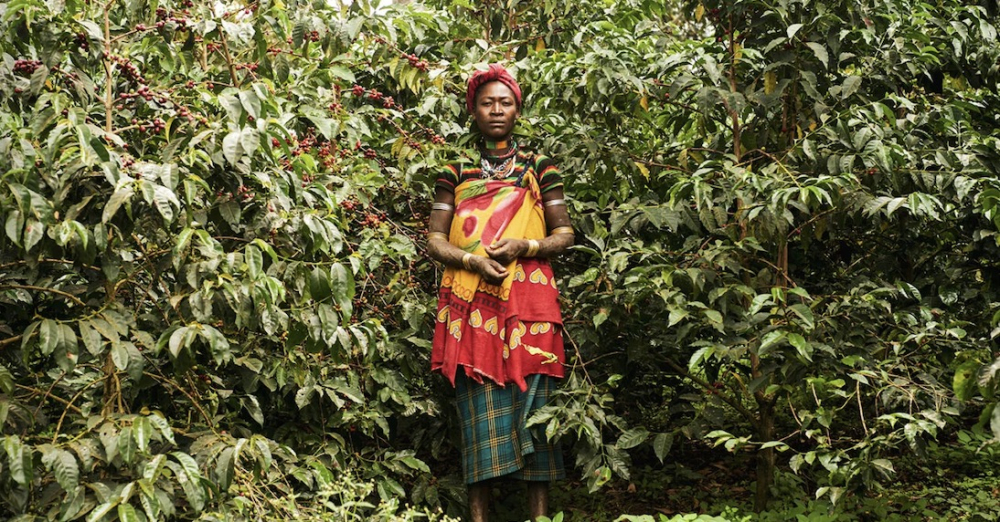
Front Street Coffee advocates a conservative brewing approach: fully extract under accurate grind, accurate temperature, accurate weight, and accurate time, and on that basis ensure the presentation of coffee flavor. Huakui coffee that can be fully extracted within an appropriate time will show berry and tropical fruit aromas, sweet-and-sour juicy character, and a finish with the sweet aftertaste of oolong tea, making for a very pleasant flavor.
For more specialty coffee beans, please add the private WeChat Front Street Coffee, WeChat ID: qjcoffeex
The above content is compiled by CoffeeHunters, a coffee news website.


