







What Makes This Geisha Green Coffee Distinctive?
This black honey Geisha comes from Café Rivense del Chirripó in Costa Rica's Brunca region, a farm sitting at roughly 1,550 meters between Cerro de la Muerte and Chirripó Mountain. The black honey process leaves more mucilage on the bean during drying, which builds pronounced sweetness and layered fruit. The farm placed fifth at the 2019 Cup of Excellence, and the coffee is brewed as pour-over to keep those fruit layers intact.
Owners Régulo Gerardo Ureña Chacón and Isabel Rojas bought the 8-hectare plot in 2005 and later began helping neighboring growers process and export their green coffee. For brewing, a pour-over dripper with a medium grind and moderate water temperature, poured in three stages, extracts the sweetness without flattening the fruit. The geisha green coffee behind the cup reflects the valley microclimate created by Costa Rica's two highest peaks.
Located in the Brunca region of Costa Rica, Café Rivense del Chirripó sits in a valley between Cerro de la Muerte and Chirripó Mountain. Thanks to its unique microclimate and sustainable farming philosophy, it produces black honey processed coffee with outstanding sweetness. This article introduces the estate's history, environmental practices, and black honey processing method, and provides a detailed analysis of the black honey Geisha that Front Street Coffee sourced—covering flavor profile and brewing recommendations, including dripper choice, water temperature, grind size, and three-pour extraction technique—to help you brew a cup with rich fruit layers.
Café Rivense del Chirripó
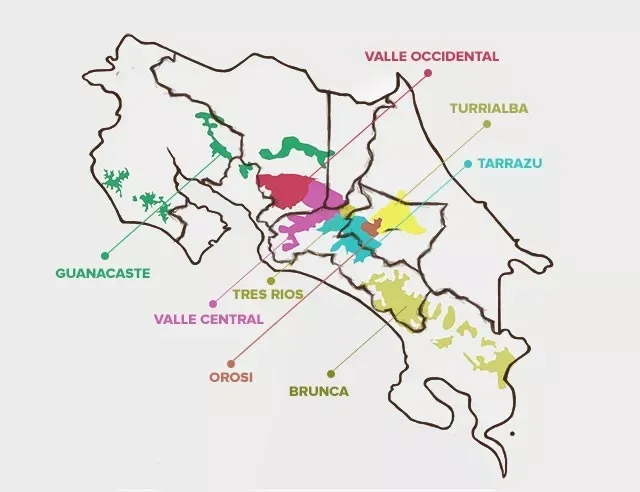
Café Rivense del Chirripó is located in the Brunca region of southern Costa Rica, at an altitude of about 1,550 meters, directly facing the country's highest mountain range, the Chirripó.
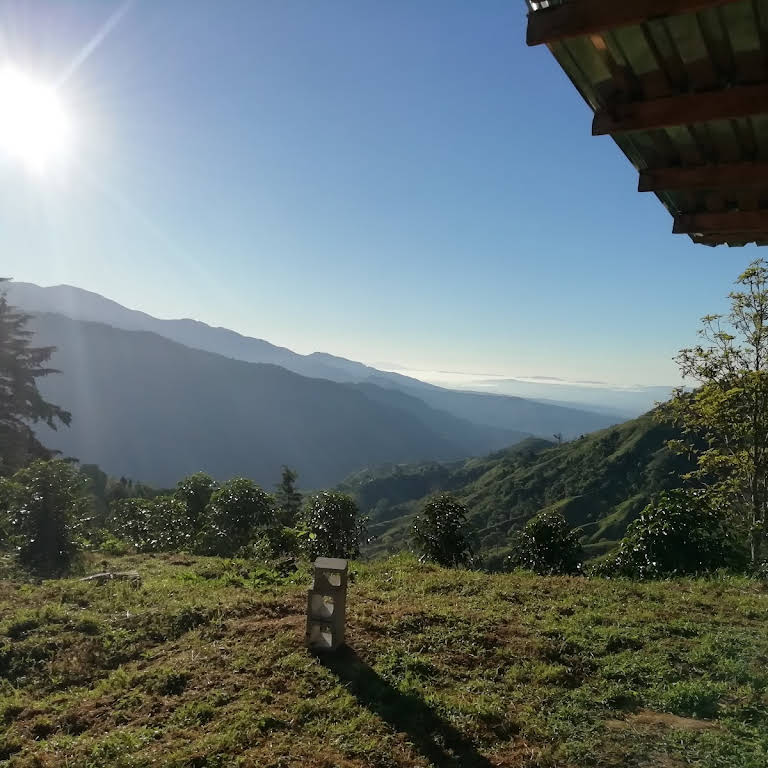
In 2005, Régulo Gerardo Ureña Chacón and his wife Isabel Rojas bought this 8-hectare plot of land and began growing coffee. While tending the coffee trees in the early morning, they could see the magnificent scenery of the Chirripó mountain range, and the estate was named after this view. This coffee micro-region is nestled between Costa Rica's two highest peaks—Cerro de la Muerte (3,491 m) and Chirripó (3,820 m). The valley between the mountains creates a distinctive microclimate, providing ideal conditions for coffee cultivation.
In the early years of running the estate, the Ureña Rojas family faced many cultivation challenges due to the harsh environment and lack of experience. After repeated trials and years of dedication from the couple, they finally won fifth place in the 2019 Cup of Excellence (COE). Today, Café Rivense del Chirripó not only helps neighboring farmers process green coffee and sell it to overseas markets, but also continues to encourage coffee growers to pursue high-quality specialty coffee production.
Café Rivense del Chirripó has always emphasized environmental protection, adopting sustainable system management from coffee tree cultivation to green bean processing to minimize its carbon footprint: organic fertilizer is applied at doses tailored to differences in soil composition, ensuring coffee tree nutrition while avoiding the impact of excessive chemicals; all water resources on the estate are protected, and fruit trees are planted to shade the coffee trees, with the fruit providing food for local wildlife. This green environment also helps ensure the quality of the coffee cherries.
Black Honey Processing
All coffee cherries at Café Rivense del Chirripó are dried using natural or semi-natural methods, resulting in very high sweetness in the final product while also saving a large amount of water.
The Ureña Rojas family picks the coffee cherries at peak ripeness, when the fruit has the highest sugar content. The skin and pulp are removed in a dry environment, allowing the mucilage layer to be fully preserved. The parchment beans with the entire mucilage layer intact are placed on raised beds to sun-dry for 12 to 15 days—because the mucilage layer is the thickest, drying takes some time, but the temperature must not be too high; only uniform drying allows the sugars to fully convert. Therefore, Café Rivense del Chirripó strictly controls every step—drying, hulling, sorting, packaging, and export—to ensure traceability of each coffee lot.
Front Street Coffee: Café Rivense del Chirripó Black Honey Geisha Coffee Beans
Region: Brunca, Costa Rica
Estate: Café Rivense del Chirripó
Variety: Geisha
Altitude: 1,550 m
Processing: Black Honey
Flavor: Dried fruit, honey, fermented fruit, cherry
The black honey processed Geisha that Front Street Coffee sourced is predominantly fruit-forward. To preserve more fermented sweetness, Front Street's roaster used a medium-light roast. Cupping reveals a dry aroma rich with the fermented fragrance of dried fruit and berries; in the cup, it presents high sweetness of citrus, cherry, and cantaloupe, with soft acidity and a full body.
Brewing Reference
This black honey processed Geisha is a Costa Rican high-altitude SHB extremely hard bean. To brew rich fruit layers, Front Street recommends using a higher water temperature and a finer grind size. The harder the coffee bean, the more a finer grind is needed to increase the extraction surface area, thereby raising the extraction yield.
Dripper: V60 Water temperature: 90-91ºC Dose: 15g Coffee-to-water ratio: 1:15 Grind size: Fine sugar consistency (sifting to 78% through a No. 20 sieve)
Three-pour extraction: Pour the coffee grounds into the V60 dripper, first wetting the bed with twice the coffee's weight in water and letting it bloom for 30 seconds; then pour in a slow circular motion from the center outward, pausing at 125g for a break; once the bed drops to halfway down the dripper, pour the third pour at the same slow flow rate until 225g. After all the coffee liquid has drained, remove the dripper. Total time: about 2 minutes (within 10 seconds).
Through pour-over brewing, Front Street found that this black honey processed Geisha has an intense fermented aroma of cantaloupe and tropical fruit, balanced acidity of berries and cherry, and after the temperature drops, the fruity tea-like finish becomes even more pronounced, with a full, well-rounded sweet-and-sour profile overall.
The above content is compiled by CoffeeHunters, a coffee news website.


