








What Does the Cappuccino Name Meaning Tell Us About the Drink?
The cappuccino takes its name from the Italian word cappuccio, meaning hood, a reference to the Capuchin order whose brown robes and pointed hoods inspired the drink's brown ring of crema against white milk foam. That cappuccino origin of name also explains why the drink was never built on an equal-parts formula. According to WBC rules, a cappuccino is one espresso plus textured milk and foam at least one centimeter thick, served in a 150 to 180 milliliter cup filled to capacity.
The widely repeated 1:1:1 recipe of 60 milliliters each of espresso, milk, and foam does not hold up in practice. Replicating it produces a coffee-heavy, bitter cup where milk and espresso fail to integrate. A qualified cappuccino instead calls for foam around 1.5 centimeters thick poured to protect the crema, which is also why the drink resists latte art. The cappuccino name meaning, tied to those robes, points back to a simpler drink than modern interpretations suggest.
Is the espresso, milk, and milk foam in a cappuccino really 1:1:1? This widely circulated recipe is actually not the WBC standard. Front Street has replicated and verified it: the high proportion of coffee leads to a strong, bitter taste and poor integration. Starting from WBC competition rules, this article sorts out the origin of cappuccino and the tradition of the "coffee golden ring," explains why it is not suitable for latte art, and breaks down in detail the process of making a qualified cappuccino—from choosing a 180ml tulip cup and the extraction parameters of Front Street Sunflower Warm Sun coffee beans, to steaming refrigerated fresh milk into 1.5cm thick milk foam and the pouring technique that protects the crema—helping you make an authentic cappuccino with milk foam rising above the rim without collapsing.

According to WBC competition rules, a cappuccino consists of a single espresso, milk with a dense texture, and milk foam no less than one centimeter thick; at the same time, it must be served in a cup with a handle with a capacity of 150 to 180 milliliters, and the drink volume must match the cup capacity. For example, a 180-milliliter cup must be filled with 180 milliliters.
Many beginners think of cappuccino as an equal-parts recipe of 60 milliliters each of espresso, milk, and milk foam. Although this statement is common in various textbooks, Front Street found after actually replicating it that the flavor is not ideal: the coffee ratio is too high, the milk and coffee do not integrate well, and the first sip is heavy and somewhat bitter.
Nowadays, people are increasingly obsessed with latte art. Many baristas want to show off their latte art skills whether they are making a latte, a flat white, or a cappuccino. This also makes many people wonder: is there actually any difference between a cappuccino and a latte?
The Origin of Cappuccino
Cappuccino is the transliteration of "Cappuccino." This word comes from the Italian "Cappuccio," meaning hood. As the name of a coffee, it is related to a local religious order called the Capuchin.
When this order went to Italy to preach, its members wore dark brown robes and pointed hoods folded into a sharp shape. This inspired Italians to steam milk into fine, stable foam and pour it into espresso. Then a ring of brown resembling the color of the robes appeared in the cup, and a spoon was used to shape the surface milk foam into a pointed hat. Because Capuchin and Cappucci sound similar, Italians, while preserving the original pronunciation rhythm, incorporated the n into Cappuccio and finally used Cappuccino to name this milk coffee.
Why is it said that cappuccino should have a "coffee golden ring"?
After cappuccino became popular, more and more Italians accepted milk coffee. Because shaping the little pointed hat of milk foam took time, people gradually stopped making the "little pointed hat" on cappuccino. But the tradition was not discarded. Cappuccino still retains a ring of brown coffee while letting dense milk foam rise above the rim to form a "hat" state, in memory of those missionaries.
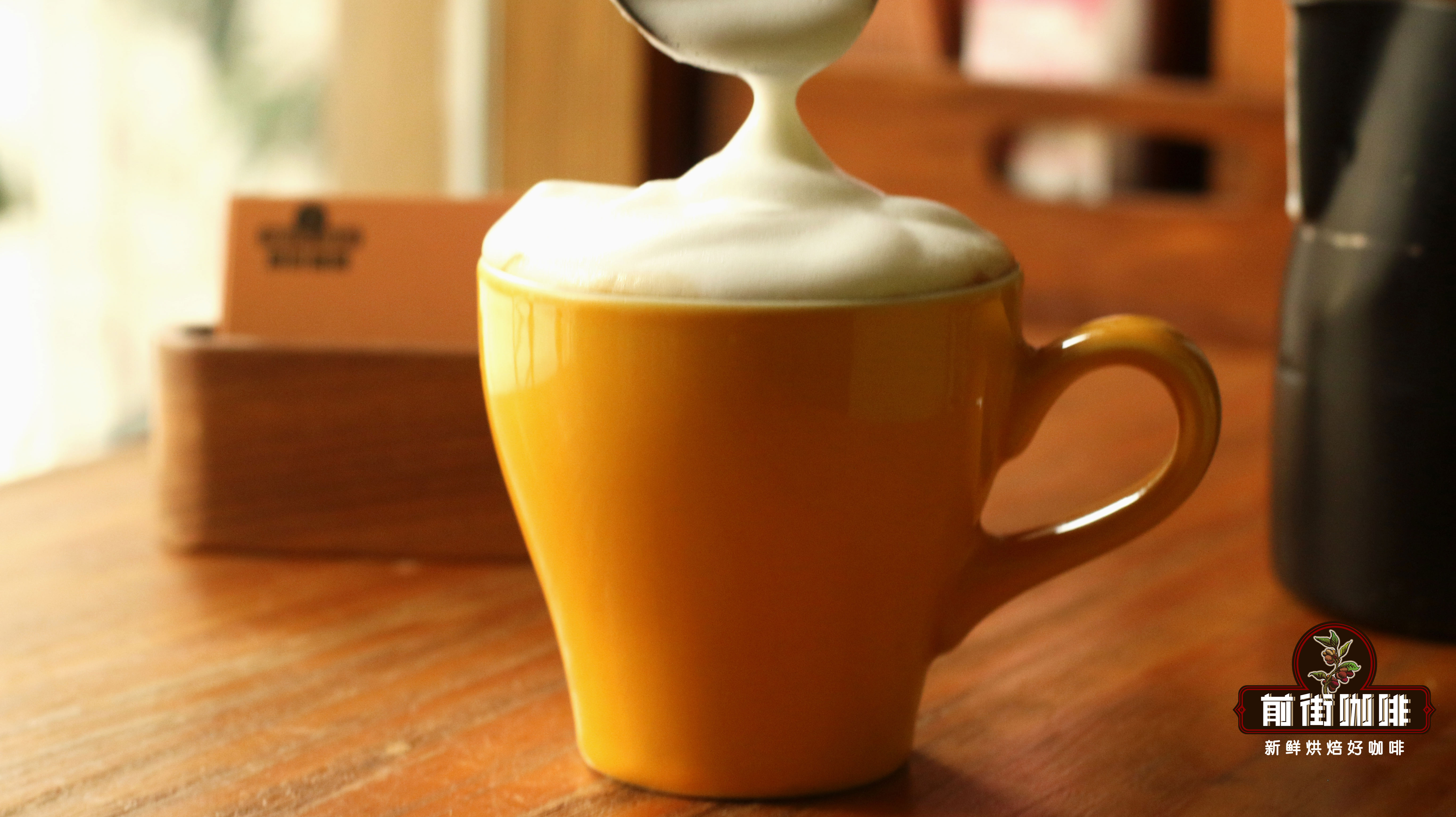
Thus came the tradition that cappuccino must have a "coffee golden ring." As is well known, after coffee and milk are mixed, the brown color turns light brown. If the "coffee golden ring" is to be preserved, it is necessary to ensure that the milk does not wash away the crema. Therefore, when steaming milk foam, it needs to be denser and thicker, so that the milk foam acts as a protective layer between the milk and the crema.
Why is latte art not made on cappuccino?
The milk foam used for latte art is about 1 centimeter thick. Milk foam of this thickness has strong fluidity and can mix evenly with espresso to form patterns. But for cappuccino to avoid washing away the crema and to preserve the "coffee golden ring," it means the espresso cannot mix evenly with the milk.
At the same time, in order for the milk foam to rise above the rim without collapsing and to have enough surface tension to remain stable at the rim, the milk foam needs to be steamed to 1.5 centimeters thick. Milk foam of this thickness has weak fluidity and cannot produce patterns.
How should a qualified cappuccino be made?
/ Choosing the Coffee Cup
When making cappuccino, Front Street uses a 180-milliliter tulip cup. Compared with a round-bottomed cup, a tall cup shape that is narrow at the bottom and wide at the top better highlights the "hat" shape of a cappuccino.
/ Espresso Extraction
For espresso drinks, Front Street Coffee uses Sunflower Warm Sun coffee beans, a blend of sherry barrel and sun-dried Yirgacheffe. To make a cappuccino, take a single espresso. The extraction plan is to extract 35 grams of coffee liquid from 20 grams of coffee grounds and divide it into two portions, taking 27 seconds. (You can also directly make a single espresso. Front Street's parameters are 12 grams of coffee grounds extracting 30 grams of coffee liquid, with an extraction time of 23 seconds.)
/ Use Refrigerated Fresh Milk
Fresh milk can more completely retain protein and milk fat. Protein is the key to forming milk foam, while milk fat can further stabilize the milk foam, slow down the rate at which it breaks down, and add a rich mouthfeel to the coffee.
/ Steaming the Milk Foam
Choose a small milk pitcher and pour in 150 milliliters of refrigerated fresh milk. Before the steam wand enters the pitcher, release steam first to expel condensed steam water at the steam holes, then place the steam wand 1 centimeter below the surface of the milk and turn on the steam switch. After it is turned on, the steam contacting the milk surface will make a squeaking sound. This step is called aeration and is the stage in which milk foam is formed.
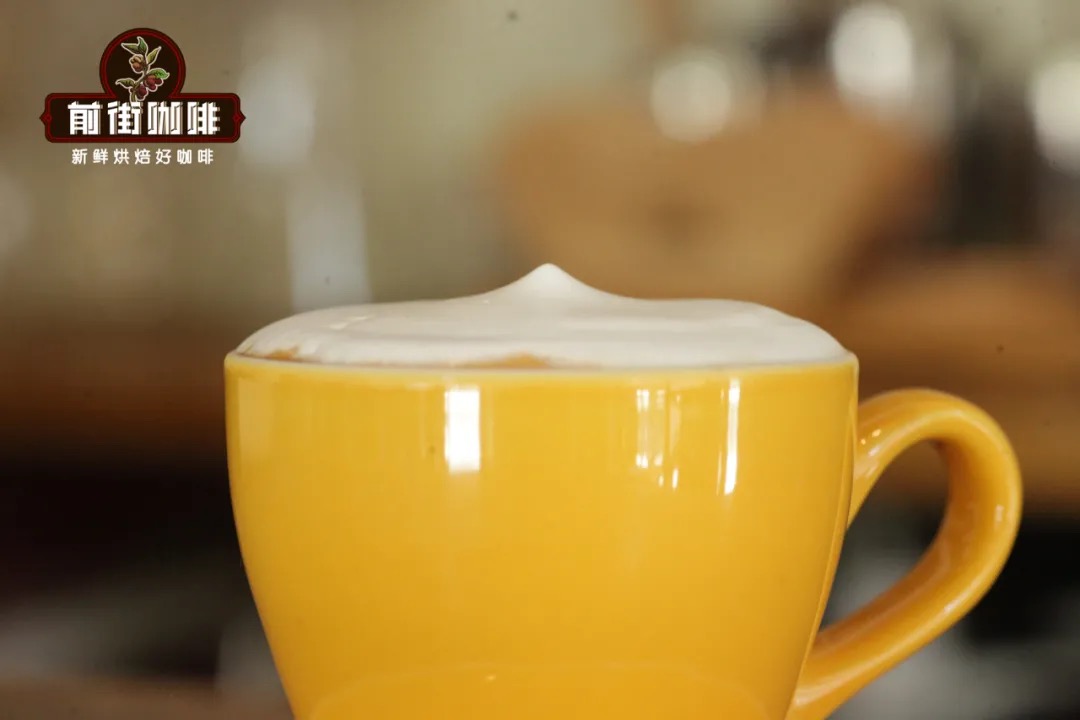
The longer the aeration, the thicker the milk foam. The milk foam for making cappuccino is 1.5 centimeters thick, so after hearing 6 to 7 squeaks while steaming, stop aeration and adjust the pitcher to a 45-degree angle to create a vortex that rolls away large bubbles (at this point it no longer makes a squeaking sound). When the milk is heated to about 55 degrees Celsius, steaming is complete.
/ Swirl the pitcher before pouring to prevent the milk foam and milk from separating.
After steaming stops, the foam and milk will gradually separate. We need to find a pivot point on the table and, by rotating the wrist, shake the pitcher clockwise at a steady speed so that the milk and foam remain integrated before pouring.
/ Pour the milk foam into the espresso.
Front Street mentioned earlier that when pouring milk, the crema of the espresso must not be washed away. If poured directly, the crema will inevitably be washed away. Therefore, the milk foam needs to be poured first to form a protective layer between the milk and the crema before pouring the milk. But milk is heavier than milk foam, and what flows out first is often the milk. How can the milk foam be poured first?
(Key point) Point the spout of the pitcher at the center of the espresso surface, then tilt the pitcher slightly to nearly pouring position, but do not pour yet. Pause!!! After the milk foam gathers at the spout of the pitcher, slowly pour from the center. In this step of pouring the milk foam, there is no need to mix in a circular motion, nor to shake the wrist. Just keep a stable posture and pour from the center.
The above content is compiled by CoffeeHunters, a coffee news website.


