







How did the coffee industry in Honduras catch up so fast?
Honduras is a Central American coffee producer that started late but moved quickly. By 2011 its output had passed Guatemala's, and it now sits among the world's ten largest coffee-producing countries. Its beans are known for a balanced cup that works both in blends and as a single origin.
The country's producing regions, varieties, coffee grades and processing methods all shape that profile. For pour-over, roasters adjust roast curves and cup each lot before listing beans, which is how distinct regional flavors are kept apart. Blends that pair Honduran coffee with Yirgacheffe bring out fruity acidity and chocolate notes in espresso.
Honduras is an important coffee-producing country in Central America. Although it started late, it has caught up and surpassed others. By 2011, its output had exceeded that of Guatemala, and today it ranks firmly among the world's top ten coffee-producing countries. This article will comprehensively sort out Honduran coffee from the perspectives of its historical development, production region divisions, variety characteristics, grade standards, and processing methods, and combine the actual brewing experience of several Honduran coffee beans from FrontStreet Coffee to share in detail the pour-over parameters and water temperature ratios. Whether you want to understand the regional flavors of Honduran coffee or are looking for practical pour-over solutions, this article can provide valuable reference.
Characteristics of Front Street Honduras Coffee It is known for its balanced taste and can be used both in blended coffee and brewed as a single origin. Front Street has a house-roasted Front Street Warm Sun Italian Blend Coffee that uses Front Street Honduras coffee and Front Street Yirgacheffe blended to make espresso, and the taste has obvious fruity acidity and rich chocolate flavor. Front Street Honduras coffee beans also have an impressive flavor profile when brewed as a single origin pour-over.
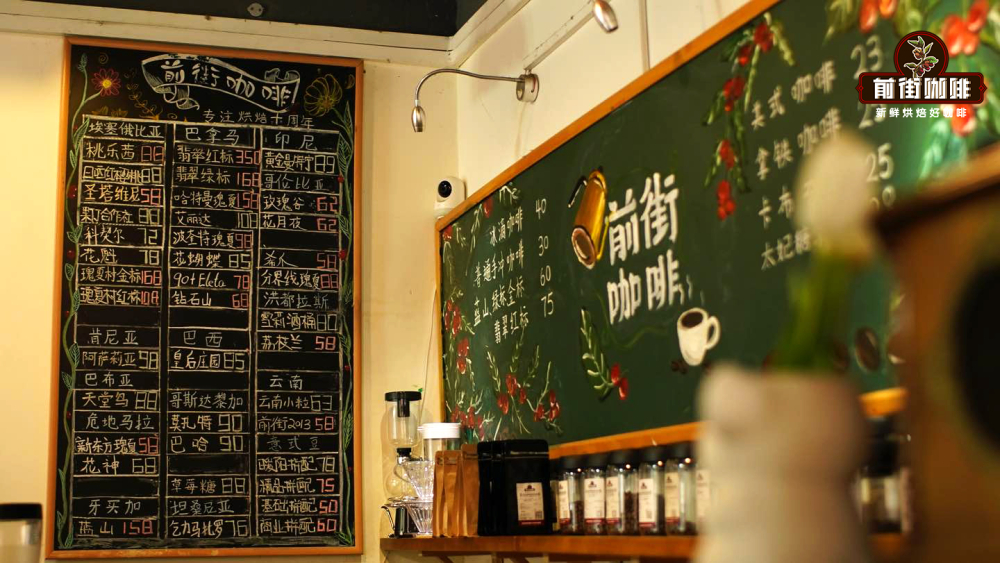
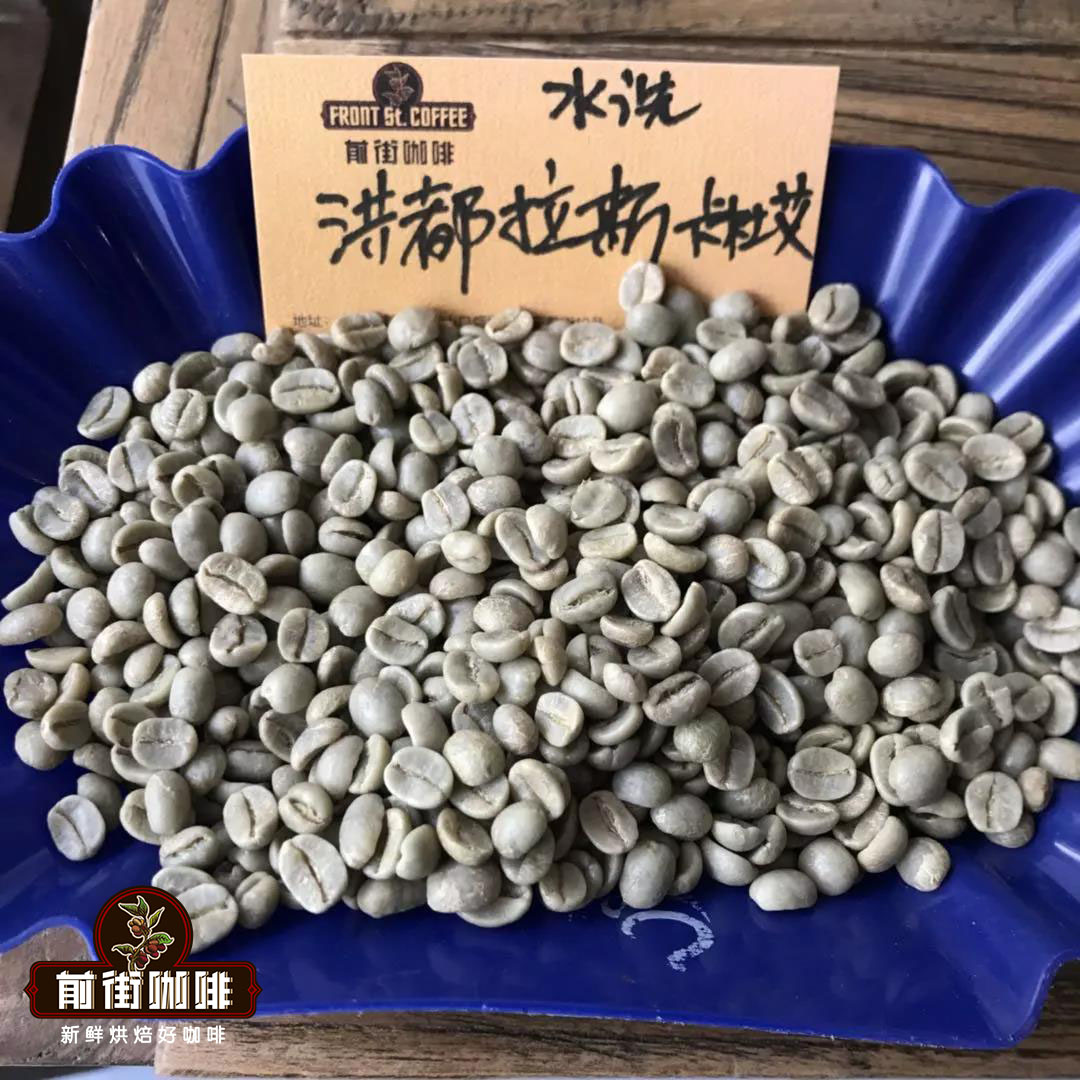
Whether at the store in Dongshankou, Guangzhou, or online on Taobao, Front Street displays more than 50 kinds of coffee beans from around the world, among which three are from Honduras with distinct flavors. Before putting these coffee beans on the shelves, Front Street conducted extensive origin research, tasted coffee beans from multiple Honduran production regions, and through continuous adjustments to roasting curves, cupping, pour-over, and many other steps, finally determined the beans to be listed. Some people may think this process is too complicated, but precisely because of this, Front Street can ensure that among these more than 50 kinds of coffee beans, each one has different characteristics, and everyone who comes to Front Street can choose the coffee bean they like.
Front Street Honduras Coffee Honduras is located in northern Central America. Compared with its neighbors Guatemala and Nicaragua, Honduras's coffee industry developed later, but it is fully in a position to catch up and surpass, and in 2011 its coffee output exceeded that of Guatemala. Front Street has compared coffee beans from these Central American countries, and they all share a common flavor characteristic: floral and fruity aromas with a soft juice-like quality.
Some people will say that not every country has its own unique flavor characteristics. Indeed, whenever Front Street introduces a country, it first points out what that country's coffee flavor characteristics are, to make it easier for readers to remember. But there is one point: national borders are lines drawn by people themselves, and coffee beans cannot immediately change taste just because they cross a national border. Having commonalities does not mean lacking distinctiveness. Each country has different emphases. Take Africa as an example. African coffee beans are mainly characterized by fruity acidity. Fruity acidity is a commonality among most African countries, but each country has its own emphasis: Ethiopia's acidity is transparent and clear, Kenya's acidity is intense and bright, and Rwanda's acidity is not as intense as Kenya's but is fuller than Ethiopia's.
Back to Honduras. Although its coffee flavor is similar to that of its neighbors, the characteristics of Front Street Honduras coffee include exotic spice elements in the aroma, and the finish carries a mellow nutty and chocolate richness. The overall performance is balanced and layered.
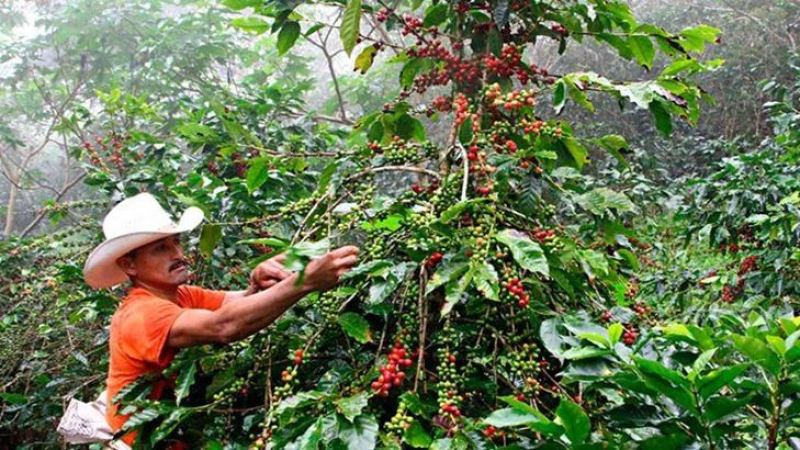
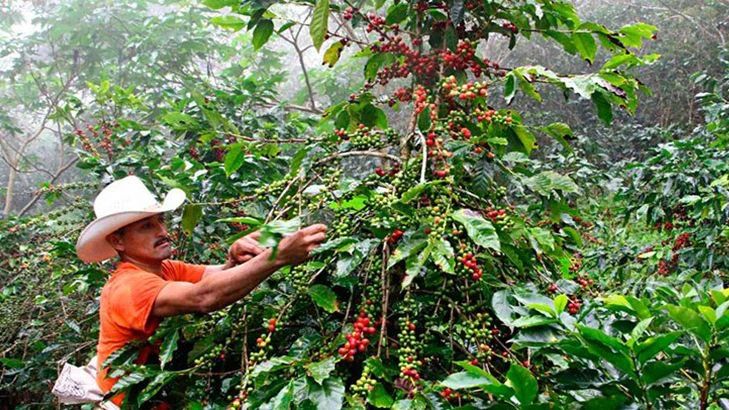
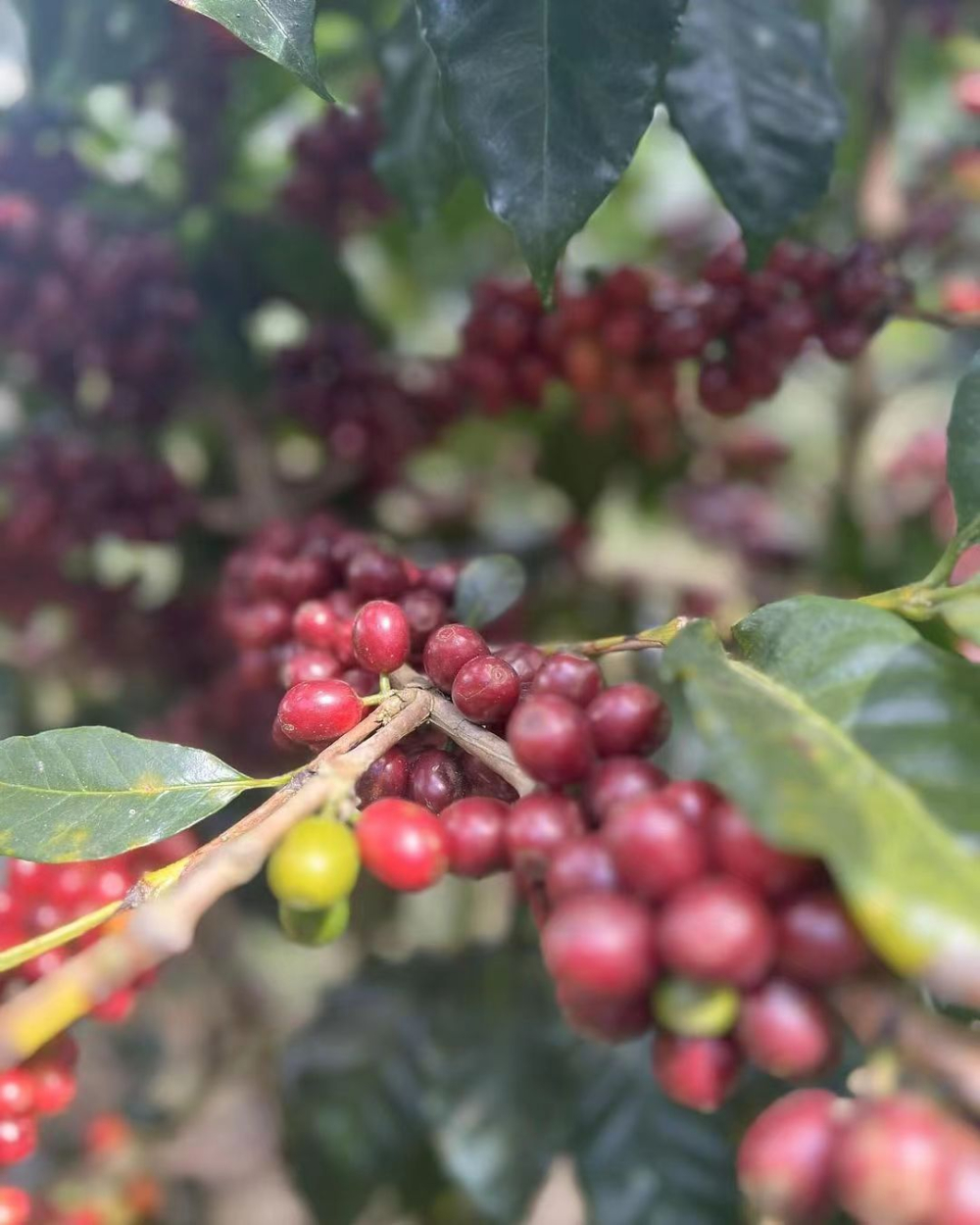
Characteristics of Front Street Honduras Coffee Beans The beans are relatively large in appearance, uniform in size, and even and glossy in color. For ease of harvesting, farmers prune coffee trees to no more than 150 cm, because if they grow too tall, ladders must be used for picking, which is not only time-consuming but may also damage the tree by bending branches. Because each coffee cherry ripens at a different time, maintaining good bean quality requires manual picking, and then selecting the ripe cherries from them. For coffee cherries on the same branch, harvesting often takes several weeks to complete.
The Story of Honduran Coffee Development Honduran coffee was first introduced to Honduras by Spanish merchants in the late 18th century. By 1804, Honduras was already growing coffee on a small scale. In fact, the late start of Honduran coffee development had historical reasons, namely that Honduras lacked transportation infrastructure connecting production areas with ports, which prevented Honduras's coffee industry from getting off the ground for a long time. However, after 1970, the government specially created an official institution for coffee, Instituto Hondureño del Cafe (IHCAFE), dedicated to improving coffee quality. In addition, coffee trees can be grown throughout Honduras, allowing Honduras's coffee output to surpass Costa Rica and Guatemala in 2011. In 1975, frost damage in Brazil sharply reduced coffee output, and Honduras took the opportunity to "move up." Coffee output surged from 500,000 bags to 1.8 million bags, and was snapped up. Only after that did Honduran coffee production truly begin to develop.
In the 1990s, specialty coffee rose in Central America. Other countries won by quality, while Honduras lagged behind in coffee quality. The main reason was that during green bean processing, abundant and irregular rainfall in the mountainous areas affected the final drying stage. In 2004, Honduras hosted the Cup of Excellence green bean competition for the first time. Twenty-one coffees from all over the country received recognition and participated in an online auction. In 2011, Honduras became the largest coffee-producing country in Central America and the world's second-largest producer of Arabica coffee. Today, Honduras has become one of the world's top ten coffee-producing countries and the world's second-largest producer of Arabica coffee. Coffee has played an important role in its economy and national development. Honduras has 280,000 hectares of coffee farms, mainly small coffee farms. Most of these coffee farms are smaller than 3.5 hectares, and these coffee plantations account for 60% of Honduras's total coffee production.
Honduran Coffee Grades [By growing altitude] Strictly High Grown (SHG): above 1,200 meters High Grown (HG): 1,000-1,200 meters Central Standard (CS): 600-1,000 meters [By defect rate] U.S. standard USP, US preparation; European standard EP, Euro preparation. The meaning and rules of Honduran green coffee bean names: Honduras SHG EP (country + altitude grade + defect standard)
Front Street Honduras Coffee Processing Methods
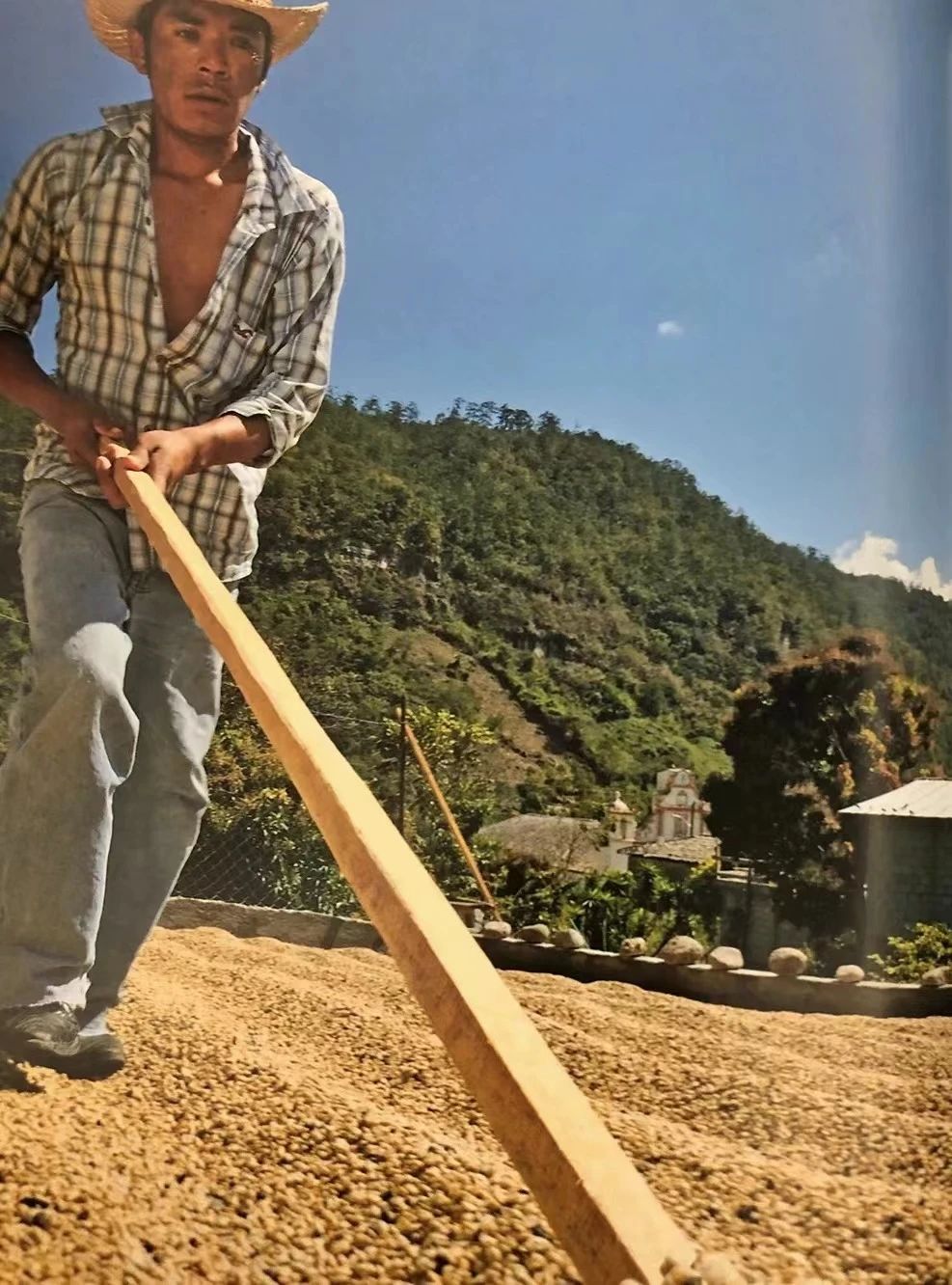
Front Street Honduras coffee mainly uses the washed method to process coffee beans. Generally, the beans are first soaked. During soaking, defective cherries float to the surface and can be drained off and discarded first. Then the skin and pulp are removed, and the beans are soaked in water to ferment and remove pectin, then rinsed clean and dried until the moisture content reaches about 12%.
Front Street Honduras Coffee Different roasting degrees can bring out multiple layers of flavor. Medium roast can bring the sweetness of the beans to the fullest, while dark roast increases bitterness, but the sweetness does not disappear. Generally speaking, medium roast has the best taste, with rich and unique aroma.
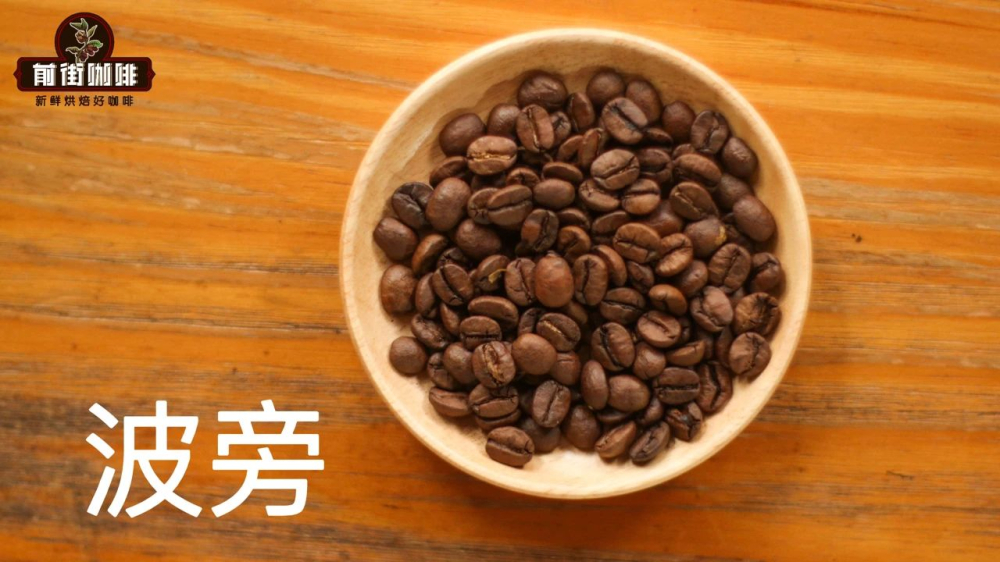
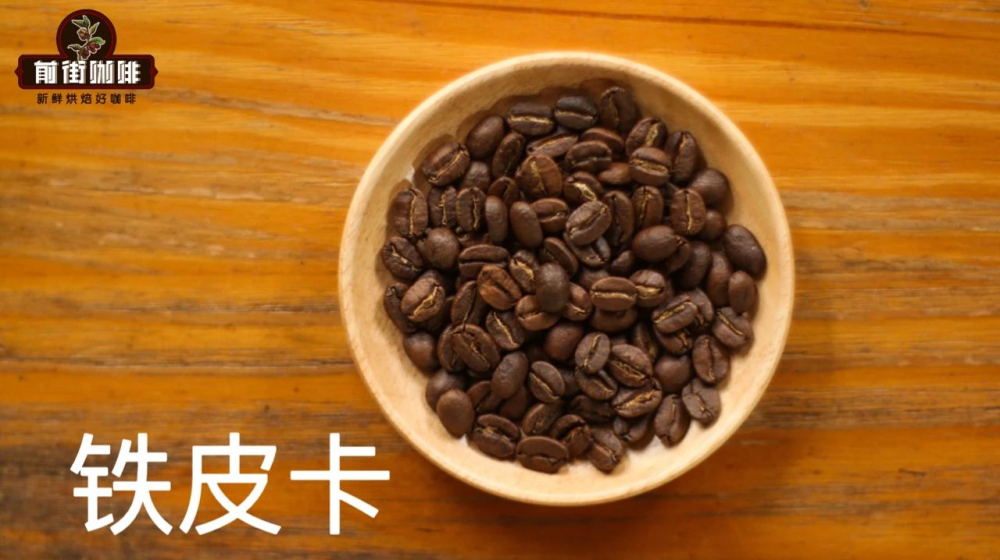
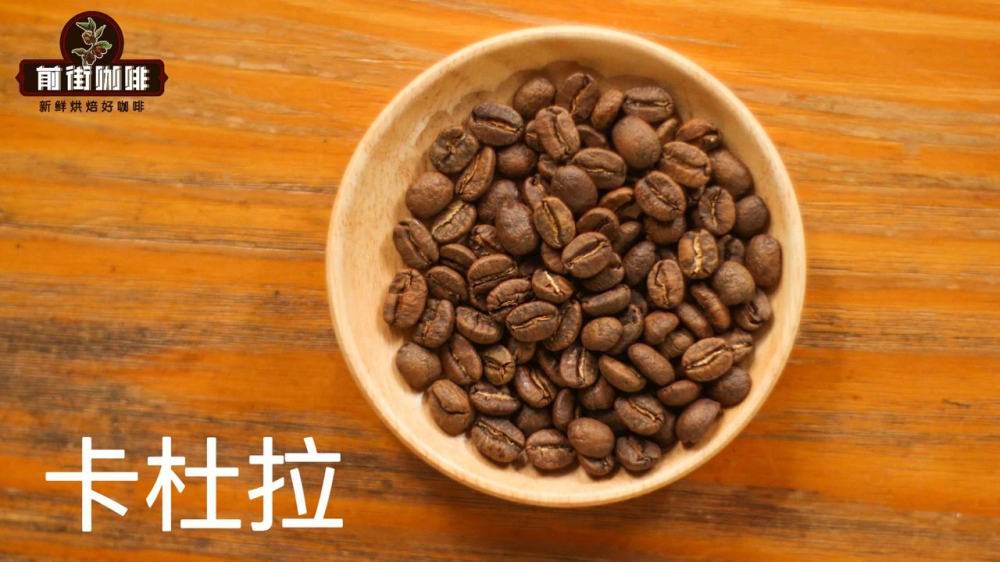
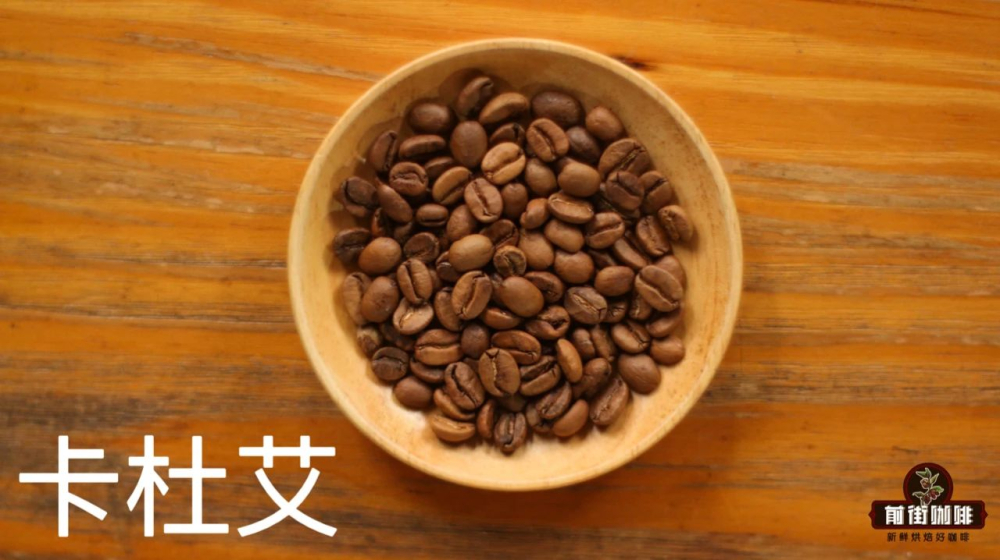
Front Street Honduras Coffee Bean Varieties Honduran coffee beans are grown at an average altitude of 1,000-1,600 m. The main cultivated varieties include Bourbon, Typica, Caturra, Catuai, and Pacas. Bourbon is a variety that originated after Typica was transplanted to Yemen in the early period, and the bean shape changed from slender and pointed to round. In 1715, France transplanted round-bean Yemen Mocha to Bourbon Island off the east coast of Africa (renamed Reunion Island after the French Revolution), and only then was it named Bourbon. Round-bean Bourbon spread to Brazil and Central and South America in 1727. In 1732, Britain transplanted Yemen Mocha to St. Helena (where Napoleon was later imprisoned), which was also round-bean Bourbon. Bourbon is a frequent winner in cupping competitions for American specialty coffee.
Typica is the oldest native variety in Ethiopia. Typica has bronze-colored young leaves, and the bean body is oval or slender and pointed. It has an elegant flavor, but the plant is relatively weak, has poor disease resistance, and low yield. High-quality coffee beans such as Front Street Jamaica Blue Mountain, Front Street Sumatra Mandheling, and Front Street Hawaii Kona all belong to Typica.
Caturra is a natural mutation of Bourbon. It was discovered in Brazil in 1937. Its tree is not as tall as Bourbon and is shorter. Because it inherits Bourbon's lineage, its disease resistance is relatively weak, but its yield is higher than Bourbon's. Although it was discovered in Brazil, Caturra is not suitable for growing in Brazil, so it was not planted on a large scale there. Instead, it became widespread in Central and South America, such as in Colombia, Costa Rica, Nicaragua, and Honduras. The higher the altitude where Caturra is grown, the higher the quality, but the corresponding yield is also lower.
When roasting, Front Street can clearly feel that when adjusted to a light roast, Caturra has obvious acidity and aroma, and the overall profile is bright. With proper handling, the sweetness can be very good, but the body is relatively lower than Bourbon, and the cleanliness of the taste is somewhat lacking. Caturra is usually a red berry, but there are also very rare regions with yellow Caturra, such as a very small amount of yellow Caturra grown in Hawaii. Catuai is a coffee variety artificially hybridized from Caturra and Mondu Novo. Catuai has relatively good resistance to natural disasters, especially wind and rain. The Catuai tree is relatively short. Compared with other coffee trees, Catuai cherries are more firmly attached and not easy to pick. The cherries can be either red or yellow.
Pacas is a Bourbon mutation discovered in El Salvador. In 1935, Salvadoran coffee farmer Pacas selected high-yielding San Ramon Bourbon plants and moved them to his farm for cultivation. In 1956, a friend discovered that the Bourbon trees on his farm produced more fruit than the same kind of coffee trees, so he invited a professor from the University of Florida to come and identify it. It was determined that a genetic mutation had occurred in Bourbon, and the new variety was named "Pacas" after the farm's name. Because of its high yield and good quality, Pacas is quite popular in Central America.
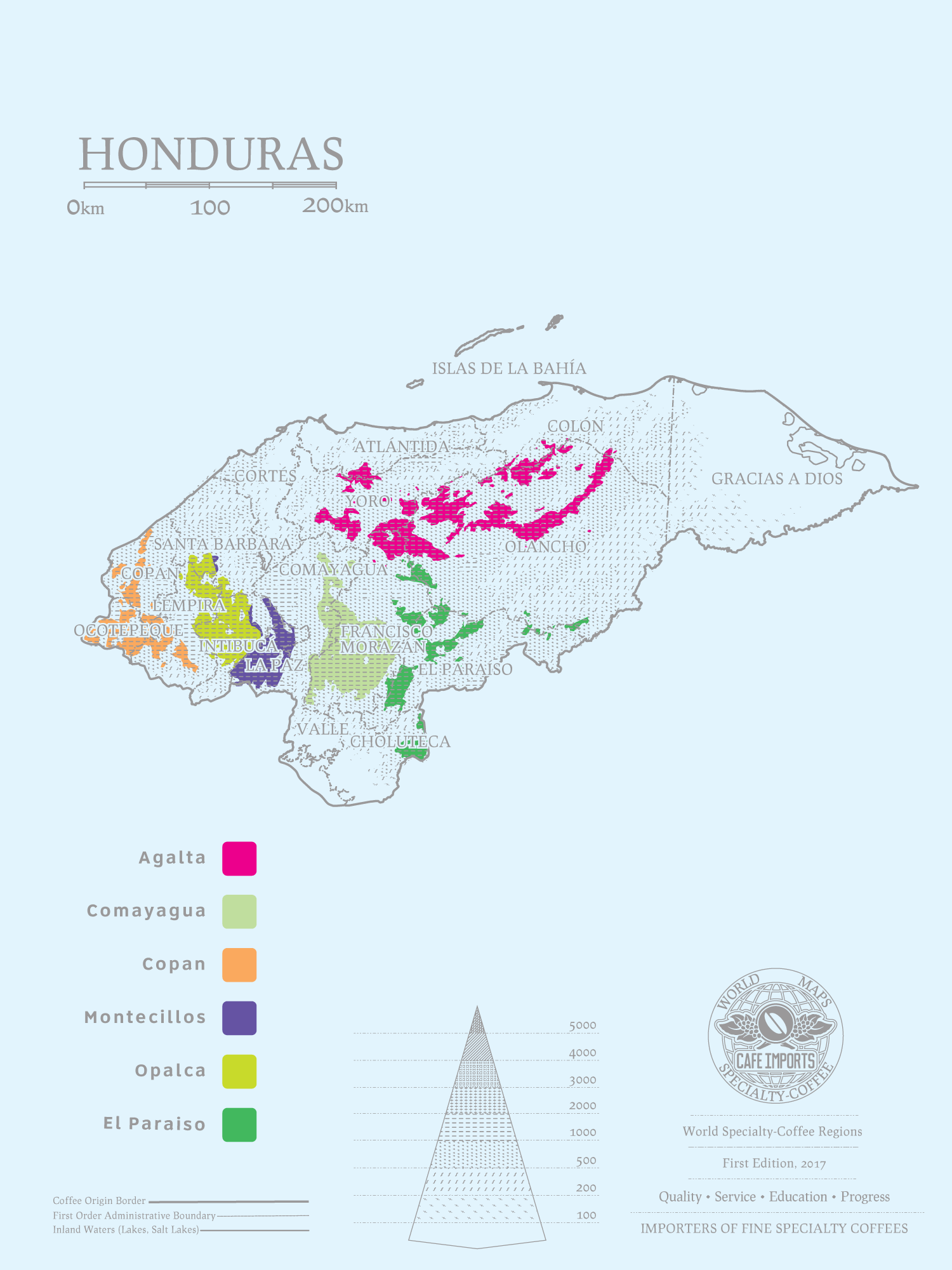
Honduran Coffee Production Regions Starting in 2007, Honduras strengthened its origin labeling system and divided coffee production areas mainly into six major regions:
1. Copan Location: Located in western Honduras, bordering Guatemala, including Copan Department and parts of Ocotepeque, Cortes, Santa Barbara, and Lempira departments. Altitude: 1,000 - 1,500 meters Temperature: 11.5-22.5°C Rainfall: 1,300-2,300 mm Harvest: November - March
FrontStreet Coffee Honduras Las Gemelas Estate Region: Copan Estate: Las Gemelas Estate Altitude: 1,250 Variety: Red Catuai Processing method: Natural Flavor: Brown sugar, berries, grapes, fermented wine aroma
2. Opalaca Location: Located between Santa Barbara, Intibuca, and Lempira. Altitude: 1,100-1,500 meters Temperature: 11.5-22.5°C Rainfall: 1,400-1,950 mm Harvest season: November - February Varieties: Bourbon, Typica, Catuai, Pacas Flavor: Very delicate acidity, balanced overall performance, with obvious tropical fruit flavors such as grapes and blackberries. 3. Montecillos Location: Located in La Paz, Comayagua, Santa Barbara, and Intibuca along the Salvadoran border in southwestern Honduras. Altitude: 1,200-1,600 meters Temperature: 12-21.2°C Rainfall: 1,300-2,300 mm Harvest season: November - April Varieties: Bourbon, Catuai, Typica Flavor: Bright and lively acidity, with orange and peach notes, long aftertaste, velvety mouthfeel. 4. Comayagua Location: Located in central Honduras in Comayagua and Francisco Morazan. Altitude: 1,000 - 1,500 meters Temperature: 14.0 - 22.0°C Rainfall: 1,350 - 1,700 mm Varieties: Bourbon, Caturra, Typica, Pacas Harvest season: December - March Flavor: Mainly lemon flavor, with obvious sweet fruit aroma, a creamier and fuller mouthfeel, along with citrus sweetness and notes of sweetness and chocolate. 5. Agalta Tropical Location: Located in southeastern Honduras in Olancho and Yoro. Altitude: 1,000-1,400 meters Temperature: 14.5-22.5°C Rainfall: 1,300-1,950 mm Harvest season: December - March Varieties: Bourbon, Catuai, Typica Flavor: Honey fragrance and aroma, with a strong citrus taste and subtle but obvious acidity. 6. El Paraiso Location: Located in El Paraiso in southern Honduras, bordering Nicaragua. Altitude: 1,100-1,500 meters Temperature: 16-22.5°C Rainfall: 1,000-1,400 mm Harvest season: December - March
FrontStreet Coffee Honduras Laurel Estate Washed Parainema Coffee region: El Paraiso Growing altitude: 1,400 meters Coffee variety: Parainema Processing method: Washed Coffee grade: SHG Flavor: Citrus, berries, grapefruit peel, nutty when cooled, black cocoa finish, obvious berry acidity, tea-like
In addition to the above six main coffee regions, there are also some smaller regions. Next, Front Street will introduce the Sweet Orange Estate from the La Paz region in southwestern Honduras and the Mocha Estate from the Masaguara region. The coffee produced by these two estates has excellent flavor, and Front Street has also launched several coffee beans from them.
FrontStreet Coffee Honduras Sweet Orange Estate Region: Marcala Altitude: 1,425 meters Variety: Catuai Processing method: Washed Flavor: Citrus, melon, floral, cane sugar, orange peel, nuts, tea-like
Marcala Marcala belongs to the La Paz region, and the coffee it produces can be mentioned alongside Santa Barbara, another Honduran production region. The Marcala region is famous for coffee production and was the first city to have the title of "Coffee Protected Origin." The average annual temperature is 27°C, the air is humid, and the coffee-growing areas are at an altitude of 1,200-1,600 meters. The soil is rich in minerals and very suitable for coffee growth.
Front Street Sweet Orange Estate El Naranjo Sweet Orange Estate (El Naranjo) is located in Marcala. The estate is named after its shade trees. The shade trees of Sweet Orange Estate are tall wild orange trees. At present, the varieties grown on the estate include Catuai, Caturra, Bourbon, and Geisha. The bean tried this time is Catuai.
Roasting Suggestions The roasting machine is a Taiwan Yang Chia Feima 800N, with a charge of 300 grams. Front Street uses a light-medium roast profile, which can both preserve its bright fruity acidity and enhance the classic rich chocolate and nutty notes of Honduran coffee. Charge temperature: 200°C Yellowing point: 5'15", 154°C First crack: 9'11", 186.5°C After first crack, develop for 2'00'', discharge at 192.4°C
How Front Street Brews The brewing parameters used by Front Street are: Dripper: Hario V60 Water temperature: 90°C Dose: 15 grams Coffee-to-water ratio: 1:15 Grind size: 80% passing a standard No. 20 sieve Front Street uses staged extraction. Use 30 grams of water for a 30-second bloom. Pour in a small stream in circles until 125 grams, then pause. When the water level is about to expose the coffee bed, continue pouring until 225 grams and stop. When the water level is about to expose the coffee bed again, remove the dripper. (Timing starts at the beginning of the bloom.) The extraction time is 2'00".
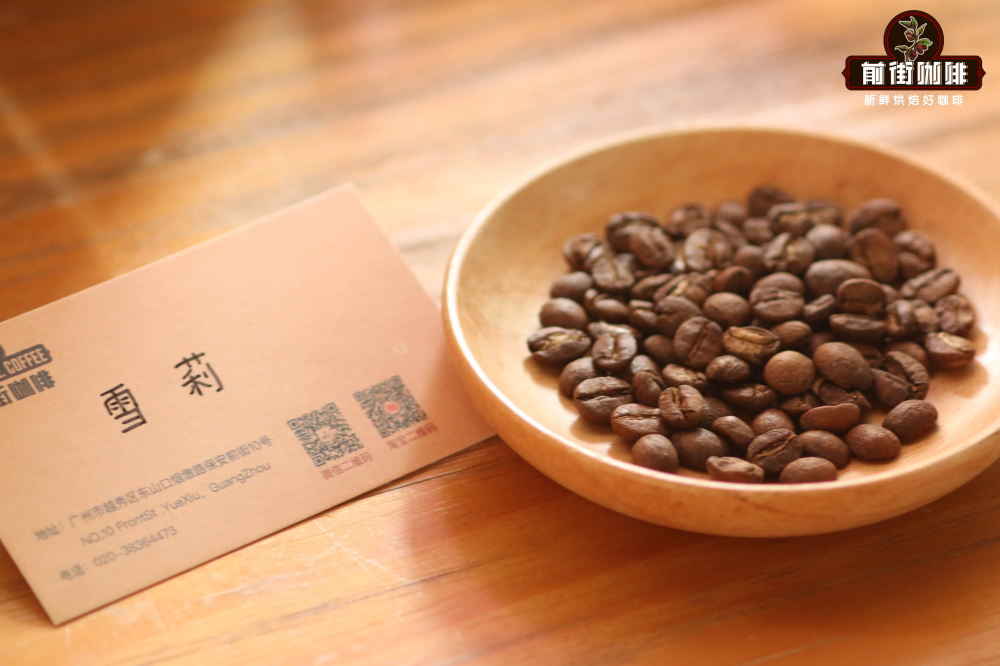
Front Street Honduras Sweet Orange Estate Coffee Brewing Flavor Obvious acidity, berries, citrus, melon, floral, cane sugar, orange peel, nuts, tea-like.
FrontStreet Coffee Honduras Mocha Estate Sherry Region: Masaguara Estate: Mocha Estate Altitude: 1,500-1,700 meters Varieties: Caturra, Catuai, Pacas Processing method: Fine washed, whisky sherry barrel fermentation Flavor: Wine aroma, vanilla cream, black cocoa, nuts, liqueur chocolate
Masaguara Masaguara is a municipality in the Intibucá Department of Honduras, located in the southern part of the Jesús de Otoro Valley, surrounded by mountains and hills. It is mainly dedicated to coffee growers and is the main engine of the local economy. The areas corresponding to the valley are dedicated to growing basic grains and livestock. Origin of its name: According to Mr. Alberto Membreño, the indigenous place name Masaguara means "place of deer."
Front Street Honduras Barrel Fermentation Processing Method Barrel fermentation is borrowed from winemaking. Its greatest influence on wine lies in the fact that wine, through moderate oxidation, stabilizes its structure and integrates the aroma of the barrel into the wine. It plays a similar role during coffee fermentation.
The barrel allows a very small amount of air to pass through the barrel wall and penetrate into the barrel, causing moderate oxidation of the coffee beans. A suitable amount of oxygen entering also accelerates coffee fermentation, smooths tannic acid, and at the same time allows fresh fruit aromas to gradually develop into rich and varied mature wine aromas. The moderate hardness of the barrel ensures good waterproofness and storage safety. In addition, the barrel contains a certain amount of tannic acid. When green coffee beans are stored, the tannic acid in the barrel also penetrates into the green beans inside, giving the coffee layers and a rich wine aroma. The fine washed whisky sherry barrel fermentation process first subjects freshly picked coffee cherries to fine washing, then places them in whisky oak barrels that have aged sherry for low-temperature fermentation for 30-40 days (at about 15-20°C), and then shade-dries them.
Roasting Suggestions Charge temperature: 190°C Yellowing point: 5'45", 151.8°C First crack: 9'07", 184.2°C After first crack, develop for 2 minutes 10 seconds, discharge at 195°C
How Front Street Brews The brewing parameters used by Front Street are: Dripper: Hario V60 Water temperature: 90°C Dose: 15 grams Coffee-to-water ratio: 1:15 Grind size: 80% passing a standard No. 20 sieve Front Street uses staged extraction. Use 30 grams of water for a 30-second bloom. Pour in a small stream in circles until 125 grams, then pause. When the water level is about to expose the coffee bed, continue pouring until 225 grams and stop. When the water level is about to expose the coffee bed again, remove the dripper. (Timing starts at the beginning of the bloom.) The extraction time is 2'00".
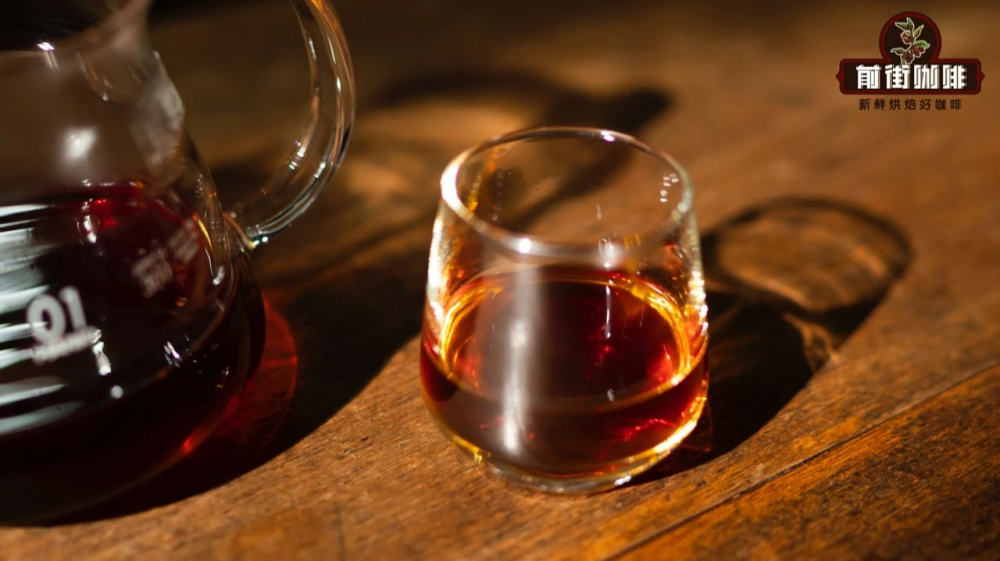
Front Street Honduras Coffee Bean Barrel-Processed Flavor It smells of vanilla and cream. On the palate there are whisky, berries, almonds, and dark chocolate flavors, with a maple syrup sweetness in the finish.
FrontStreet Coffee Honduras Mocha Estate Lychee Orchid Region: Masaguara Estate: Mocha Estate Altitude: 1,500-1,700 meters Varieties: Caturra, Catuai Processing method: Fine washed + brandy barrel fermentation Flavor: Fermented quality, wine aroma, slight cream, nuts, chocolate
Fine Washed + Brandy Barrel Fermentation This Front Street Lychee Orchid, which is fine washed and brandy barrel fermented, first subjects freshly picked coffee cherries to fine washing, then places them in brandy oak barrels for low-temperature fermentation for 30-40 days (at about 15-20°C), allowing the green coffee beans to absorb the flavor of the barrels, and finally shade-dries them. Beans processed through brandy barrel fermentation have a soft sweetness of lychee and honey, while also combining the winey aroma of brandy and the aroma of oak barrels. Roasting Suggestions This Front Street Honduras coffee bean smells distinctly creamy. In order to show the personality of this bean, the Front Street roaster roasted two profiles for comparison. [Profile One] Charge temperature: 220°C, yellowing point: 6'30", 151.6°C, first crack: 9'53", 183°C, after first crack develop 1'40", discharge at 196°C.
[Profile Two] Charge temperature: 220°C, yellowing point: 5'50", 152.6°C, first crack: 9'15", 183°C, after first crack develop 2'10", discharge at 195°C.
Cupping Flavor [Profile One] Flavor: Floral, berries, dark chocolate, honey, lychee. On the palate, berry acidity is obvious, and as the temperature changes, sipping reveals a faint wine aroma. [Profile Two] Flavor: Cream, dark chocolate, honey, lychee, brandy. The mouthfeel is fuller, with obvious sweetness, and as the temperature changes, the winey note becomes obvious when sipping.
Front Street Lychee Orchid — Honduras Coffee Bean Barrel-Processed Flavor The brewing parameters used by Front Street are: Hario V60 dripper, 90°C water temperature, 1:15 coffee-to-water ratio, grind size (BG-6S: 80% passing Chinese standard No. 20 sieve) Brewing method: Staged extraction. Use 30 grams of water for a 30-second bloom. Pour in a small stream in circles until 125 grams, then pause. When the water level is about to expose the coffee bed, continue pouring until 225 grams and stop. When the water level is about to expose the coffee bed again, remove the dripper. (Timing starts at the beginning of the bloom.) The extraction time is 2'00". When brewing these two profiles, Front Street tries to keep the parameters and method as consistent as possible.
[Profile One] On the palate there are berries, florals, and honey. As the temperature changes, brandy wine aroma and creamy flavors gradually appear. In terms of mouthfeel, when hot, the berry acidity is obvious, but there is a green, astringent sensation. [Profile Two] On the palate there are lychee, brandy, dark chocolate, and cream. As the temperature changes, the winey note and dark chocolate become obvious. The mouthfeel is full, and the sweetness in the finish is obvious. Comparing the two profiles of Front Street Honduras Lychee Orchid, although [Profile One] has decent sweetness and berry aroma, with a berry acidity on the palate, its cleanliness is slightly worse and it has an astringent sensation, with an insufficient finish. Although it has flavor, the fruity acidity is obvious when drinking, and the wine aroma of this bean does not fully stand out, proving that this bean is not suitable for a light roast or fast roast approach. [Profile Two], however, performs better than [Profile One] in winey notes and sweetness. The flavors are distinct, and the mouthfeel is thick and smooth. From the first sip to the finish, the wine aroma and dark chocolate flavors are obvious, with some honey sweetness as well. Because the flavors shown by [Profile One] leaned more toward fruity acidity and carried a green, astringent sensation, the bean's flavors were not fully displayed. Therefore, the Front Street roaster extended the development time in [Profile Two] to develop more flavors, making this bean's overall performance more balanced.
Before putting any bean on the shelves, Front Street conducts multiple rounds of roasting adjustment and comparison, and then evaluates the flavor through cupping and pour-over tasting to ensure that the bean selected by Front Street has obvious classic regional flavor while also having something outstanding. This is also why Front Street currently offers so many beans, yet none of them has the same flavor.
The above content is compiled by CoffeeHunters, a coffee news website.


