







Why does geisha coffe thrive in Panama's Boquete region?
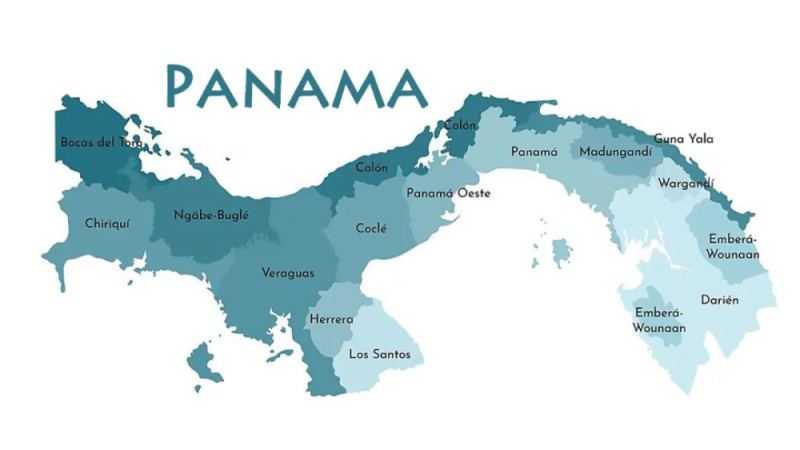
Panama's specialty coffee centers on the western side near Costa Rica and the Pacific, above all the Boquete district in Chiriqui province. Volcanic soil, high altitude, and a distinct microclimate there produced the internationally known Geisha coffee, and the area hosts estates including Hacienda La Esmeralda, Elida, and Finca La Valentina.
Industry consensus treats coffee grown between 1,300 and 1,500 meters as specialty grade. Estates are classed as sun, semi-shade, or full-shade depending on tree density per hectare, and shade slows cherry ripening so fruit accumulates richer flavor compounds at the cost of yield. Several arabica coffee varieties, including Geisha, appear across these farms.
Although Panama is a small country, it occupies a pivotal position in the world of specialty coffee. The Boquete region in the western province of Chiriqui, with its unique volcanic soil, high altitude and microclimate, has given rise to the internationally renowned Geisha coffee and is also home to many top estates such as Hacienda La Esmeralda, Elida, and Finca La Valentina. This article will systematically review the geographical conditions and cultivation methods of Panama's main producing regions, introduce the history, variety composition, processing techniques and cupping flavors of each famous estate one by one, and retain Front Street Coffee's recommendations for Hacienda La Esmeralda Red Label and Green Label Geisha, providing coffee lovers with a complete guide to Panamanian specialty coffee.
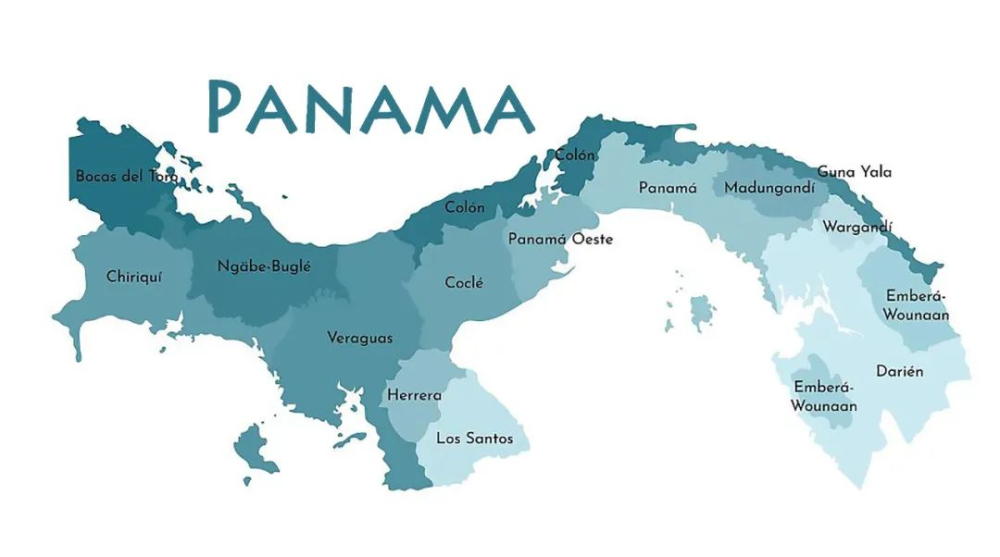
Panama's high-quality coffee is mainly concentrated on the western side of the country, the area bordering Costa Rica and facing the Pacific Ocean. Among these, coffee produced in the Boquete district within Chiriqui province enjoys the greatest reputation, while Volcan, Santa Clara, and Candela are likewise quite famous. In addition, there are the David district, Remacimeinto district, Bugaba district, and Tole district. According to industry consensus, only coffee grown at altitudes between 1,300 and 1,500 meters can be classified as specialty coffee.
The Boquete region of Panama is located in Chiriqui province on the border with Costa Rica. It is the birthplace of Panama's famous Geisha coffee and is world-renowned for producing high-quality Arabica coffee. The Tedman & Macintyre Estate, located in the 4,000-foot-high mountains of Boquete, originates from two of Panama's earliest coffee families—the Tedman family and the Macintyre family.
Plantations can be classified into three models: sun plantations, full-shade plantations, and semi-shade plantations. If more than 50 trees are planted per hectare, it is a full-shade plantation; between 25 and 50 trees counts as a semi-shade plantation; fewer than 25 trees is called a sun plantation. So, for two neighboring estates with identical growing conditions, what difference does shading make to the coffee? Shade can slow down the ripening rhythm of the coffee fruit, allowing the coffee cherry to accumulate richer flavor compounds internally. Therefore, shading itself means higher costs and lower yields, but the coffee flavor will be superior to that of a semi-shade plantation under equivalent growing conditions. At present, most plantations in Colombia adopt a model of interplanting coffee trees with banana trees, because as Arabica trees continue to be bred shorter, the banana trees provide shade once they mature.
Villa Donica Estate
Green beans from the Boquete producing region are blue-green in color, with relatively high moisture content. The bean quality is soft, with good heat conductivity, so there is no need to worry about uneven roasting. Its aroma and flavor are both top-notch, with a smooth mouthfeel, rich black chocolate and nut aromas, medium-high body, low acidity, and a lasting sweet aftertaste.
[Country]: Panama
[Region]: Boquete
[Altitude]: 1,550-1,700 meters
[Estate]: Villa Donica Estate
[Processing Method]: Wet-Process Style washed
[Grade]: SHB
[Size]: 17 screen and above
[Variety]: Catuai
[Climate]: Rainy season May-December, dry season January-April
[Soil]: Volcanic soil
[Recommended Roast Level]: Medium (CITY+ ~ FULL CITY)
Panama · Finca La Valentina
[Origin]: Panama
[Region]: Located on the volcano of Baru Mountain, the highest peak in western Panama
[Estate]: Finca La Valentina
[Grade]: SHB
[Growing Altitude]: 1,500-1,675 meters
[Processing Method]: Fine washed processing
[Special Certification]: Rainforest Alliance certification
[Roast Level]: Light roast city
[Flavor Description]: On the entry, the tip of the tongue feels distinct fruity acidity, then it becomes mild and mellow in the mouth; the fruity sweetness and lingering aftertaste are strong, refreshing to the heart. The lower the temperature, the more delicate the acidity. The charm is also quite lasting, making one feel very satisfied!
Finca La Valentina covers approximately 12.5 hectares, making it a micro-sized small estate locally in Panama. According to the estate owner's account, 8.5 hectares are planted with varieties ranging from the common Typica, Red Catuai, and Pacamara. After 2008, a few plots began to be planted with Geisha coffee, which now accounts for nearly half the total. The estate's altitude ranges between approximately 1,500 and 1,675 meters. In addition to the coffee-growing areas, there are another 3.5 hectares of native forest and various fruit trees, including high-mountain cypress, pine, and eucalyptus, making it a typical example of a self-sufficient estate.
Finca La Valentina is best known for winning the championship in the 2011 Best of Panama competition, with a cupping score as high as 92.3 points. It not only defeated the then most iconic Hacienda La Esmeralda, which had won consecutive championships, but its bidding price also broke the record of that year, reaching $70.25 per pound. Its excellent results in subsequent years have been countless, with consecutive years of finalist entries in Best of Panama including 5th place in the 2012 washed Geisha category, 10th place in the 2013 washed Geisha category, 12th place in the 2014 washed Geisha category, and 14th place in the 2015 washed Geisha category.
Finca La Valentina, owned by the Osorio family, is located in Panama, Boquete, Horqueta. The terrain varies greatly and the climate is humid. The average temperature is around 15-20 degrees. In addition, the estate is surrounded by a forest, slate mines, and two clear streams, making its resources quite abundant—a wonderful planting paradise.
Finca La Valentina is dedicated to growing specialty beans. In addition to personalized care, the local unique microclimate has also produced their outstanding high-quality Arabica coffee beans (SHB). In 2011, the estate's Geisha ARISTAR won first place in the Panama competition. This year, 2012, the estate's Geisha ARISTAR and Valentina also respectively received high scores of 87.07 and 84.66.
Elida Estate
[Name]: Elida Estate Natural
[Region]: Boquete
[Estate]: Elida Estate
[Variety]: Catuai 85%, Typica & Bourbon 15%, Geisha (small amount)
[Processing Method]: Natural
[Altitude]: Above 1,800 meters
[Growing Soil]: Volcanic clay
[Flavor Description]: Tropical fruits, spices, nuts, milk chocolate
The farm's history can be traced back to 1918. This farm is the Lamastus family's business, and the farm's name Elida comes from the name of the then farm owner Robert Louis Lamastus's wife. Elida Estate is located in the Boquete producing region. The estate's altitude is almost the highest in all of Panama, and nearly half of its area is within a national protected park, making it a rare ultra-high-altitude estate in Central America! Elida Estate has a total area of 65 hectares, of which more than half is within the Baru Volcano National Park. Thirty hectares of the estate are planted with coffee trees, while the remaining 35 hectares are virgin forest. Coffee is grown at altitudes from 1,670 to 1,850 meters, making it one of the two highest coffee estates in Panama (the other estate with such an altitude should be Carmen Estate in the Volcan Valley).
The rugged Baru is a young volcano with an altitude of over 3,400 meters and is an active volcano. Due to the large temperature difference between day and night, Elida Estate's coffee requires 5 years of care after sowing before the first harvest can be welcomed. The waiting period for harvest is quite long (usually only 3 years for coffee in other producing regions). Although the plants grow more slowly, it greatly helps the development of coffee flavor. After entering the harvest period, due to temperature, the coffee's ripening period often exceeds one month. Once hurricanes, heavy rain, or other force majeure factors occur just before ripening, despite knowing it will cause major losses, because the beans have not met the estate's harvest standards, under the insistence on quality, they refuse to harvest early, resulting in a sharp reduction in yield! The risk is actually much greater than that of other lower-altitude estates.
Elida Estate mainly cultivates three varieties: Catuai, Typica, and Geisha. The estate's processing plant is located halfway up the mountain, so after the coffee is picked, it can be immediately transported to the factory for processing to ensure the quality of the coffee fruit is not affected. Of course, Elida's environment is also suitable for growing other high-quality temperate crops, especially tree tomatoes and some uncommon high-altitude fruits. Interestingly, the flavors of these fruits can often be found in Elida's coffee.
In addition to the unique ultra-high altitude and microclimate, the estate owner Mr. Wilford has also put considerable effort into harvesting and processing. In order to achieve the highest standards, Elida Estate's coffee only allows hand-picking of the ripest coffee cherries (Ripe on Pinton). The high ripeness of the fruit means the pectin naturally has high sugar content, which is also the foundation for producing Elida's high-quality flavor.
In addition to being extremely strict about coffee cultivation and processing, estate owner Mr. Wilford is also more rigorous than industry peers in the "purification" of green beans after processing. Taking Panama Elida as an example, after green bean processing is completed, it requires more than 5 months of low-temperature resting to remove greenness, which allows the coffee's flavor to develop more balanced and full. (Low-temperature resting is a green bean purification concept vigorously promoted by coffee master George Howell starting in 2006. We have found that although green beans from subtropical places certainly need to be kept at low temperatures, different processing methods and altitude levels will change the low-temperature resting time. For Panama Elida, 5 months of low-temperature resting is optimal.)
Cupping expert Ken Davids gave Elida Estate's coffee a high score of 93 points in 2012! Elida is also a frequent choice on the competition bean lists of contestants from various countries in the World Barista Championship (WBC). In the finals of Taiwan's TBC (Taiwan Barista Championship) and China's CBC (China Barista Championship), contestants are also often seen using single-origin Elida for SOE espresso.
Casa Ruiz Estate
[English Name] Panama Boquete Casa Ruiz S.A.
[Chinese Name] Panama Boquete Producing Region Casa Ruiz
[Cupping Flavor] Clean and fresh fruit flavors, elegant and charming floral fragrance, slight citrus acidity, bright and delicate mouthfeel, full fruity sweetness.
[Country] Panama
[Region] Boquete
[Estate] Casa Ruiz S.A.
[Processing] Washed processing
[Variety] 40% Typica, 30% Caturra, 20% Catuai, 10% Mundo Novo and Bourbons Bons
[Altitude] 1,400 meters
[Grade] SHB
[Soil] Volcanic soil
Panama Casa Ruiz Estate, founded in 1920, is located in the Boquete producing region of Baru Volcano, in the Boquete Valley on the slopes of Baru Volcano in northwestern Panama. With three generations of inherited coffee-growing experience, the family has united with more than 300 small family farms in the area, with small estate coffee farmers joining as partners in planting, post-processing, roasting, and marketing, unlike a single estate that cannot increase production scale. Varieties include Typica, Caturra, Catuai, Mundo Novo, and Bourbons. The average annual rainfall is 3,000 millimeters (between May and November), the average annual temperature is 14-24 degrees, and the altitude is above 1,400 meters.
The Casa Ruiz, S.A. family and their coffee partners choose to follow the traditional growing methods of the Boquete producing region that are environmentally friendly and maintain the natural ecosystem. Because the area's natural tree groups provide abundant natural environmental resources, this environment has become a migratory habitat for migratory birds.
Because Panama Casa Ruiz, S.A. possesses high-quality techniques, strictly controls every detail, and conducts layer-by-layer screening, recording, and review, it is undoubtedly one of the outstanding estates of Best of Panama. From green bean appearance, consistency, and freshness to dry aroma and flavor, all are quite excellent. Its aroma expression is very distinctive, with a clean and fresh mouthfeel, unique fruit flavors and aromas, exuding an elegant and charming floral perfume fragrance, rice stalk aroma, almond tea aroma, ripe apple, fermented ripe fruit mellow aroma, berry aroma, cherry, jujube, brown sugar, jasmine, orange, solid sweetness, mild, clean and balanced, with a lasting, lively, and rich fruity sweet finish.
Front Street Coffee Panama · Hacienda La Esmeralda Geisha Coffee Beans
Panama Geisha (Hacienda La Esmeralda)
[Origin]: Panama
[Region]: Located on the slopes of Baru Mountain, the highest peak in western Panama
[Estate]: Hacienda La Esmeralda
[Grade]: SHB
[Growing Altitude]: 1,450M
[Processing Method]: Fine washed processing
[Special Certification]: Rainforest Alliance certification
[Roast Level]: Light roast city-
[Flavor Description]: Front Street Hacienda La Esmeralda Red Label Geisha has oolong tea aroma, peach aroma, and honey aroma, fresh and comfortable, bright yet balanced, with extremely strong layers of aroma. The entire aroma and caramel sweetness are wrapped together. On the entry, the tip of the tongue feels distinct fruity acidity, then it becomes mild and mellow in the mouth; the fruity sweetness and lingering aftertaste are strong, like swallowing a sip of fresh fruit tea, refreshing to the heart. The lower the temperature, the more delicate the acidity. The charm is also quite lasting, making one feel very satisfied!
Hacienda La Esmeralda is the discoverer of Geisha. The coffee beans it produces are stable in quality and have an excellent reputation in the industry. It is a high-end single-origin coffee that every coffee beginner must try. For beginners, buy the high-value Front Street Hacienda La Esmeralda Green Label Geisha; to give to relatives and friends or share with connoisseurs, choose the highest-grade Front Street Hacienda La Esmeralda Red Label Geisha.
Panama's Hacienda La Esmeralda is located at one corner of Baru Volcano, so the coffee beans produced in this area were mostly named after Baru Mountain before becoming famous. The surrounding area of Boquete is beautiful, with many leisure hotels, villas, and vacation estates, even built along the important Rio Caldera river. Hacienda La Esmeralda is located in Jaramillo on the right side of this river, and later coffee was planted even further to the left side of the river in the higher-altitude Cañas Verdes area. All of this is thanks to Rudolph Peterson's decision to purchase this property back then.
To date, La Esmeralda Estate has won 12 championships in various coffee competitions, and in public online auctions, it has set the highest bidding record 3 times, respectively $21 in 2004, $50.25 in 2006, and $130 in 2007! Of course, other countries have also seen good coffee bid at close to $50 per pound (Brazil's 2005 CoE champion Fazenda Santa Inês), and Guatemala's 2008 CoE champion El Injerto at $80.20; but note the timing—when La Esmeralda set records, no bidding price had surpassed hers before, and afterward there were those that did, but she would surpass others again. To call her a record creator is by no means luck!
La Esmeralda Estate was purchased by Price Peterson's father, the Swedish-born banker Rudolph A. Peterson, who had served as president of Bank of America and was a major figure in the financial circles of the time. Rudolph bought Hacienda La Esmeralda only for vacation and later retirement use, and probably never expected that this estate would become world-famous, even becoming a representative of Panamanian specialty coffee estates. After Price took over, he segmented the market into three major brands for sale based on altitude and microclimate, as well as cupping performance and planted varieties (Esmeralda Special, Diamond Mountain grows, Palmyra).
Palmyra (Rainforest Alliance certified)—the coffee of this brand is near the Baru Volcano Park area, and all planted is the Catuai variety. It is a typical Panamanian Boquete high-altitude coffee flavor. The acidity is not too sharp, with nutty sweetness and vanilla chocolate flavors. Palmyra is actually La Esmeralda's highest-yielding coffee, accounting for about 70% of the entire family's coffee production.
Hacienda La Esperanza
[Country]: Panama
[Region]: Boquete
[Grade]: SHB
[Variety]: Caturra, Catuai, Typica
[Roast Level]: CITY+ (Medium)
[Processing Method]: Washed
[Growing Environment]: Altitude 1,400-1,600M
[Producer/Company]: Hacienda La Esperanza
[Certification]: Organic certification
[Mouthfeel & Flavor]: This organic Boquete has nutty and berry aromas in the dry and wet fragrance, with low, mild acidity, very high sweetness, a delicate and full body, and a very long finish. Overall it feels somewhat similar to baby Geisha and sweet Geisha.
Hacienda La Esperanza is located at an altitude of 1,400-1,600 meters, with a production of between 300-700 bags. Processing is mostly completed on the farm, using washed processing and sun-drying, and the processed husks, pulp, and mucilage are used as fertilizer. The estate plants 60% Caturra, 20% Catuai, and 20% Typica and other varieties. The most famous is the Geisha variety, which won the championship in the 2008 Best of Panama. They also plant many local trees as shade trees and to supply soil nutrients, including orange trees and many tropical fruits such as lemons and grapefruits. The estate contains a huge tropical rainforest nature reserve, and there are at least three mountain wells rich in rainfall. The average annual rainfall is 3,200 millimeters, and the temperature range is 16-23 degrees during the day and 14-20 degrees at night.
Hacienda La Esperanza is somewhat different from other estates. It has a doctoral botanist, three professional cuppers, and 100 full-time employees, and currently manages six subordinate estates. The estate is owned by the Herrera brothers. In fact, the Herrera brothers' grandfather ran a coffee farm in the Trujillo area of Colombia, which gradually declined, and the two brothers left Colombia. But they did not give up their dream of returning to their hometown to run a coffee estate.
After returning home, the first estate Herrera bought was La Esperanza in Trujillo, very close to their grandfather's original farm, and it now serves as the regional headquarters. The estate itself is 100% organic. Different varieties of coffee trees include Colombian, Castillo, and Caturra, as well as more than 14,000 organic Geisha trees. Subsequently, Herrera purchased a total of four estates in Trujillo and Caicedonia north of Trujillo. Together with La Cardeida Estate in Boquete, Panama, leased in 2005, they now have six estates under their umbrella, with a total coffee-growing area of 213 hectares.
The estates under Cafe Granja La Esperanza are located in eight unique microclimate production areas across three mountain ranges in Colombia, giving their botanists an excellent opportunity to experiment with different microclimates and terroir flavors, different processing methods, and different coffee varieties, combining the rationality of scientists, the instincts of businessmen, and persistence in coffee quality. For example, for different microclimates and varieties, they create different processing steps and specifications. From seedling cultivation to export, there are 95 data points to manage all the data.
The team of chief botanist Hernando Tapasco has established climate stations on the estate to track weather data and assist in making harvest decisions. Data on the farm is continuously collected and analyzed once a week. After harvest, they compare weather data, production data, and cupping data to analyze correlations. Geisha pickers are all strictly trained to pick only ripe cherries and are paid by the day, unlike other estates that pay by weight. This avoids workers picking unqualified cherries just to boost their performance. Half of the picking workers have more than six years of experience. After the fruit is harvested, it is sent to the central processing plant at Hacienda La Esperanza, and each batch of Geisha is marked and processed separately. It first undergoes a three-day pre-drying stage on the drying patio, and then is moved to small towers for drying. Strict quality control is another key. At Cerro Azul Estate there are 40,000 to 45,000 Geisha trees, of which only 5,000-7,000 can produce Geisha beans worthy of bearing the Cerro Azul brand.
Hacienda La Esperanza's experimentation and innovation in varieties seems endless, constantly testing different new varieties. In addition to the organic Caturra that originally occupied most of the area at Hacienda La Esperanza, from Geisha, organic Geisha, Mocha, Bourbon (including different Bourbons such as red, yellow, and Tekizik), pointed Bourbon, Pacamara, San Bernardo, and Pache, they truly bring the attitude of wineries seriously treating grape varieties into coffee. After Geisha, the Pacamara, Bourbon, and even pointed Bourbon produced by Hacienda La Esperanza continued to create surprise and admiration in the specialty coffee world.
Their approach finally paid off. As early as the 2008 "Best of Panama" competition, La Cardeida, leased by Hacienda La Esperanza, won the Best of Panama championship with a high score of 93.16. The 2012 Coffee of the Year triple crown was won respectively by the three estates currently mainly growing Geisha: Cerro Azul second, Las Magarita third, and Buenos Aires Experimental Estate seventh.
Hartmann Estate
[Origin]: Panama
[Estate]: Hartmann Estate
[Region]: Volcan
[Variety]: Arabica, Caturra, Typica
[Growing Environment]: 1,260-1,500 Meters
[Processing Method]: Winey processing
[Roast Level]: City+ (Medium)
[Mouthfeel & Flavor]: Black chocolate, dark fruit aromas, bright citrus acidity, rounded juicy mouthfeel, stone fruit notes, honey, citrus, apple, with delicate floral notes.
Hartmann's story, like its coffee, is highly legendary. Hartmann Estate is located in the city of Chiriqui in the state of Santa Clara. The founder was Mr. Alois St. Hartmann (Luis Hartmann). He was born on June 20, 1891, in the Moravia region of Austro-Hungary, now the Czech Republic; he died on May 25, 1970, at the age of 78.
After World War I began, he was abandoned as a young boy. Thanks to his mother, he was able to hide on a ship bound for Pennsylvania, USA, and survive. Both of his brothers died in the war after joining the army. Luis Hartmann traveled through several countries with friends he had made, until he came to Panama in 1911 and settled in Chiriqui province in 1912, mainly active in the Candela area. He built his first small wooden cabin in this virgin forest.
Today's Hartmann Estate is a family business, founded in 1940 by Ratibor Hartmann (son of Alois). In 1966 Ratibor married Dinora Sandi of Costa Rica. They have five children in total: Ratibor Jr., Allan, Alexander, Alice, and Kelly. Each family member takes on their own responsibilities in coffee growth management, harvest processing, and estate tours. A family estate that has been growing coffee for more than 100 years is itself a legendary story.
This family business has a state-level cupping laboratory and sample roasting room. Each batch of coffee fruit is rigorously cupped. This ensures the stable quality of Hartmann Estate's coffee and that they are always seeking improvement. Their scientific approach to coffee and nearly 100 years of family experience guarantee their excellent output.
Carmen Estate
[Origin]: Panama
[Estate]: Carmen Estate
[Grade]: SHB, EP
[Altitude]: 1,750 meters
[Soil]: Black soil
[Screen Size]: 17 screen
[Variety]: Catuai 70%, Caturra 20%, Typica, San Ramon, Mundo Novo 10%
[Green Bean Processing]: Semi-washed
[Mouthfeel & Flavor]: Melon, brown sugar aroma, slight acidity, juice-like viscosity, citrus notes, stone fruit, pear.
Carmen Estate coffee is a family-centered coffee estate. The family has long adhered to the principles of providing high-quality coffee and protecting the environment in growing coffee. In 1950, Efrain and Carmen Franceschi began cultivating Arabica coffee varieties on their estate. Today, Carmen Estate's single processing plant produces approximately 1,200 bags (60 kg per bag) of unique high-quality coffee beans annually!
Carmen Estate is located in a volcanic valley at an altitude of 1,750 m. The estate is blessed with fertile soil and good natural shade. In addition, this area is also influenced by both Pacific and Atlantic climates. The cool climate, the dual characteristic of no frost damage at night, plus dry weather are what create excellent growing conditions! Benefiting from volcanic black soil and good drainage equipment, Carmen Estate possesses high-quality Catuai, Caturra, and Typica varieties of Arabica coffee!
Carmen Estate has 60% natural virgin forest, and the coffee trees are planted here and grow under this natural shade! Because of this, the farm obtained Rainforest Alliance certification as ECO-OK environmentally friendly coffee! Coffee beans are harvested from approximately late December to March of the following year, with manual picking of individual fully ripe coffee cherries. Waste generated during fruit processing (such as pulp or juice is properly converted into compost or recycled). Green beans undergo preliminary sun-drying and are stored in dedicated warehouses for secondary moisture content adjustment, and are hulled before export to maintain good green bean quality!
Carmen Estate has obtained the Certified Eco-OK Coffees ecological sustainability certification issued by the Rainforest Alliance. Passing this certification is very strict, requiring every processing step from planting to green bean milling to meet environmental and organic requirements, such as species diversity on the estate, zero-pollution processing, reduction or restricted use of artificial chemical fertilizers, and socioeconomic protection for estate coffee farmers, among others.
The above content is compiled by CoffeeHunters, a coffee news website.


