







How Does a French Press Change the Mandheling Cup?
A French press uses immersion extraction, so the coffee's oils and aromas stay in the cup, while pour-over relies on drip filtration for a crisp, layered result. For mandheling, the immersion method brings out a smooth, sweet, rich body that suits breakfast drinking, and it needs no filter paper, making it simple to repeat at home.
Grind size, coffee-to-water ratio, and water temperature decide the outcome, and pressing slowly keeps grounds from muddying the taste. A coarse grind close to cupping consistency works well; fine particles pass the metal mesh and turn the cup gritty. Because the metal filter is reusable, cleanup is quick, though the plunger and mesh need rinsing right after brewing.
The French press and pour-over are two vastly different coffee brewing methods: the former uses immersion extraction to restore the coffee's original flavor, while the latter uses drip filtration to bring out a crisp, layered taste. This article compares the two in terms of principles, taste, and difficulty of operation, and uses Front Street Coffee beans as an example to explain in detail the French press brewing steps and practical tips, including grind size selection, coffee-to-water ratio recommendations, water temperature control, and how to prevent coffee grounds from affecting the taste, helping coffee lovers easily make a rich, full-bodied French press coffee at home.
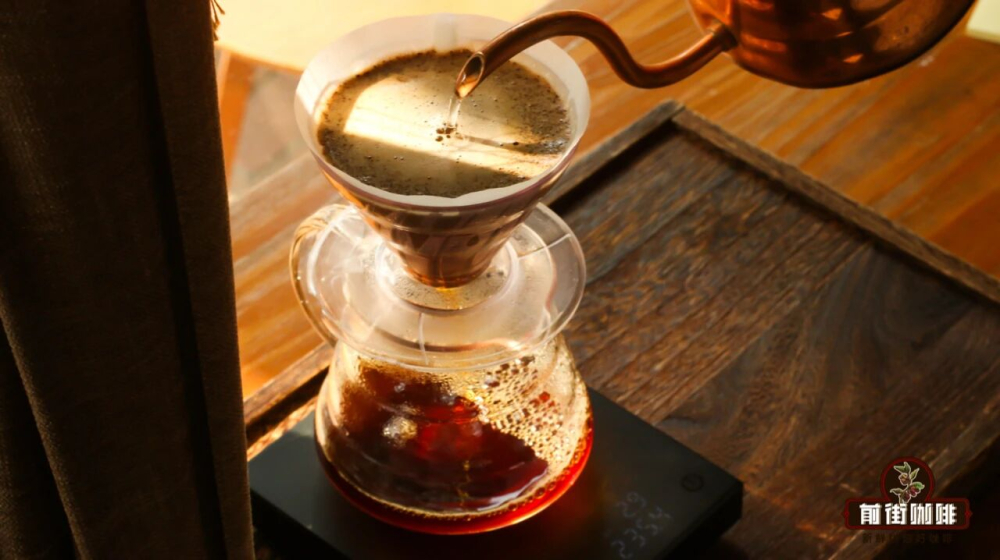
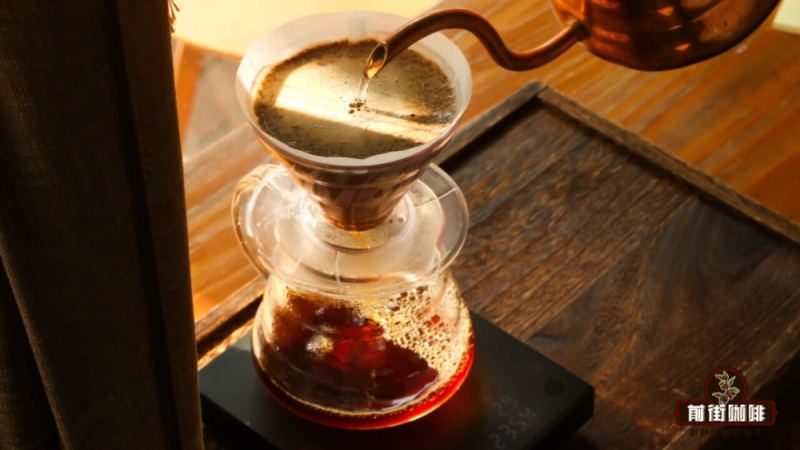
The pour-over coffee commonly seen in coffee shops is essentially drip extraction. Hot water is continuously poured, passes through the coffee grounds layer, and then flows through the filter paper into the carafe below. Pouring and extraction happen simultaneously, and the resulting coffee tends to have a crisp taste, clear layers, and a more three-dimensional aroma. However, pour-over involves many variables, and it is not easy to control extraction consistently.
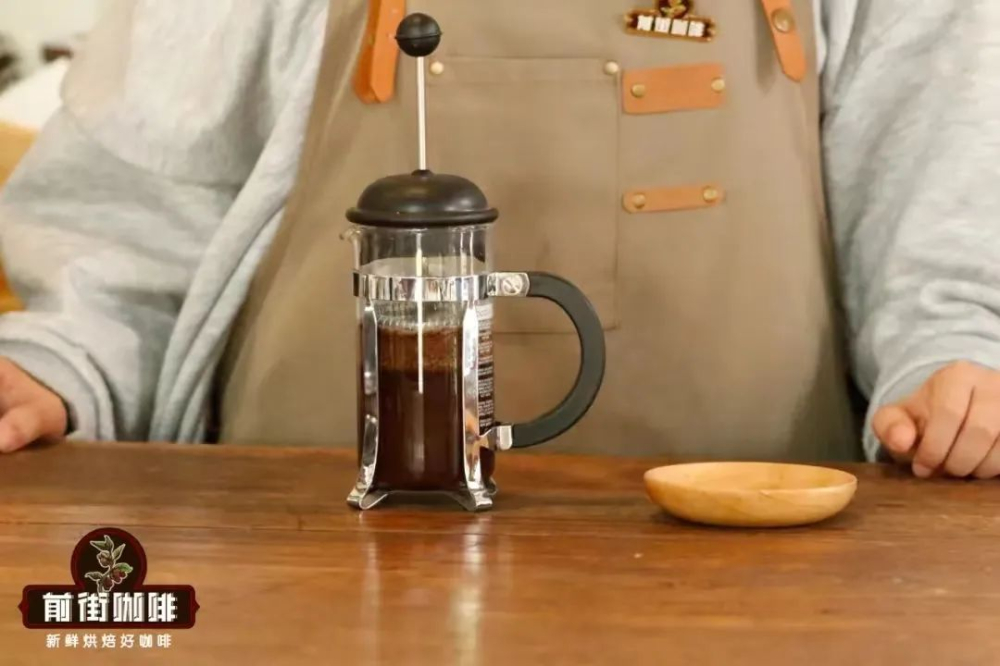
The design idea of the French press is quite direct: place coffee grounds and water together in the pot, and after steeping is complete, press the coffee grounds to the bottom with a metal plunger, and filtration is done. The metal filter can be washed and reused repeatedly. Although the principle is simple, it is highly efficient, and it does not require filter paper, making it more eco-friendly and money-saving. The biggest advantage of the French press is that it can quickly present the coffee's original taste. Natural oils are not absorbed by filter paper, so the coffee's truest richness and varied flavors are fully preserved.
The French press is like a "lazy person's coffee tool": the barrier to operation is low, but a good cup of coffee's complete flavor is not compromised because of that.
In fact, the extraction method of the French press is very close to cupping. The oils, aromas, and various flavor substances in the coffee are fully released, and the taste is smooth, sweet, and rich, making it very suitable as breakfast coffee.
Let's see how Front Street makes an excellent cup of coffee with a French press. Front Street Brazil Queen Estate, Front Street Golden Mandheling, Front Street Colombia Huila, and other coffee beans all have flavor profiles suitable for French press brewing. Here, Front Street Colombia Huila coffee beans are used as an example.
For FrontStreet Coffee's own roasted coffee beans, take rested Front Street Huila coffee beans and grind them to a coarseness suitable for a French press—medium-coarse, coarser than pour-over grinding. Front Street recommends controlling the standard sieve pass rate at 70%–75%. If the powder is too fine, coffee grounds will leak through the filter mesh holes, and the coffee liquid will become cloudy.
Start with a coffee-to-water ratio of 1:10. For two servings, for example, use 20 grams of coffee beans with about 200 grams of water. The final ratio can be adjusted according to personal taste. Like FrontStreet Coffee's drip bags, each small packet contains 10 grams of coffee powder. The current-season Front Street Brazil drip bags and Front Street Mandheling drip bags are also very convenient for making French press coffee using these pre-ground drip bags. Front Street recommends a coffee-to-water ratio of 1:16, that is, 15 grams of coffee powder with 240 grams of water.
Front Street recommends preparing an electronic scale. Even if the French press has its own markings and measuring spoon, an electronic scale is still indispensable, because the density of coffee beans is affected by factors such as growing altitude and roasting method, and different beans vary in weight. In addition, if you brew a particularly delicious cup of coffee one time and want to replicate that taste, you must record the ratio; conversely, if you brew an unsatisfactory cup, having the data also tells you how to adjust.
At Front Street, use fresh, clean soft water such as C'estbon mineral water. Avoid extracting with water that is too hard, and do not use unfiltered water. If the water quality itself is poor, it is difficult to make delicious coffee.
FrontStreet Coffee brewing steps:
After grinding the coffee beans, pour them into the French press. At this point, there is no need to worry about various claims regarding grind size. Do not grind too coarse; keeping a medium grind is enough.
Bring the water to a boil. A recommended water temperature is 93°C, then pour in the appropriate amount of water. We used 15 grams of coffee powder and poured in 240 grams of hot water. Stir with a spoon so the coffee powder and water fully contact and blend.
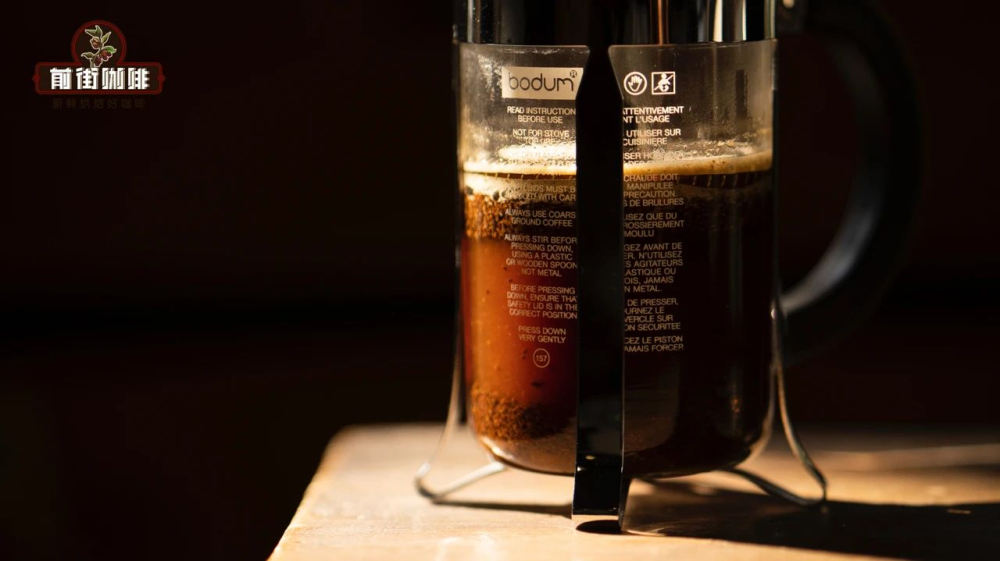
Cover the French press lid, leave the filter at the highest position, and let it sit for 4 minutes.
Before pressing down the filter, you can open the lid first and use a spoon to skim off the foam and fine grounds floating on the surface, then press the filter all the way down.
After brewing is complete, immediately pour it out into another insulated container without delay, because the coffee grounds remain in the pot and continue steeping. After that, pour it into a cup and enjoy slowly.
If you are worried about fine particles in the coffee liquid, Front Street recommends filtering it once more with filter paper. This will make the taste clearer and the cleanliness higher.
The above content is compiled by CoffeeHunters, a coffee news website.


