







Geisha coffee, with its layered floral and fruity aromas, has long been a benchmark variety in the specialty coffee world. Many enthusiasts, after getting their hands on Geisha beans, often worry that improper brewing will fail to do justice to its flavors. This article, from the perspective of Front Street, first introduces the origins and main producing regions of Geisha coffee, then delves into the plot divisions and grading system of Panama's Hacienda La Esmeralda, analyzing how the refined natural process shapes its unique fruitiness. Finally, it shares the pour-over parameters and three-stage extraction steps used by Front Street stores for Esmeralda Red Label Natural Geisha, helping you more fully present Geisha's jasmine, citrus, and tropical fruit notes.
Geisha coffee Relying on its layered, complex floral and fruity aromas, it is almost universally known throughout the specialty coffee world. After many friends buy Geisha coffee beans , they always worry that their brewing mistakes will prevent Geisha's true flavors from showing. Don't worry—next, Front Street will first help you understand the characteristics of Geisha coffee beans, then step by step explore how to brew that cup of "Geisha flavor." Where are specialty Geisha coffee beans produced? When it comes to Geisha's origins, the first places that come to Front Street's mind are naturally Panama, which made it famous, and Ethiopia, Geisha's birthplace—these two are undoubtedly the most representative Geisha regions. As the "Geisha boom" has continued to build in recent years, more and more coffee-producing countries have begun exporting specialty-grade Geisha coffee beans, such as Colombia, Costa Rica, Guatemala, and even the renowned Jamaica Blue Mountain released a small natural Geisha batch in 2020. In Front Street's daily Geisha bean lineup, however, the largest share still comes from Panama, Geisha's "stage of fame."
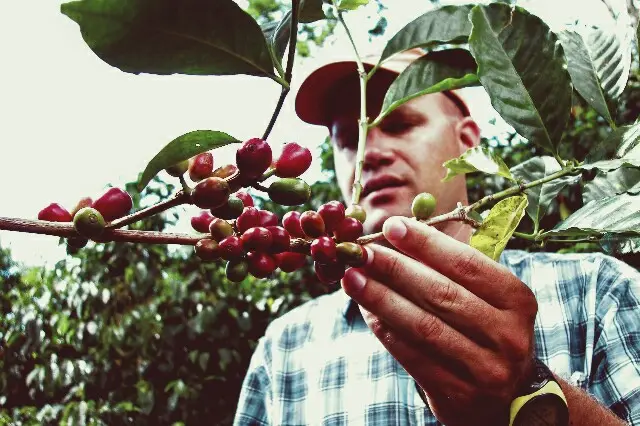
In 1931, the Geisha variety was first discovered in Gesha Village, Ethiopia. It was later introduced to Kenya, Uganda, Tanzania, Costa Rica, Panama, and other countries for research and to enrich local coffee varieties. By the 1990s, coffee culture continued to spread, and after the turn of the millennium, "specialty coffee" gradually became mainstream, with more and more coffee professionals pursuing higher-quality coffee. Daniel Peterson, the third-generation owner of Hacienda La Esmeralda, after mastering cupping skills, organized Geisha cultivation and tasting by dividing areas according to different growing altitudes and analyzing the flavor differences of each batch one by one. In 2004, under the careful management of Daniel and his sister Rachel, the first batch of stunning natural Geisha coffee beans was produced, and they entered that year's Best of Panama competition, instantly becoming the face of specialty coffee. Front Street believes that Geisha coffee's status today would not be possible without Hacienda La Esmeralda, the "talent scout," behind it. Cultivation Classification of Hacienda La Esmeralda's Specialty Geisha Front Street has mentioned in many articles that the characteristics of coffee beans are closely related to the terroir environment, the processing method used, the roast level, and many other factors. Hacienda La Esmeralda is located in the Boquete region of western Panama, where the climate is influenced by moist air currents from the Caribbean Sea and the Pacific Ocean, forming a unique microclimate. The fertile soil brought by eruptions of Barú Volcano, combined with the towering terrain, abundant rainfall, and cloud cover, allows the Geisha coffee here to contain higher nutritional components, and its ability to convert these into sweetness and aroma is difficult for other coffee varieties to match.
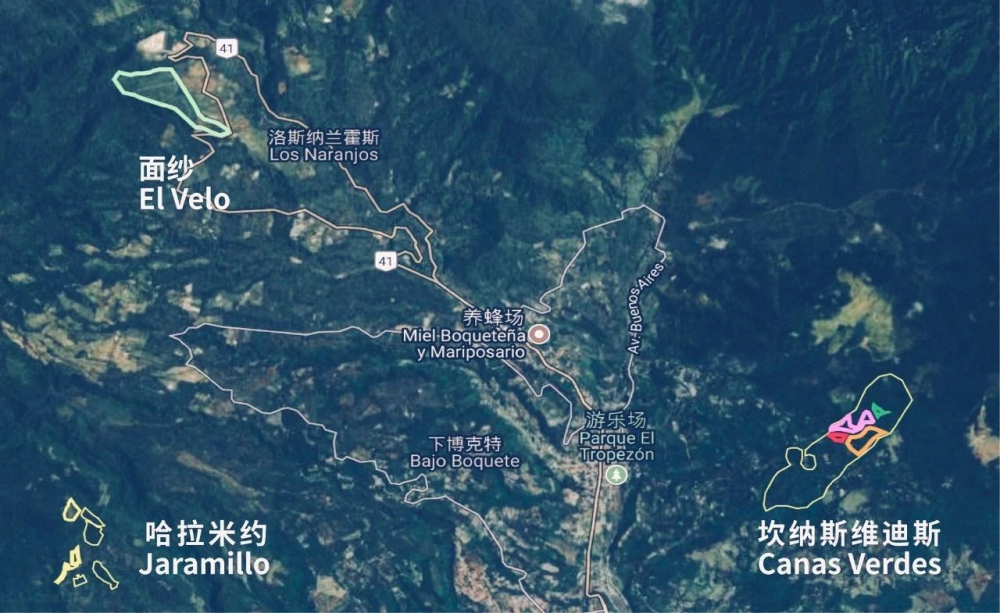
After Geisha coffee won the championship, the Peterson siblings began more systematic management of the Geisha coffee trees on the estate. Broadly speaking, Geisha cultivation areas are divided into three major plots: Cañas Verdes, Jaramillo, and El Velo. To ensure every coffee batch can be traced, the Peterson family further subdivides each major plot into different small plots. Buyers of Geisha coffee can use the batch to trace specific cultivation plot information.
The Geisha variety was first discovered in the Jaramillo plot, and Daniel and his sister decided to increase Geisha's cultivation altitude starting from this land as well. As Geisha's discovery and cultivation site, Jaramillo became the most famous plot of Hacienda La Esmeralda. Jaramillo's average altitude exceeds 1,650 meters, and the cold, humid mountain air fills the Geisha coffee here with natural essence and a fragrant aroma. At present, Jaramillo is divided into five small plots: Mario, Noria, Reina, Bosque, and Buenos Aires.
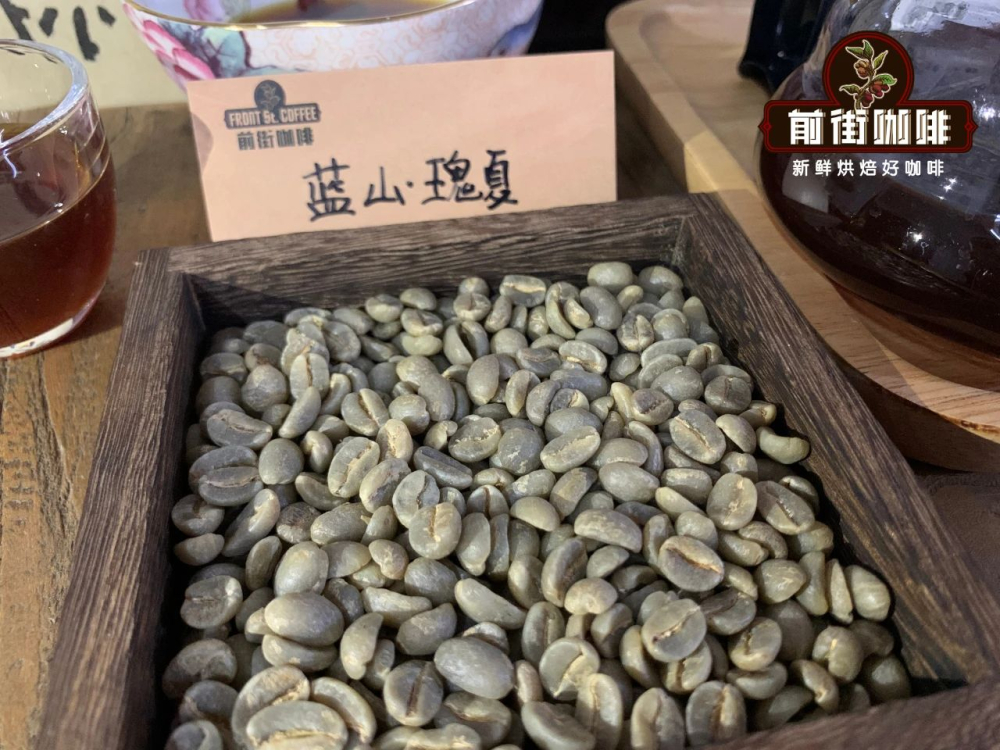
Among them, the Mario and Bosque plots have performed excellently in major competitions. The Esmeralda Red Label Natural Geisha coffee beans Front Street obtained come precisely from the Mario plot.
The Cañas Verdes plot is relatively far from the estate's other two major plots. Because the area covered by this plot was gradually purchased by the Peterson family in 1967 and after 2004, the subdivided plots are relatively small. The cultivation altitude in Cañas Verdes is all above 1,600 meters, and it contains 9 small plots. Among them, Montaña and Tumaco perform most prominently; the Geisha batches they produce have impressive, elegant floral and fruity aromas and often rank among the highest prices at Hacienda La Esmeralda auctions. The "youngest" El Velo estate was established in 2012. In addition to the Geisha variety, it also cultivates many other high-quality coffee varieties, mainly serving the estate's future development through coffee exploration and research. El Velo has 7 small plots in total.
To enhance the brand's high-end positioning, Hacienda La Esmeralda divides the green Geisha coffee harvested and processed from different plots into three grades based on cupping flavor performance and cultivation plot, from highest to lowest: Esmeralda Special (Red Label batch, including auction lots), Private Collection (Green Label batch), and Las Rocas Geisha (formerly Blue Label).
Refined Natural Processing Method Front Street believes that brewing coffee is like cooking: the variety and growing environment determine the refined flavor of the "ingredients" themselves, while the processing method used is a crucial step in preparing those "ingredients."
Traditional natural processing allowed Geisha coffee to display rich, diverse fruity flavors in the 2004 Best of Panama competition. Hacienda La Esmeralda has extremely high requirements for detail control in every stage of green bean processing, which is what ensures the high quality of the Geisha coffee beans it produces. Hacienda La Esmeralda spreads the harvested ripe cherries directly in the courtyard to dry, allowing the coffee fruit to slowly dry with its pulp and skin and absorb more fruit aromas. With natural processing, the number of drying days is determined by weather conditions and drying space. Hacienda La Esmeralda usually places coffee cherries on concrete beds for sun drying for 3 to 5 days, 8 hours per day, then moves them into a dryer for 72 hours of rotation to complete drying and prevent fermentation. After drying is finished, a huller is used to remove the outer shell and other parts of the beans. Front Street believes that specialty batches of natural Geisha therefore have more of the sweet-and-sour character of fruit fermentation.
Flavor Characteristics of Pour-Over Specialty Geisha Coffee Geisha coffee is famous worldwide for its rich floral aromas and complex fruit notes. Front Street's roasters want to preserve more of Geisha's high-quality acidity, so they choose a medium-light roast (slight adjustments are made for different batches). This roast level does not greatly change the high hardness of high-altitude beans, so brewing requires a somewhat higher extraction yield to present fuller flavor layers. Here, a higher water temperature and a finer grind are used to bring out more aromatic substances; in addition, Front Street wants Geisha coffee's flavor expression to be clearer, so it widens the coffee-to-water ratio a little, using 1:16. To increase Geisha coffee's extraction yield, avoid over-extraction, and at the same time highlight the sweet-and-sour flavor layers, Front Street Coffee's baristas choose the V60 dripper. The V60 dripper has guide ribs connecting the top and bottom and a large central hole, which can speed up the flow of water; the spiral-shaped vent design lengthens the water flow path and increases the contact time between coffee grounds and hot water. Each stream of water converges along the grooves toward the center of the dripper, concentrating the pressure on the coffee grounds and extracting coffee with richer layers.
Below, Front Street demonstrates the brewing steps for an in-store Esmeralda Red Label Natural Geisha. You can use it as a reference or compare it with your own brewing approach to make the coffee taste better. The pour-over parameters for Red Label Geisha coffee are: Dripper: V60, Water temperature: 91-92°C, Coffee dose: 15g, Coffee-to-water ratio: 1:16, Grind size: fine granulated sugar size (80% passing a No. 20 sieve)
Three-stage extraction: First, pour 15 grams of coffee grounds into the dripper and tare the scale. For the first stage, pour in 30g of water to bloom for 30 seconds, and start timing at the same time. Throughout, pour with a small stream from the center point and then spiral outward, taking care to wet the entire coffee bed. For the second stage, use a slightly larger stream to pour in 120g of water, with the aim of lifting the entire coffee bed. The water column should be poured vertically and evenly; at this point the scale should read 150g, and the pour should be finished in about 55 seconds. When the liquid level drops to about halfway, begin using a small stream in a small spiral to pour the third stage of 90 grams. Try to control the stream so it does not spiral too widely, as this can easily disturb the coffee bed and cause under-extraction. The final total poured water is 240 grams, and the drip completion time is about 2 minutes 10 seconds. After removing the dripper, swirl the coffee liquid in the server to mix it evenly, and it is ready to taste.
The pour-over Esmeralda Red Label Geisha coffee tastes of fresh jasmine, citrus, and tropical fruit acidity. The flavor layers change with temperature, the overall mouthfeel is smooth, and the finish has a tea-like fragrance. For professional coffee knowledge exchange and more coffee bean information, please follow Coffee Workshop (WeChat public account: cafe_style) For more specialty coffee beans, please add the private WeChat of Front Street Coffee, WeChat ID: qjcoffeex
The above content is compiled by CoffeeHunters, a coffee news website.


