







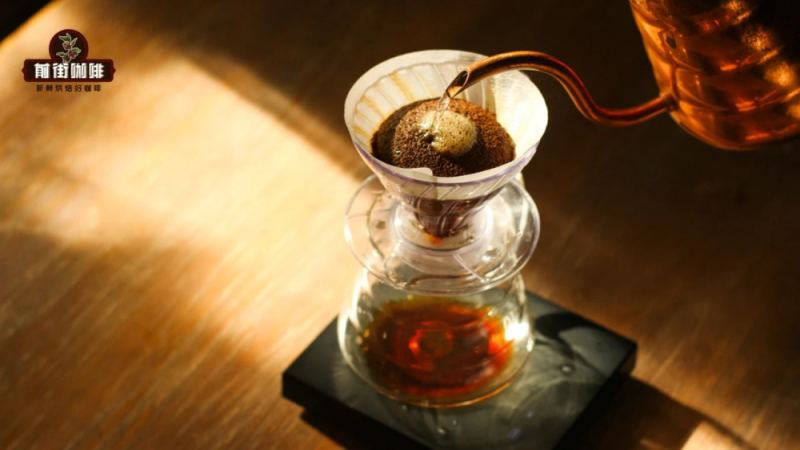
To brew a balanced pour-over coffee at home, mastering the Golden Cup extraction guidelines and the golden water-to-coffee ratio is key. This article starts from the three-stage pour-over method commonly used at Front Street Coffee stores, using Guatemala Antigua Flor de Café beans as an example, and breaks down in detail the core steps of blooming, pouring rhythm, grind size, and water temperature control, while giving specific parameters such as a 1:15 coffee-to-water ratio and 90°C water temperature. Whether you are a beginner just starting out or an enthusiast looking to refine your skills, you can find practical operational points here to avoid common pitfalls such as uneven extraction and weak flavor.
Today Front Street wants to talk with everyone about coffee brewing. Coffee equipment that is relatively easy to use at home includes American-style electric coffee makers, French presses, siphon brewers, moka pots, and drip brewers, among others. Among them, drip brewing has the lowest barrier to entry, and pour-over is the most common method within the drip brewing system. Therefore, Front Street wants to do a dedicated feature introducing the pour-over method most often used at Front Street Coffee stores—staged pouring, which is what everyone usually calls three-stage pour-over.
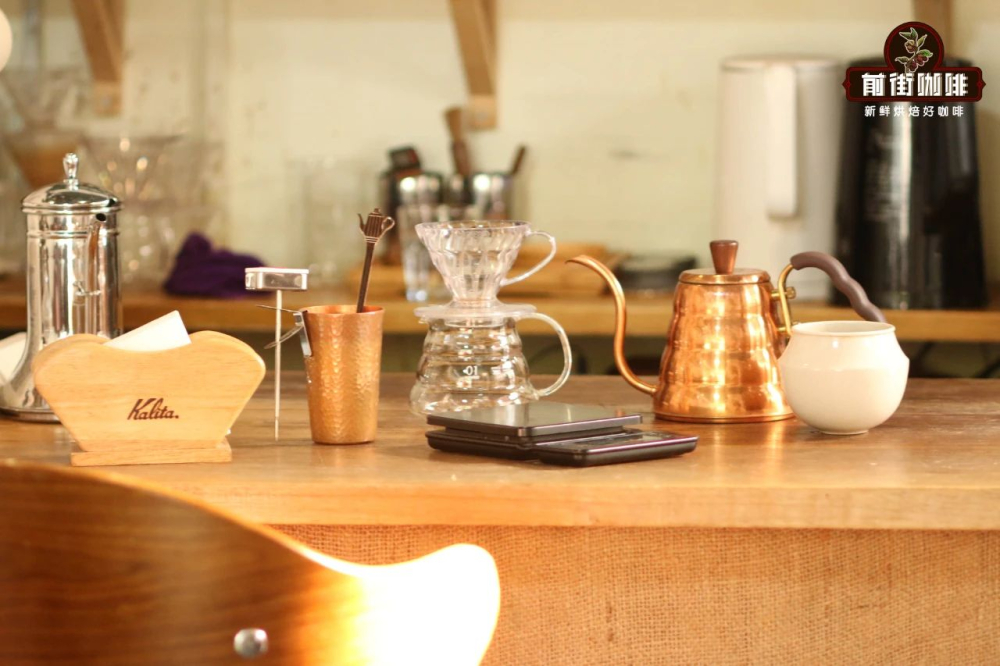
Front Street selected a Guatemala Antigua Flor de Café coffee bean as the demonstration subject. In order to fully showcase the bright citric acidity and faint smoky aroma of the Guatemala Antigua producing region, Front Street set the pour-over coffee-to-water ratio at 1:15 (15 grams of coffee to 225 grams of water), with the water temperature controlled at 90°C. The required equipment roughly includes a digital scale, a server for catching the coffee liquid, a V60 dripper with matching filter paper, a gooseneck kettle, a thermometer, and hot water at the target temperature. Once these items are all ready, you can formally begin the brewing process.
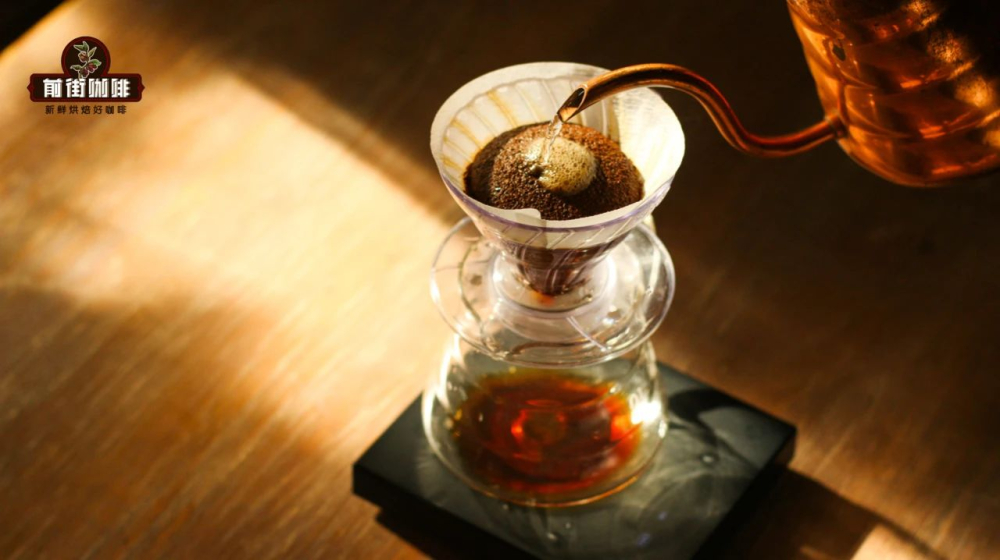
The first step in pour-over coffee is blooming. First use 30 grams of hot water to thoroughly saturate the coffee bed, allowing the bed to swell into a "hamburger" shape. Blooming occupies an extremely important place in pour-over. It not only provides an intuitive way to judge whether the beans are fresh, but more critically, it prompts the coffee grounds to release trapped carbon dioxide. Do not underestimate these 30 grams of water. As the saying goes, all things are difficult at the beginning; if the first step is done well, then getting a delicious cup of pour-over coffee afterward follows naturally.
Why does Front Street place such importance on the blooming step in pour-over coffee? Because Front Street has repeatedly conducted comparative experiments before, and the conclusion is that coffee brewed without blooming has noticeably under-extracted flavor. During roasting, coffee beans generate a large amount of carbon dioxide stored inside the bean body, and even after grinding, some gas still remains. During brewing, when the gas in the coffee grounds encounters water, it escapes in large amounts. If you pour water directly to start brewing, the gas wraps around the coffee particles, making it difficult for water to penetrate; it can only act on the surface of the particles and continuously washes that portion of extractable substances, resulting in uneven extraction—this is precisely the significance of blooming.
After entering the blooming stage, some friends have reported that the coffee bed does not visibly swell, or even shows no movement at all. Front Street Coffee analyzes that the first possibility is that the coffee grounds themselves contain limited gas. Gas will gradually dissipate over time, and coffee grounds will also absorb moisture from the air, causing the original gas to decrease. Therefore, less fresh roasted beans often do not swell much, or even show no reaction at all. Another reason is related to the roast level of the purchased coffee. Light-roasted coffee beans usually have a weaker swelling reaction because light-roasted beans are denser, and their overall porosity is not as great as that of medium or dark roasted beans, so their internal gas reserves are relatively lower.
However, the blooming time is not rigidly fixed at 30 seconds. Generally speaking, blooming time falls between 30 seconds and 60 seconds. The beans brewed by Front Street Coffee have a resting period of four to five days. Through experimental verification, setting the blooming time at 30 seconds best presents the coffee flavor completely. Everyone can flexibly adjust the specific duration according to the freshness and roast level of the beans. When the swelling on the surface of the coffee grounds calms down and is about to show signs of shrinking, that indicates blooming is over and you can begin the first pour.
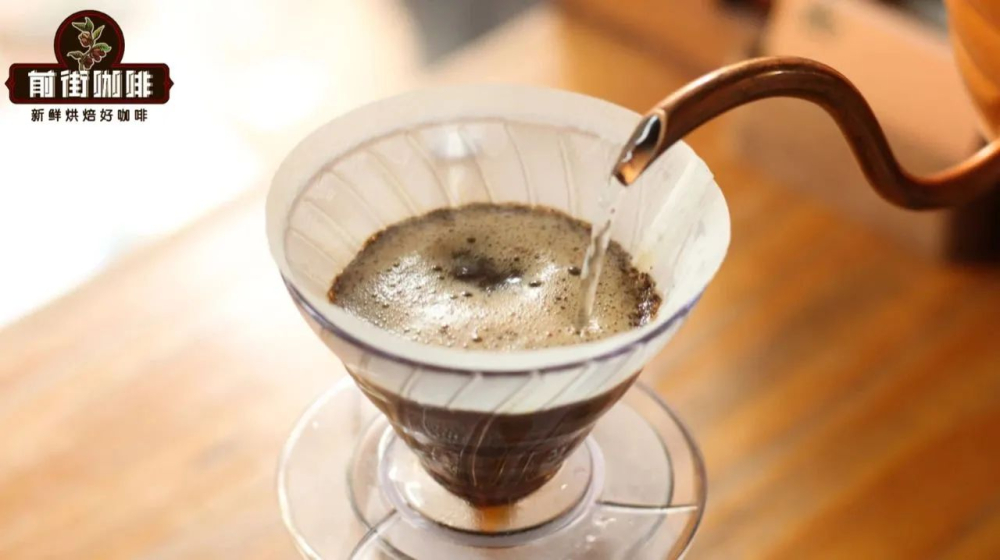
Next, please follow Front Street into the second pour of the pour-over. When the digital scale timer reaches 30 seconds, you can begin the second pour. Start from the center and pour with a relatively thin stream into the bottom of the coffee bed. In order to make the stream's penetrating force more concentrated, the circling movement should be small, then gradually spiral outward. Throughout the process, try to keep the flow rate steady and avoid alternating between fast and slow, and try not to interrupt the stream.
Because too little poured water will lead to insufficient saturation of the coffee grounds, and the brewed coffee will have an obvious rough and astringent sensation on the palate, with a shorter finish; while too much poured water means the hot water in the earlier blooming portion fails to extract enough coffee components, and the resulting coffee tends to have a single taste and flavor, with the acidity extracted in the early stage being especially prominent and overpowering other flavors. Front Street believes that a stable circling pouring range can be from inside to outside, from outside to inside, or center pouring expanding outward; these motions can be chosen according to personal habit.
There is also a small detail to pay attention to, which is the grind size of the pour-over coffee grounds. Grind size directly affects the contact area between grounds and water, and the degree of contact in turn influences the final extracted coffee flavor. If the grounds are too fine, although the contact area increases, water will linger on the surface, and the blooming effect will also be compromised. Front Street usually uses a standard No. 20 sieve, determining each bean's grind size by a sieving pass rate of 80% (light-roasted beans) and 70-75% (medium-dark roasted beans).
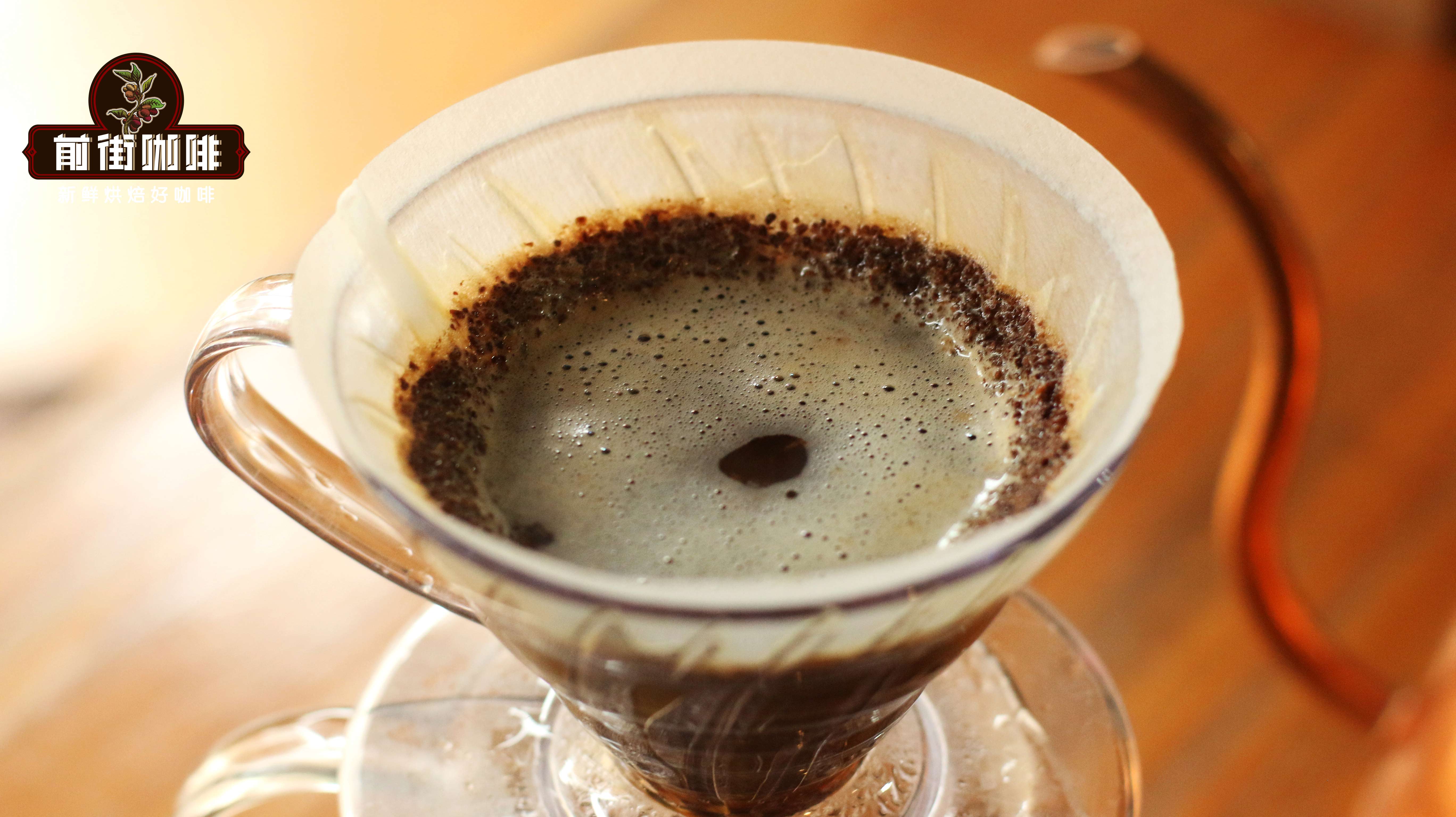
Finally, proceed with the third pour. Front Street Coffee suggests observing the drop in water level carefully at this point and beginning the third pour just before the coffee bed is about to be exposed. Likewise, start from the center and pour in circles, with the amount of water not exceeding the height of the coffee bed. Stop pouring at 1 minute 50 seconds, and complete filtration at 2 minutes. At this point the entire pour-over process is basically finished, and everyone can enjoy the coffee in hand. This Guatemala Flor de Café brewed by Front Street Coffee has a rich citric acidity right at the first sip, with a slight juicy feel, a smooth mouthfeel, and the smoky sensation unique to Guatemalan coffee without being overpowering; in the aftertaste you can also catch a hint of caramel sweetness.
The pour-over method may seem simple, but every tiny operation affects the final quality of the cup, and suitable water temperature can likewise influence coffee flavor. Through many experiments, Front Street has found that when the water temperature is on the low side, substances in the coffee grounds extract more slowly, and before they are fully extracted, the water has already flowed into the server, resulting in coffee that is weak in flavor and almost lacking in layers. Therefore, when brewing dark-roasted beans, Front Street usually does not use too high a water temperature, around 86 to 88°C, to avoid over-extraction. When brewing light-roasted coffee, the water temperature is generally controlled between 90 and 92°C to prevent under-extraction caused by too low a temperature.
Another question everyone is more concerned about is what pour-over coffee ratio is appropriate. Front Street adjusted the brewing ratio many times to brew the same coffee, and ultimately found that the most ideal is still 1:15, that is, 15 grams of coffee grounds producing about 225 grams of brewed coffee; this ratio is the most appropriate.
Professional coffee knowledge exchange. For more coffee bean information, please follow Coffee Workshop (WeChat public account: cafe_style).
For more specialty coffee beans, please add the private WeChat of Front Street Coffee: kaixinguoguo0925.
The above content is compiled by CoffeeHunters, a coffee news website.


