







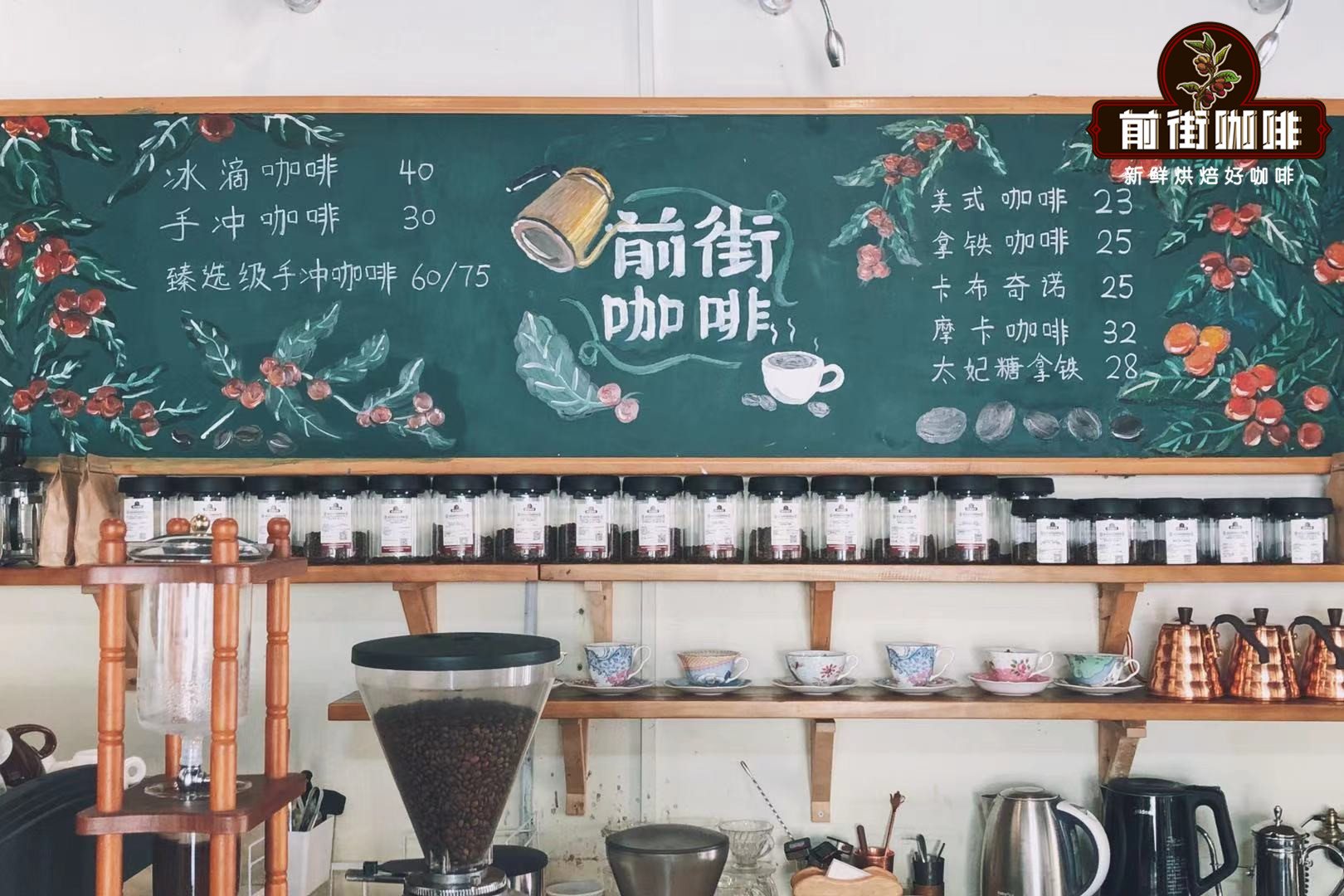
Among the many espresso coffee choices, if someone asks which espresso coffee has the highest milk content, Front Street Coffee will definitely answer that it is latte coffee, and latte coffee is divided into iced latte and hot latte. Their methods are slightly different, but the recipe is the same. Then in this article, Front Street Coffee will explain whether latte tastes better iced or hot, as well asThe recipe ratio for latte coffee.
The origin of latte coffee
According to Front Street Coffee, latte coffee appeared much earlier than espresso coffee. Since the 17th century, Europeans have been mixing coffee and milk, especially Italians. The concept of espresso coffee itself comes from Italy.

For example, William Dean ·Howells first used the term "cafe latte" in his 1867 essay "Italian Journeys." At this point in history, coffee began to cause a worldwide sensation, but because the espresso machine had not yet been invented, the brewing method was still very primitive.
Latte is actually a transliteration of the Italian word "Latte," meaning milk. So if you order a latte at an Italian coffee bean shop, what you may get is a cup of milk. Therefore, in Italy, latte coffee actually means milk coffee. And with the appearance of the espresso machine, the steam wand became standard equipment on espresso machines, making it easy to heat milk on the coffee machine, and modern latte coffee took shape accordingly. So much so that in the 1980s, baristas from Seattle, Washington, began to "color" with textured rich milk, and this was the prototype of latte art.

And because the flavor of the espresso blend beans used by each coffee shop is different, and the models of espresso machines are also different, latte coffee will have slight differences in the ratio of milk to coffee, beans used, extraction parameters, and so on at each shop. But generally speaking, latte coffee is a coffee drink made by adding a large amount of milk to espresso. Lattes made with different coffee beans will also have different flavors, lattes made with different milks will also have different flavors, and even different ratios of coffee to milk can present different flavors.
What coffee beans are used for latte coffee
So what coffee beans should be used to make latte coffee? Generally speaking, the coffee beans used to make latte coffee must be suitable for espresso machines, so coffee that is too light-roasted is not suitable for making latte coffee. The darker the roasted coffee beans, the stronger the coffee flavor of the latte made with them (caramel, bitterness). The lighter the coffee beans, the more obvious the milk flavor of the latte made with them. Therefore, the roast level should be chosen appropriately so that coffee and milk can better compatible.
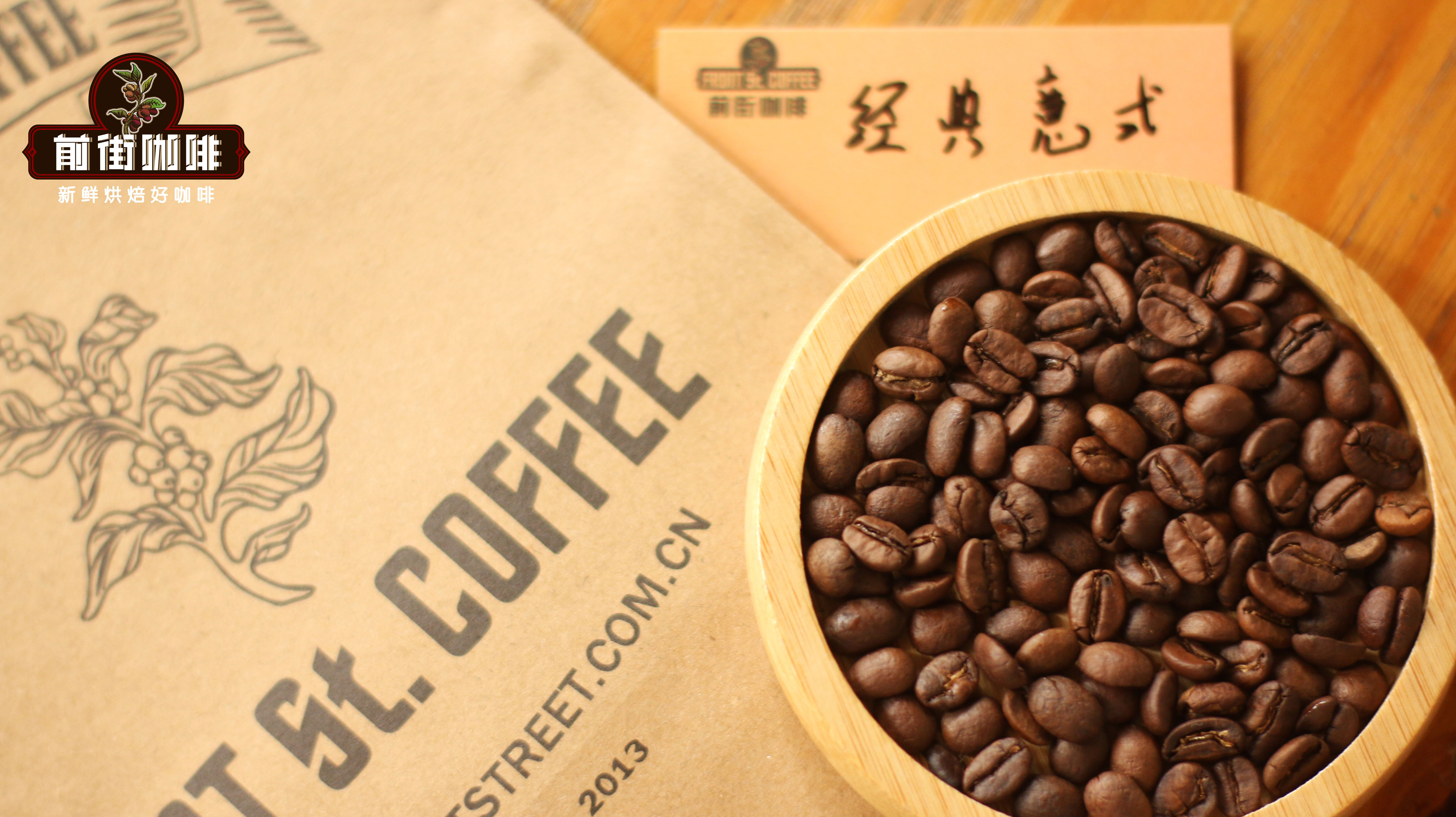
Because espresso machines have a very distinct characteristic, which is that they amplify the original flavor of the coffee beans, and lightly roasted coffee beans themselves have more prominent acidity. If extracted with an espresso machine, the acidity will be even more obvious, so they are not suitable for making espresso.
For example, the Sunflower Warm Sun series currently used in Front Street Coffee's shop is Front Street's most proud blended coffee creation so far. It is blended from Honduras Sherry coffee and Yirgacheffe sun-dried Red Cherry coffee. When integrated into milk, it highlights rich chocolate, caramel, and slightly tipsy flavors.

Then next, Front Street Coffee will introduce the characteristics of this coffee bean!
Front Street Coffee Sunflower Warm Sun Blend
Flavor:Obvious fruit acidity, a light berry aroma, wine aroma, rich chocolate flavor, and a notably sweet aftertaste.
Recipe:Honduras Sherry : Yirga Red Cherry = 7:3
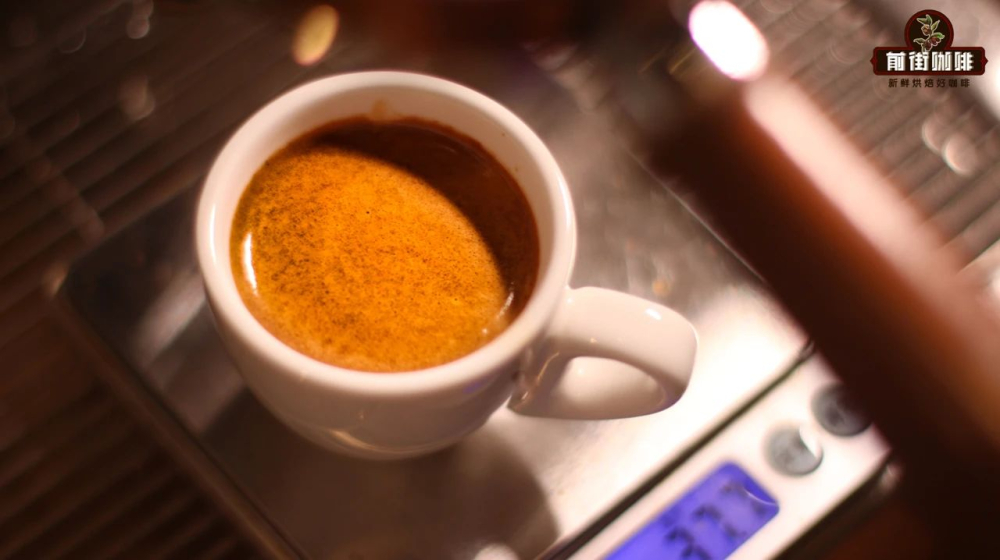
This blend is made by Front Street using Yirgacheffe sun-dried Red Cherry and Honduras Sherry. Front Street's design concept for this blend is that it can be used for both espresso and pour-over. When used to make espresso, the flavor it gives off has an obvious fermented wine aroma. When tasted, the acidity of citrus and berries immediately emerges, with a whisky aroma, and the finish is dark chocolate.
Secondly, Front Street Coffee has also developed another three espresso blend beans for coffee developers to choose from. Each blended coffee bean has its own characteristics, and you only need to choose according to the flavor you like.
Front Street Coffee Front Street Specialty Blend
Flavor:Soft slight acidity, light sweetness, nutty sweet aftertaste, overall not too stimulating, mild, with medium body.
Recipe:Colombia : Brazil = 3:7
This blend is made by Front Street using Brazil and Colombia. It tastes of a light roasted grassy aroma, fragrant with a slight bitterness, smooth and pleasant, with a refreshing aftertaste. This is because coffee beans from the Huila region of Colombia have a pleasant acidity, a mellow aroma, moderate acidity, and rich sweetness that is very intriguing
, while coffee beans from Brazil's Cerrado region have a comfortable sweet-bitterness and are extremely smooth on the palate. So the combination is simply wonderful.
Front Street Coffee Front Street Commercial Blend
Flavor:Caramel sweetness, flavors of nuts, cocoa, and dark chocolate, balanced acidity and sweetness, slightly bittersweet, with a lasting aftertaste.
Recipe:Colombia : Brazil : Robusta = 3:6:1

This blend is made by Front Street using coffee beans from Brazil and Colombia and 10% Robusta coffee beans. The taste is classic. Front Street believes that this blend tastes of rich body and mouthfeel, caramel sweetness, and also flavors of nuts, cocoa, and dark chocolate, with balanced acidity and sweetness, slightly bittersweet, and a lasting aftertaste. This Front Street Commercial Blend, like Front Street Coffee Front Street Specialty Blend, uses a ratio of Colombian and Brazilian coffee beans. The difference is that Robusta is also added to provide rich crema, making the coffee taste fuller.
Front Street Coffee Front Street Black Cocoa Blend
Flavor:With soft fruit acidity, caramel sweetness, flavors of nuts and dark chocolate, smooth and viscous, but the taste is on the lighter side.
Recipe:Yunnan : Brazil = 3:7

This blend is made by Front Street using Brazil and Yunnan. Front Street believes that it tastes of soft fruit acidity and caramel sweetness, as well as flavors of nuts and dark chocolate, smooth and viscous, but the taste is on the lighter side. This is because Yunnan's natural conditions are very similar to Colombia's: high altitude and a large temperature difference between day and night. Its flavor is mellow, with moderate acidity, rich and full-bodied taste, uniform beans, high oil content, and fruity notes. Its quality and mouthfeel are similar to Colombian coffee. However, its taste is still slightly lighter than Colombia's, while coffee beans from Brazil's Cerrado region have a comfortable sweet-bitterness and are extremely smooth on the palate. Therefore, mixing these two coffee beans also gives a good flavor, and this Front Street Black Cocoa Blend coffee bean is very cost-effective, suitable for espresso beginners and small coffee shops.
The above are the four espresso blend beans recommended by Front Street Coffee. Next, Front Street Coffee will share the recipe ratio for latte coffee with everyone.
The recipe ratio for latte coffee

As mentioned above, Front Street Coffee's shop uses the Sunflower Warm Sun espresso blend beans. When extracting espresso, Front Street uses the Bezzera E98 espresso machine. The extraction parameters are as follows:
Pressure: 9 bar
Temperature: 90.5~96 degrees Celsius
Time: 20~30 sec
Coffee-to-water ratio: 1:1.7~1:2
Dose: 12g (single espresso) 20g (double espresso)
Extracted espresso amount: 20ml (single) 40ml (double)
Front Street uses a double espresso when making latte coffee. After extraction, the coffee beans' flavor profile is: obvious fruit acidity, a light berry aroma lingering, rich wine aroma and chocolate flavor, and a comfortable sweet aftertaste.
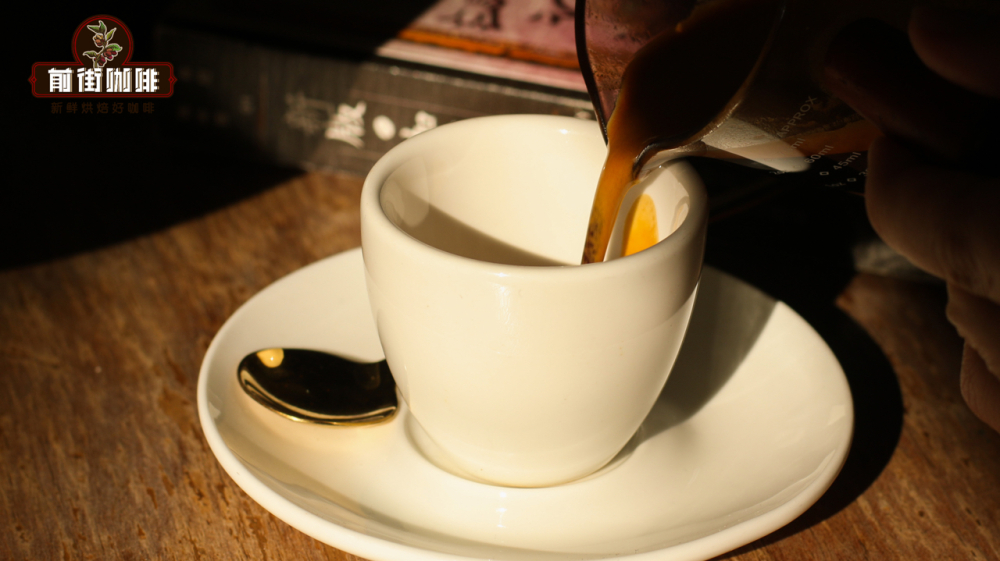
How to make a cup of hot latte coffee?
Milk: whole fresh milk (Front Street uses Vitasoy fresh milk)
Milk steaming temperature: 50-60 degrees Celsius (too low a temperature cannot stimulate the lactose in milk to develop, while too high a temperature will destroy the protein in milk and create a grainy mouthfeel)
Milk foam thickness: 1 cm (milk foam thinner than 1 cm is for making flat white coffee, and milk foam thicker than 1 cm is for making cappuccino)
How to steam milk foam for hot latte coffee?
Milk frothing technique: rinse before pressing the steam switch: let the steam wand rinse and release the water vapor at the front to avoid milk foam being too wet (cover with a clean cloth to avoid splashing.)

Insert the steam wand into cold milk: let steam rush into the milk. (Wand depth: if the wand is inserted too deep, it will only heat and not create milk foam. On the contrary, if the wand is inserted too high, it will create large bubbles and latte art will not be beautiful. You can tap the surface of the table to pop the large bubbles.)
Steam wand placement: the most perfect and foolproof steam injection point is when the steam wand is inserted into the pitcher, with the steam wand against the spout of the pitcher and the nozzle pointing toward the exact center and then slightly offset by 1 cm.

Press steam on: begin frothing milk (when steam is injected, listen carefully with your ears - there should be the sound of blowing into a straw while drinking a beverage, not the crisp sound of bubbles hitting the metal pitcher. When the temperature reaches about 50-60 degrees, it is about time to turn it off.)
Suggested recipe ratio for making hot latte coffee
Front Street suggests a coffee-to-milk ratio of 1:6.5 for making latte coffee, 40ml espresso : 260ml hot milk. By fully integrating the milk and espresso in a circular motion, you can get a cup of hot latte coffee. Heating fresh milk produces lactose sweetness molecules that are better released. After being evenly mixed with espresso, the entire latte naturally has the sweet taste of milk, without stealing the spotlight from the espresso. Instead, with the milk as a backdrop, the flavor of the espresso is even better expressed.
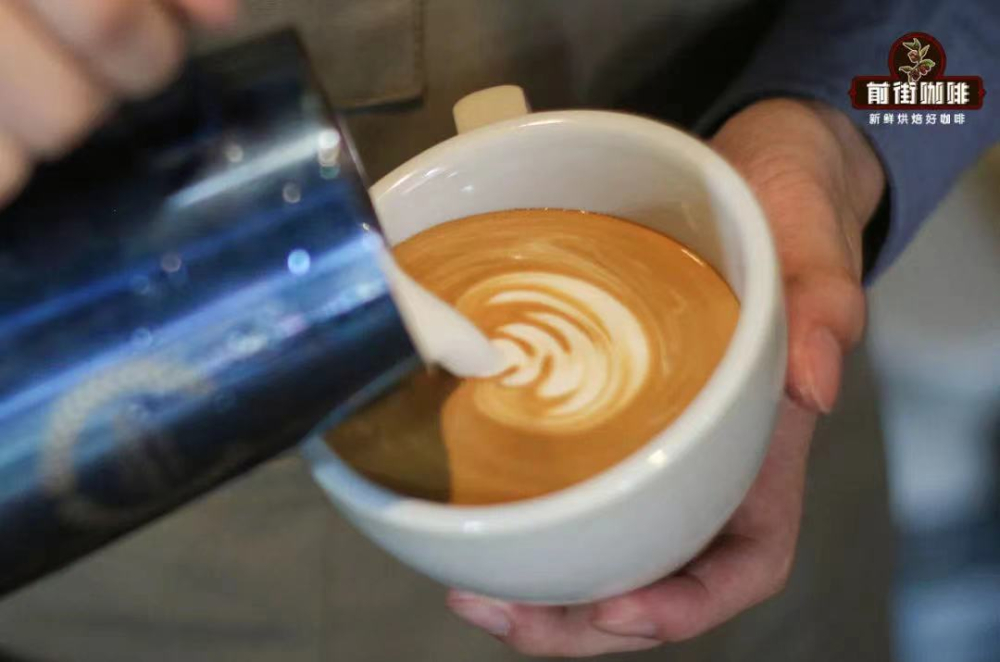
Front Street Coffee hot latte taste and characteristics:Whisky aroma, lactose and coffee acidity colliding to create a milkshake-like sweetness, with an aftertaste of hazelnuts and other nuts.
How to make a cup of iced latte coffee?
Milk: whole fresh milk
Milk temperature: refrigerator-chilled milk
Ice cubes: mixed with milk at a ratio of 1:3
Amount of milk and coffee: Front Street recommends 300ml iced milk mixture : 40ml espresso

Add ice cubes and fresh milk for a total amount of 300ml, then extract a double espresso and pour in the iced milk. If you add less ice, remember to add more milk.
Front Street Coffee iced latte taste and characteristics:Whisky aroma, with rich nutty aroma. As the ice cubes melt, the overall richness of the coffee will gradually decrease.
The above is the relevant knowledge and preparation methods about latte coffee compiled by Front Street Coffee. We hope it can help coffee lovers choose espresso coffee beans suitable for their own taste to make latte coffee.
For more specialty coffee beans, please add the private WeChat Front Street Coffee, WeChat ID: kaixinguoguo0925
The above content is compiled by CoffeeHunters, a coffee news website.


