







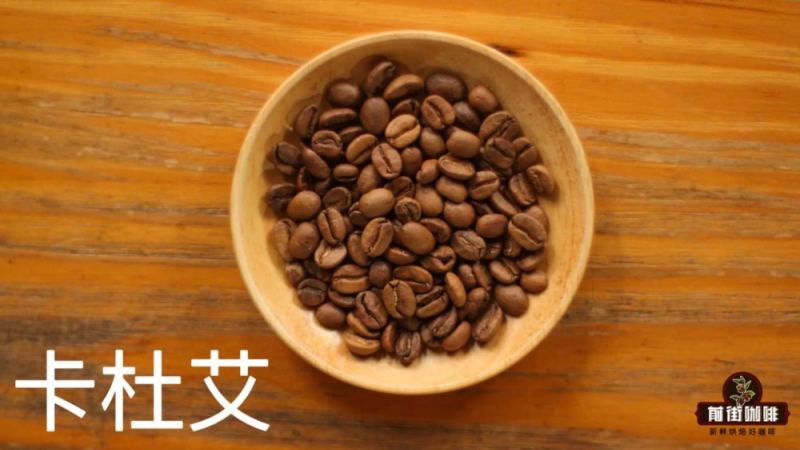
What are the main types of coffee seeds grown as Catuai?
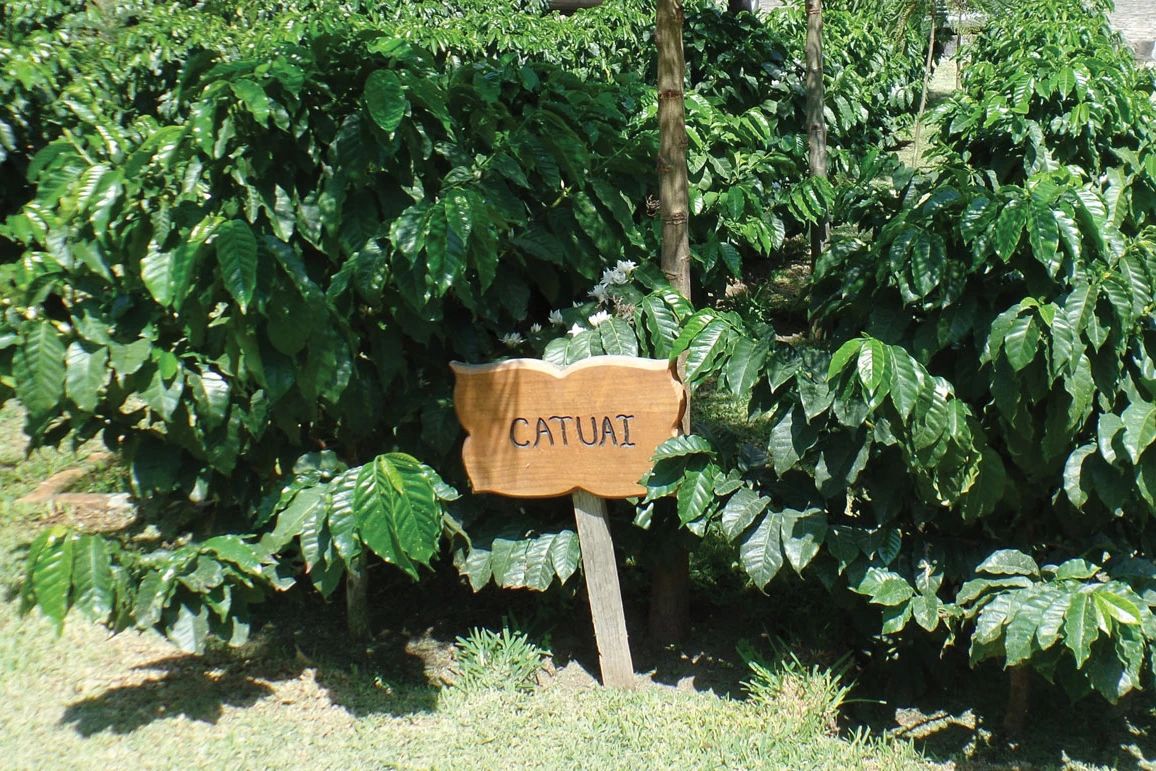
Catuai is a Brazilian variety bred at the Instituto Agronomico de Campinas in Sao Paulo from Mundo Novo and Yellow Caturra, first designated H-2077. It inherited high yield and disease resistance from Mundo Novo, plus compact size and elegant acidity from Caturra. In Guarani, Catuai means "very good," and it spread widely across Brazil and Central America.
Early H-2077 lots were not notable in the cup; strengths sat in yield, pest resistance, and adaptability. Pedigree selection over successive generations improved it, and by 1972 it was widely promoted in Brazil. Central American countries introduced it, though productivity there seemed to decline. Catuai comes in red and yellow fruit types, and it remains susceptible to leaf rust.
Catuai is a well-known coffee variety developed in Brazil, bred from a cross between Mundo Novo and Yellow Caturra, combining high yield, resistance to wind and rain, and fine acidity. In Guarani, its name means "very good," and it is widely cultivated in Brazil and across Central American countries. This article traces the origins and spread of Catuai, explains why it so often appears alongside Caturra, and uses the natural-process Catuai from Panama's Elida Estate as an example to share Front Street Coffee's brewing parameters and flavor profile, giving you a comprehensive understanding of this variety.
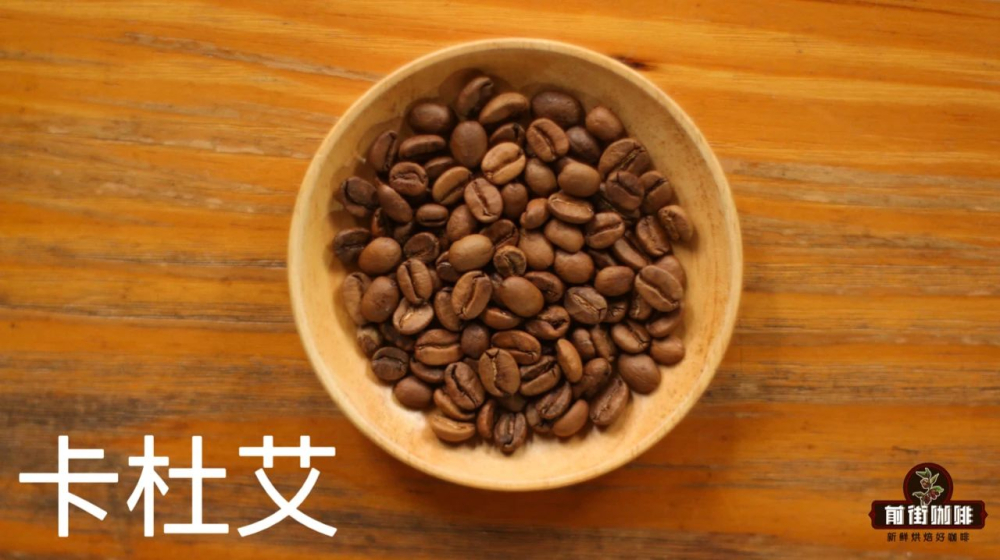
What exactly is the Catuai coffee variety?
As the name suggests, Catuai shares a close genetic relationship with Caturra. It was created at the Instituto Agronomico de Campinas (IAC) in Sao Paulo State, Brazil, from parents Mundo Novo and Yellow Caturra, initially designated "H-2077." Mundo Novo itself is a natural hybrid of Bourbon and Typica, first discovered in 1943 in Tiete, Sao Paulo, Brazil.
From Mundo Novo, Catuai inherited high yield, strong disease resistance, and excellent cup quality, while from Caturra it gained a compact plant size, elegant acidity, and suitability for natural processing. As a result, Catuai performs outstandingly against natural disasters, particularly wind and rain. Because of its compact structure, it can be planted at double density, and its short stature makes pest and disease control relatively convenient. Catuai grows vigorously and stays low, but is susceptible to leaf rust.
The variety was so excellent that it was named Catuai, which means "very good" in Guarani. However, the early variety known as "H-2077" did not perform notably in cupping; its strengths lay mainly in disease resistance, pest resistance, yield, and adaptability to growing conditions.
Later, the Instituto Agronomico de Campinas carried out pedigree selection on "H-2077"—that is, selecting individual plants over successive generations—and by 1972 it was widely promoted for cultivation in Brazil. Catuai's high-yield characteristics also attracted Central American countries to introduce it, but research showed that after being transplanted to Central America, Catuai's productivity seemed to decline.
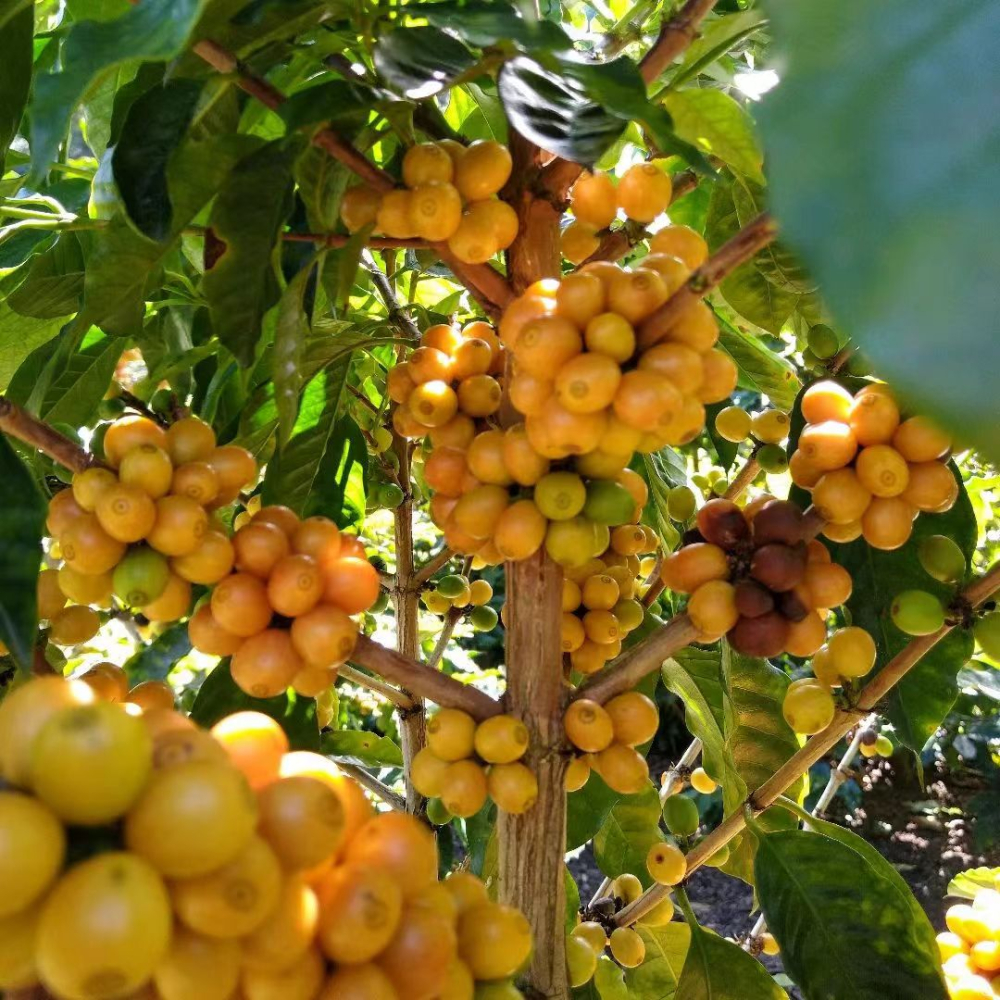
Catuai performs impressively in cupping and comes in red and yellow fruit types, cultivated in different countries according to their characteristics. Costa Rica, for example, introduced Yellow Catuai as early as 1985. One Costa Rican Musician Series Beethoven offered by FrontStreet Coffee is a coffee bean product composed entirely of the Yellow Catuai variety, featuring excellent acidity, a clean mouthfeel, and a fascinating fruity aroma.
Why do Caturra and Catuai often appear in the same coffee?
Research in Honduras and Costa Rica found no significant productivity difference between Caturra and Catuai (the test was conducted by the Honduran Coffee Institute IHCAF, starting with two lines). Coffee estates in Central America had already planted Caturra as a replacement for Bourbon, and after introducing Catuai for localized cultivation, since Catuai itself contains Caturra genetics, the two became increasingly similar in biological habits. Further sub-classification within a single growing area would only drive up labor costs. As a result, today when we buy estate-level Latin American coffee beans, we often see names like Caturra and Catuai in the variety descriptions.
Currently, Catuai is widely cultivated in Brazil, Costa Rica, Honduras, and other Central American regions. Examples include the Costa Rican Musician Series Bach and Mozart (Caturra, Catuai) offered by FrontStreet Coffee, the natural-process Catuai from Panama's Elida Estate, the Catuai from Honduras' Sweet Orange Estate, and Panama's Butterfly (70% Geisha, Caturra, Catuai).
How does Catuai taste?
FrontStreet Coffee demonstrates with the natural-process Catuai from Elida Estate:
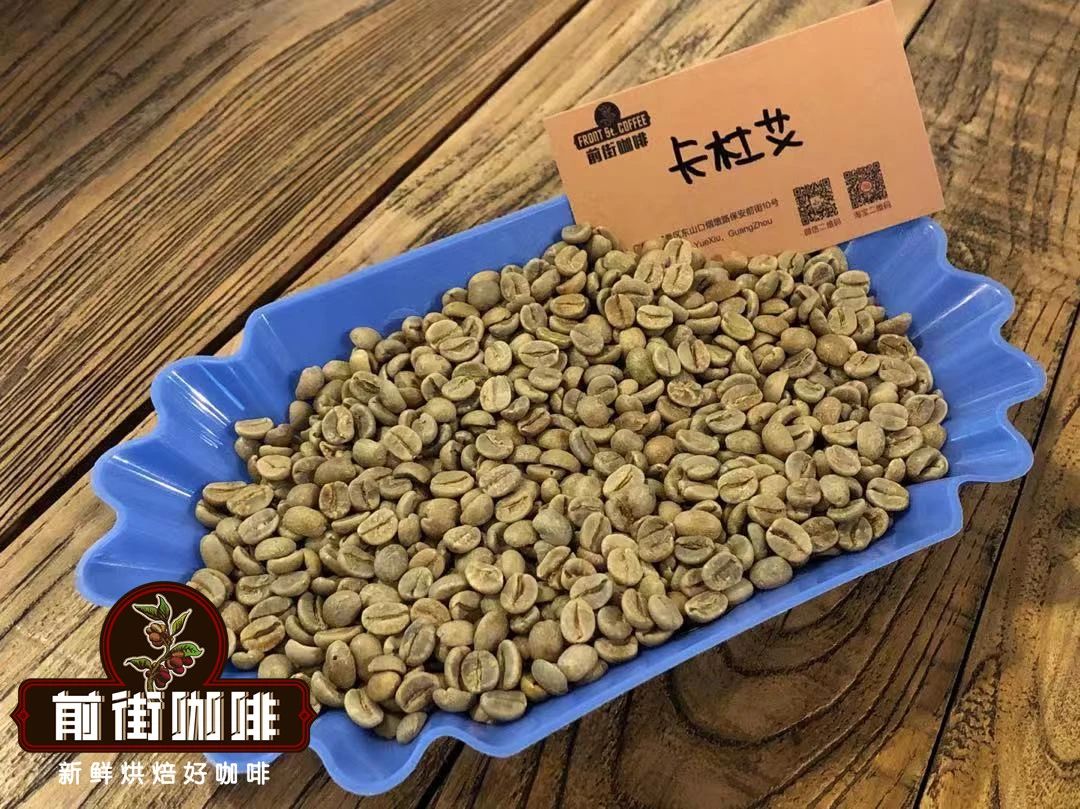
FrontStreet Coffee: Panama Elida Estate Catuai Region: Boquete, Panama Estate: Elida Estate Altitude: 1,850 meters Variety: Catuai Processing: Natural
Elida Estate is a century-old established estate, founded in 1918 by Robert Lamastus from Kentucky, USA, located near Baru Volcano in Boquete, Panama. The estate's name is frequently mentioned because Mr. Robert named it after his wife.
How should Elida Natural Catuai be brewed?
To highlight this coffee's sweet orange aroma and pleasant acidity, choose a fine grind, close to fine sugar in texture, with a pass rate of 80% through a standard 850-micron sieve. Use a higher water temperature of 92°C, as high heat helps extract the coffee's aroma and sweetness. Use a V60 dripper; this pour-over style dripper better accentuates a specific flavor, and the goal of this brew is to highlight a peach-like sweetness.
This brew uses 15g of coffee powder at a ratio of 1:16. After grinding, you can clearly smell the aroma of sunflower seeds and fresh berries. After adding the coffee powder, first pour 30g of water for a 30-second bloom; you can observe the coffee absorbing water, expanding, and releasing gas.
For the second pour, circle in 150g of water. The pour after blooming is crucial, essentially determining the main flavor direction of this cup; pouring at a 1:10 ratio better highlights sweetness. After the bed slightly drops, pour another 60g of water to raise the bed to the height of the second pour. End extraction once all the coffee liquid has flowed into the server; total time is 2 minutes.
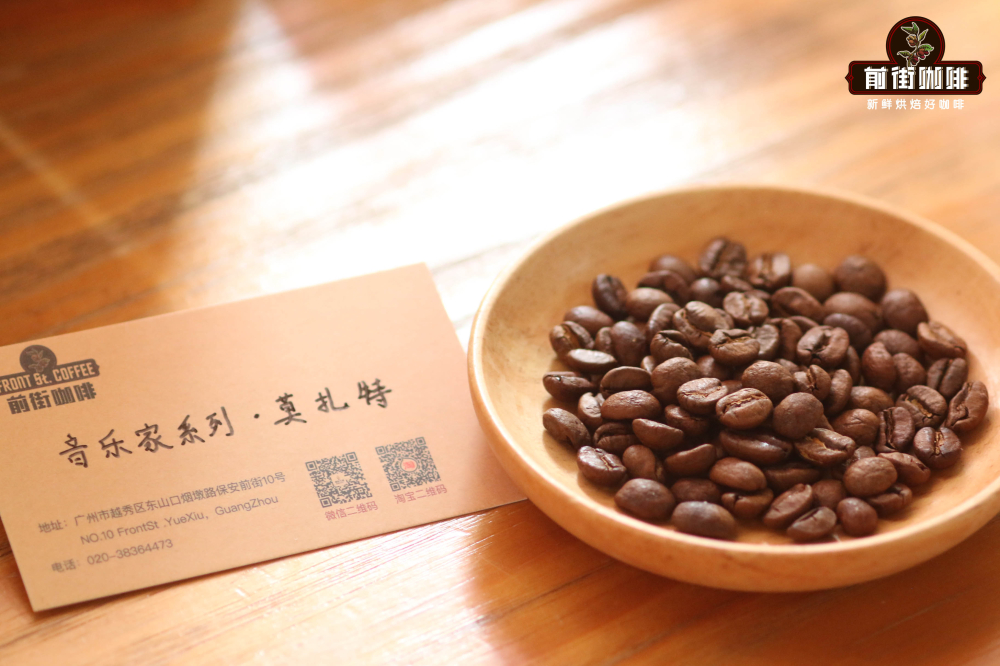
Flavor: Brewed this way, the Elida Catuai delivers prominent notes of peach, raisin, and orange on the palate, followed by gradually emerging sweetness of sugarcane and melon, with a finish that carries grapefruit and a green tea-like tea sensation.
The above content is compiled by CoffeeHunters, a coffee news website.


