








Caramel notes are a common and well-loved flavor descriptor in coffee, originating from the caramelization and Maillard reactions during roasting, and most often appearing in the finish and sweet aftertaste of medium-roast beans. This article starts with the causes of caramel notes, sorts out which origins and roast levels are more likely to present this flavor, and gives several of Front Street's recommended caramel-forward pour-over and espresso beans. Then, using the medium-roast Front Street Queen's Estate as an example, it explains in detail a four-pour brewing recipe centered on low pouring, minimal agitation, and heavy immersion, helping you brew a rounded cup interweaving caramel, cocoa, and cream at home.

When it comes to the taste of caramel, what foods come to mind? For Front Street, beyond the childhood snacks that run through it all—candied sweet potato, caramel cookies, caramel pudding, caramel peanuts, flying fish crispy ice cream bars, sugar paintings…—the first thing that pops out of memory is actually that "caramel note" in coffee.
What exactly is the caramel note in coffee
Caramel is a food made by melting sugar at high temperature and gradually lightly scorching it, a process called caramelization. It mainly brings two results: the browning of sugar, and the generation of "caramel aroma."
The sugars in green coffee beans are mainly sucrose, accounting for about 6–9%, which is the main source of sweetness in a cup of coffee.
When the temperature rises to about 170°C, caramelization begins. High heat drives the sugars in the beans to break down further, the bean surface color continuously deepens, and pleasant aromas such as honey, caramel, maple syrup, roasted nuts, and chocolate are released. When such aromas become strong enough for us to smell or taste, the brain automatically retrieves memories of eating caramel, and so we call this sensation a "caramel note."
Which coffee beans are more likely to present a "caramel note"
Compared with the ethereal flavor of delicate floral notes, finding caramel notes in coffee is much easier. Generally speaking, the caramel-like aromas pointing to sweetness are mainly concentrated in the scent released by ground coffee, while the caramel note often appears in the finish of drinking, and sometimes "hides" in the sweet aftertaste—the slight bitterness brought by the coffee liquid, together with inhaling as you swallow, draws out a sweet aroma like caramel-flavored sunflower seeds.
Because during roasting, both caramelization and the Maillard reaction actually reduce coffee's sweetness and increase bitterness, choosing the right roast level is especially important if you want a cup with rich aroma while retaining a moderate caramel note.
Based on Front Street's accumulated experience, as a common flavor term in coffee, the caramel note mostly appears in medium-roast beans (covering medium-light and medium-dark roasts), and it is also one of the most prominent mouthfeel characteristics of such beans.
If we also consider origin, coffees from Central and South America, influenced by terroir, climate, and variety, often carry many positive caramel-type aromas. If you want to get a caramel-forward pour-over single origin, you can choose Front Street Huila, Front Street PWN Golden Mandheling, and Front Street Queen's Estate; their flavor descriptions are mostly roasted nuts, toffee, maple syrup, honey, dark chocolate, almond, cocoa, and so on;
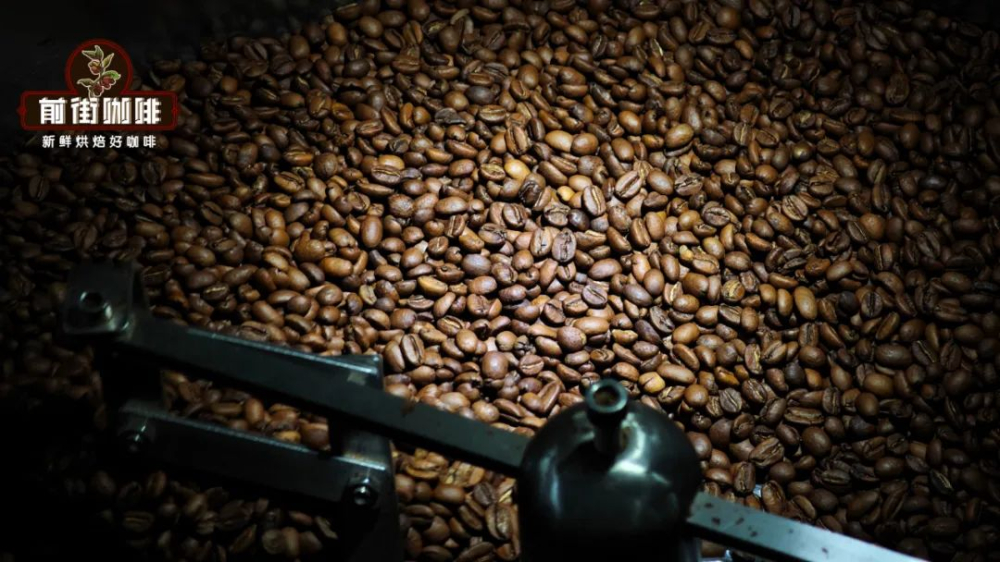
If you want to buy caramel-forward espresso beans, the first choices are Front Street Classic Blend, Front Street Dark Cocoa Base Blend, and Front Street Commercial Blend, because to let the coffee undergo more caramelization and Maillard reactions, their roast level is usually darker than pour-over single origins. Espresso made this way has lower acidity, higher body, and richer crema.
How to brew out coffee's caramel note
Considering that the caramel note is often linked to expressions such as full-bodied, rounded, and strong body, Front Street suggests that when setting the brewing recipe, focus on three things: "lowering the pouring point, agitating the coffee bed less, and making more use of immersion," and appropriately extending the extraction time, with the aim of releasing more substances that reflect the finish. Here, Front Street Queen's Estate is used as a reference to demonstrate how to brew out its caramel note.
Coffee beans: Front Street Queen's Estate
Dose: 15 g
Coffee-to-water ratio: 1:16
Dripper: ceramic cake cup
Water temperature: 88–89°C
Grind size: granulated sugar-like / EK43s setting 10.5
Pouring method: four-pour
For the first pour, Front Street still uses a small stream to pour 30 g of hot water in circles clockwise from the center outward and blooms for 30 seconds, letting the coffee grounds enter the degassing state; for the second pour, first lower the kettle spout, then pour 80 g with a slightly larger stream while maintaining a height of about 2 cm, likewise continuously circling from the center outward. Be careful to avoid disturbing the coffee bed as much as possible, and rely on the dripper's immersion characteristics to let the hot water fully contact the coffee grounds;
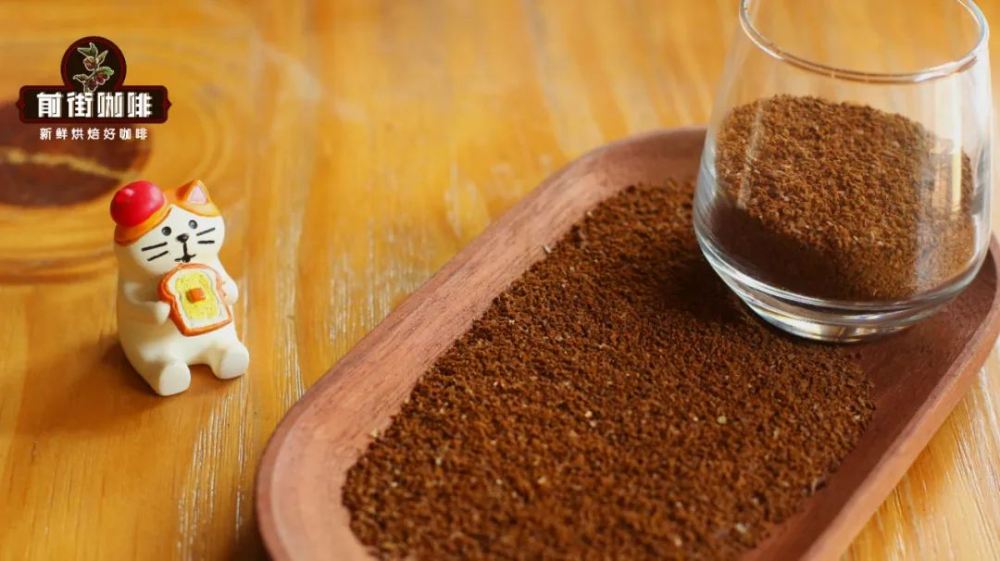
When the coffee liquid in the dripper is almost finished flowing and the time approaches 1 minute 25 seconds, pour the third pour of 80 g of hot water with a small stream. Remember to keep the same low water level as before, with the aim of letting the mid-stage sweetness substances release in an orderly way;
For the last pour, there is no need to wait for the water to dry completely. Instead, when the liquid level drops to halfway, still using a small stream, pour the final 50 g from the center, finishing all pouring at 1 minute 45 seconds. Finally, the drip time of the coffee liquid will be slightly longer than usual, ending extraction at about 2 minutes 13 seconds.
Brewed this way, Front Street Queen's Estate greets you at first sip with flavors of caramel, cocoa, cream, and roasted peanuts, accompanied by slight fruit acidity, with the three tastes of acidity, sweetness, and bitterness balanced and comfortable. As the temperature drops slightly, the charm of caramel and chocolate begins to release, especially when swallowing in big mouthfuls, a toast-like aroma spreads in the throat, making the whole mouthfeel richer, with a lasting sweet aftertaste.
The above content is compiled by CoffeeHunters, a coffee news website.


