







Although Rwanda is a small landlocked country in Africa, its high altitude, volcanic soil, and mild climate nurture outstanding washed Bourbon coffee. Starting from the product information of Front Street Rwanda Washed Red Bourbon, this article traces the historical development of Rwandan coffee from colonial introduction to independent development, introduces its growing environment and the terroir advantages of the "Land of a Thousand Hills," and provides a detailed analysis of the local grading system centered on screen size and defect rate. Whether you want to learn about the story of the producing region or understand the differences between AA, SC, and TT grades, this article will help you build a systematic understanding of Rwandan coffee.
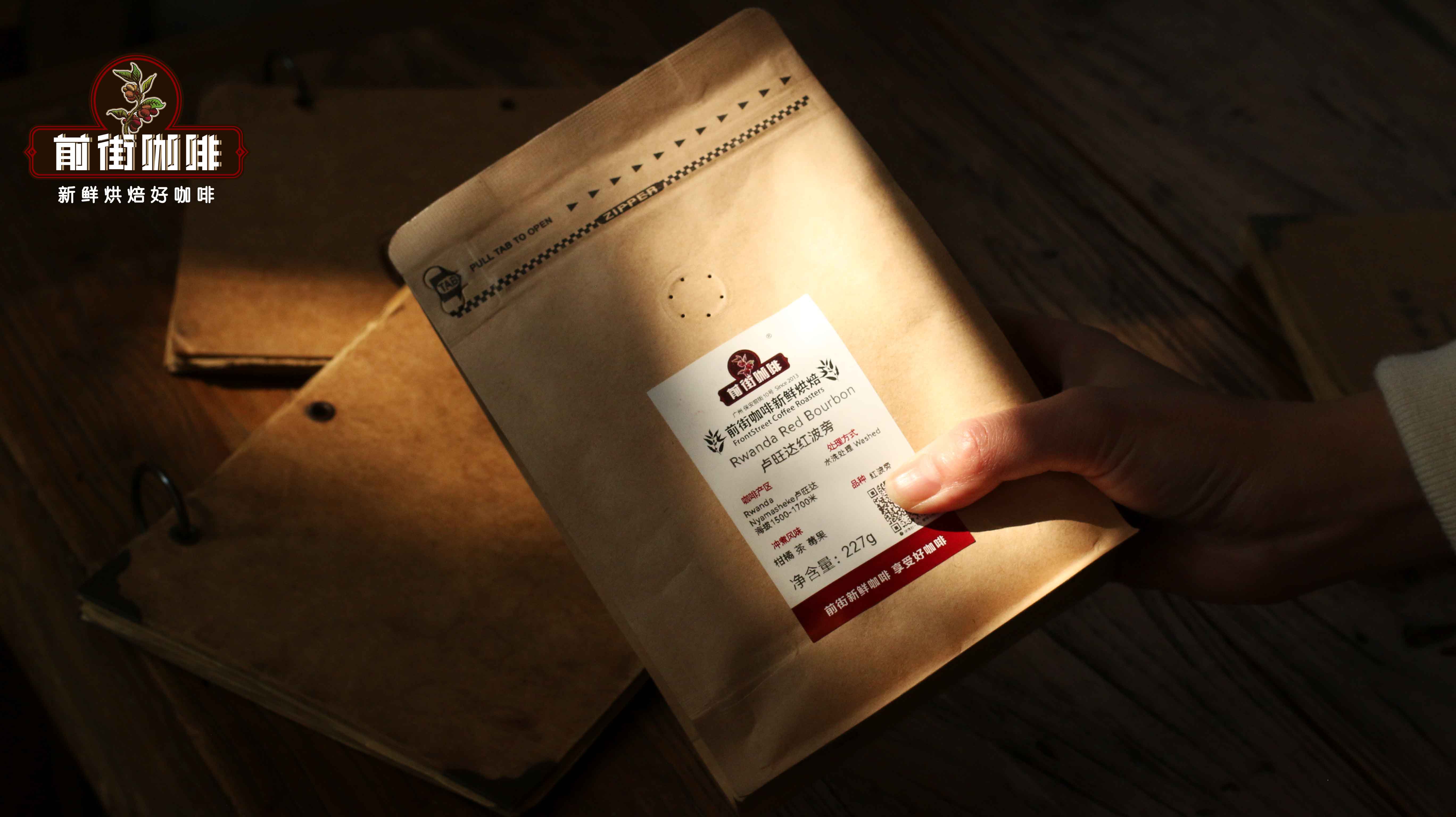
If you want to try Rwandan specialty coffee, Front Street's Rwanda Washed Red Bourbon is a good choice to start with.
Country: Rwanda
Region: Nyamasheke
Altitude: 1,500–1,700 meters
Variety: Red Bourbon
Processing Method: Washed
Flavor: Berries, apple, green tea, apricot
Rwanda is located in central Africa and is a landlocked country with no coastline, while almost all of its neighbors are major coffee-producing countries. In the early twentieth century, Rwanda was successively colonized by Germany and Belgium, and coffee was first brought to this land by German missionaries.
During the colonial period, although Rwanda's coffee production increased significantly, labor exploitation, suppressed coffee crop prices, and high export taxes meant that the overall quality of the coffee beans was not ideal. Against the backdrop of commercial coffee at the time, this was in fact a common phenomenon.
After Rwanda gained independence, the first official coffee organization, OCIR, was established, and coffee bean production gradually began to receive attention. From the 1960s to the 1980s, Rwanda's coffee production climbed steadily and reached an unprecedented peak in 1986. However, in the early 1990s, domestic political turmoil and the outbreak of the Rwandan genocide caused the coffee industry to fall into stagnation.
Today Rwanda is gradually recovering. Whether in terms of urban development, public security, or the friendliness of the people and environmental sanitation, Rwanda can be called an "atypical" country in Africa. It is widely recognized as currently the safest country in Africa. In the "2017 World's Safest Countries and Destinations" list, Rwanda ranked ninth among global cities and was the only African country to enter the top ten.
Rwanda is a developing country, with an economy based mainly on agriculture and animal husbandry, and 92% of the population is engaged in agriculture- and animal husbandry-related work. Coffee and tea are Rwanda's main cash crops, and on average 1 in every 30 Rwandans works in a coffee-related industry.
The impact of the COVID-19 pandemic put considerable pressure on Rwandan coffee sales. To help local coffee farmers get through the crisis, on May 14, Alibaba livestreaming host Viya recommended Rwandan Gorilla's coffee beans in her livestream and sold a year's worth of inventory in just one second.
Rwanda's Coffee Growing Environment
As Front Street Coffee mentioned in a previous article, Rwanda is located inland in Africa, with Burundi to the south, Tanzania to the east, Uganda to the north, and Congo to the northwest.
Rwanda has the beautiful name "Land of a Thousand Hills," a title that comes from its layered, rolling mountains, including 5 volcanoes alone. In addition to mountains, Rwanda also has 23 lakes and numerous rivers, making its water resources quite abundant.
Rwanda has a temperate and tropical highland climate, with average temperatures between 24.6 and 27°C, somewhat cooler than typical equatorial countries. Coffee is mostly grown in mountainous areas such as the west, where temperatures are lower than in the low-lying eastern regions and the temperature difference between day and night is greater. Taking northern Lake Kivu as an example, its average altitude is 1,463 meters and its average daily temperature is about 22°C. Combined with fertile volcanic soil, this is very suitable for coffee growth.
Rwanda's Coffee Grading System
Rwanda's grading system is mainly based on coffee bean screen size. Screen sizes 12–18 are classified as AA grade, while sizes above 18 are listed separately.
· AA grade: above 18 screen size, the largest beans, and also the highest price. Front Street Rwanda Red Bourbon belongs to the highest AA grade, with uniform and plump beans.
· SC grade: screen size 15+, with a defect rate not exceeding 5%. Under this grading rule, manual hand sorting is used to keep the defect rate below 5%.
· TT grade: screen size between 13 and 14. Some beans have a screen size above 14 but a defect rate higher than 5%, and these are also classified into this grade.
· T grade: refers to beans with a screen size smaller than 12.
· STL grade: (stock lot) broken beans; this grade usually comes from parchment beans graded as A3 and A4.
In addition, honey processing and natural processing are used only when making specialty coffee.
In natural and honey processing, using SC (above 15 screen size) coffee beans is considered high-spec production; TT (below 15 screen size) corresponds to the G2 grade. However, whether it can become specialty coffee still needs to pass cupping inspection. Only coffee scoring 85 or above on the SCAA cupping form can be called specialty coffee. Under such a grading system, the milling yield of SC (above 15 screen size) coffee beans needs to reach more than 70% for the processing station to be profitable.
The above content is compiled by CoffeeHunters, a coffee news website.


