








What role do robusta coffee beans play in espresso blends?
Robusta coffee beans carry a reputation as the supporting act to Arabica, yet they are hard to replace in espresso blends. The variety is higher in bitterness and lower in acidity and sweetness than Arabica, and it is exactly that intensity that industrial coffee production relies on. Blended in small amounts with Arabica, it adds body without masking the Arabica aroma.
Robusta accounts for roughly 30 to 40 percent of global coffee production, led by Vietnam, Indonesia, Côte d'Ivoire and Brazil, where it now makes up about 30 percent of national output. It grows at low altitudes in hot, humid climates, resists leaf rust and yields heavily. Specialty-grade robusta is increasingly used to lift crema and texture.
Robusta coffee is often seen as the supporting act to Arabica, but it plays an irreplaceable role in espresso blends. This article starts from Robusta's historical reputation, the causes of its flavor, and its global growing regions, analyzes the sources of its bitterness and its disease-resistant advantages, and introduces the rising trend of specialty Robusta. At the same time, drawing on two products—Front Street Commercial Blend and Front Street Classic Blend—it explains how Robusta collaborates with Arabica beans to enhance coffee's body and crema performance, offering coffee lovers a practical reference for blend choices.
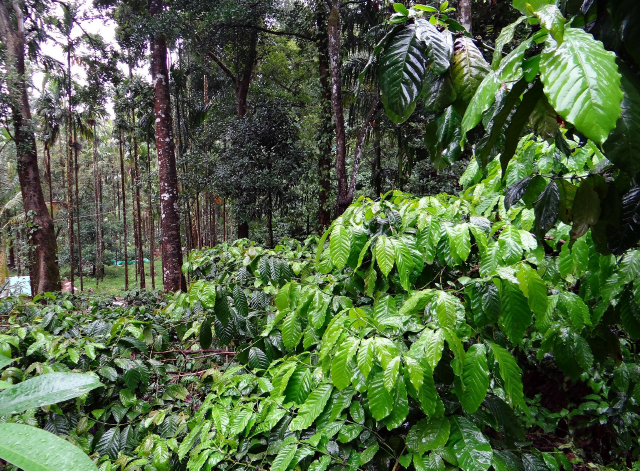
Robusta coffee beans were once described as an undrinkable variety that couldn't even compare to the lowest-grade Brazilian Santos. It isn't suited for drinking on its own, but if a small amount is blended into Arabica beans, it can enhance the finished product's full-bodied texture without masking Arabica's own pleasant aroma.
In terms of acidity and sweetness, Robusta is indeed inferior to Arabica, yet its pronounced intensity and strong bitterness are exactly the characteristics that industrial coffee cannot do without. In addition, Robusta has strong resistance to diseases such as leaf rust and yields quite abundantly, so it is often used in variety hybridization and instant coffee production.
Some high-quality specialty-grade Robusta coffee beans are used to blend espresso, with the aim of enhancing the coffee's body and intensity.
Main Producing Regions and Annual Output of Robusta Coffee
Robusta accounts for roughly 30% to 40% of global coffee bean production, with major producing regions including Vietnam, Indonesia, Côte d'Ivoire, and Brazil. In recent years Brazil has vigorously promoted Robusta cultivation, and this variety now accounts for 30% of Brazil's total coffee production. Surprisingly, Brazil is now able to compete with Vietnam for the position of largest Robusta producer.
These producing regions are usually at lower altitudes with hot, humid climates. While coffee trees can grow and bear fruit smoothly, bacteria and pests are equally active. For Arabica, which has weaker resistance to disease and pests, such an environment is not suitable for its healthy development.
Robusta originated in West Africa and can adapt to growing conditions at low altitudes and higher temperatures. It has extremely strong adaptability, can withstand harsh climates and pests and diseases, and requires little manpower for land preparation, weeding, and pruning. It can even grow naturally in the wild, making it an easily cultivated coffee tree species.
Its excellent disease and pest resistance comes from its high content of chlorogenic acid. Chlorogenic acid tastes rather bitter, deterring pests and pathogens, which is also why Robusta is much more bitter than Arabica. At the same time, because chlorogenic acid occupies a large proportion, some desirable flavor compounds are also difficult to fully form.
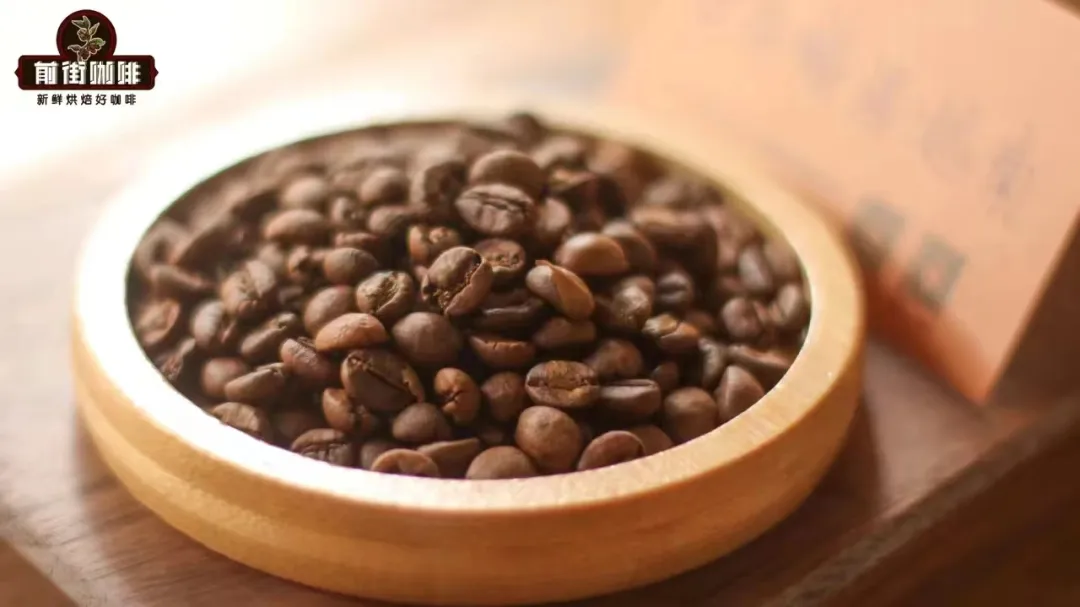
Why Is Robusta More Bitter?
Although Arabica and Robusta differ markedly, what about the difference between Typica and Bourbon, both of which belong to the Arabica species? After consulting the materials, Front Street found that whether from the perspective of genetics or composition, there is almost no difference between the two.
However, the compositional structure of the green beans of the two original varieties differs somewhat, which has a relatively large impact on the aroma after roasting—though this difference is far less significant than that between Arabica and Robusta. Academically, Arabica and Robusta represent an interspecific difference, comparable to the relationship between Wenzhou mandarin and grapefruit. The two differ greatly in the balance of their compositions, so it is only natural that their flavors are so different.
According to scholars' analysis, Robusta's bitterness mainly comes from the following aspects:
① Caffeine, one of the refreshing-type bitter components;
② Chlorogenic acid, the main source of mellow, bitter, and astringent notes in coffee;
③ Proteins and amino acids, which bring a strong bitterness similar to stout beer and chocolate;
④ Low fructose content. Fructose is originally a source of acidity and can add layers to bitterness, producing a soft, full-bodied mouthfeel, but it is present in very small amounts in Robusta. In other words, acidity is almost imperceptible, causing Robusta's bitterness to lack roundness; the strong bitterness overwhelms the astringency, forming a monotonous bitter sensation.
Specialty Robusta Coffee
Robusta is cheap and its taste isn't particularly appealing, but this doesn't mean all Robusta beans are low quality.
In fact, India, Indonesia, Vietnam, and other places all hold competitions and auctions to select specialty coffee among the Robusta species. The judges presiding over these events are not Q Graders (Quality Graders) but R Graders (Robusta Graders). By the way, a Q Grader is a coffee bean appraiser recognized by the Specialty Coffee Association of America (SCAA), while an R Grader is its Robusta counterpart.
In recent years, Liberica coffee produced in the Philippines and Malaysia has begun to appear on the Japanese market. There are both voices in favor and voices against it in terms of taste evaluation, so it can be said to be a coffee with a highly distinctive character.
Some Robusta coffees that have undergone better cultivation and processing can retain their high body and low acidity while displaying beloved flavors such as barley tea, nuts, and caramel. At the 2022 World Barista Championship, Japanese competitor Takayuki Ishitani used a blend of Panama Hartmann Geisha with Vietnamese specialty Robusta, overturning a new generation of coffee lovers' definition of specialty coffee.
Although most Robusta falls short of Arabica in flavor, it possesses extremely strong body and can give coffee a solid mouthfeel. Brewed directly it may not taste good, but when used in espresso, specialty Robusta can be called an outstanding "partner."
The Preferred Pairing of Robusta and Arabica
Front Street sells an espresso bean designed specifically for shop use, the "Front Street Commercial Blend," which adds a small amount of Vietnamese Robusta to a base of 100% Arabica from the two major producing regions of Brazil and Colombia. The mixed nut flavor of the Brazilian beans forms the main theme, the berry and caramel flavors of the Colombian beans enrich the layers, and the addition of Vietnamese Robusta not only brings rich golden crema but also enhances the coffee's body.
If you want to practice latte art at home, you can choose Front Street Classic Blend. This is a medium-dark roasted espresso recipe composed of three producing regions, inspired by the early popular "Mamba," a combination of Mandheling and Brazil. To enhance the aroma and crema, Front Street Classic Blend also adds a small amount of Robusta, thereby boosting flavor intensity, so that beginners can easily make espresso with golden crema at home.
The above content is compiled by CoffeeHunters, a coffee news website.


