







Colombia, as the world's third-largest coffee-producing country, is known for its coffee beans' balanced and mild flavor, making them highly favored whether as single-origin or in blends. This article starts from the flavor characteristics of the origin and provides a detailed explanation of the pour-over extraction method recommended by Front Street Coffee, including medium grind, 90°C water temperature, a 1:15 coffee-to-water ratio, and a three-stage pouring technique. It also introduces one by one the five Colombian coffee beans currently on sale—Huila Caturra, Hanami, Flower Moon Night, Sakura, and Rose Valley—covering processing methods such as washed, anaerobic natural, double anaerobic washed, and anaerobic enzyme washed, to help you gain a comprehensive understanding of the brewing key points and flavor performance of Colombian coffee.
Professional coffee knowledge exchange. For more coffee bean information, please follow Coffee Workshop (WeChat public account: cafe_style)
For more specialty coffee beans, please add the private WeChat of Front Street Coffee, WeChat ID: qjcoffeex
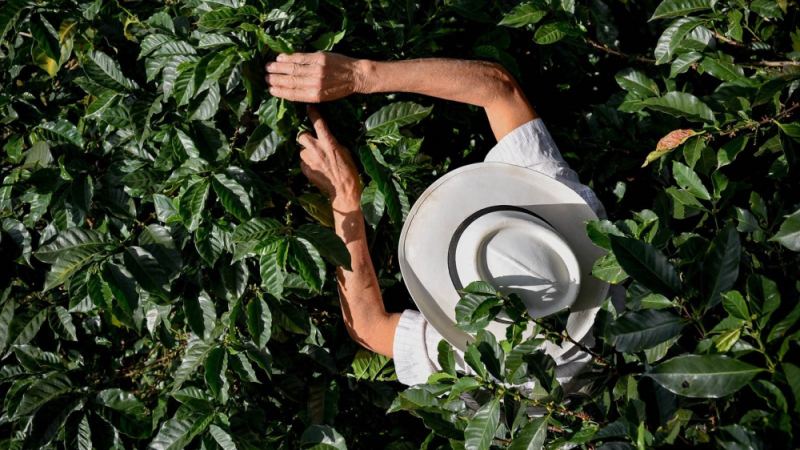
Colombia is the world's third-largest coffee-producing country, with an exceptionally advantageous growing environment, and the coffee beans it produces have long been favored by the market and consumers. Whether used as a single-origin bean or in espresso blends, Colombian coffee beans can showcase a standout characteristic of balanced flavor.
It has a mild fruity acidity, while also exuding a rich aroma similar to nuts, and the caramel-like sweetness in the finish is like the finishing touch, making the layers of the whole cup of coffee even richer. In order to fully present the soft yet still full-bodied mouthfeel characteristic of the Colombian origin, Front Street Coffee uniformly uses medium roasting for all of its Colombian coffee beans.
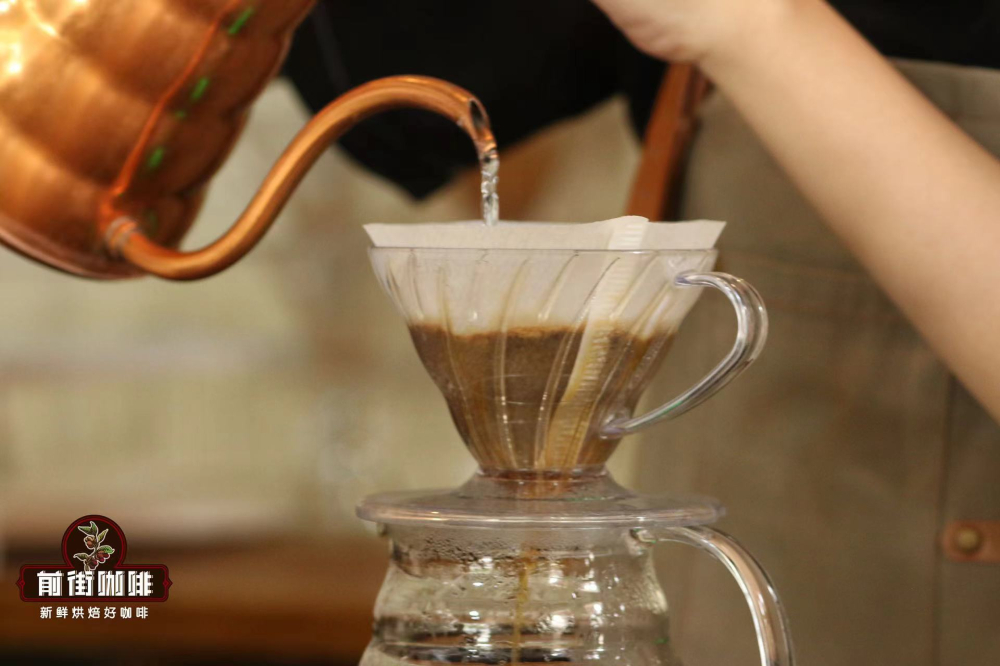
Colombian coffee generally follows a balanced approach. If you want to brew a layered flavor and balanced mouthfeel, Front Street Coffee recommends drip extraction, that is, pour-over coffee. As the roast level deepens, the internal structure of the coffee beans gradually becomes looser, and soluble flavor substances are also released more easily.
Therefore, in the grinding step, Front Street Coffee suggests using a medium grind, with a particle size close to granulated sugar (sifted through the Chinese No. 20 standard sieve, with a 75% pass rate), paired with 90°C hot water, at a 1:15 coffee-to-water ratio, using three-stage pouring for extraction.
The specific operation of the three-stage brewing: first pour 30 grams of water for a 30-second bloom. Then pour in a circular motion with a small stream; when the water volume reaches 130 grams, pause the stage, and when the water level drops to the point where the coffee bed is about to be exposed, continue pouring until 240 grams and stop. After the water level has completely passed through the coffee grounds, remove the dripper, and control the total extraction time (starting timing from the bloom) to between 2 minutes 00 seconds and 2 minutes 15 seconds.
The five Colombian coffee beans currently sold by Front Street Coffee all use medium roasting and are shipped within 5 days after roasting is completed, ensuring 100% freshly roasted coffee so that everyone can experience the most complete flavor and aroma of the coffee beans.
The first is Caturra coffee beans from the large Huila production area, belonging to Front Street Coffee's selected origin daily-drinker bean series. This bean uses the washed processing method, allowing people to clearly taste the flavor unique to Colombian coffee, while also offering quite high value for money.
The second is Hanami coffee beans from Finca Monteblanco in the Huila production area. This lot includes three varieties: Caturra, Catuai, and Geisha. After washed processing, it presents flavors of mugwort, berries, fermentation aroma, spices, and strawberry jam.
The third is Flower Moon Night coffee beans from Finca El Diviso in Huila, using the currently popular anaerobic natural processing. The coffee fruit is first fermented in an oxygen-free environment and then dried in the sun, thus possessing an extremely rich strawberry jam flavor, prominent fermentation aroma, and a sweet chocolate taste that is intoxicating.
The fourth is Sakura coffee beans from Finca Paraiso in the Cauca production area. It uses the double anaerobic washed processing method that has become popular in recent years—usually the coffee fruit is first placed in an anaerobic environment for fermentation, then removed, pulped, and demucilaged, followed by a second anaerobic fermentation, and finally taken out to dry. This bean has aromas of mugwort, mint, and eucalyptus, as well as flavors of berries and strawberry candy.
The fifth is Rose Valley coffee beans from the Santander production area, using anaerobic enzyme washed processing. First, defective beans are removed by flotation, then the pulp and skin are removed by machine. The processed coffee beans are placed in a sealed container, and carbon dioxide is injected to expel oxygen. In an oxygen-free environment, the decomposition rate of sugars in the coffee mucilage is slowed, and the pH value decreases more slowly, thereby extending the fermentation time. This coffee bean presents flavors of roses, strawberry jam, and honey peach oolong.
The above content is compiled by CoffeeHunters, a coffee news website.


