







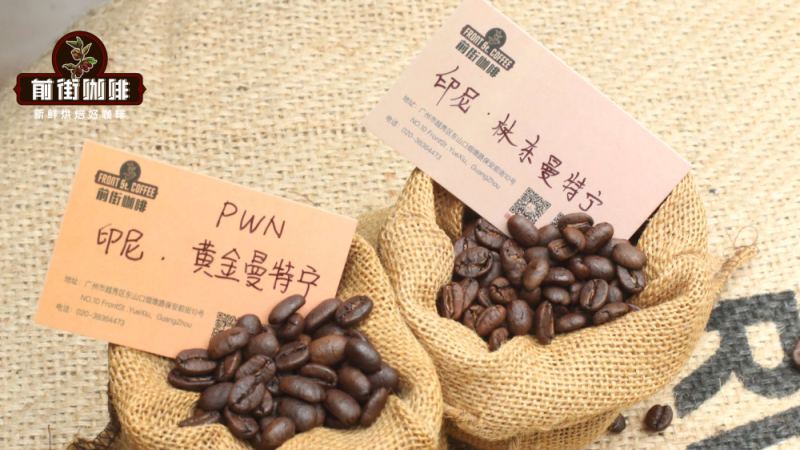
The Mandheling family has many varieties, and although they are all known for being mellow and solid, each has its own character due to differences in origin and processing method. Among them, the Golden Mandheling produced by the Indonesian company PWN is regarded as a high-end specialty within Mandheling, and it has clear distinctions from Front Street Lintong Mandheling in terms of cleanliness, sweetness, and spice notes. This article will start with the classification of Mandheling, sort out the origin information, grade standards, and flavor profile of PWN Golden Mandheling, and compare it with ordinary Mandheling G1 in terms of mouthfeel and price. It will also include the pour-over parameters recommended by Front Street to help coffee lovers understand this Sumatra classic more clearly.
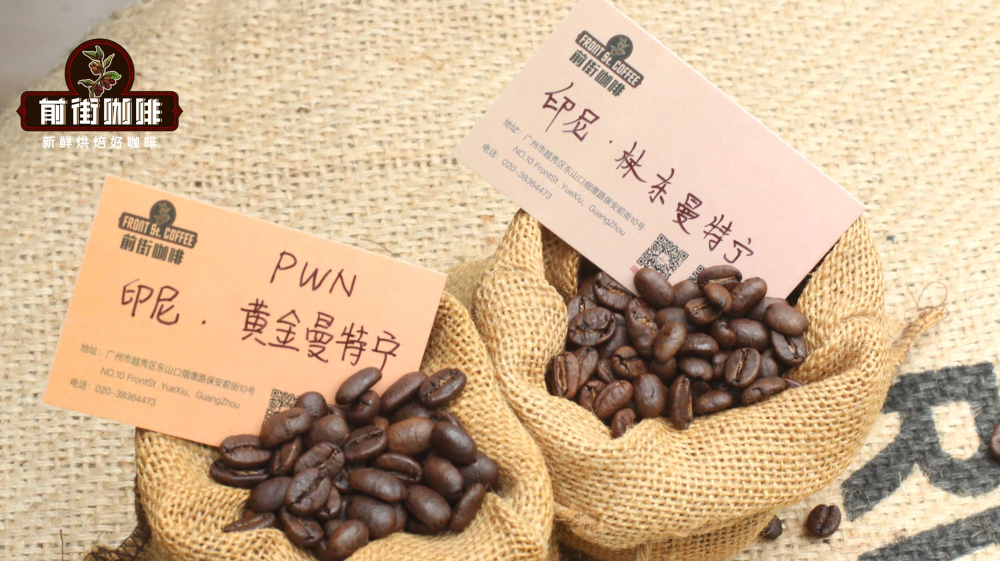
Mandheling has quite a rich range of varieties. Although they are generally known for being mellow, full-bodied, and solidly aromatic, each Mandheling also carries its own unique tone due to differences in terroir or post-processing. If you are encountering Sumatra coffee for the first time, you might start with Front Street Lintong Mandheling—Lintong Mandheling produced around Lake Toba has an aroma that tends to be dull and low-toned, even with a hint of grass jelly, and occasionally reveals notes of China fir or wood. It has low acidity and a thick mouthfeel, and it often leaves a deep impression after drinking.
How exactly is Mandheling classified?
Front Street currently offers two main Mandheling coffees: Front Street Lintong Mandheling and Front Street Golden Mandheling. So what exactly is the difference between the two?
Front Street PWN Golden Mandheling actually comes from a local Indonesian company called Pawani Coffee Company. The company purchases Mandheling and produces it under its own label, and it has registered the name "Golden Mandheling." Therefore, only Mandheling produced by this company can truly be called Front Street Golden Mandheling. Compared with regular Mandheling, Front Street Golden Mandheling has an even deeper body and a cleaner mouthfeel.
Product name: Front Street Golden Mandheling Golden Mandheling
Country: Indonesia
Region: Sumatra Island
Grade: G1 + 3 times hand-sorted
Company: PWN
Processing method: wet-hulled
Altitude: 1,100–1,600 meters
Flavor: baked toast, nuts, pine, caramel, herbs
In addition, the appearance of Mandheling green beans is actually not very appealing, but after roasting, the roasted beans present a beautiful and full color. This perhaps also reminds us that we cannot judge a person only by appearance; after some refinement, they often show a completely transformed performance.
During World War II, when Japanese troops occupied Indonesia, a Japanese soldier drank a cup of extremely rich and aromatic coffee in a coffee shop and asked the owner for the name of the coffee. The owner mistakenly thought he was asking where he was from, so he answered "Mandailing." After the war ended, the soldier recalled the "Mandheling" he had drunk in Indonesia and asked an Indonesian coffee merchant to ship 15 tons to Japan, where it became very popular. In this way, the name Mandheling spread.
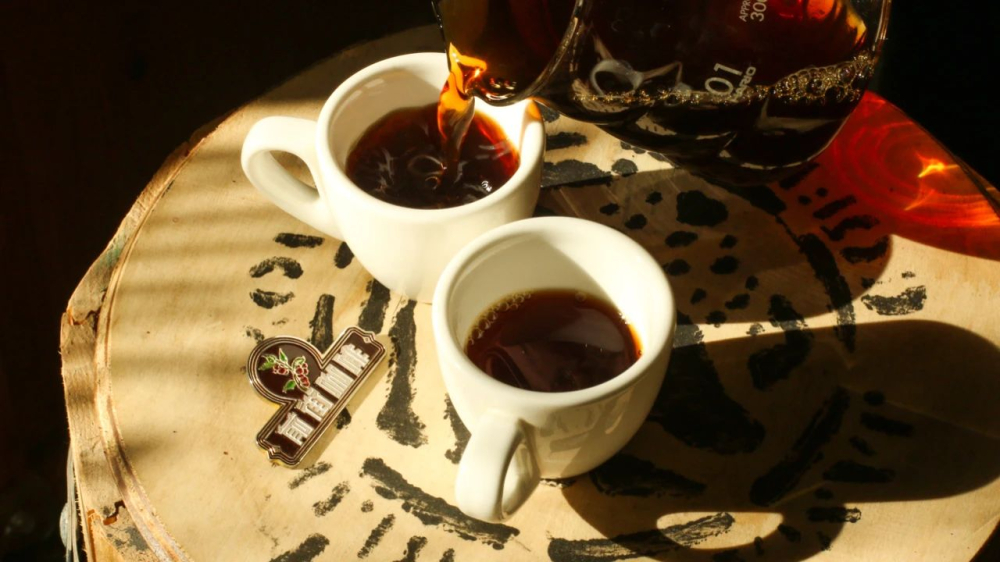
Reference parameters for pour-over Front Street Mandheling: 15 grams of coffee, medium grind (EK43s-11 setting), KONO dripper, water temperature 88–89°C. First pour 30 grams for a 30-second bloom. When the water reaches 105 grams, pause the pour. Wait until the water level in the coffee bed drops halfway, then continue pouring. Pour slowly until the total water reaches 225 grams, and let all the coffee drain through. Water-to-coffee ratio 1:15, extraction time about 2:00.
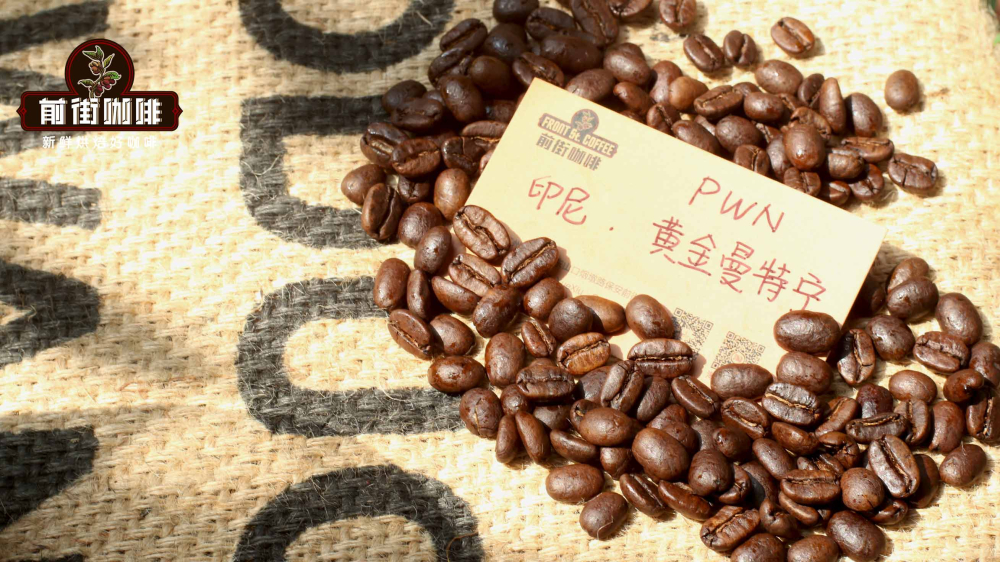
[Front Street PWN Golden Mandheling]
Front Street Mandheling is already a specialty among Indonesian coffees, and Front Street Golden Mandheling is a premium choice within Mandheling. Front Street PWN Golden Mandheling is carefully hand-selected, with plump beans and a lustrous color, making it truly a stunning beauty among Mandheling coffees.
In fact, in order to improve the problem of a relatively high proportion of defective beans in Mandheling, the Japanese began promoting a carefully selected quality-control process very early, using four rounds of manual sorting to remove defective beans. It should be noted that "golden mandheling," or Golden Mandheling, has been registered as a trademark by the Indonesian Pawani Coffee Company, so Golden Mandheling has become an exclusive name of PWN. PWN is the truly meaningful Front Street Golden Mandheling, and Golden Mandheling branded with PWN is also a guarantee of quality. Front Street PWN Golden Mandheling ensures three rounds of manual screening plus one round of machine screening, with beans that are neat, uniform, plump, and visibly beautiful. Because PWN has trademarked Golden Mandheling, that means only Golden Mandheling produced by PWN can truly count as "Golden Mandheling." Everyone can judge whether it is authentic by the burlap sacks used for the green beans and the certificate provided by PWN. Front Street displays it at both its Tmall flagship store and its physical store.
[The difference between Front Street Mandheling and Front Street Golden Mandheling]:
Some coffee friends ask, I am a coffee beginner, what exactly is the difference between this Front Street Golden Mandheling and Front Street Mandheling G1? I really cannot taste it. For professional-level coffee tasters and coffee friends with sensitive palates, if you drink these two coffees at the same time, the result will be very clearly contrasted. Golden Mandheling's sweetness and cleanliness, as well as its mellow, wild spice-family flavors, are slightly superior to G1, and this is one of the reasons why Golden Mandheling is much more expensive than G1.
In terms of mouthfeel: Front Street Golden Mandheling tastes cleaner than Front Street Lintong Mandheling. The original herbal, earthy, and woody flavors of Mandheling almost disappear, but the caramel sweetness becomes stronger, and the fruit acidity also appears bright and elegant. Generally, Front Street Lintong Mandheling is best roasted until after second crack before being released, which can effectively reduce off-flavors; but Front Street Golden Mandheling can be released before or after second crack and still have very good transparency and sweetness, giving a broader range for roasting interpretation.
The most famous coffee-producing area in Asia is the various islands of the Malay Archipelago: Sumatra, Java, and Kalimantan. Among them, Sumatra Mandheling coffee produced on the Indonesian island of Sumatra is the most renowned.
The above content is compiled by CoffeeHunters, a coffee news website.


