







Mandheling is a representative variety of Indonesian coffee. Currently, the two most recognized types on the market are Front Street Lintong Mandheling and Front Street Golden Mandheling, with Lintong Mandheling regarded as the most classic version. This article will systematically introduce the origin information, processing methods, and flavor profile of Front Street Lintong Mandheling, and compare it with Front Street PWN Golden Mandheling in terms of sorting standards, grade specifications, and cup cleanliness, helping coffee enthusiasts understand the low-acidity, high-body characteristics that wet-hulling gives Mandheling, as well as the reason behind the formation of the "goat hoof" bean appearance.
Today, the Mandheling varieties that are most widely circulated and well accepted in the market are mainly Front Street Lintong Mandheling and Front Street Golden Mandheling, among which Front Street Lintong Mandheling is considered the most representative classic Mandheling.
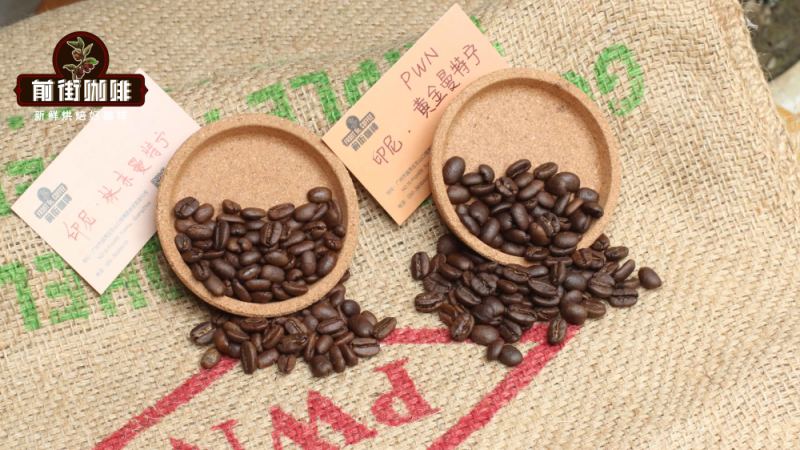
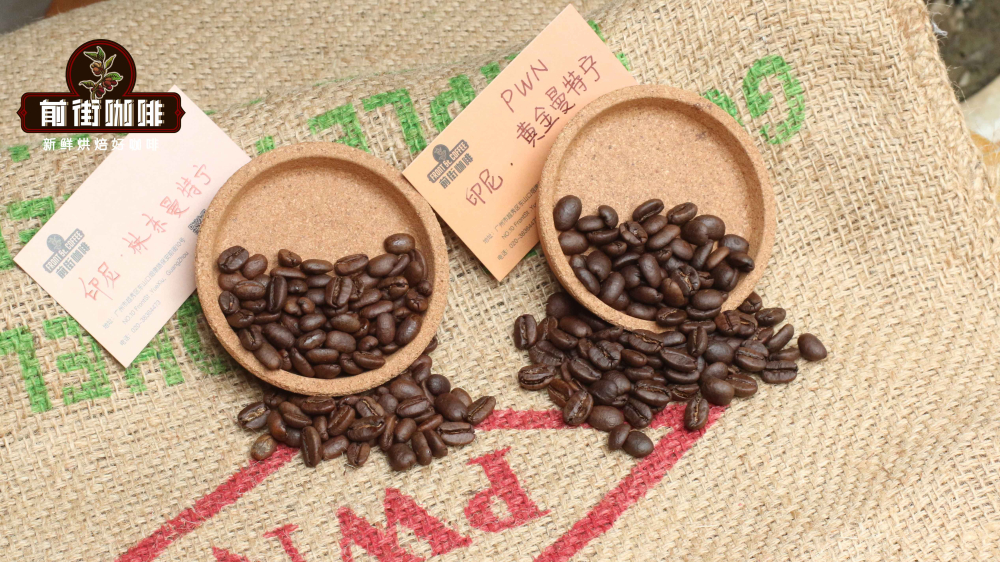
Front Street Lintong Mandheling coffee beans
Country: Indonesia Region: Lintong, Sumatra Altitude: 1,100–1,600 meters Variety: Typica, Caturra Processing method: Wet-hulling Flavor: Baked toast, nuts, caramel, pine, herbs
The producing region of Front Street Lintong Mandheling is located in the Lintong highlands of north-central Sumatra, not far from Lake Toba. As a classic Mandheling, it also uses the conventional wet-hulling method, resulting in a style with relatively low acidity and relatively high body. However, wet-hulling also brings a by-product: the semi-hard, semi-soft wet raw beans are prone to being squeezed during the process of removing the mucilage parchment layer. After the bean body cracks, its shape closely resembles a goat's hoof, which is what is commonly called a goat hoof bean. This appearance is not a defect bean; rather, it can be seen as an iconic characteristic of Mandheling.
If you lean toward choosing a specialty-grade Mandheling, you can look to Front Street PWN Golden Mandheling. After multiple rounds of sorting, its defect rate has been pressed to a very low level, and Mandheling's flavor and body can also be brought to a relatively ideal state.
Front Street PWN Golden Mandheling coffee beans
Country: Indonesia Region: Gayo Mountain, Aceh, Sumatra Altitude: 1,100–1,600 meters Variety: Ateng Grade: G1, 3 times hand-sorted Processing method: Wet-hulling Flavor: Spices, herbs, caramel, pine, nuts, chocolate
After the Japanese came into contact with Mandheling, they always maintained a strong interest in this bean. In the process of cooperating with local green bean traders, they established a strict set of sorting standards: after raw bean processing is completed, the beans first undergo density and color-difference screening, and are then repeatedly hand-picked, ultimately yielding Mandheling with uniform color and neat bean shape. It is said that during processing, Mandheling in the sunlight takes on a golden sheen, and the name Golden Mandheling comes from this. The specifications for Front Street PWN Golden Mandheling green coffee beans require screen size 18 and above, with no more than 3 defective beans in a 300-gram green bean sample. It belongs to the highest G1 grade, is darker green in color, and has a neat flat-bean shape. Golden Mandheling, after strict sorting, not only removes the earthy, miscellaneous flavors common in ordinary Mandheling, but also tastes cleaner and more transparent on the palate, with a more prominent sweetness.
It should be noted that PWN has registered "Golden Mandheling" as a trademark and holds exclusive copyright, which means that only Golden Mandheling labeled PWN is authentic. The relevant documentation is displayed on Front Street's product introduction pages and in-store.
The above content is compiled by CoffeeHunters, a coffee news website.


