







Bourbon is one of the oldest coffee varieties in history, as renowned as Typica, but it is more often remembered by enthusiasts for its fruit skin colors such as red, yellow, and pink. This article, from the perspective of Front Street, traces Bourbon's naming on Réunion Island, its introduction to Brazil in the 19th century, and its spread to Central and South America. It explains the causes and cultivation differences of Red Bourbon, Yellow Bourbon, and Pink Bourbon, and uses the Queen's Farm Yellow Bourbon from Brazil and Front Street's South Minas Red Bourbon as examples to help you discover nutty, chocolatey, and creamy flavor profiles. At the end, it also includes Front Street's medium-dark roast pour-over parameters and three-stage pouring details for Queen's Farm, making it easy to replicate.
When discussing coffee varieties, two veteran names are unavoidable: one is Typica, and the other is Bourbon, which Front Street will elaborate on this time. Other varieties are often remembered for their flavor, yield, or price, but Bourbon often stands out for the color of its fruit—Yellow Bourbon, Pink Bourbon, and Orange Bourbon are all its branches. So, how exactly do these color differences arise? What flavor tendencies do different colors bring? Next, Front Street will explain it clearly step by step.
The Origin of the Bourbon Variety
In the 18th century, the French brought round coffee beans from Yemen to Réunion Island, which was then called Bourbon Island, and the name Bourbon comes from this. Afterwards, Bourbon took root on Réunion Island and gradually adapted to the local environment. Although it was introduced very early, it did not spread outward until the mid-19th century. In 1860, Bourbon was introduced to Brazil, and using Brazil as a springboard, it quickly spread to Central and South American countries, which still cultivate and produce Bourbon coffee beans today.
The Color Classification of Bourbon Varieties
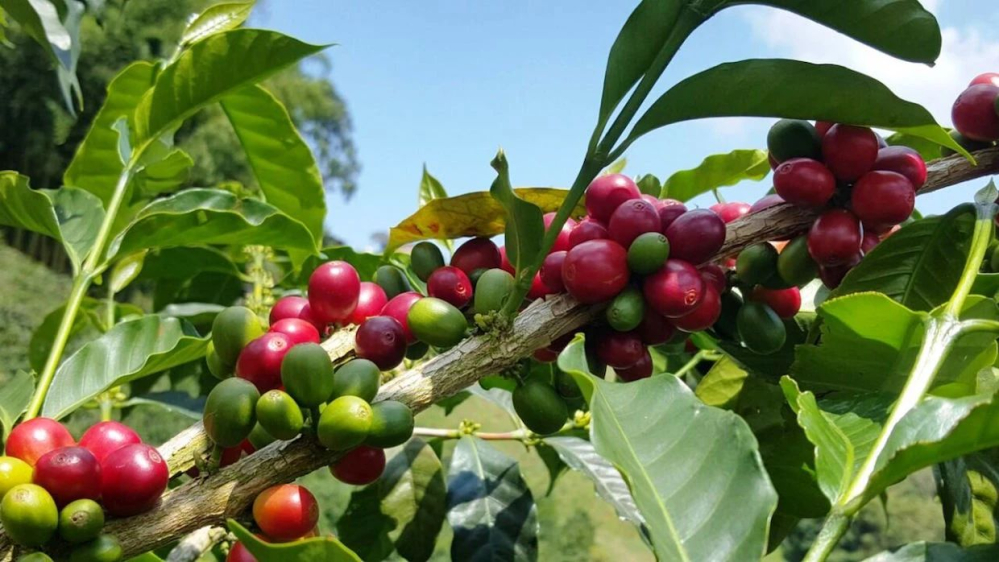
When mentioning Bourbon, many people first think of its color classifications, such as Red Bourbon, Yellow Bourbon, Pink Bourbon, etc. Red Bourbon is probably the most common type. Typically, coffee cherries gradually mature from unripe green, first turning light yellow, then orange, reaching their optimal picking state when red, and finally overripe when dark purple.
Trained pickers determine which coffee cherries to harvest on a given day based on fruit color—unripe cherries mean the beans have not accumulated enough nutrients and naturally struggle to develop fine flavors; overripe cherries are prone to excessive fermentation flavors. A Yirgacheffe from FrontStreet Coffee comes from the Red Cherry Project, which purchases coffee cherries harvested from fully red fruit at higher prices, improving both farmers' income and coffee bean quality, achieving a win-win situation.
Back to the main topic, Red Bourbon is named for its red fruit, and Yellow Bourbon and Pink Bourbon follow the same logic. Yellow Bourbon is generally considered to be a cross between Red Bourbon and other varieties, with yellow fruit when ripe. It was first discovered in Brazil, and Brazil is currently the main cultivating country for Yellow Bourbon. In addition to different fruit skin color, Yellow Bourbon also has lower yield and is not resistant to wind and rain, so it has not been widely cultivated.
Pink Bourbon is even rarer, obtained by crossing Red Bourbon and Yellow Bourbon. The reason for its rarity is that the pink fruit is determined by a recessive gene, which is easily disturbed, making it difficult to stably maintain the pink appearance.
What Does Bourbon Coffee Taste Like?
To find the taste of Bourbon coffee, FrontStreet Coffee believes you can start with Brazil. Although Bourbon spread to many producing countries in Central and South America, its shortcomings also destined it to be replaced: Bourbon and Typica, the two oldest Arabica varieties, both have low resistance to pests and diseases and low yield. Their only merit is probably their excellent cup quality. Therefore, many Central and South American countries prefer to cultivate Caturra, a natural mutation of Bourbon, and other more disease-resistant and higher-yielding varieties.
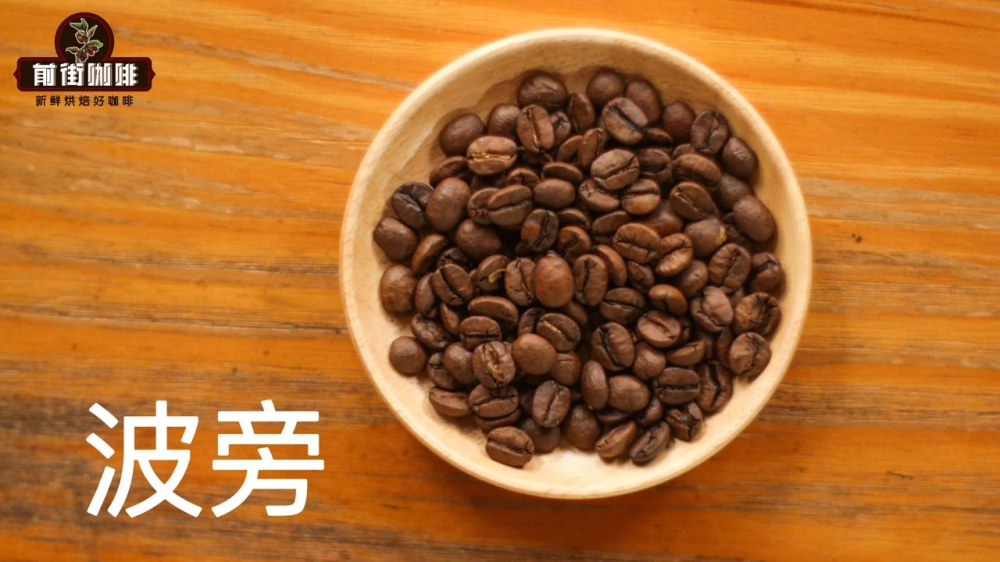
Brazilian Yellow Bourbon coffee comes from Queen's Farm in the Mogiana region, using natural processing, and we can taste obvious nutty notes, creaminess, etc. In addition to Queen's Farm's Yellow Bourbon, FrontStreet Coffee also has a Red Bourbon coffee bean from the South Minas region, processed with semi-washed method, which tastes with nutty and chocolate notes, accompanied by a caramel aftertaste. Comparing these two Brazilian Bourbon coffees, it is easy to find that the base notes of Bourbon varieties are mostly nutty, etc., and the obvious sweetness is also very appealing.
Front Street Queen's Farm Coffee Pour-Over Reference
Front Street aims to highlight the classic regional flavor of Queen's Farm, namely the rich chocolate aroma, so a medium-dark roast is used. Through cupping, Front Street tasted that this Queen's Farm coffee has a very obvious sweetness, so a three-stage pouring method is used in brewing, hoping to present more layers.
Dripper: Medium-dark roasted coffee beans mainly present a rich and rounded mouthfeel. For this characteristic, Front Street will choose the slower-flow KONO dripper for extraction. The upper part of the KONO is a smooth curve, and the lower part is one-third length of guiding ribs, which allows the filter paper to fit the dripper more closely, restricting airflow upward, so hot water can only flow downward, forming a siphon extraction effect, allowing the coffee powder's aromatic substances to be released more fully.
Grind size: Considering the darker roast, the coffee bean texture becomes looser, and after grinding into powder, it easily absorbs more water and releases more soluble substances, easily bringing out unpleasant woody and other miscellaneous bitter flavors. FrontStreet Coffee baristas will adjust the grind size coarser, making the coffee powder particles larger, reducing over-extraction. Here, a medium grind is used (70-75% passing rate on Chinese standard No. 20 sieve).
Water temperature: When brewing light to medium roasted coffee beans, Front Street will use a higher water temperature to release the aromatic substances of high-density coffee beans. For medium-dark roasted Brazilian coffee, due to longer caramelization reactions, if the same high-temperature hot water is used, the coffee easily presents a strong and burnt bitter taste. Appropriately lowering the water temperature can help reduce a certain degree of bitterness. Front Street will use 87-88°C water temperature.
Coffee powder absorbs about twice its weight in water. Front Street generally uses 15 grams of coffee powder, with a 1:15 powder-to-water ratio for extraction, finally extracting nearly 200ml of coffee liquid, which is 1-2 servings.
Dripper: KONO dripper
Water temperature: 87-88°C
Coffee powder amount: 15 grams
Powder-to-water ratio: 1:15
Grind size: Medium grind (70% passing rate on Chinese standard No. 20 sieve)
Use twice the amount of water as coffee powder to wet the coffee bed, forming a dome and blooming for 30s, then pour in a small stream in a circular motion from inside to outside until 125g, pause, wait for the coffee bed to drop to half the dripper's height, continue pouring the same fine stream for the third stage to 225g, until all coffee liquid is filtered, then remove the dripper. The time is about 2 minutes.
The pour-over Brazilian Queen's Farm coffee smells of lemon, nuts, and peanuts. On the palate, it is very rich with nutty, dark chocolate, and caramel flavors, with obvious sweetness and a creamy smooth mouthfeel, overall quite rounded.
The above content is compiled by CoffeeHunters, a coffee news website.


