







How does Huila coffee taste and how should it be brewed?
Huila coffee comes from the Huila Department in southern Colombia's Central Cordillera, the country's most recognized specialty origin. It combines nutty aromas with bright fruit acidity and strong balance, making it a clear representative of Colombian specialty coffee and a practical starting point for drinkers new to single-origin beans.
Coffee there grows at altitudes generally above 1,500 meters, which supports high-quality arabica bean development. The washed processing and green bean grading system shape the clean cup, and a medium-dark roast suits pour-over brewing, where the balance of nut and fruit notes is easiest to follow.
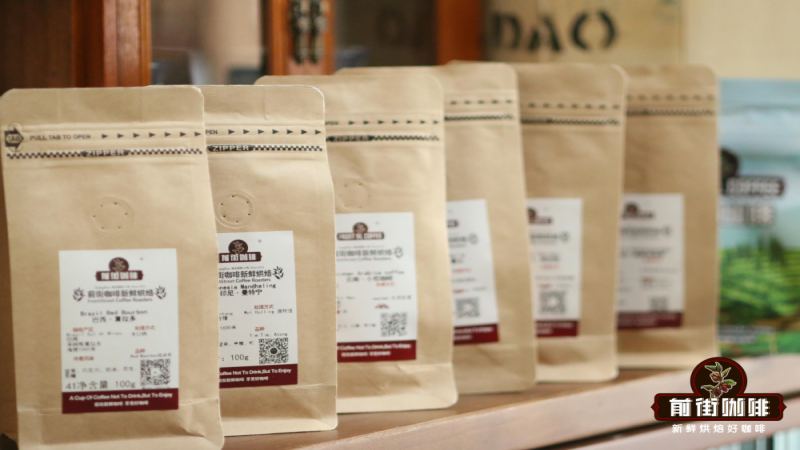
For friends who are new to specialty coffee, choosing a suitable everyday bean is often a challenge. The Front Street everyday bean series selects seven classic origins, presenting the flavor profile of each region at an affordable price, helping beginners identify their coffee preferences. This article focuses on the Colombia Huila region, detailing its geographical environment, washed processing method, green bean grading system, and offering Front Street's medium-dark roast pour-over recommendations. Huila coffee combines nutty aromas with bright fruit acidity and excellent balance, making it a representative of Colombia's top specialty coffee. Through this article, we hope more coffee lovers will discover the unique charm and brewing points of Huila coffee.
Friends who have just stepped into the coffee world have asked Front Street which specialty coffee bean is suitable for beginners. Front Street has always believed that the core of "specialty" lies in whether one can taste the unique high-quality flavor of a certain origin. Rather than spending a lot of money on classic single-origin coffees, Front Street recommends beginners start with the small-package "everyday bean series."
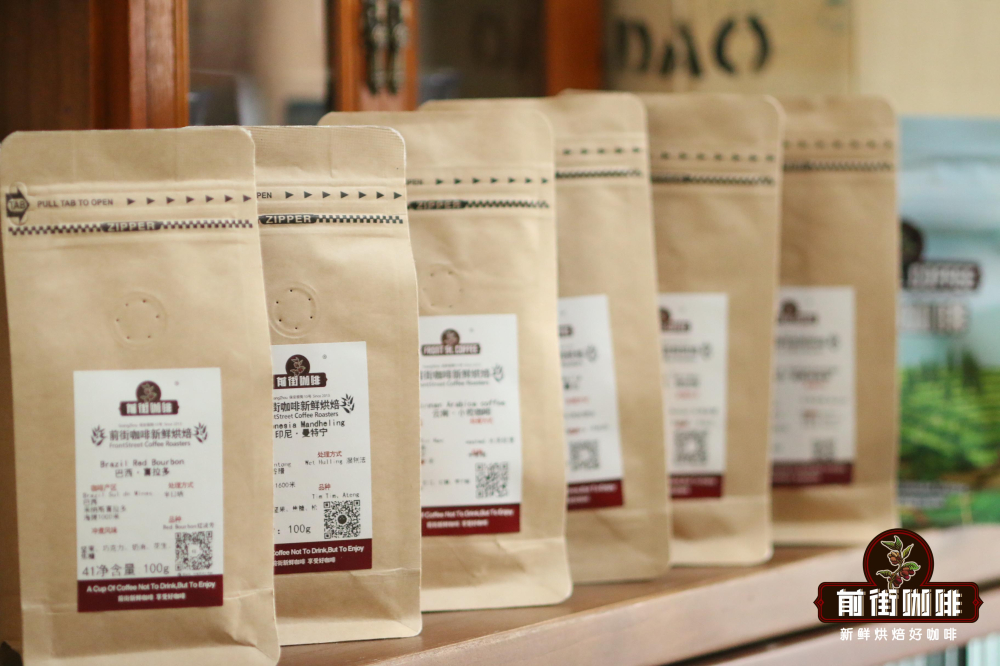
The Front Street everyday bean series covers 7 classic origins, encompassing multiple representative regions, varieties, and natural processing methods, specifically including: Ethiopia washed Yirgacheffe, Guatemala washed Huehuetenango, Colombia washed Huila, Brazil semi-washed Cerrado, Costa Rica washed Tarrazu, Indonesia wet-hulled Lintong Mandheling, and China Yunnan washed Baoshan. This series allows consumers to experience the flavor directions of different origins at an accessible price, thereby finding their preferred coffee type. It is a product line with outstanding value for money under Front Street. Today Front Street will talk about the Huila everyday bean from Colombia.
Introduction to the Huila Region
The Huila Department is located in the southern section of Colombia's Central Cordillera, and is the country's most renowned specialty coffee origin. Here, mountains stretch endlessly and hills roll on, with coffee cultivation altitudes generally above 1,500 meters, providing the high altitude and suitable temperatures needed to grow high-quality Arabica beans. Fertile soil plus unique geographical conditions for coffee cultivation—Colombia's most important rivers happen to converge here, bringing abundant water resources and moisture to the area. The canyon slope terrain prevents cold winds from intruding, while mountain breezes keep things cool without causing high temperatures. Combined with abundant rainfall, it is truly a coffee-growing land especially favored by nature.
According to FNC (Colombian Coffee Growers Federation) statistics, coffee production in the Huila region accounts for about 18% of Colombia's total national production, and in 2013 it obtained official designation of origin certification. Front Street believes that Huila coffee is widely favored not only because of its considerable production, but more importantly due to its solid quality and good reputation. Coffee lots from local farms have won Cup of Excellence awards multiple times, and many roasters, baristas, and cafes are happy to recommend Huila beans as a priority. This is because Huila coffee possesses both full nutty aromas and bright, pleasant fruit acidity, with excellent balance, and is recognized as the benchmark product of Colombia's top specialty coffee.
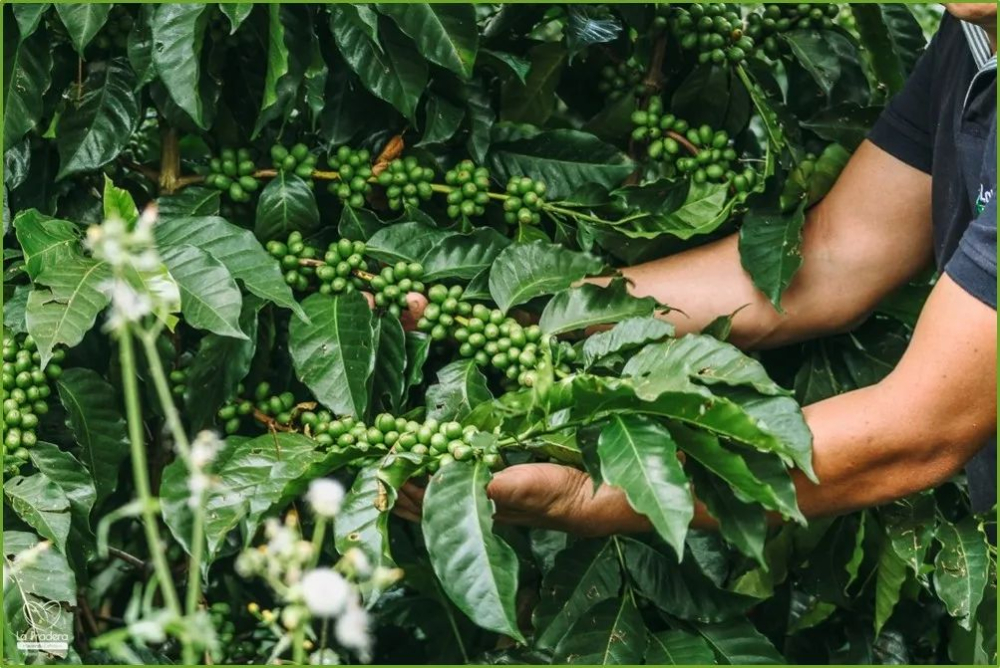
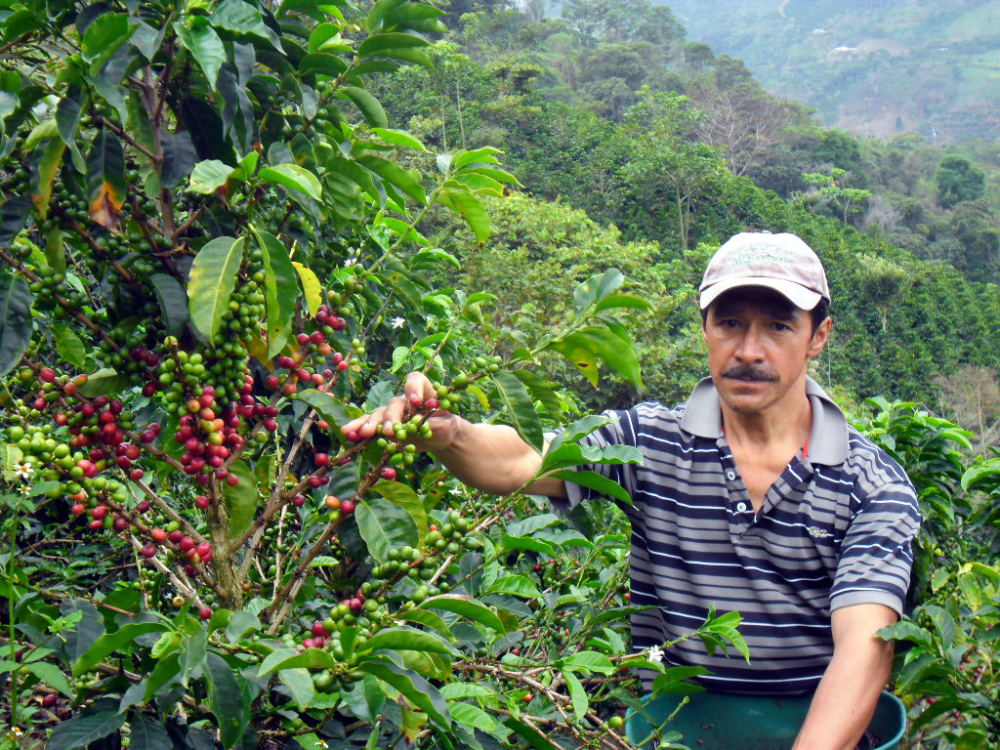
Unlike neighboring Brazil's model oriented toward large-scale mass production, Colombia is dominated by smallholder farming, with an average farm size of only about 1.5 hectares. During the harvest season, growers rely entirely on hand-picking coffee cherries one by one, selecting only the most mature and plump fruits, then delivering the fresh cherries to the processing stage in the shortest possible time.
Washed Processing Method
On Front Street's bean list, Colombian coffees include not only the washed Huila beans but also several Colombian coffees with special processing methods. These novel processing methods bring richer aromas and sweetness to the coffee and have won the favor of many enthusiasts. However, most farmers in the Huila region still adhere to the traditional washed process. In their view, the washing step can greatly reduce the defect rate of coffee beans, preserve the beans' own flavor, and present higher cleanliness.
Colombia's coffee regions are rich in water resources, making them very suitable for washed processing. Family-based farms usually have dedicated green bean processing machines (Ecomill or Eco-Pulper). After pouring the harvested coffee cherries into the machine, it not only removes the skin and pulp, but also removes most of the mucilage with only a very small amount of water. The parchment beans with a small amount of residual mucilage are then placed into a small tank or container—possibly a tiled tank—and left to ferment overnight, allowing the residual mucilage to loosen naturally. The next day they are rinsed clean with fresh water, and finally spread out in the sun to dry to the target moisture content.
Colombian Coffee Grading
Before export, Colombian green coffee beans are graded according to screen size, usually using fixed-size screens, with different specifications corresponding to different aperture sizes. For example, when the screen aperture is 17 mesh, beans larger than that size cannot pass through, so the larger the screen number, the larger the beans retained on the screen. The most common export grades are UGQ, EP, and Supremo.
Regardless of which screen size level the green beans fall into, as long as they are for export they are all classified as Excelso grade. In other words, most burlap sacks of Colombian green coffee beans exported around the world today must be labeled with the word Excelso. The Excelso export grade is currently the most widely used export standard adopted by FNC, and is also the optimal grade for Colombian green bean exports. Excelso grade coffee must meet the following conditions: in 500 grams of green beans, the size must be above 14 mesh, with no more than 5% of green beans allowed between 12 and 14 mesh, and overall at least 50% of the green beans must be larger than 15 mesh; free of insect damage, uniform in color, free of off-flavors, and clean in flavor; moisture content must not exceed 12.5%, and cumulative defects must not exceed 24 points.
Each farmer reports a number and enters green bean information for future green bean traceability. The names of Colombian exported green coffee beans are usually formatted as country + region + grade + other information. For example, the full green bean name of Front Street's Huila everyday bean is Colombia Huila Supremo SC17/18 FNC.
Front Street's Colombian Coffee Pour-Over Recommendations
The washed Huila everyday bean has both soft acidity and moderate body and sweet aftertaste. To present the classic Colombian nutty profile while retaining some acidity, Front Street chose a medium-dark roast. Before launching any coffee bean, Front Street conducts at least one cupping evaluation, as cupping helps us more objectively showcase the coffee's strengths and weaknesses. Front Street's flavor descriptions for each coffee in cupping are based on freshly roasted beans. If the coffee beans have been stored for more than a month, the aroma has likely partially dissipated and is hard to reproduce during brewing. Front Street deeply understands the importance of freshness, so we only ship coffee beans freshly roasted within 5 days, ensuring you can enjoy the most complete flavor window upon receipt.
Considering that the Huila everyday bean uses a medium-dark roast with a flavor profile leaning toward the rich, full-bodied notes of nuts and chocolate, the deeper roast makes the coffee beans more porous and the coffee grounds more absorbent. To avoid over-extracting unwanted flavors, Front Street chooses a medium grind size. For water temperature, Front Street will appropriately lower the temperature to prevent the medium-dark roasted coffee from producing excessive burnt bitterness, and pairs it with a KONO dripper for extraction.
Dripper: KONO dripper
Water temperature: 88°C
Coffee-to-water ratio: 1:15
Coffee grounds: 15g
Grind size: EK43s - setting 10.5 (75% pass rate through No. 20 standard sieve)
Pour the coffee grounds into the KONO dripper, wet the coffee bed with twice the amount of water to form a dome and bloom for 30s, then pour in a small stream in circles from inside to outside until reaching 125g, then pause. Wait until the coffee bed drops to half the height of the dripper, continue pouring the third stage with the same fine stream until 225g, until all the coffee liquid has filtered through, then remove the dripper. Total time is about 2 minutes.
This Colombian Huila everyday coffee bean has obvious roasted aromas of chocolate, nuts, and caramel on the palate, smooth and sweet, with moderate body and a clean mouthfeel. As the temperature drops, pleasant soft acidity can be felt.
For professional coffee knowledge exchange and more coffee bean information, please follow Coffee Workshop (WeChat public account: cafe_style)
For more specialty coffee beans, please add the private WeChat of Front Street Coffee (FrontStreet Coffee), WeChat ID: qjcoffeex
The above content is compiled by CoffeeHunters, a coffee news website.


