







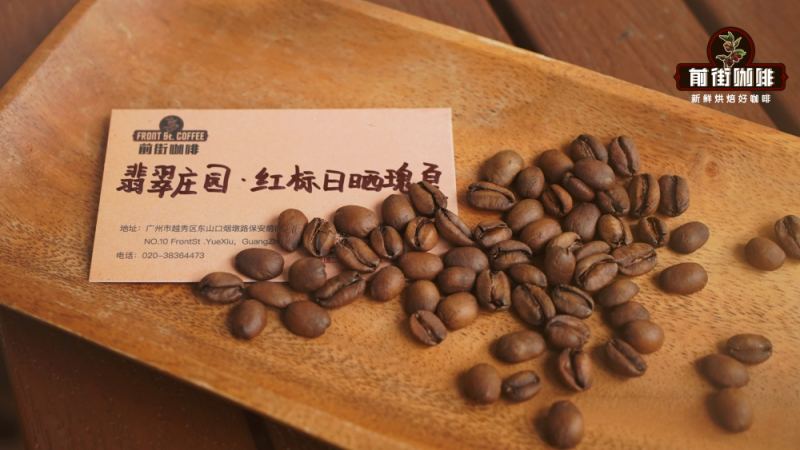
Geisha is hailed as the champion among coffee varieties, and the Geisha produced by Panama's Hacienda La Esmeralda is the benchmark among them. This article focuses on Front Street's Emerald Red Label and Green Label Geisha, sorting out the differences between the two in terms of origin, auction attributes, pricing positioning, and flavor performance, to help coffee enthusiasts make a choice based on their own needs. At the same time, the article provides a detailed introduction to Front Street Geisha's medium-light roast approach, methods for judging grind size, and the pour-over extraction parameters and three-stage pouring steps for Emerald Green Label, offering actionable reference for readers who want to recreate the classic Geisha flavor at home.
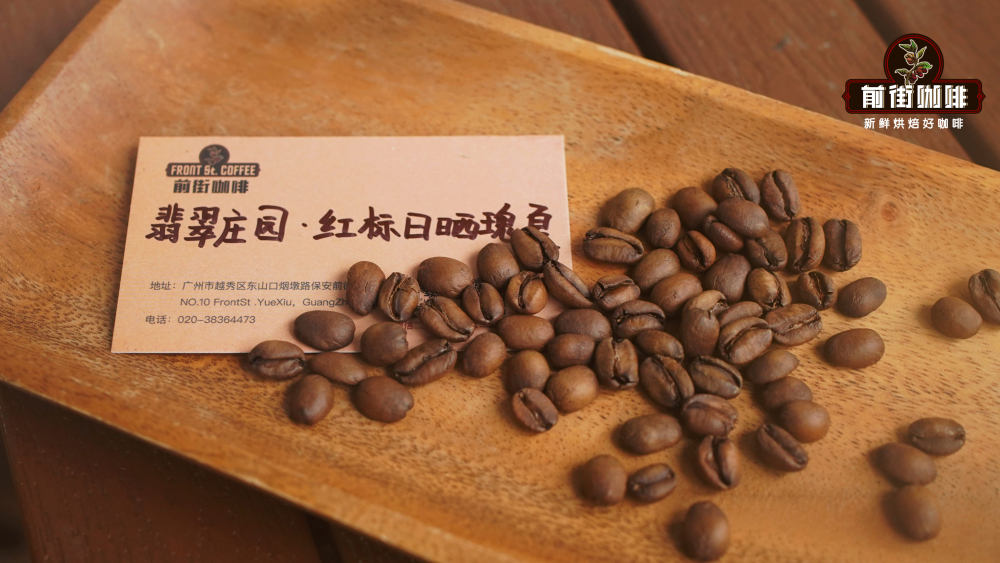
The leaves of the Geisha coffee plant are slender and elegant. It has a full-bodied sweetness on the palate, extremely high cleanliness, and an aroma that extends from berries and citrus all the way to mango, papaya, and peach, with a distinct bergamot note in the finish—this is also its signature characteristic in cupping. This variety has repeatedly won championships in coffee competitions. Cupping evaluations typically describe it as having medium body, pronounced sweetness, rich layers of tropical fruit flavors, and a rose-like aromatic aftertaste.
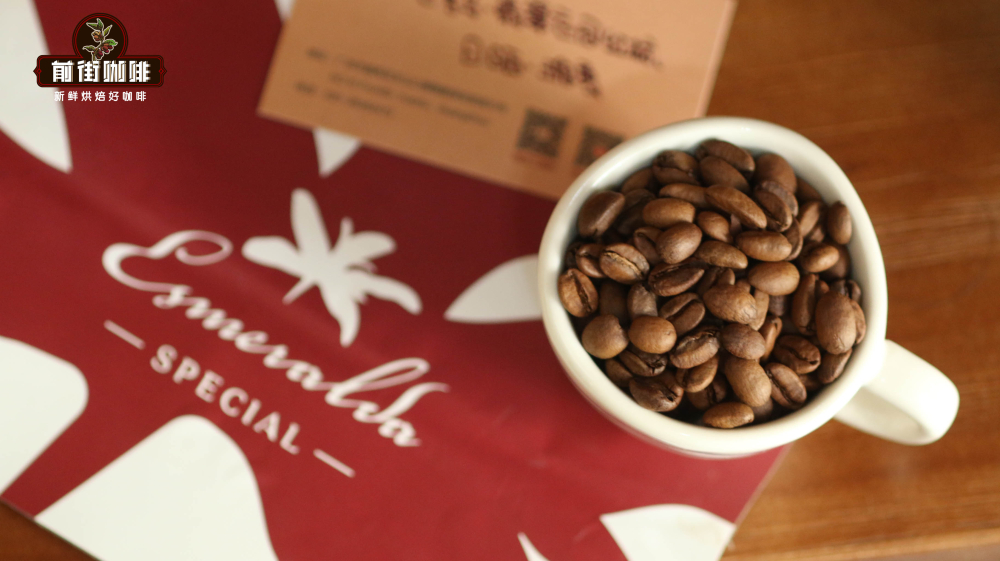
Front Street Emerald Red Label Geisha Geisha from the Emerald Special Selection, commonly known as Red Label. Grown at altitudes between 1,600 and 1,800 meters, with a cupping score of 90 or above. The beans come from two production areas: Jaramillo and Cañas Verdess.
In the independent auction held by Hacienda La Esmeralda itself, only the Geisha lots selected from designated plots to participate in the auction qualify as auction Red Label. Customers often ask whether auction Red Label or non-auction Red Label tastes better. In fact, both come from the same plot, and the only difference is whether they participate in the auction. FrontStreet Coffee feels there is no need to insist on chasing the auction level: first, the price is indeed on the high side; second, if you just want to try it, Red Label is already a very suitable choice. Geisha at this grade is processed either naturally or washed, presenting a distinctive and bright floral and citrus profile.
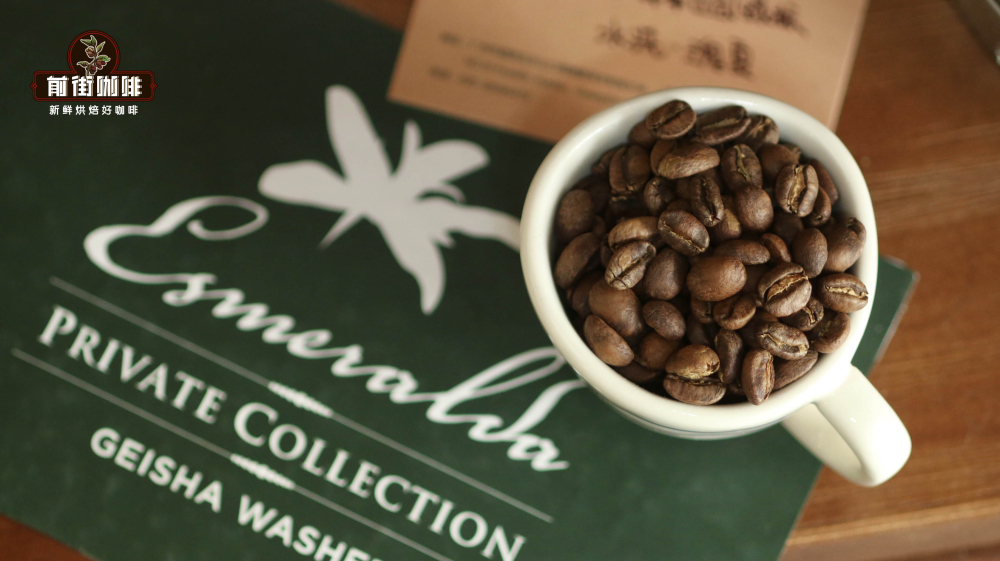
Front Street Emerald Green Label Geisha Private Collection series, commonly known as Green Label. It belongs to lots that do not participate in the independent competition—Geisha varieties that are not entered into auctions after cultivation but are still excellent in quality. Grown at altitudes between 1,600 and 1,800 meters, it is a blend of micro-lots from different plots such as Jaramillo and Cañas Verdess.
Front Street Emerald Red Label Geisha can be traced back to the specific small plot where it was grown, while Front Street Emerald Green Label cannot be traced to its source because it uses a blended-bean model. Since it is a blend and the plots are not labeled in detail, sometimes Green Label and Red Label can be quite similar in flavor. In terms of price, Red Label is nearly twice that of Green Label. Therefore, friends trying a high-end Geisha for the first time can choose Front Street Emerald Green Label Geisha; if it is for gifting or for more advanced enthusiasts, Front Street Emerald Red Label Geisha is more recommended.
Hacienda La Esmeralda Geisha roast level, grind size, and flavor description
Front Street believes that to present the classic "Geisha flavor," it is necessary to retain more floral aroma and acidity while moderately highlighting a roasted sweet potato-like honeyed sweetness. Therefore, Front Street Emerald Geisha coffee beans are all given a medium-light roast, with the roast curve adjusted accordingly for different processing methods and flavor differences.
At this roast level, the hardness of high-altitude beans has not been significantly altered, so a higher extraction rate is needed during brewing to reveal fuller flavor layers. Here, a higher water temperature is used to activate more aromatic substances; in addition, because Front Street wants the Geisha flavor to come through more clearly, the coffee-to-water ratio is appropriately widened to 1:16.
Front Street takes into account that these Geisha beans are all light-roasted, and the dissolution rate of coffee substances in light-roasted beans is lower than in dark-roasted beans. To ensure the Geisha flavor is fully extracted, a higher water temperature is used for brewing, along with a finer grind size. There are three ways to judge the grind size for Geisha coffee: first, visually check whether it is close to fine granulated sugar; second, use a sieve to shake the particles until 80% pass through; third, judge by time—if it exceeds 2 minutes 20 seconds, the grind is too fine, causing the water flow to be too slow; if it is shorter than 1 minute 50 seconds, the grind is too coarse and the water flow is too fast.
Pour-over recommendations for Emerald Green Label Geisha coffee:
Dripper: V60
Water temperature: 91-92°C
Dose: 15g
Coffee-to-water ratio: 1:16
Grind size: fine granulated sugar size (20-mesh sieve bowl, sift to 80% passing)
Three-stage extraction: First, pour 15 grams of coffee grounds into the dripper and tare the weight. In the first stage, pour 30g of water for a 30-second bloom while starting the timer. Throughout, pour in a small stream from the center point and spiral outward, making sure to wet the entire coffee bed.
In the second stage, begin pouring 120g of water with a slightly stronger stream. The purpose is to lift the entire coffee bed. The water column should be poured vertically and evenly. At this point the scale shows 150g, and pouring is completed at around 55 seconds.
When the liquid level drops to the halfway point, begin the third stage, pouring 90 grams in a small stream in a tight spiral. Try to control the stream so it does not spiral too widely, as this can easily disturb the coffee bed and cause under-extraction. The final total water amount is 240 grams, and the drip finish time is about 2 minutes 10 seconds. After removing the dripper, swirl the coffee liquid in the server to mix it evenly, and it is ready to taste.
The above content is compiled by CoffeeHunters, a coffee news website.


