







Costa Rican coffee stands out among American coffees for its balanced and mild style, harmonizing acidity, sweetness, bitterness, and aroma, making it suitable for all kinds of taste preferences. Among them, the Tarrazú region, as the country's most renowned specialty coffee origin, has high altitude and fertile soil, and its coffees have repeatedly won favor in COE competitions. This article will systematically review the flavor formation of Costa Rican Tarrazú coffee from aspects such as growing environment, distribution of the eight major producing regions, main varieties (Bourbon, Caturra, Catuai), and the washed processing flow, and will also include Front Street Coffee's brewing parameters and flavor descriptions of several single-origin coffees, providing coffee lovers with a complete reference on origin knowledge.
The overall performance of coffees from American origins has always been known for balance, and Costa Rica is an especially reliable representative among them. It does not have the sharp personality of Guatemala, nor the clear brightness of Ethiopia, and it is even less like the pine and herbal notes commonly found in Indonesian coffee. On the palate, acidity, sweetness, and chocolate-like bitterness blend with one another, soft and smooth, with extremely high balance, making it a model of classic coffee flavor. If you are not very comfortable with coffee that is too acidic or too bitter, Costa Rica will be a quite friendly choice.
FrontStreet Coffee currently offers several Costa Rican single-origin beans, among which Costa Rica Tarrazú coffee is one of Front Street's daily beans and also represents the typical profile of the country's coffee flavor.
Costa Rica's coffee growing conditions
Coffee was introduced to Costa Rica from Cuba in 1729. Since then, the country's coffee industry has developed into one of the more highly organized industrial systems in the world, with yields reaching 1,700 kilograms per hectare. Costa Rica's national population is only 3.5 million, yet the number of coffee trees reaches 400 million, and coffee export earnings account for 25% of the country's total exports. Most coffee-growing areas are located above 1,500 meters in altitude. High altitude helps increase the acidity of coffee beans while slowing the growth rate of coffee trees, thereby making the flavor more concentrated and full. Just as the case of Panama Geisha reveals: the harsher the growing environment and the higher the altitude, the more outstanding the coffee's flavor expression often is.
Costa Rica's coffee producing regions
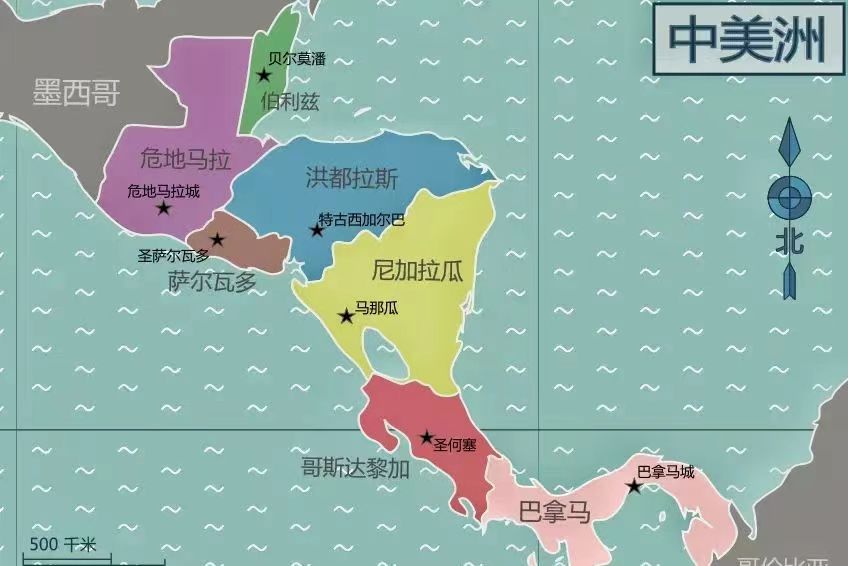
Because each producing region differs in altitude, climate, and soil conditions, coffee flavors also show their own regional characteristics. For this reason, Front Street has introduced multiple single-origin coffee beans for Costa Rica as a producing country. Among them, the highest-altitude Tarrazú region is also the most famous producing region, and FrontStreet Coffee's daily bean Costa Rica Tarrazú comes precisely from here.
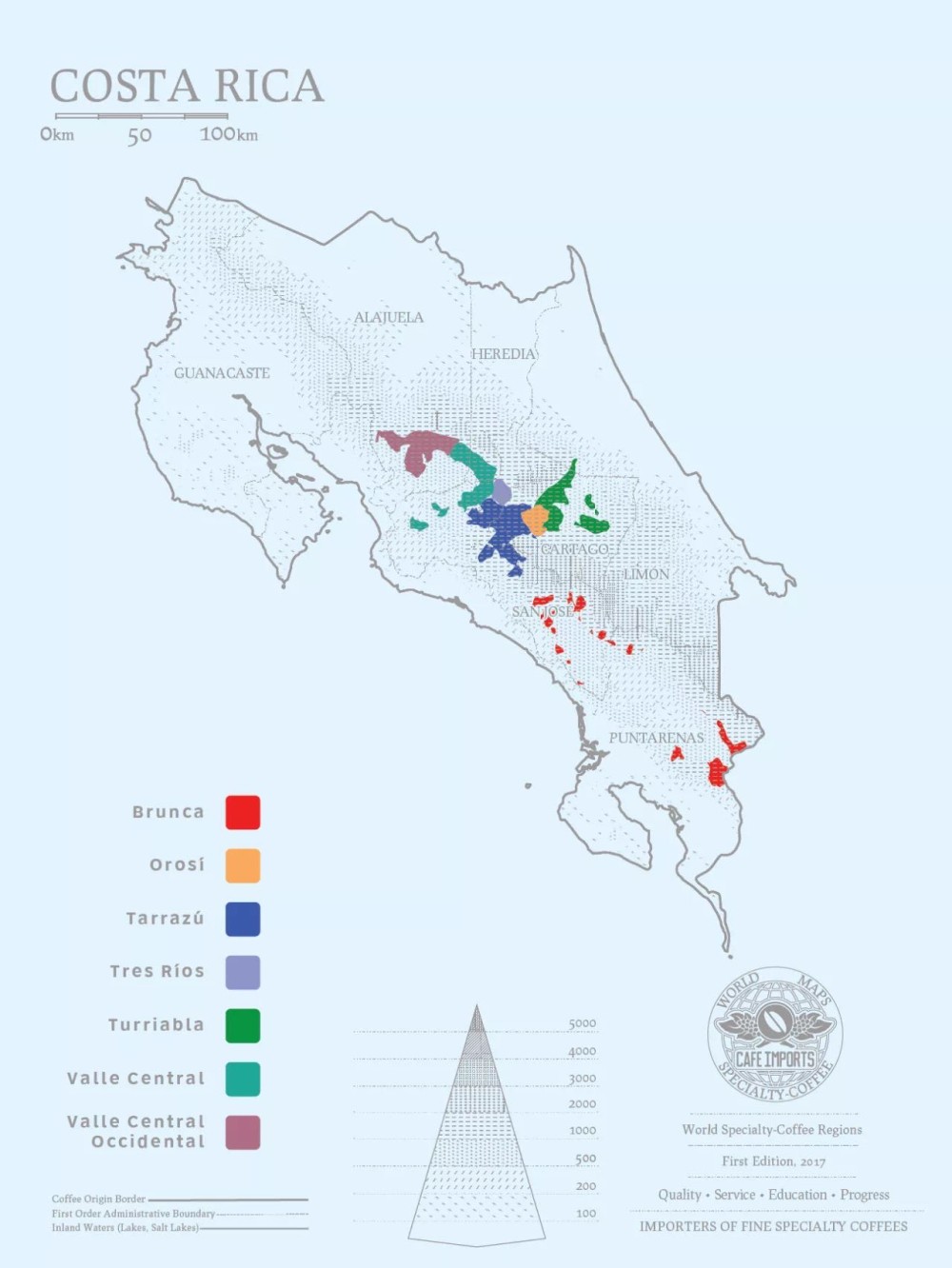
Costa Rica is divided into eight major coffee producing regions: Brunca, Turrialba, Tres Ríos, Orosi, Tarrazú, Valle Central, Valle Occidental, and Guanacaste.

Tarrazú enjoys an extremely high reputation in the specialty coffee world and is one of the important coffee origins globally. Of the 23 winning coffees in the 2014 COE competition, 17 came from the Tarrazú region. This producing region is located in Central America's fertile volcanic zone, with a humid climate, volcanic rock soil rich in nutrients, abundant rainfall year-round, high altitude, and natural shade provided by dense forests, creating extremely ideal conditions for coffee growing. No pesticides or artificial fertilizers are used during cultivation. Nearly 95% of the coffee beans produced in Tarrazú's high-altitude areas are Strictly Hard Bean (SHB), usually grown above 1,500 meters.
Varieties of Costa Rican coffee beans
The flavor characteristics of Costa Rican coffee are closely related to its variety choices. As is well known, Arabica is mostly used for specialty single-origin coffee, and its quality is superior to Robusta. Costa Rica's main cultivated varieties include Bourbon, Caturra, Catuai, Villa Sarchi, and Villalobos, among others.
Bourbon
Bourbon is a mutation produced after Typica was early transplanted to Yemen, and the bean shape also changed from slender and pointed to round and plump. In 1715, France transplanted the round-bodied beans of Yemen Mocha to Bourbon Island off the east coast of Africa (renamed Reunion Island after the French Revolution), and Bourbon got its name from this. Thereafter, round-bodied Bourbon beans were introduced to Brazil and Central and South America in 1727, and in 1732 were transplanted from England to Saint Helena (later the place where Napoleon was imprisoned). Bourbon remains to this day a frequent winner in cupping among American specialty coffees.
Caturra
Caturra is a natural mutation of the Arabica Bourbon variety, discovered in Brazil in 1937. Its tree is shorter than Bourbon. Although it inherits Bourbon's lineage and therefore has relatively weak disease resistance, its yield is higher than Bourbon's. Although discovered in Brazil, Caturra is not well suited to growing locally, so it was not widely promoted in Brazil. Instead, it became widely planted in Central and South America, with large-scale cultivation in countries such as Colombia, Costa Rica, and Nicaragua.
Catuai
Catuai is a hybrid offspring of Mundo Novo and Caturra and can be called a second-generation hybrid. It inherits Caturra's advantage of a shorter tree while making up for Caturra's shortcoming of fragile fruit—the fruit holds firmly and is not easily blown off by strong winds. Its shortcoming is that its overall flavor is slightly simpler than Caturra's. Catuai has red-fruit and yellow-fruit types, and the red-fruit variety has better flavor expression.
Processing methods of Costa Rican coffee beans
When mentioning Costa Rican coffee, most people may first think of honey processing and the rich sweetness and fruity notes this processing method brings. However, if you want to experience the most authentic aroma of high-quality Costa Rican coffee, Front Street believes that starting with washed processing is most appropriate.
According to records, Costa Rica first introduced the washed processing method in 1830; by 1905, nearly 200 washed processing plants had been built locally. Washed processing makes coffee quality more controllable and also promotes overall quality improvement. Washed processing requires removing the skin and pulp of the coffee fruit, then fermenting in water tanks to break down the pectin layer, followed by sun drying. Natural processing, by contrast, keeps the whole fruit and dries it directly, and only afterward removes the skin, pulp, and pectin. In comparison, washed coffee has a lower defect rate, which enabled Costa Rican coffee to maintain a sufficiently excellent quality standard at the time.
Washed processing flow
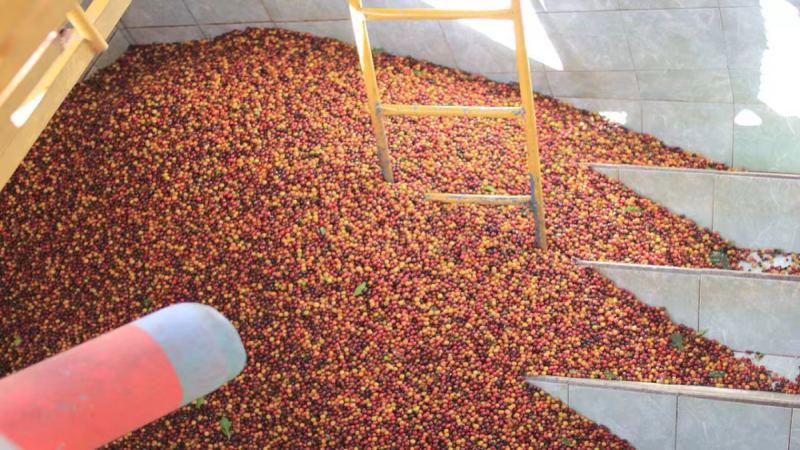
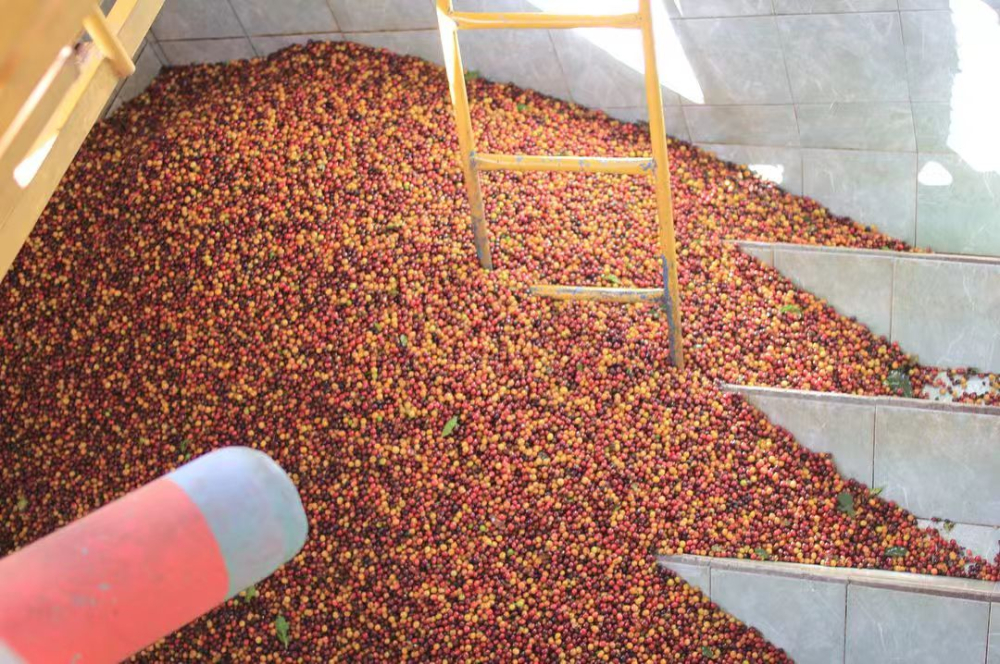
1. Harvesting. After ripe coffee fruits are picked, impurities and defective beans are first initially removed, and floating beans are screened out. This step is the same as in the natural method.
2. Pulping. Fresh fruits are sent into a pulping machine to remove the skin and pulp. Unripe fruits, because their pulp is not easily separated, are screened out at this stage. After passing through the pulping machine, what remains is pectin, parchment, and the seed.
3. Fermentation to remove pectin. The seeds with pectin still attached after pulping are moved into fermentation tanks. Although it is called the washed method, in reality the pectin is not directly washed away, but removed through biological decomposition during fermentation. Fermentation lasts about 16 to 36 hours, during which frequent stirring is needed to accelerate the separation of pectin from the seeds. Washed fermentation produces acidic substances such as citric acid, malic acid, and acetic acid, and these acids penetrate the green beans, making washed beans more acidic than natural beans. Only after fermentation is complete is the actual washing carried out—rinsing the beans clean once more.
4. Drying. After washing is completed, sun drying or machine drying is likewise required to reduce moisture content to 12%. Because the pulp has already been removed, the washed method does not need to worry about mold during the drying stage as the natural method does. The dried parchment green beans are also not as hard as the beans in the natural method that still contain pulp and skin, and can be hulled to obtain green beans.
Front Street believes that compared with the clean and tranquil character of washed processing, honey-processed coffee has higher sweetness on the palate, richer sugar content, and relatively stronger body.
FrontStreet Coffee brewing recommendations
In terms of brewing, Front Street recommends using freshly roasted coffee beans, as only then can you experience the coffee's rich flavors to the greatest extent. The coffee beans shipped by FrontStreet Coffee are all products within 5 days of roasting, because Front Street deeply understands the important influence of freshness on flavor. Front Street's roasting philosophy is "freshly roasted good coffee," so that every customer who places an order can receive the freshest state when the coffee arrives. Coffee's resting period is about 4 to 7 days, so when customers receive it, it is exactly at its best flavor stage.
Of course, some customers need Front Street to grind the coffee for them, and that is no problem either, but Front Street needs to remind them: once coffee beans are ground in advance, there is no need to rest them anymore, because during transportation the pressure generated by carbon dioxide inside the package can also make the coffee flavor rounder, so after receiving ground coffee it can be brewed and drunk immediately. However, ground coffee needs to be used up as quickly as possible, because after contact with air it oxidizes faster, flavor dissipates more quickly, and quality declines accordingly. Therefore, Front Street recommends buying whole beans and grinding fresh before brewing, so as to better taste the coffee's flavor.
Front Street's parameters for brewing Costa Rica Tarrazú coffee:
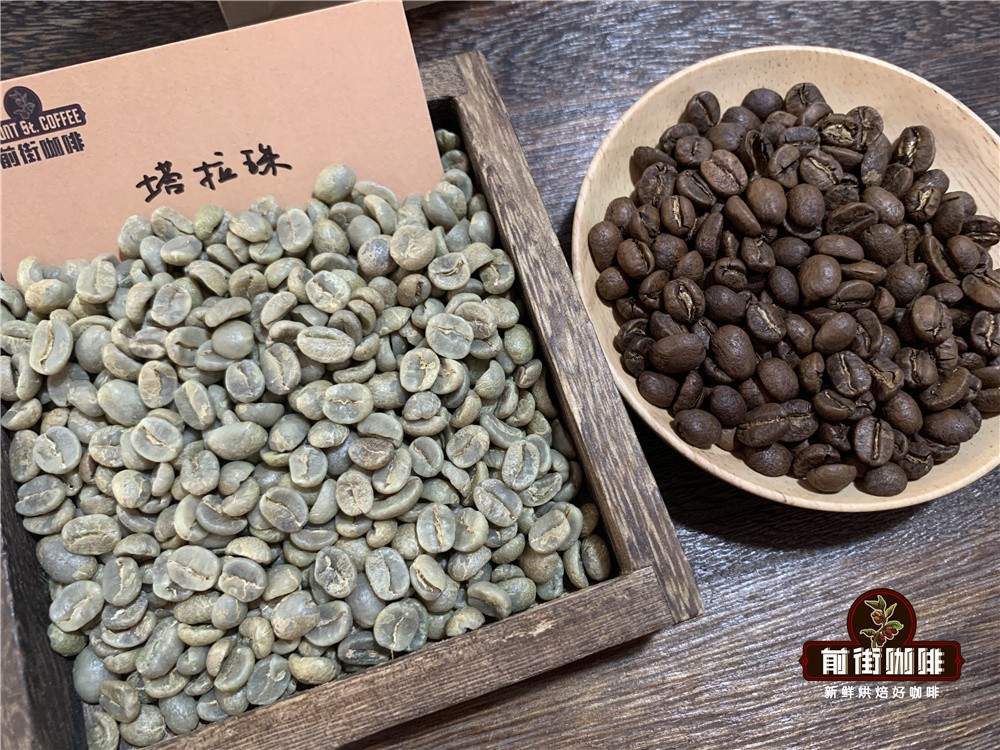
Tarrazú green coffee beans are blue-green in color and have the characteristics of Strictly Hard Bean, with a round body, relatively small size, and slightly uneven uniformity. They are fully washed, and the variety is Costa Rican Caturra. To highlight its refreshing and clean mouthfeel, Front Street uses a light-medium roast.
Dripper: V60 dripper, water temperature: 90°C, dose: 15 grams, coffee-to-water ratio: 1:15, grind size: medium-fine grind (75% passing through China standard No. 20 sieve)
Costa Rica Tarrazú coffee flavor: sweet orange, nuts, toffee
Front Street's parameters for brewing Costa Rica Mirazu, Mozart, and Bach coffee:
Dripper: Hario V60, water temperature: 90°C, dose: 15 grams, coffee-to-water ratio: 1:15, grind size: medium-fine grind (80% passing through China standard No. 20 sieve)
Front Street Mirazu Geisha coffee flavor: strawberry, white peach, cinnamon, jasmine
Front Street Bach coffee flavor: fermented wine aroma, berries, fruit tea notes
Front Street Mozart coffee flavor: raisin acidity, berries, floral aroma, fermented wine aroma
For professional coffee knowledge exchange and more coffee bean information, please follow Coffee Workshop (WeChat public account cafe_style)
For more specialty coffee beans, please add the private WeChat FrontStreet Coffee, WeChat ID: qjcoffeex
The above content is compiled by CoffeeHunters, a coffee news website.


