







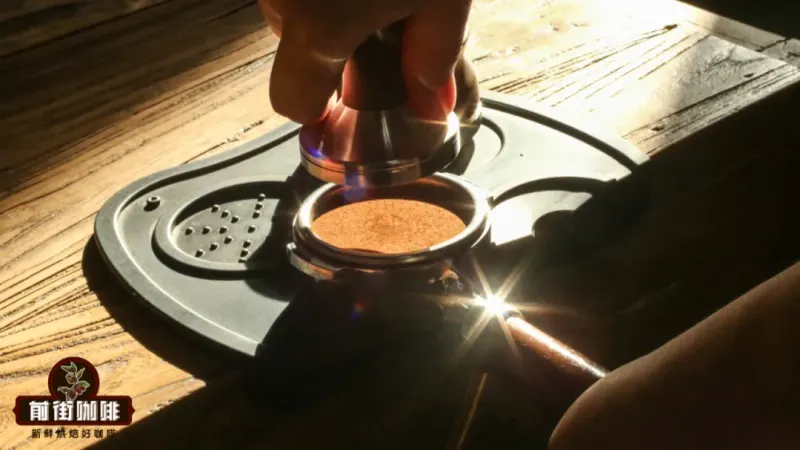
Many coffee enthusiasts wonder when making espresso: how much force is actually needed to tamp the puck? Do light tamping, heavy tamping, or even no tamping at all have any effect on the extraction result? This article will use actual extraction experiments to compare the extraction time and flavor performance of espresso under different tamping forces, and deeply analyze the true meaning of the 9-bar pressure of an espresso machine. At the same time, Front Street will also share two blend beans suitable for espresso, to help you better understand the actual role of tamping in extraction, and why even if you use all your strength, it still seems insignificant in front of the coffee machine.
In the article "The Importance of Distribution and Tamping," Front Street once mentioned that in the preparation stage before espresso extraction, whether the coffee grounds are evenly distributed in the portafilter basket and whether the force applied during tamping is consistent will both affect the extraction result and the flavor of the espresso. However, that article did not explain how much force should be used when tamping, so quite a few readers asked Front Street in the background: how much force is actually needed for tamping?
Actually, Front Street has also published several test articles about tamping force before, but because the content focused more on experimental comparison, many friends may still not quite understand the principles after reading them. So today Front Street will focus on talking about: how the amount of force used when tamping the puck affects extraction, and what exactly the concept of a coffee machine's 9-bar pressure is. Why mention the coffee machine's pressure? Keep reading and you will understand!
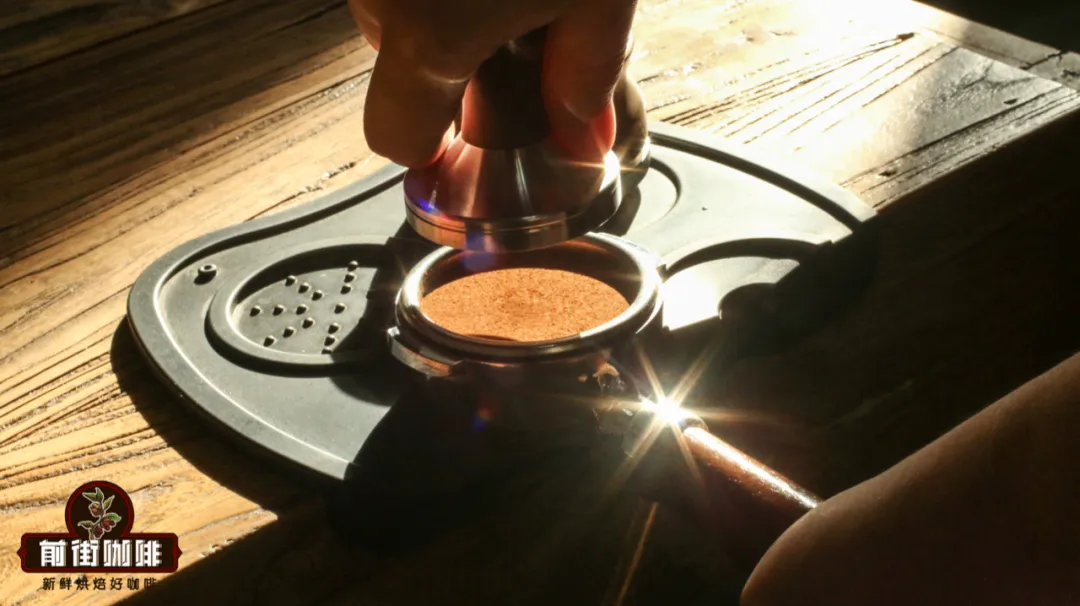
Extraction Experiment
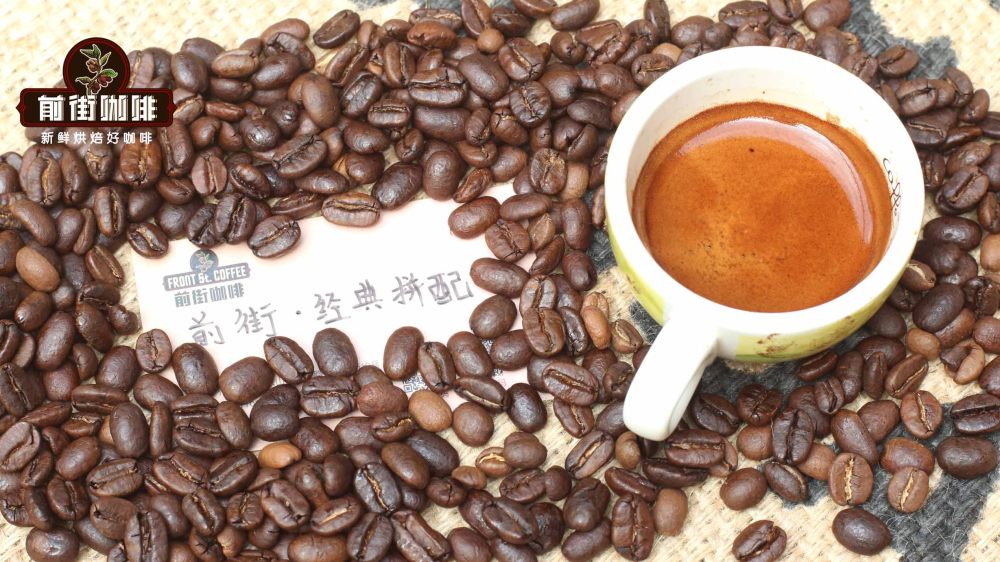
In order to make the extraction effect more ideal, this experiment prioritizes freshly roasted medium-dark espresso beans. The first is Front Street Classic Blend, composed of Brazil, Mandheling, and a small amount of Robusta, with a rich caramel aroma, a buttery-smooth mouthfeel, a lasting aftertaste, and fine crema, very suitable for beginners and home coffee machines.
The second is Front Street Dark Cocoa Basic Blend, positioned as tasty and affordable with high cost performance. Its flavor presents nuts, chocolate, and slight fruity acidity, with a balanced mouthfeel and moderate crema, suitable for making various milk-based coffees. The key point is that the price is affordable, making daily home drinking burden-free, and it is also the first choice for many owners when opening a shop.
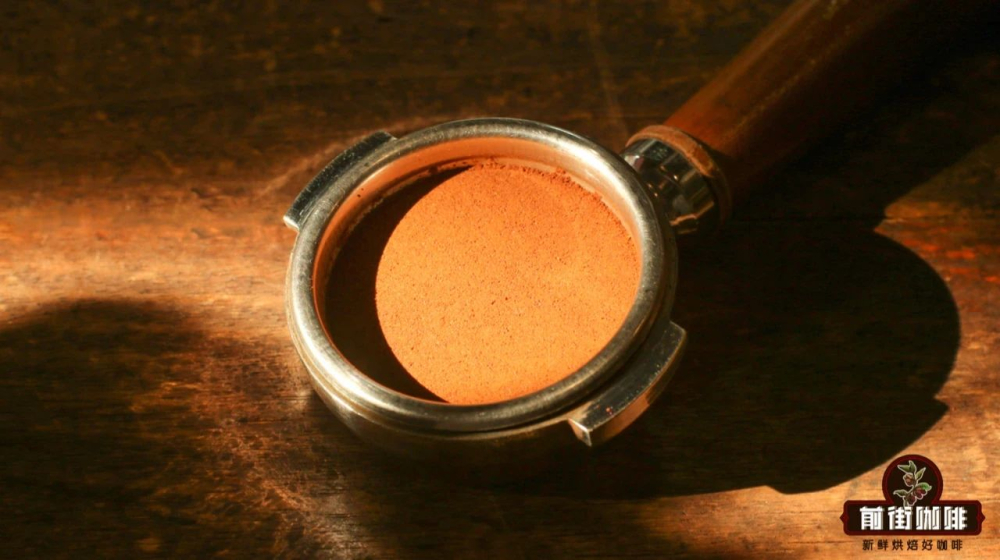
Let us get straight to the point and first look at how the extraction time and flavor of espresso change with the same dose under different tamping forces. The experiment used a dose of 20 g, a target yield of 40 ml, and the tamping forces were light tamping at 2 kg (a gentle press) and heavy tamping at 18 kg (a hard, forceful press). To ensure stable results, Front Street extracted 6 espressos in total and took the average extraction time. The results are as follows:
Average time for three pucks using 2 kg light tamping: 33 seconds. Average time for three pucks using 18 kg heavy tamping: 34 seconds.
In terms of flavor, there was almost no obvious difference between the two: balanced acidity, sweetness, and bitterness, with prominent flavor. But the experiment did not end there. Front Street additionally extracted two special espressos. What was special about them?
The special thing was that after distribution, these two espressos were not tamped at all and were directly put on the machine for extraction. As a result, their extraction time was also 33 seconds (more on the taste later). From the extraction time, it can be seen that whether lightly tamped, heavily tamped, or not tamped at all, the extraction time did not fluctuate greatly.
This may differ from what many friends understand. Front Street also once thought that the greater the tamping force, the tighter the puck would be pressed, and the extraction time would be prolonged due to increased resistance, thereby improving extraction efficiency. But the fact is not so. The reason is simple, because many people overlook the extraction method of the coffee machine.

Perhaps because 9 bar is a single-digit number, many friends cannot intuitively understand how great this force is. That is fine, let us do a simple conversion: 1 bar of the coffee machine acting on the puck in a 58 mm portafilter basket is approximately equal to 27 kg of force, so 9 bar is 27 × 9 = about 243 kg, equivalent to the body weight of 4 adults. One can imagine why the coffee machine can extract substances from coffee so quickly.
So we can understand that no matter how much force is used when tamping, it is insignificant in the face of pressure as high as 9 bar. But this leads to another question: since the effect of tamping is limited, why do we still tamp? If tamping is ineffective, would it not be enough to distribute the grounds and then extract directly?
The above content is compiled by CoffeeHunters, a coffee news website.


