







Why does Panamanian geisha command such attention?
Geisha coffee is known for a clean, translucent cup with bright sweet-and-acid notes, and when people mention Geisha in shops they usually mean Panamanian Geisha. The variety began in Ethiopia's Geisha forest, was collected by researchers in the 1930s, moved through Kenya and Tanzania, reached Costa Rica's CATIE institute in the 1950s as T2722, and was distributed across Panama in the 1960s for its rust resistance.
Farmers initially ignored it. Geisha trees have slender, fragile branches that break easily and demand extra care, and yields are low, so profit-focused growers passed it over. Hacienda La Esmeralda later brought the variety to wider notice. Its grading system, including Red Label, Green Label, and Volcanic Rock, now helps buyers compare lots from different estates and processing methods.
Geisha coffee, with its clean and refreshing taste and rich sweet-and-sour flavor, has become a highly sought-after variety in the contemporary specialty coffee world. This article will take you through Geisha's legendary journey from the forests of Ethiopia to the estates of Panama, analyze the flavor differences and grading system of different grades of Geisha from Hacienda La Esmeralda, such as Red Label, Green Label, and Volcanic Rock, and introduce the Geisha products and brewing suggestions offered by Front Street Coffee, presenting a complete guide to Geisha coffee knowledge for coffee lovers.
When it comes to the cream of the crop in specialty coffee, many people may first think of Blue Mountain coffee. However, with the evolution of specialty coffee culture, people's understanding of the word "top-tier" is no longer limited to the heavy, mellow Japanese-style approach. Compared with Blue Mountain, today's young coffee consumers prefer Geisha—that bright, sweet-and-sour, clean and translucent cup performance is unforgettable once tasted.
As a member of the top-tier coffee echelon, Geisha's value is often higher than that of many other varieties, and Panamanian Geisha is especially representative. The price of Geisha coffee beans produced by certain well-known estates is astonishingly high.
Nowadays, when people talk about Geisha in coffee shops, they usually mean Panamanian Geisha by default. So, what exactly makes Panamanian Geisha stand out?
As is well known, the birthplace of coffee is Ethiopia, and the Geisha variety also originates from the local Geisha forest. In the 1930s, researchers collected and observed the Geisha variety, and later introduced it to Kenya and Tanzania. After several transfers, by the 1950s it was brought to CATIE, the agricultural research institute in Costa Rica, and assigned the number T2722. As coffee leaf rust spread more and more seriously in Central America, T2722 was distributed by CATIE to various parts of Panama in the 1960s because it was considered to have rust resistance.
However, Geisha did not receive much attention at first. In fact, the branches of the Geisha coffee tree are slender and fragile, easy to break, requiring growers to invest more effort in care, and the yield is low. For coffee farmers pursuing profit, Geisha was naturally not the first choice.
The turning point came at Hacienda La Esmeralda in the Boquete region of Panama. In order to improve coffee quality, the estate carried out comparisons and records of hundreds of coffee varieties. It was not until 2003 that Hacienda La Esmeralda discovered the Geisha variety, whose flavor was completely different from the typical "caramel, nut, chocolate" profile of Central American coffee at the time, making it exceptionally unique.
In 2004, Daniel of Hacienda La Esmeralda selected the competition batch of Geisha coffee beans two weeks before the BOP competition began. The recorded flavors included jasmine, citrus, peach, blueberry, bergamot, sugarcane, and more. This batch of Geisha coffee beans amazed everyone. With such a distinctive fruity and floral profile, it completely refreshed the judges' understanding of Central American coffee and won the championship that year in one fell swoop. The two names "Hacienda La Esmeralda" and "Geisha" have since become famous.
Geisha's flavor is so dazzling that other varieties pale in comparison. In order to give non-Geisha varieties a stage to shine as well, the BOP competition later divided the green coffee competition into a Geisha group and a non-Geisha group.
Geisha coffee has an outstanding flavor and frequently wins awards, and its auction prices have also climbed all the way, even making international news headlines and attracting global attention. In 2019 alone, the auction price of one pound of high-quality Panamanian Geisha green beans had already exceeded one thousand US dollars.
Today Geisha is a popular variety in the specialty coffee world, and more and more growers in producing regions are setting their sights on it. In addition to Ethiopia and Panama, Guatemala, Honduras, El Salvador, Colombia, Costa Rica, as well as Yunnan and Taiwan in China, have all introduced this top-tier variety.
Although the Geisha variety has a unique flavor, the terroir of each producing region cannot be replicated. To experience the most classic Geisha flavor, you still have to look to Panama. And as the discoverer of the Geisha variety and the promoter of its flavor, Hacienda La Esmeralda is undoubtedly an option worth paying attention to.
Hacienda La Esmeralda in Panama is located in a corner of Baru Volcano. Before this region's coffee beans became famous, they were mostly sold under the name Baru Mountain. The fertile volcanic soil, suitable temperature, and abundant rainfall around Baru Volcano give the coffee here a balanced sweet-and-sour character.
Friends who know Hacienda La Esmeralda should know that its Geisha coffee beans are divided into three grades: Red Label, Green Label, and Blue Label, based on growing altitude and cupping score.
In 2021, Hacienda La Esmeralda upgraded the Geisha brand and abolished the Blue Label grade. Later, Front Street discovered a coffee bean called Las Rocas on the market. After cupping, it was found that its flavor was very close to washed Blue Label. After verification, it was learned that the green beans of this Volcanic Rock Las Rocas were processed by Hacienda La Esmeralda, and the growing altitude was the same as the original Blue Label.
[Red Label]
Red Label Geisha uses coffee beans grown at an altitude of 1,600 to 1,800 meters, with a cupping score above 90, and traceable to a specific plot. It is divided into auction and non-auction batches. Some friends may ask which tastes better, auction or non-auction. In fact, both belong to the same plot, and the only difference is whether they participate in the auction. Which one suits your taste better depends on the individual.
The Red Label from Hacienda La Esmeralda purchased by Front Street is selected from the Mario plot and uses the natural process. As the place where the Geisha flavor was discovered, the Mario plot allows enthusiasts to catch a glimpse of the style of that year's BOP champion. The natural process makes the coffee flavor more intense, with a more prominent sweet-and-sour sensation and richer layers.
[Green Label]
Green Label also uses Geisha coffee beans grown at an altitude of 1,600 to 1,800 meters. The difference is that Green Label uses a micro-lot blending model from different plots, so it cannot be traced back to a specific plot. Although its grade is lower than Red Label, Green Label is still an excellent Geisha coffee. The flavor of Green Label is a bit like buying a lottery ticket; sometimes it is highly similar to Red Label, and the next production may be different again.
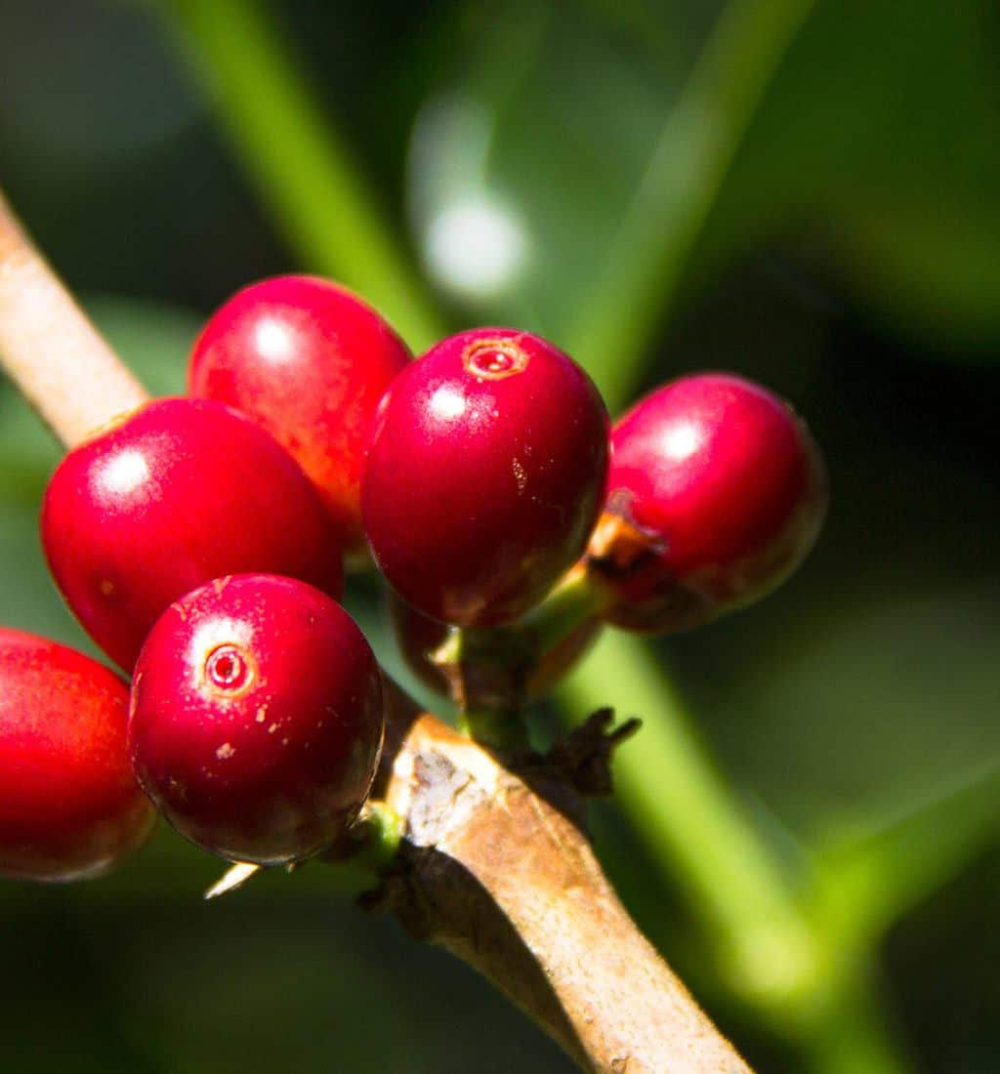
Front Street Coffee's Hacienda La Esmeralda Green Label Geisha includes both natural and washed processing methods. The washed Green Label takes a fresh and delicate route, with the aroma of jasmine and ginger flower, bright citrus-like acidity, a juicy mouthfeel, and a sweet aftertaste reminiscent of Tieguanyin.
[Volcanic Rock New Blue Label]
Blue Label Geisha uses Geisha coffee beans grown at an altitude of 1,400 to 1,500 meters, and is a blend of beans from different plots. As an entry-level Panamanian Geisha, its flavor has clear white floral notes, fruity acidity, and honey sweetness, with a relatively light mouthfeel. Blue Label was discontinued in 2021 and replaced by the Las Rocas brand, with washed processing as the only method.
Brewing Suggestions
Dripper: Hario V60
Water temperature: 91 degrees Celsius
Dose: 15 grams
Coffee-to-water ratio: 1:15
Grind size: 80% passing through a Chinese standard No. 20 sieve
Pour 30 grams of water for blooming for 30 seconds, then pour from the center with a fine stream in a slow circular motion until 125 grams. When the water level in the dripper drops to the point where the coffee bed is about to be exposed, continue pouring in a circular motion until 225 grams. The total extraction time is about 2 minutes.
The coffee beans shipped by Front Street Coffee are all freshly roasted within 5 days, and by the time you receive them, they have already gone through a 4-to-7-day resting period. When brewing, it is recommended to bloom for 30 seconds to give the coffee grounds enough time to release carbon dioxide, bringing more stability to the subsequent flavor extraction.
Considering that some enthusiasts are limited by their conditions, Front Street also offers a grinding service. However, Front Street would like to remind you that after coffee beans are ground into powder, degassing activity intensifies and flavor compounds dissipate more quickly. Therefore, friends who have grinding equipment are advised to buy whole beans and grind fresh before brewing for a better flavor.
For more coffee bean information, please follow Coffee Workshop (WeChat public account cafe_style) For professional coffee knowledge exchange, please add WeChat ID kaixinguoguo0925
The above content is compiled by CoffeeHunters, a coffee news website.


