







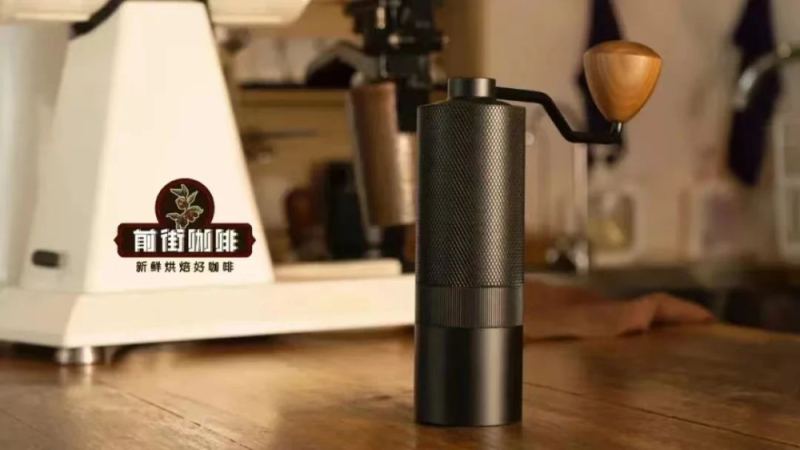
Grind size is one of the core variables affecting coffee flavor. This article starts with the structure of a manual grinder, progressively explaining how to disassemble it and adjust the grind adjustment screw, and combines Front Street Coffee's practical experience to provide grind size standards for different brewing methods. The article also shares a method for judging whether the grind is appropriate using a 0.80mm standard sieve, as well as reference suggestions for pour-over parameters such as coffee-to-water ratio, water temperature, and extraction time. Finally, using Panama Diamond Mountain coffee beans as an example, it demonstrates a complete three-stage brewing process to help readers put theory into daily practice.
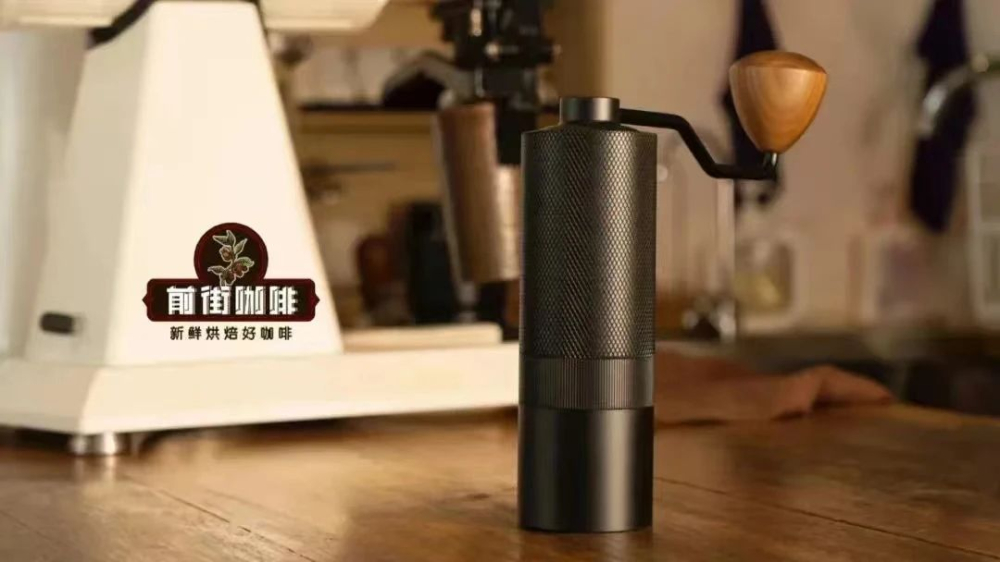
The handle section of a manual grinder typically consists of five components: the grind adjustment screw, the check fixing ring, the A-shaped grind adjustment fixing screw, the handle itself, and the main fixing screw. Designs vary across models — some machines require you to disassemble each of these parts one by one before you can access the grind adjustment screw, then reassemble them after adjusting; others allow direct rotation for adjustment without disassembly. The operating principle is simple: turning the grind adjustment screw clockwise produces finer grounds; turning it counterclockwise yields coarser particles.
If using a rotary-blade electric grinder, the key to obtaining uniform coffee particles is to shake the body up and down during grinding. Observing the grinding state while adjusting the coffee grounds to the target coarseness is the basic method. Once you become proficient, you can judge the particle size solely by the sound made while shaking — the finer the particles, the softer the sound. This description may sound a bit like advertising copy, but the actual experience is indeed just so.
1. Unscrew the metal nut on top of the manual coffee grinder
2. Remove the handle from the body
3. Remove the metal fixing clip above the manual grinder's fineness adjustment screw
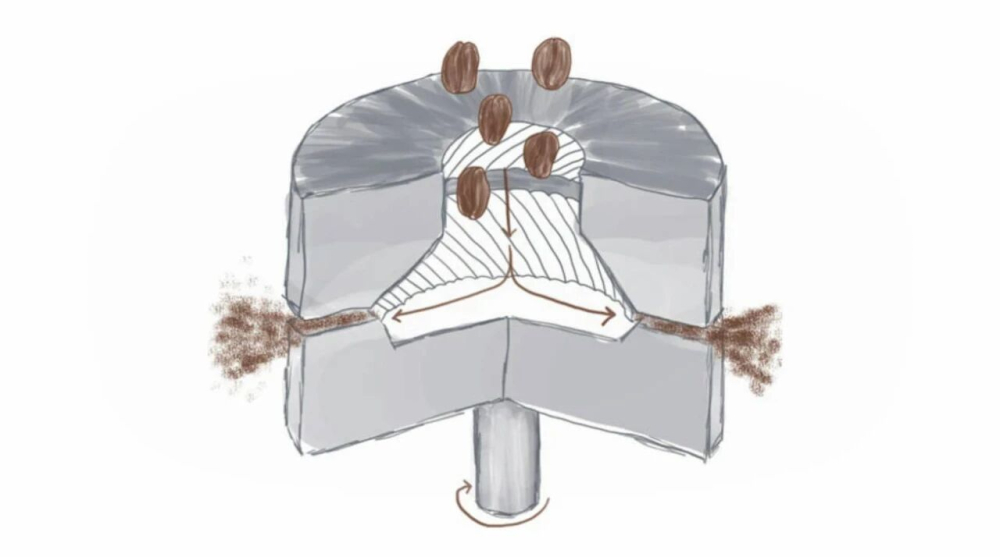
4. Pinch the central fixing column of the manual coffee grinder with your left hand to prevent it from rotating along, and turn the grind adjustment nut with your right hand. Turning it downward makes the grind finer; turning it upward makes the grind coarser. During adjustment, periodically reattach the handle and grind a few coffee beans to test and observe whether the coarseness meets expectations.
5. Reattach the handle, then tighten the nut on top.
Once the grind size setting is complete, you can officially start grinding beans. Manual grinders are suitable for most pour-over coffee scenarios, but cannot handle espresso — espresso requires a dedicated espresso grinder and an extremely fine grind. Pour-over coffee's grind is coarser than espresso, and the specific choice still depends on the beans being brewed.
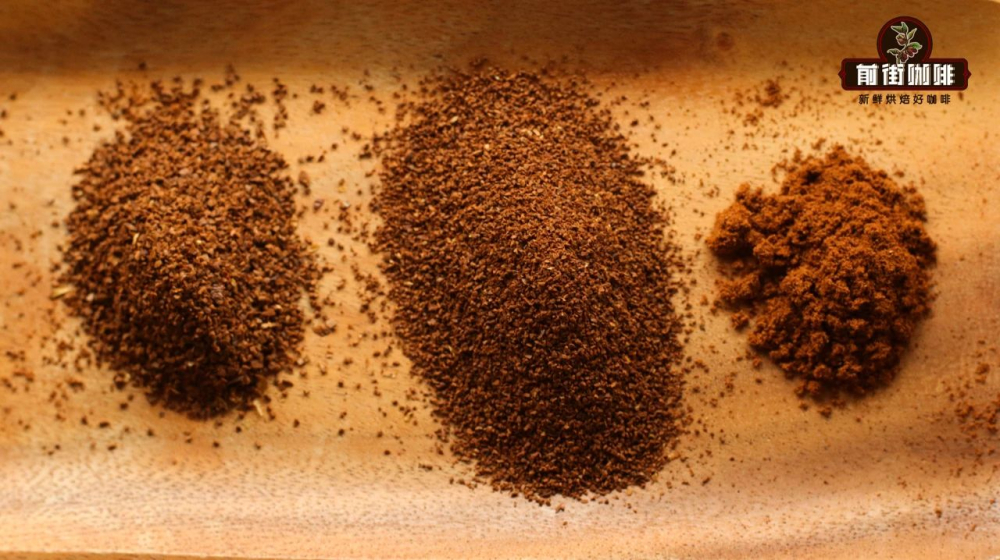
Front Street Coffee typically uses a medium coarseness for pour-over coffee; one step coarser for siphon; and the coarsest grind for French press. Front Street Coffee has also summarized the standard sieve pass-through rate patterns for different grind coarseness levels:
Cold drip > Pour-over, siphon 80% > Moka pot, American drip 75-80% > Cupping 70-75% > French press 65-70%.
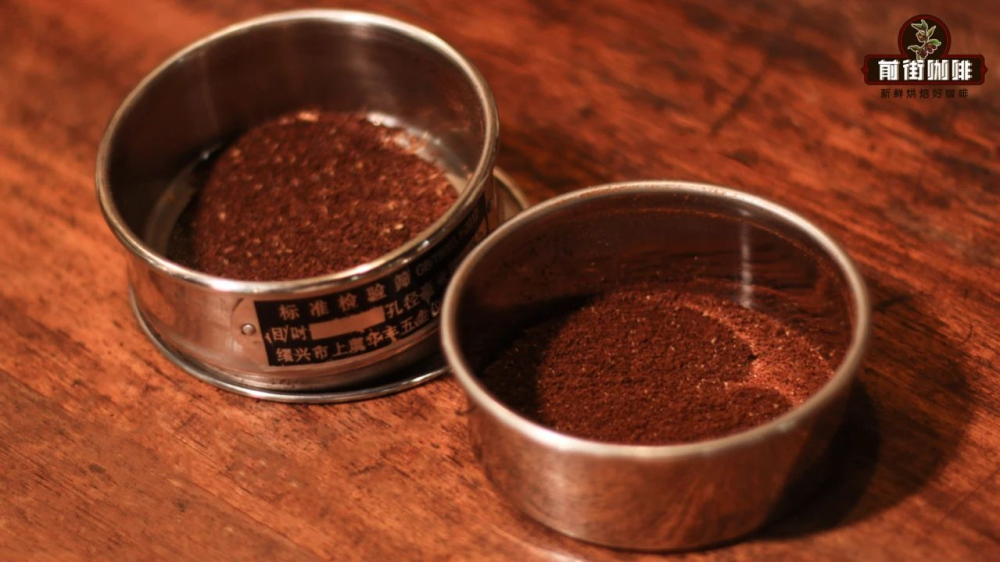
Taking a new batch of beans as an example, when Front Street Coffee needs to determine its grind size, it uses a 0.80mm standard sieve — coffee particles smaller than 0.80mm will pass through the sieve openings. The specific procedure is: first weigh 10 grams of coffee beans and grind them, pour the ground coffee onto the upper layer of the sieve, shake repeatedly multiple times so that particles smaller than 0.80mm fall through to the lower layer, then weigh the coffee grounds in the lower layer. Front Street Coffee recommends a pour-over grind of medium-fine, with a sieve pass-through rate of about 80%, meaning 10 grams of coffee beans yield approximately 8 grams of ground coffee. The initial grind setting should follow the pour-over standard.
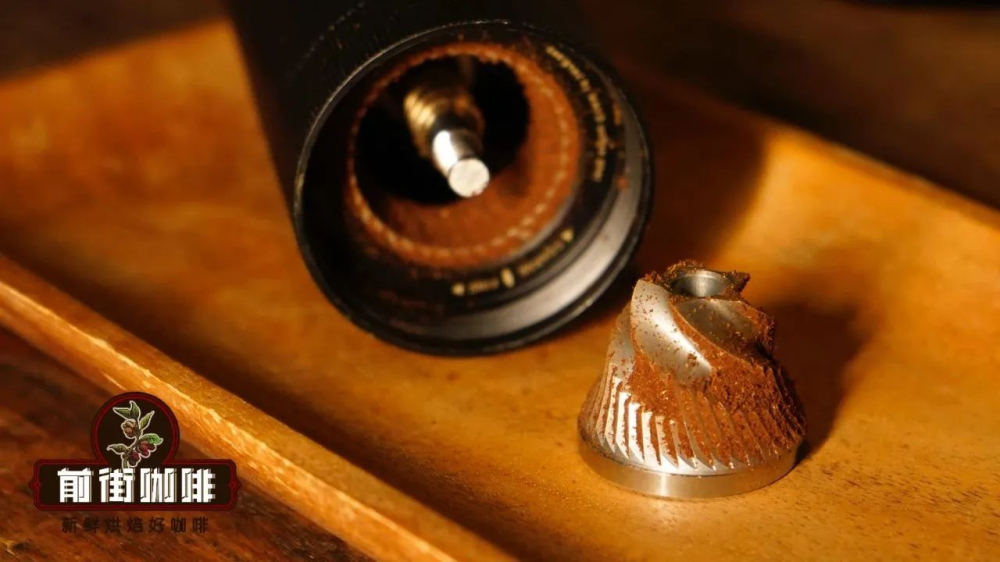
If the sieved coffee grounds weigh less than 8 grams, the grind is too coarse and needs to be adjusted finer; if more than 8 grams, the grind is too fine and should be adjusted coarser.
Some may find this process tedious, but with practice it becomes second nature. Pour-over coffee is itself a meticulous craft — coffee-to-water ratio, grind size, water temperature, and extraction parameters all influence the final flavor, so every barista's brew will taste subtly different, and even the same person brewing at home may get different results each time.
For this reason, Front Street Coffee records and summarizes the grind size, water temperature, and brewing time for each coffee bean during its research. As for coffee-to-water ratio, Front Street Coffee recommends a pour-over ratio between 1:14 and 1:18; currently, a 1:15 ratio is used for service, meaning 15 grams of coffee grounds correspond to 225 grams of water. A higher ratio yields a lighter taste, while a lower ratio yields a stronger taste.
Water temperature is also an important factor affecting pour-over. The higher the water temperature, the more flavor compounds are extracted; the lower the water temperature, the lower the extraction efficiency. Front Street Coffee uses 90°C water when brewing lighter-roasted coffee beans, and 88°C for darker-roasted beans. Extraction time refers to the total duration from when the coffee grounds contact water to when the dripper is removed; the longer the contact between grounds and water, the more compounds are extracted; shorter contact time yields a weaker taste. Front Street Coffee's brewing/extraction time is approximately 2 minutes.
Enough theory — time for hands-on practice. Front Street Coffee uses a Panama Diamond Mountain coffee bean as an example for explanation.
Front Street's brewing parameters are: Hario V60 dripper, 90°C water temperature, 15 grams of coffee, 1:15 coffee-to-water ratio. The pour-over technique uses Front Street's most basic three-stage method. In the first stage, use 30g of water to fully saturate the coffee bed, forming a "hamburger" shape, and let it bloom for 30 seconds. The second stage begins pouring when the timer reaches 54 seconds, pouring up to 125g, then pausing; wait for the water level to drop to 2/3 of the coffee bed, then pour the third stage — this stage is to extract the sweet and sour flavor compounds from the coffee grounds. The third stage pours up to 225g when the timer shows 1'40", with a total extraction time of 2'10". After extraction is complete, gently swirl the sharing pitcher, and taste once the coffee liquid is evenly mixed.
This Diamond Mountain from Panama's Hacienda La Esmeralda features berry acidity along with citrus and chocolate flavors, with rich layers and a smooth mouthfeel. Front Street believes that Panama's washed processing method creates a clean and balanced mouthfeel with bright acidity, while retaining caramel aroma.
The above content is compiled by CoffeeHunters, a coffee news website.


