







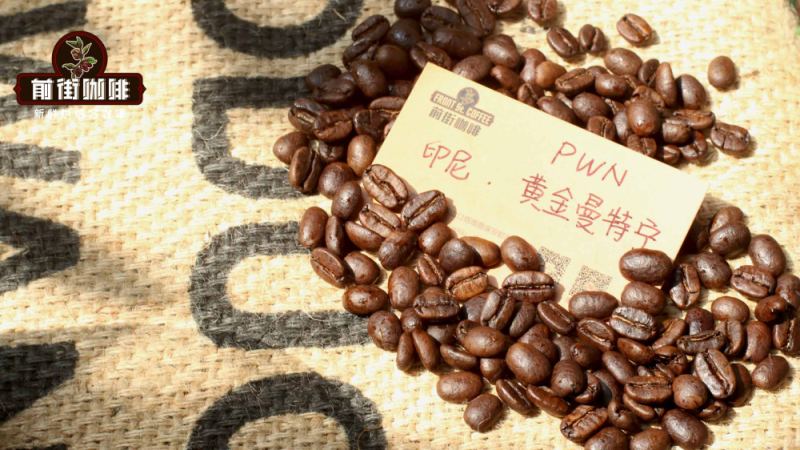
What Makes Golden Mandheling Coffee Different?
Golden Mandheling coffee is a wet-hulled Indonesian bean from the Gayo highlands of Aceh, Sumatra, sold under the PWN trademark. Grown at roughly 1,110 to 1,600 meters by smallholder farmers under shade trees, it is known for a thick, full-bodied mouthfeel that carries a cane-sugar or brown-sugar sweetness rather than bitterness. The PWN company sorts the beans three times by hand and once by machine.
Front Street PWN Golden Mandheling shows how body and sweetness can coexist in one cup. The wet-hulling process, called giling basah, gives the bean its low-acid, syrupy character. Roasting suggestions, Kono dripper brewing parameters, and cupping notes round out the picture. The sweetness resembles what is coffee sugar in everyday terms, a simple sucrose note that appears once extraction is balanced.
Indonesian Mandheling has won the favor of many seasoned coffee lovers with its thick, full-bodied mouthfeel. Many people mistakenly believe that richness must come with bitterness, but in fact, once the body of a coffee reaches a certain level, a sweet aftertaste reminiscent of cane sugar or brown sugar emerges in the mouth. Front Street Golden Mandheling is exactly such a richly layered bean, overturning many entry-level enthusiasts' understanding of the word "rich." This article will systematically lay out the complete picture of Front Street PWN Golden Mandheling coffee—from the terroir of its producing region, the background of the PWN company, varietal characteristics, and wet-hulling processing, to roasting suggestions and Kono dripper brewing parameters—along with the actual cupping flavor performance.
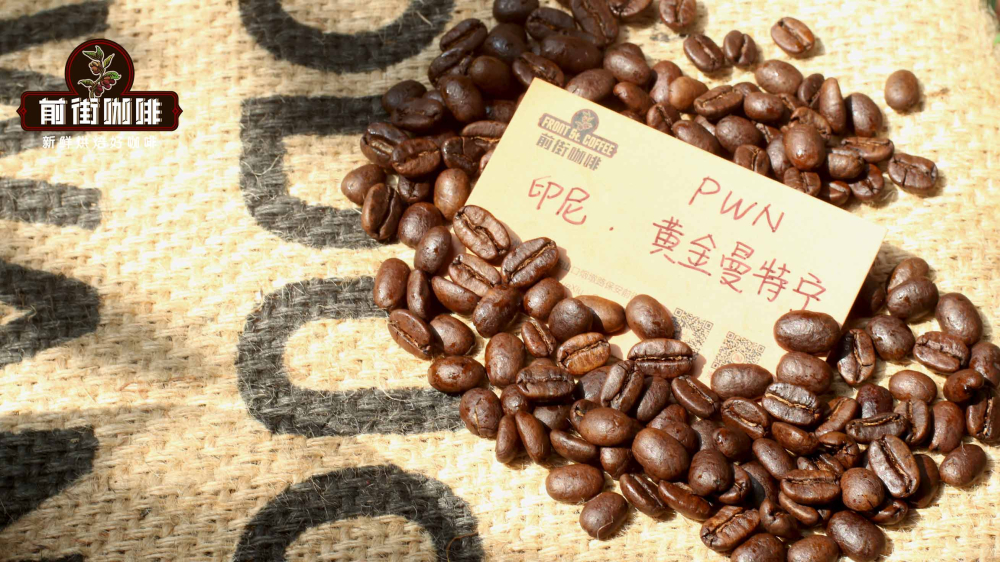
Indonesian Mandheling coffee has won the favor of many seasoned coffee lovers with its thick, full-bodied mouthfeel. Many people mistakenly believe that richness must come with bitterness, but in fact, once the body of a coffee reaches a certain level, a sweet aftertaste reminiscent of cane sugar or brown sugar emerges in the mouth. Front Street Golden Mandheling is exactly such a richly layered bean, overturning many entry-level enthusiasts' understanding of the word "rich." This article will discuss Front Street PWN Golden Mandheling coffee.
Golden Mandheling Coffee Bean Producing Region
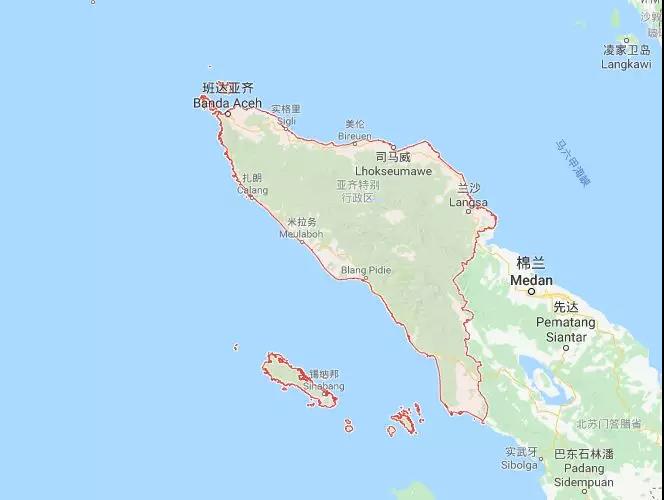
Front Street PWN Golden Mandheling comes from Mount Gayo in Aceh Province, Sumatra, Indonesia.
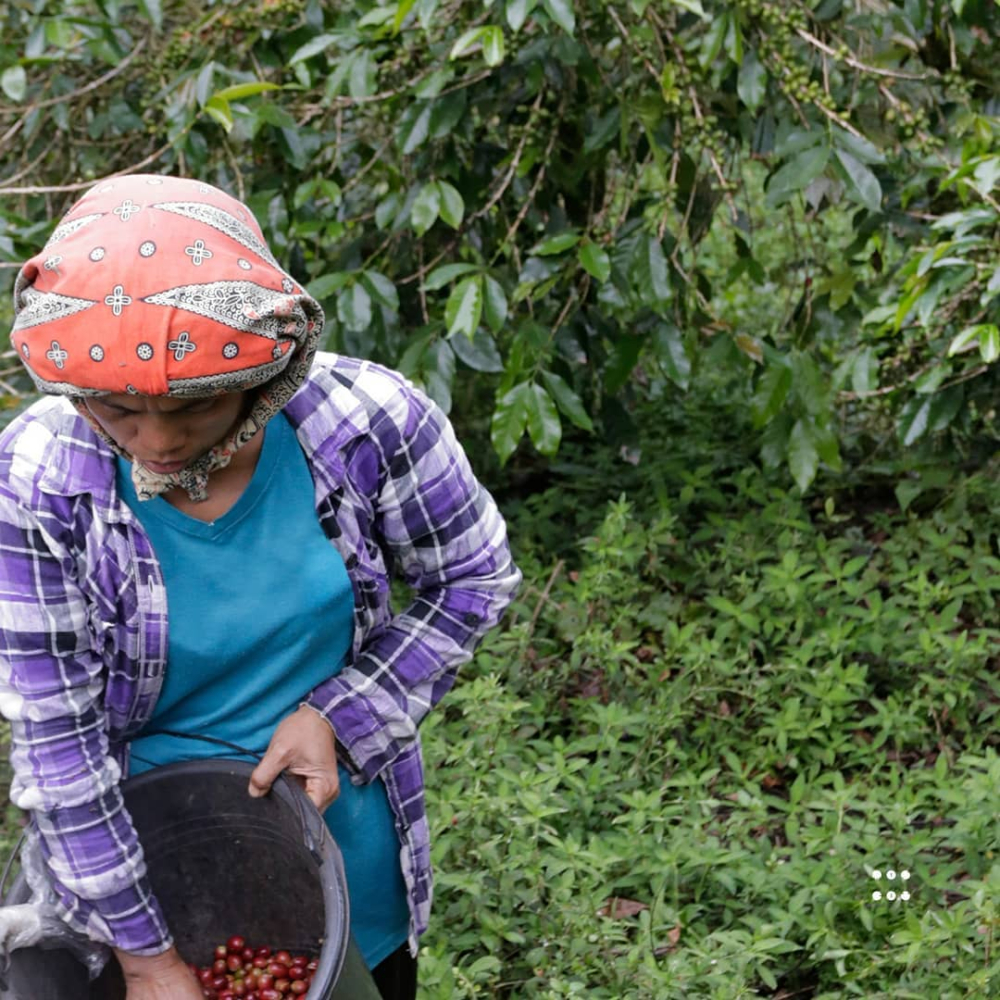
Aceh Gayo Mountain Producing Region: The Gayo mountain range region is located in Aceh Province in northern Sumatra, where coffee is mostly grown on the slopes around the town of Takegon and Lake Tawar. The growing altitude in the production area averages between 1,110 and 1,600 meters. The coffee is cultivated by smallholder farmers under shade trees, and the wet-hulling method brings out a unique flavor that combines a deep, low-key texture with a lively richness. Aceh, at the northernmost tip of Sumatra, is a fascinating yet complicated place. Due to long-term political instability, this is not a coffee-producing region that ordinary people can easily set foot in.
Golden Mandheling PWN Company
Golden Mandheling coffee comes from the renowned Pawani Coffee Company (PWN) in the Indonesian coffee world, which is also the registered owner of the Golden Mandheling trademark. PWN's approach to Golden Mandheling is to purchase Mandheling coffee beans from surrounding producing regions, then subject them to three rounds of manual sorting and one round of machine sorting. The Golden Mandheling beans selected this way have a beautiful appearance and uniform size, and show even more prominent cleanliness after roasting.
In fact, many coffee merchants sell Indonesian beans with larger bean sizes under the name Golden Mandheling, which also explains why this bean is seen everywhere on the market despite its limited production.
Golden Mandheling Coffee Bean Quality
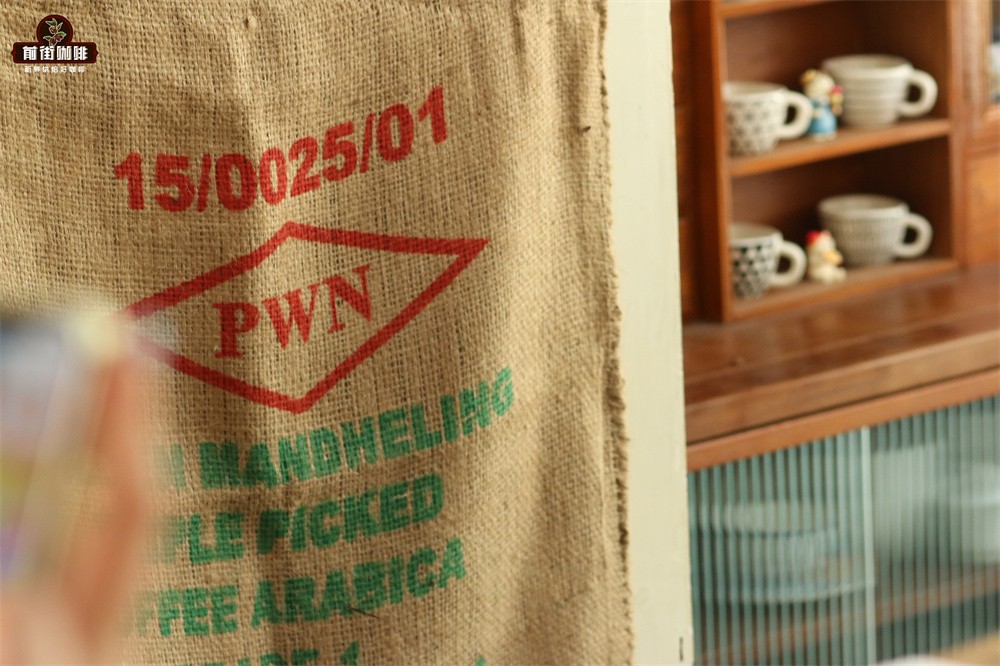
Front Street Golden Mandheling bears the PWN logo and certificate both on the outside of the burlap sack and inside the bag. Front Street Golden Mandheling is graded at 18 screen or above. The beans are dark green in color and neatly shaped flat beans. Front Street's cupping has found that Front Street Golden Mandheling, after strict sorting, not only sheds the earthy, miscellaneous flavors common to ordinary Mandheling, but also enters the mouth with greater cleanliness and clarity, and a noticeably stronger sweetness.
Golden Mandheling Registered Trademark
PWN has registered Golden Mandheling as a trademark; in other words, only Golden Mandheling produced by PWN can be considered a true "Golden Mandheling." Front Street Golden Mandheling coffee originates precisely from PWN. Front Street Golden Mandheling is derived from Mandheling and can be understood as a select-grade Mandheling, which is also the reason Front Street chose to carry it.
Golden Mandheling Coffee Variety
Front Street Golden Mandheling coffee uses the Ateng variety of coffee beans. Ateng is a hybrid between Arabica and Robusta, divided into several subtypes, and is widely planted in Sumatra and other Indonesian islands. Simply put, it is a branch of Catimor; Ateng is the local customary name.
Golden Mandheling Coffee Bean Processing Method
Front Street Golden Mandheling coffee beans are wet-hulled. The local economic conditions are poor, and farmers likewise cannot afford the higher-cost washed method. The combination of these factors gave rise to the highly regional wet-hulling method (in which, during the regular washing process, the beans are sun-dried with the parchment still on for 2 to 3 days, and once the moisture content drops to 20-24%, the parchment is removed).
The extremely fast processing pace of the wet-hulling method also leads to Mandheling often having a relatively high defect rate, but Front Street Golden Mandheling successfully avoids this shortcoming. Front Street Golden Mandheling is graded at 19 screen or above, with fewer than 3 defective beans (in a 300g green bean sample), reaching the highest grade G1. The beans are dark green in color and neatly shaped flat beans.
Front Street Roasting Suggestions for Golden Mandheling Coffee Beans
Heat to 200°C and charge the beans; set the damper to 3. After 1 minute, adjust the heat to 160°C, keeping the damper unchanged. Roast until 5 minutes 40 seconds, at 148°C, when the bean surface turns yellow, the grassy smell has completely dissipated, and dehydration is complete; adjust the heat to 140°C and change the damper to 4. At 9 minutes 40 seconds, ugly wrinkles and dark streaks appear on the bean surface, and the toasty bread aroma clearly shifts to coffee aroma; this can be defined as the prelude to first crack. At this point, listen carefully for the sound of the first crack. First crack begins at 9 minutes 54 seconds; reduce the heat to 60°C and open the damper fully (adjusting the heat requires extra care—do not reduce it so much that there is no cracking sound). Drop the beans at 204.5°C.
Front Street Tips for Brewing Front Street Golden Mandheling Coffee Beans
Brewing parameters: Use a Kono dripper Water temperature: 88°C Dose: 15 grams Coffee-to-water ratio: 1:15 Grind size: medium-fine grind (70-75% passing through a Chinese standard No. 20 sieve)
For darker-roasted coffee beans, to highlight the coffee's richness, Front Street chooses the Kono dripper for brewing. The Kono dripper's distinguishing feature is its immersion function, which allows more coffee substances to be extracted through immersion, enhancing the rich mouthfeel. Because it has few ribs and they are located at the lower end, the filter paper can cling tightly to the dripper to restrict airflow, thereby slowing the flow rate and increasing the contact time between water and coffee grounds.
Front Street uses segmented extraction, also called three-stage brewing: bloom with 30 grams of water for 30 seconds, then pour in a small stream in circles until reaching 125 grams for the first stage; when the water level drops and is about to expose the coffee bed, continue pouring until 225 grams and stop. When the water level drops and is about to expose the coffee bed, remove the dripper. (Timing starts at the beginning of the bloom.) Total extraction time is 2'05"-2'15".
Brewed flavor: spices, herbs, multi-layered, rich and clean, high balance, intense nut and brown sugar aromas, with notes of chocolate, and a lasting finish.
The above content is compiled by CoffeeHunters, a coffee news website.


