








Indonesia is one of the earliest coffee-growing regions in Asia, and its coffee development has gone through the decline of Typica, the introduction of Robusta, and the rise of Tim hybrid varieties. Sumatra's Mandheling, with its unique wet-hulling process, presents herbal, spicy, and full-bodied flavors. This article systematically analyzes the core characteristics of Indonesian coffee from historical context, regional terroir, variety evolution, to brewing parameters. Front Street Coffee's Lintong Mandheling everyday beans and Golden Mandheling both come from Sumatra, use wet-hulling processing, are medium-dark roasted, and are suitable for home pour-over experiences.
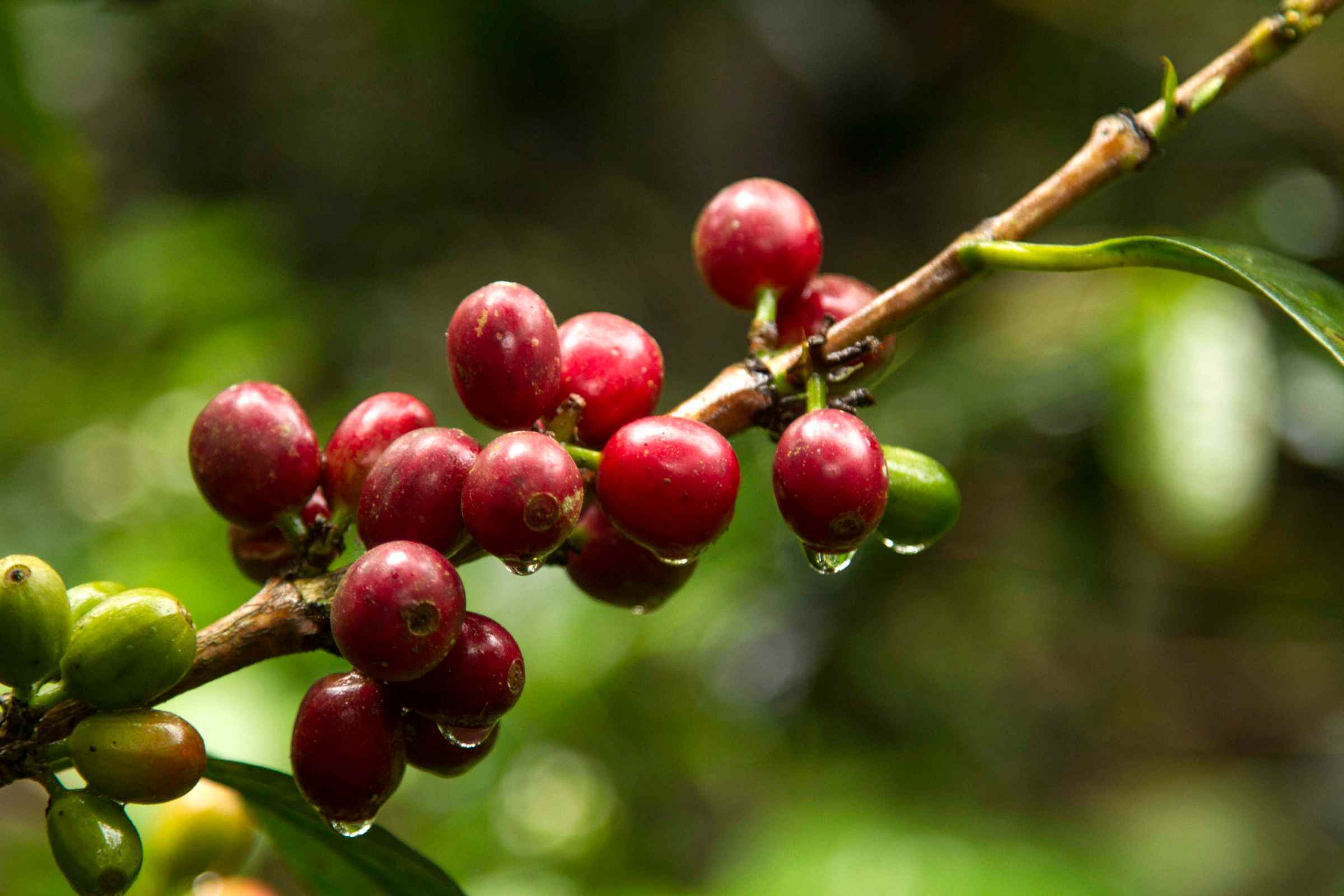
When it comes to coffee-producing regions in Asia, besides Vietnam and Yunnan, China, Indonesia is often the first place Front Street thinks of. In the early 17th century, the first Arabica seedling was brought to this land, opening the history of coffee cultivation in Indonesia, making it one of the oldest coffee-producing regions in the world.
The evolution of coffee cultivation in Indonesia
The origin of Indonesian coffee can be traced back to the late 17th century, when the Dutch occupied Jakarta on the island of Java and made it the Eastern base of the Dutch East India Company, then introduced Typica seedlings from India to Java in two batches for cultivation. By the 1870s, coffee-growing areas had been established in Sumatra, Bali, Sulawesi, and Timor, and gradually expanded from Java to the whole of Indonesia. However, the good times did not last long. In 1869, coffee leaf rust suddenly broke out and swept through producing regions across Asia, and large areas of Typica trees in Indonesia withered.
To save the devastated coffee plantations, the Indonesian government introduced more disease-resistant Robusta varieties from Africa and other places, and to this day Robusta is still Indonesia's main variety. To ensure plant survival rates and increase yields, Indonesia continued to introduce various disease-resistant varieties from abroad, among which the Tim varieties Tim Tim, Bor Bor, and the Catimor series Ateng, hybrids of Robusta and Arabica, showed unique cedar-herbal notes because of their good disease resistance, high yield, and adaptation to Sumatra's terroir. Soon Ateng and Tim Tim gradually replaced the original Typica and became the main varieties in Sumatra and other places, accounting for 70% of Sumatra's total coffee.
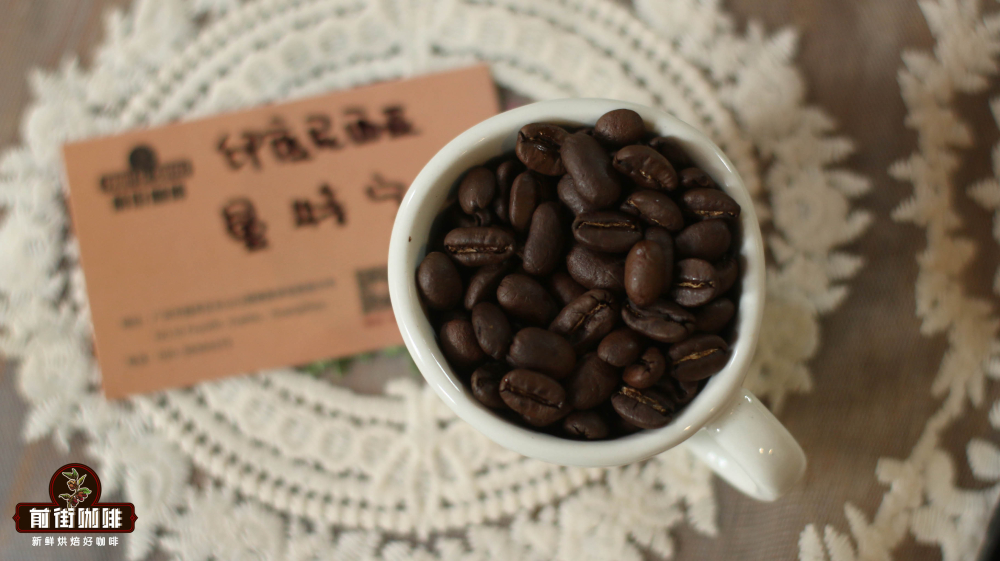
Front Street's home-roasted Indonesian Lintong Mandheling everyday coffee beans are a blend of Tim Tim and Ateng, produced on the island of Sumatra, and processed using Indonesia's common wet-hulling method. After medium-dark roasting, they present a rich coffee bitterness, with extremely slight acidity and notes of herbs and spices. They taste full-bodied and solid, making this a coffee with very high recognizability.
The terroir characteristics of Sumatra
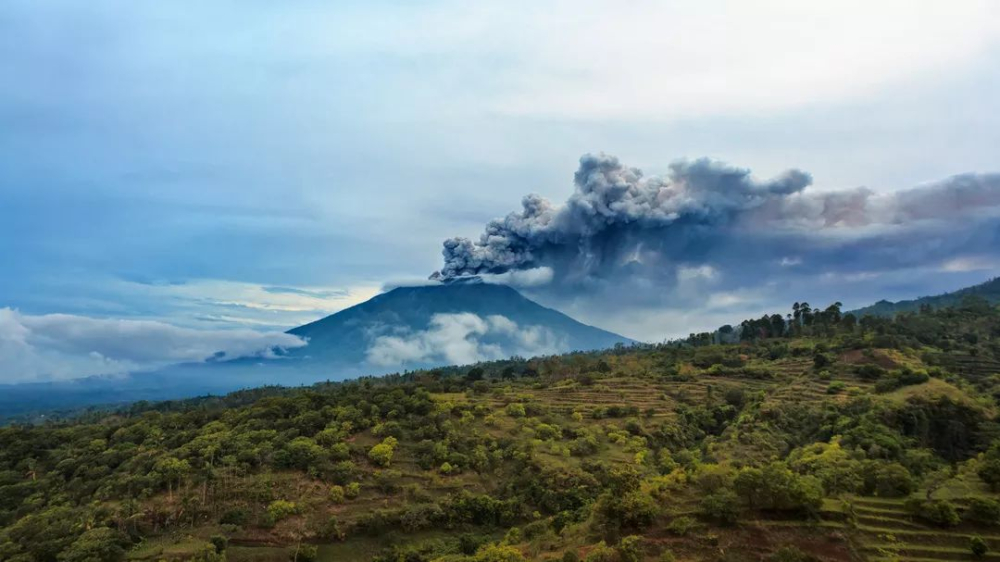
Mandheling is produced on Indonesia's mysterious island of Sumatra. The whole of Sumatra is divided into eight provinces, among which only the high-altitude Aceh Province and North Sumatra Province cultivate Arabica coffee on a large scale. Sumatra belongs to a tropical rainforest region, and the mountains and forests are often filled with clouds and rain, adding a layer of mystery to Sumatra. Every year from September to April of the following year is the coffee cherry ripening season, and you can see many farmers busy picking in the mountains. Traditional Lintong Mandheling is grown by the Mandailing and Batak peoples, while the "rising star" Lake Tawar Mandheling is grown by the Gayo people.
Local people plant coffee trees around two major volcanic lakes, Lake Tawar and Lake Toba. The Gayo Mountains around Lake Tawar have ideal conditions for coffee growth, widely adopt organic cultivation, and, together with a long history of cultivation, make the coffee produced here higher in quality and yield. Many green coffee buyers also value this place more, including the locally very famous Pwani Coffee Company (PWN).
PWN mainly purchases high-quality Mandheling green coffee beans. After purchase, they undergo one mechanical sorting plus three rounds of hand sorting to select plump, defect-free beans. The coffee beans produced are all specialty grade, and "Golden Mandheling Coffee" is their flagship product. In the early days, in order to become the exclusive supplier of Golden Mandheling Coffee, PWN registered the English trademark of "Golden Mandheling," which means that only the Golden Mandheling coffee produced by them is truly Golden Mandheling. Front Street's Golden Mandheling coffee beans are, of course, also the "authentic product" purchased from PWN, using Indonesia's unique wet-hulling method.
The flavor of Indonesian Mandheling comes from the wet-hulling method
The biggest difference between Indonesia and many coffee-producing regions lies in the local humid weather. Indonesia's year-round humidity is between 70 and 90%, typhoons can come at any time, and annual rainfall even reaches more than 2000mm. Such harsh weather makes it impossible to use sun-drying for as long as 2 to 3 weeks as in Africa. Washed processing is not only time-consuming but also consumes more labor and water resources, which Indonesia, aiming for mass production, simply cannot afford. So they developed a unique semi-washed method: wet-hulling.
Coffee cherries with the skin and pulp removed are poured directly into a pool for a short fermentation of a few hours. At this point, a small amount of mucilage still remains on the parchment. The mucilage is removed by brushing and washing. Then the parchment beans are dried. The first drying only needs to reach 30 to 40% moisture content. After about 2 to 3 days, the coffee farmers sell the green beans to collectors. The collectors directly hull the purchased semi-dry parchment beans by machine to obtain the innermost green beans.
Because the hulling machine uses relatively strong friction, it tears open the parchment layer tightly attached to the green beans. At this stage, white or green viscous liquid usually flows out. Due to long soaking in the mucilage and the humid environment, the green beans finally become soft, pale and swollen, and form a gray-green color. Through the stirring caused by friction, the green beans are also more likely to be crushed or injured, especially at both ends, forming small notches and causing "goat-foot beans." The "naked beans" with the parchment removed dry very quickly, while also being directly exposed to the humid environment and affected by the growth of various microorganisms. This gives Indonesian coffee its unique woody, spicy, and herbal notes. This is what we call the "taste of place."
If you are also beginning to wonder what the taste of Southeast Asia is really like, you can start by learning about the large-region everyday beans launched by Front Street. The small-pack Lintong Mandheling everyday beans use wet-hulling processing and present the classic Mandheling flavor, making it convenient for us to try at home.
The pour-over parameters for Indonesian Mandheling
Dark-roasted coffee beans greatly change the internal structure of the beans, making them porous, and when ground into coffee powder they absorb water more strongly. If the brewing parameters are not adjusted well, the coffee will easily be over-extracted and bitter. If you want the coffee to have enough aroma without over-extraction, you need to lower the extraction rate. Front Street uses a relatively low water temperature and a grind size like coarse granulated sugar to reduce the release of bitter large molecules in the coffee.
Dripper: KONO
Water temperature: 87°C
Dose: 15g
Coffee-to-water ratio: 1:15
Grind size: 70% passing through Chinese standard No. 20 sieve (coarse granulated sugar, EK43s setting 11)
Pouring method: three-stage pouring
First wet the dripper so that the filter paper fits closely against the dripper, then pour in the ground coffee powder and try to level the coffee bed. Pour 87°C hot water from the center for 30g to start blooming for 30s. At this point you can see that the dark-roasted Mandheling coffee forms a tall dome. Then begin pouring the second stage evenly until the liquid weight is 125g. When the coffee liquid drops to the halfway point, begin pouring the final 100g. Be careful to pour steadily with a small stream throughout to avoid uneven extraction. The freshly brewed Lintong Mandheling coffee has an Indonesian-style spicy mouthfeel, with prominent aromas of roasted nuts, chocolate, and caramel, and a slight sweet aftertaste.
The brewing parameters mentioned by Front Street are all based on fresh coffee beans, so freshly roasted coffee is the primary condition here. The coffee beans shipped by Front Street are all freshly roasted within 5 days. When you receive the coffee from the logistics provider, it is just within the best tasting period. This is in the hope that every customer can drink the most complete-flavored good coffee.
For professional coffee knowledge exchange and more coffee bean information, please follow Coffee Workshop (WeChat public account cafe_style)
For more specialty coffee beans, please add the private WeChat Front Street Coffee (FrontStreet Coffee), WeChat ID: qjcoffeex
The above content is compiled by CoffeeHunters, a coffee news website.


