







The coffee grind size directly determines the extraction effect, and drip coffee makers and espresso machines have completely different requirements for powder particle size. Why is a coarser coffee grind more suitable for American-style drip brewers? How should single-origin beans and blended beans be chosen for American-style preparation? Starting from Front Street Coffee's practical experience, this article sorts out the logic of matching grind size with brewing methods, and explains in detail how to determine the coffee-to-water ratio for Americano, the espresso extraction parameters, and the specific steps for making iced Americano, helping coffee lovers reproduce a balanced cup of drip coffee or espresso diluted with water at home.
For more specialty coffee knowledge, please follow: Front Street Coffee (Frontsteet Coffee)
When people mention Americano, most first think of the practice in cafes of diluting espresso with water. However, the roots of this method lie in Italy. The coffee that truly has an American local character is actually brewed with an American coffee maker—that is, a drip coffee maker. The grind size required by this type of machine is noticeably coarser than that of an espresso machine. Next, Front Street Coffee (FrontStreet Coffee) will explain why a coarser grind is more suitable for drip coffee makers.
Why is coarsely ground coffee suitable for drip coffee makers?
The English word for Americano, "Americano," can refer both to the black coffee made by a drip brewer and to the drink made by diluting espresso with water. However, at present, the vast majority of Americanos served in domestic cafes belong to the latter, while the former is more often called "drip coffee" to distinguish it.
According to Front Street Coffee's (FrontStreet Coffee) observations, if brewed with a drip brewer or American coffee maker, a coarse grind is less likely to cause over-extraction. The reason is that the water outlet of an American coffee maker is like a showerhead, spraying hot water onto the coffee grounds, and the operating water temperature of such machines is also relatively high. If the grind is too fine, the contact area between the coffee grounds and hot water increases, the extraction rate speeds up, and it is very easy for bitterness and off-flavors caused by over-extraction to appear.
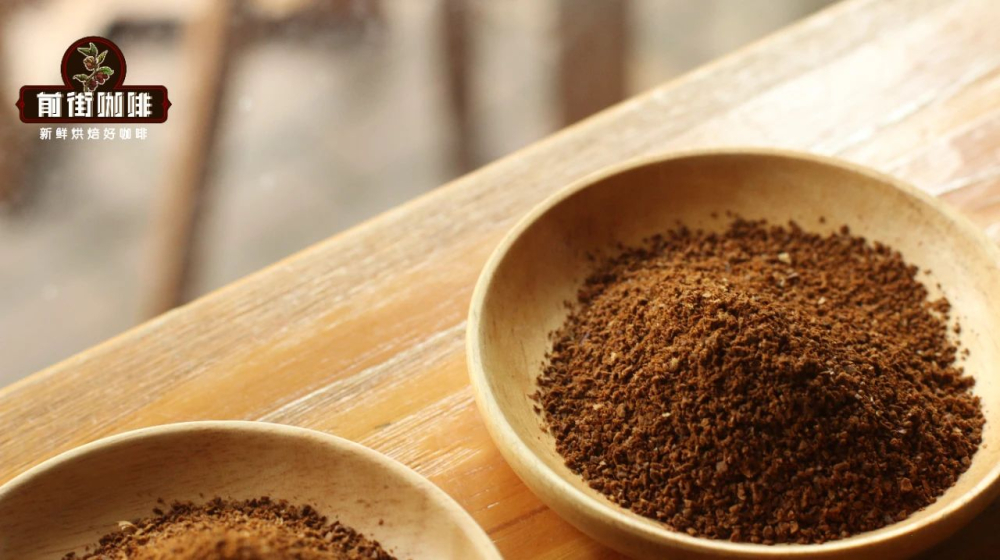
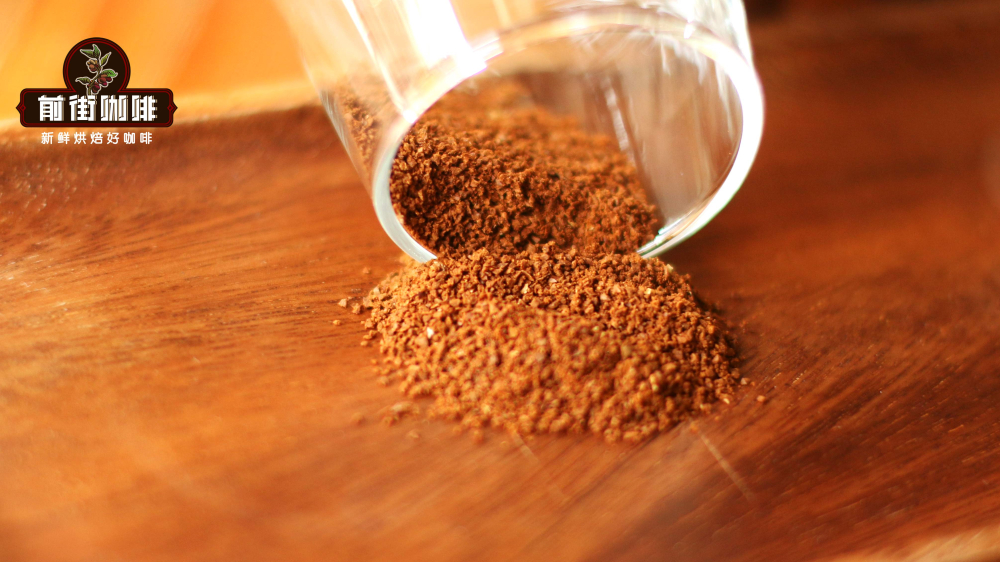
This is also one of the reasons why coarsely ground coffee is suitable for drip coffee makers. In contrast, with an espresso machine, when making espresso, the coffee grounds must be tamped firmly so that they create resistance to the high-pressure hot water, allowing the essence of the coffee to be extracted. Therefore, espresso machines are extremely sensitive to grind size. The more uniform the grind, the tighter the puck after tamping, the fewer the gaps, and the more even the resistance to water flow, so that a successful cup of Espresso can be extracted. That is why the grind size required for espresso is extremely fine.
So what coffee beans are used to make Americano?
If specifically referring to American-style drip coffee, the beans chosen are the same as those for pour-over coffee, usually single-origin specialty coffee beans from a single producing region. But as far as most cafes today are concerned, the base of Americano—espresso—is mostly made with espresso blend beans. When an espresso machine extracts espresso, there is a notable characteristic: high-pressure operation magnifies the flavor of the coffee beans.
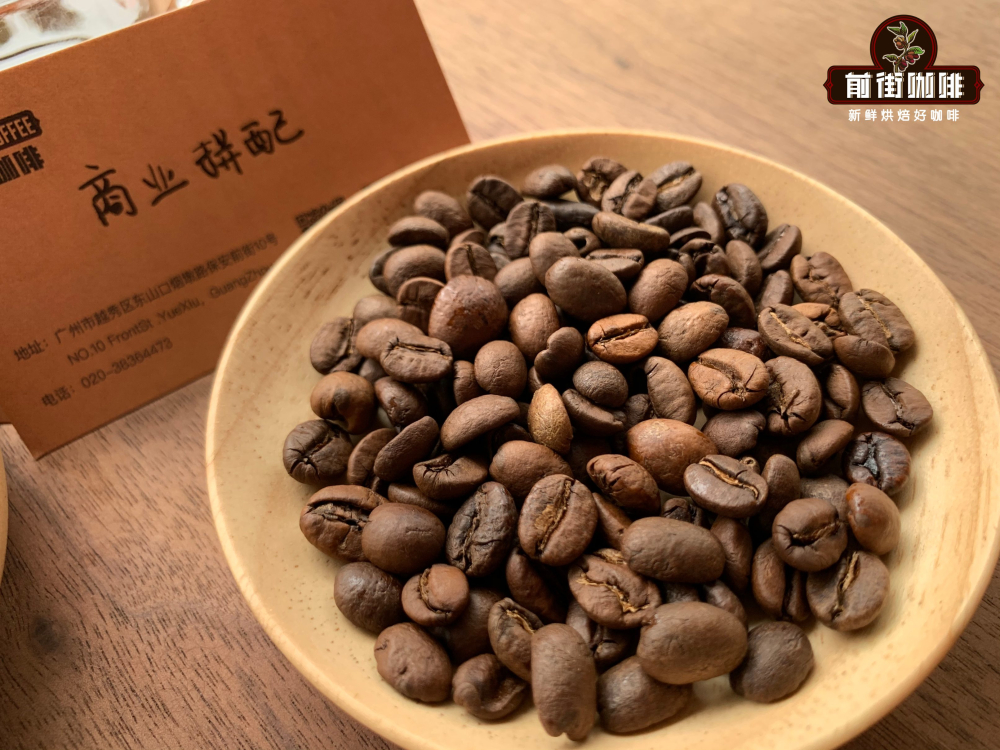
For this reason, single-origin coffee beans are not suitable for extraction with an espresso machine; otherwise, after the flavor is excessively magnified, unpleasant off-flavors are likely to appear. Instead, coffee beans from multiple producing regions are blended together, and it is generally more common to mix two to three kinds of beans. The purpose of blending is very clear: to bring together the flavors of different coffee beans and present a new, more balanced taste, while also being able to become a shop's signature formula.
For example, the in-house blend "Sunflower Warm Sun" series used at Front Street Coffee (FrontStreet Coffee) is one of Front Street's currently quite proud blended creations. It is blended from Honduras Sherry coffee and Yirgacheffe natural sun-dried Red Cherry coffee, with rich chocolate, caramel, and subtly tipsy flavors. Next, Front Street Coffee (FrontStreet Coffee) will explain how to make iced Americano.
How to make Americano?
As Front Street Coffee (FrontStreet Coffee) said above, the way to make Americano is to add one serving of espresso to one cup of water. What naturally needs attention here is the water-to-coffee ratio of Americano—how much water, and how much espresso is made from the coffee grounds. Every coffee shop's Americano coffee-to-water ratio is different, so Front Street Coffee (FrontStreet Coffee) will use its own Americano as an example to explain.
First, the coffee-to-water ratio of traditional Americano is 1:8, that is, double espresso (40 ml) diluted with 320 ml of water. The ratio can be adjusted according to the shop's serving cup size, roughly between 1:7 and 1:8. But this does not apply to all beans. The Americano made by Front Street Coffee (FrontStreet Coffee) using Warm Sun blend coffee beans uses 1:4.5. So how does Front Street determine the ratio suitable for making Americano with its own blend beans?
First, extract double espresso (or according to the number of servings). Pour the extracted espresso into a sharing pot placed on a scale, add water sequentially according to the ratio, and taste to determine the appropriate range. For example, after extracting 40 grams of coffee liquid, start from 1:4, that is, pour in 160 ml of water, then taste; then pour in another 20 grams of water (ratio 1:4.5), and continue tasting; similarly pour in another 20 grams of water (ratio 1:5) and taste. Repeat this operation until the suitable ratio range is determined.
Because each tasting consumes part of the coffee liquid, it is not possible to accurately find the suitable Americano coffee-to-water ratio this way; this method only helps find the suitable range, after which Americano still needs to be remade according to that range. For example, if in the above method the ratio for making Americano with Warm Sun blend falls between 1:4 and 1:5 when tasting, then remake one Americano at 1:4, one at 1:4.5, and one at 1:5, and finally determine that 1:4.5 is the most suitable. At this coffee-to-water ratio, the wine-like charm and cocoa finish of Warm Sun blend are more prominent, while the body is not lost. Front Street Coffee's (FrontStreet Coffee) hot Americano parameters are 40 ml espresso diluted with 180 ml of 85°C hot water or ice-water mixture.
Front Street espresso extraction parameters:
Grinder: Pegasus 900N Grind size: 1.6 Pressure: 9 bar Temperature: 90.5~96°C Time: 20~30 sec Dose: 20g (double espresso) Yield: 40ml Extracted espresso flavor: smooth mouthfeel, medium body, with obvious fruity acidity on the palate accompanied by a light berry aroma, whiskey-like fragrance, rich chocolate flavor, and a noticeable sweet aftertaste.
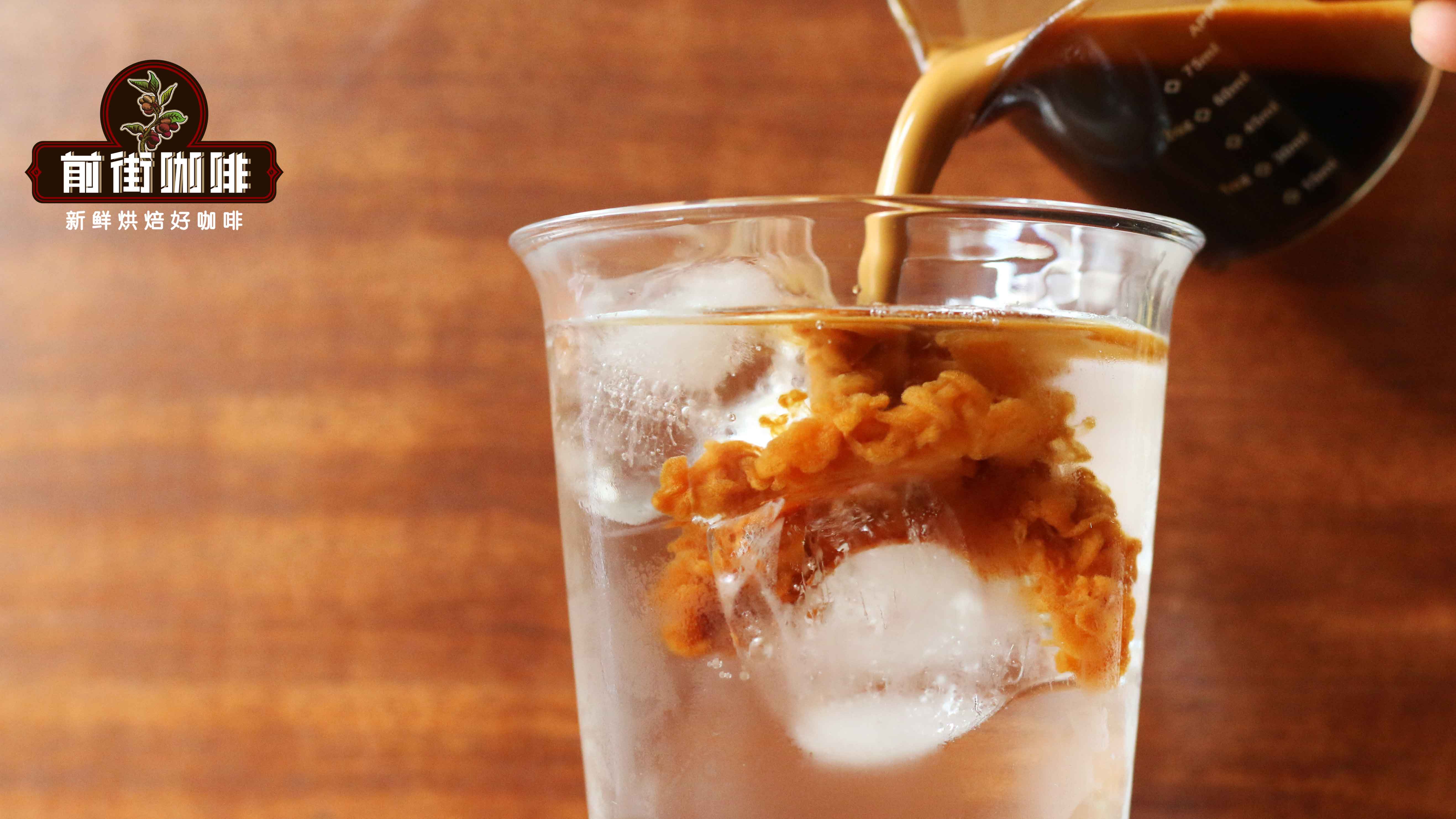
Iced Americano is actually made by adding ice water to espresso at a ratio of 1:7. Front Street's steps for making iced Americano:
1. Front Street extracts double espresso using the parameters mentioned above.
2. Prepare 280 ml of ice-water mixture.
3. Pour the double espresso into the ice-water mixture, stir evenly, and it is ready to drink.
Iced Americano taste description: The Warm Sun blend used by Front Street Coffee (FrontStreet Coffee) itself has obvious chocolate and wine-like aromas in its flavor. After making espresso and adding it to ice water, it becomes a refreshing and smooth drink, with a relatively obvious wine-like charm, lasting aroma, and a chocolate finish.
The above content is compiled by CoffeeHunters, a coffee news website.


